Hepper is reader-supported. When you buy via links on our site, we may earn an affiliate commission at no cost to you. Learn more.
Amitriptyline for Cats: Our Vet Explains Usage, Safety & FAQ

In this article
Amitriptyline is a tricyclic antidepressant that is prescribed in veterinary medicine to treat behavioral disorders in cats and dogs. Amitriptyline works by blocking the reabsorption of serotonin and norepinephrine. These are neurotransmitters that have important roles in the body. Serotonin moderates mood and behavior. If levels are low, this is thought to contribute to anxiety and stress. Norepinephrine is responsible for motivation and emotional regulation.
If levels of both these neurotransmitters are increased, the brain will be more capable of regulating behavior and mood. Amitriptyline is commonly used to treat anxiety, and stress-induced behavior, and to relieve physical pain.
Its use in cats is “off-label.” This means it has not officially been approved for this specific use. There are lots of drugs that are prescribed for off-label use in veterinary medicine.

What Is Amitriptyline?
Other brand names of Amitriptyline include:
Amitriptyline should be stored at room temperature, which is typically between 68°F and 77°F. It should be kept away from direct sunlight and any sources of moisture. The medication should be kept in its original container. It should not be stored anywhere humid such as a bathroom, and should always be kept well out of reach of children and animals.
Uses in cats
Amitriptyline has various uses in cats, these include correction of anxiety and stress-related behavior such as:
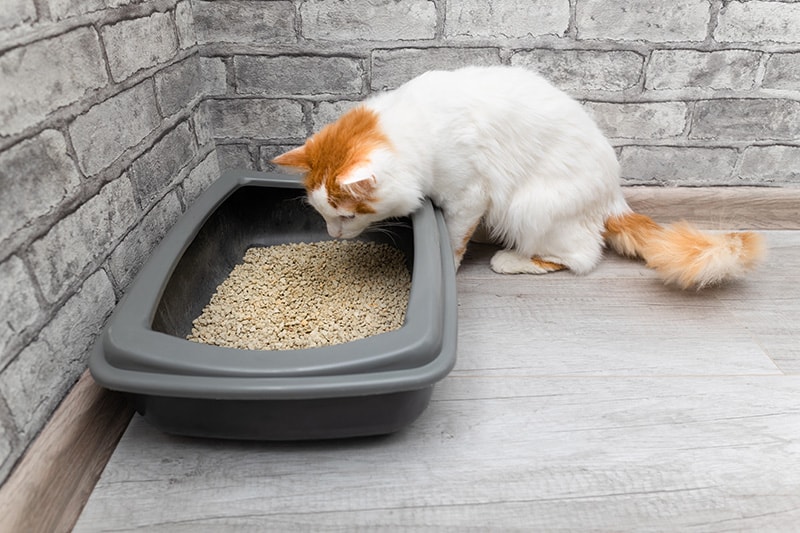
1. Inappropriate Elimination
Cats spraying around the home, avoiding their litter box, and using inappropriate places to defecate and urinate are often stressed or anxious. Amitriptyline can help calm them and take away the urge to carry out these unwanted behaviors.
2. Excessive Vocalization
Some cats will wander around the house howling, again this can be stress or anxiety-related. If this is the case amitriptyline can help in some circumstances. Bear in mind there are other reasons this can happen including hyperthyroidism, so it is important to always get your cat checked out by a vet if you witness this behavior.
3. Destructive Behavior
Some cats will attack furniture and shred things in their home or groom themselves excessively to the point they cause themselves harm. Amitriptyline can help in these cases.
Amitriptyline can also be used to manage chronic pain conditions such as nerve pain. It is thought to have analgesic properties that offer relief in some cats. Cats that suffer from Idiopathic Feline Lower Urinary Tract Disease (FLUTD) may benefit from the use of amitriptyline as it can help with bladder spasms and discomfort associated with this condition.
Owners should be aware that using behavior-modifying medications such as amitriptyline should not be the first port of call when addressing behavioral issues. Owners should discuss behavior-modifying techniques such as positive conditioning, training, and changes to their environment and routines with a vet. Amitriptyline can be used alongside these methods but should not be used alone.
How Is Amitriptyline Given?
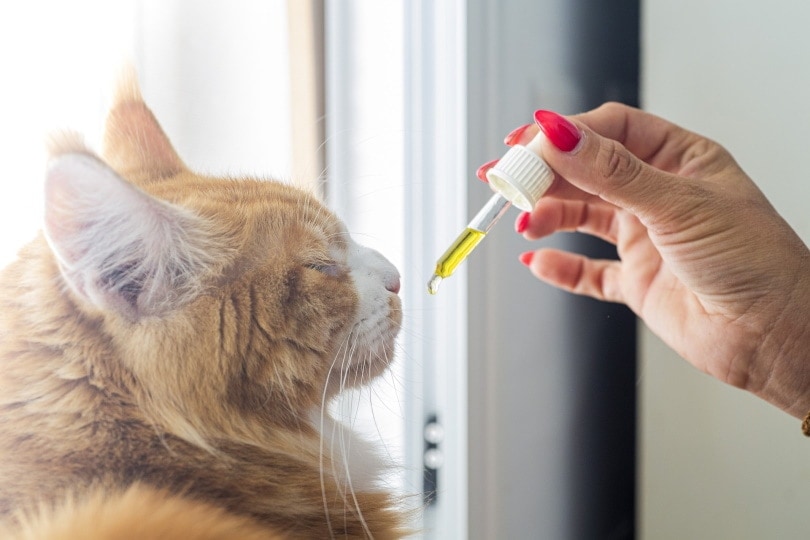
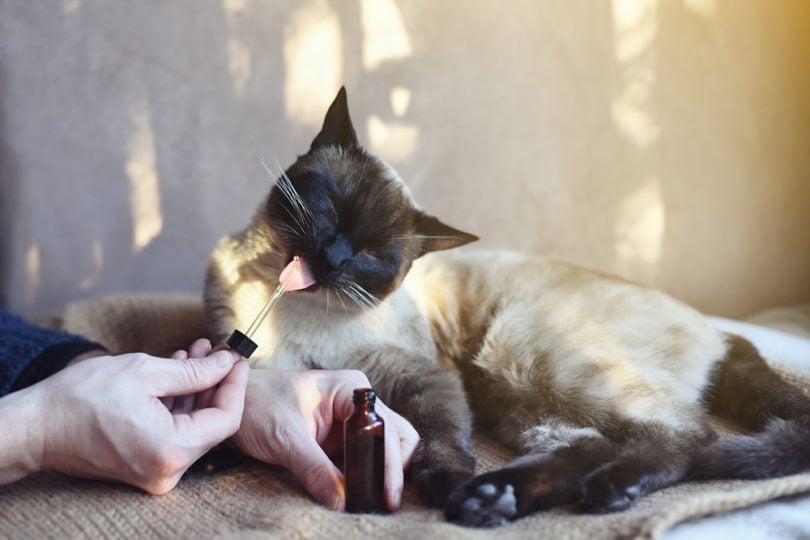
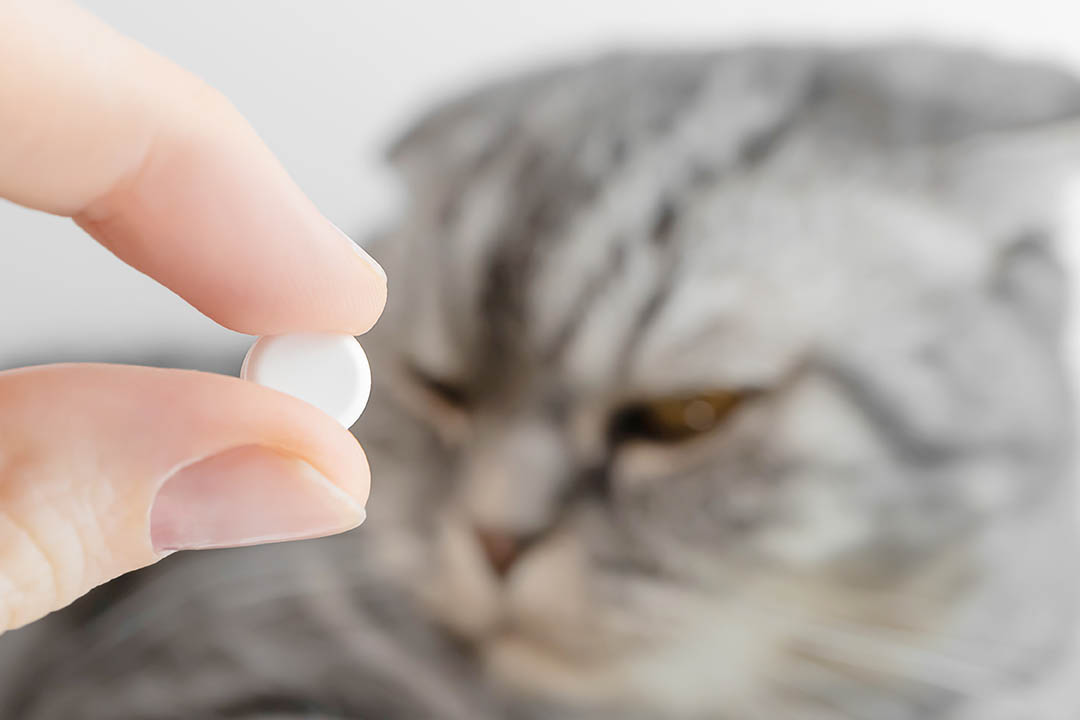
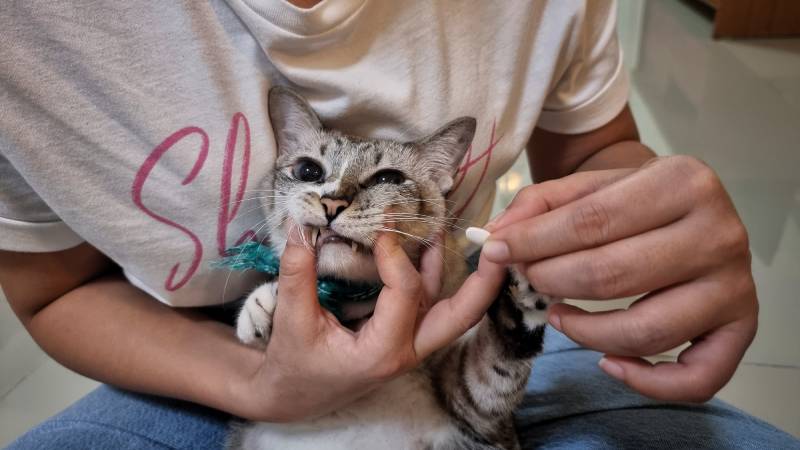
Amitriptyline comes in tablet form, as a solution, and also as a transdermal patch. It is usually given orally in tablet form to cats. It can be given with or without food, but if vomiting occurs when it is administered on an empty stomach, consult your vet. They may suggest feeding your cat before giving the medication. It can take a few weeks for any effects to be noted, however side effects can be seen immediately.
The dose for amitriptyline is calculated based on your cat's weight. Your vet will be able to prescribe an appropriate dose for your cat once they have weighed them.
In some circumstances, you may be prescribed a compounded formulation of amitriptyline. Compounded medications are used if there is a reason your cat cannot be prescribed a licensed drug for the particular issue affecting them, or if they cannot swallow tablets or have an allergy to an ingredient in an approved product. These prescriptions will always be created by a vet and done on a case-by-case basis tailored to suit the individual cat’s needs.
What Happens if You Miss a Dose?
If you realize you have missed a dose of amitriptyline, give it again as soon as you remember. If it is close to the next scheduled dose, you may have to skip this dose and give the next one as planned. If you are unsure of the timings, consult your vet. Never give extra doses or double doses to your cat.

Potential Side Effects of Amitriptyline
If you have recently started giving your cat amitriptyline and you witness any of the clinical signs above, contact your vet immediately for advice.
Frequently Asked Questions
Is amitriptyline safe for cats?
Amitriptyline is very safe for cats. It is not officially FDA-approved for cats, so its use is classed as “off-label.” There are plenty of veterinary medicines that are used off-label and are safe, as long as they are used under the guidance of a licensed vet. It is always good practice for owners to be aware of potential side effects and to monitor their cats closely when giving the drug.
How long does it take for amitriptyline to work in cats?
It can take 7–14 days for the full therapeutic effect of amitriptyline to be reached. It is very important not to adjust to dosage or stop giving the medication without first consulting your vet at any point during their treatment.
Are there any natural alternatives to amitriptyline for cats?
Depending on what amitriptyline is being used to treat, there are many other options for cats. For behavioral issues, environment enrichment, positive conditioning, and behavioral training methods can all have very positive effects. For some conditions, there are other non-pharmaceutical approaches. Your vet will be able to advise you and discuss any alternative methods you may wish to pursue.
Conclusion
Amitriptyline is very useful for the treatment of certain behavioral issues and chronic pain in cats. It should only ever be used under the guidance of a vet and as with many drugs, there are some side effects witnessed. These are few and far between and the benefits of using the drug in these situations far outweigh the risks. If you think that your cat is experiencing behavioral problems, speak to your vet for advice and guidance.
Sources
Featured Image Credit: Tyler Olson, Shutterstock
Get Hepper In Your Inbox


Pet care tips from our vets and experts, straight to your inbox.
You may opt-out at any time. View our Privacy Policy for more information.
Dr. Emma is an experienced vet who is always happy to share her knowledge and expertise with our readers. Her passion is surgery but she will happily talk about anything animal related. Dr. Chandley graduated from The Royal Vet College and since then she has worked in general practice in the UK. She has completed a postgraduate certificate in Small Animal Surgery and has also gained Advanced Practitioner status in the same discipline. She enjoys developing her skills in clinical pathology, animal behavior and nutrition as well.
Emma is an experienced veterinarian who is always happy to share her knowledge and expertise with our readers. She is passionate about surgery but will happily talk about anything animal related.
Experience
Since graduating, Dr. Emma has worked in general practice in the UK. She has completed a postgraduate certificate in Small Animal Surgery and has also gained Advanced Practitioner status in the same discipline. She also has expert knowledge in small animal medicine with a special interest in Endocrinology, although surgery is her passion. She enjoys developing her skills in clinical pathology, animal behavior, and nutrition as well.
Education
Emma received her degree from the Royal Vet College, University of London. She obtained her postgraduate certificate from the British Small Animal Veterinary Association and Nottingham Trent University.
She was granted Advanced Practitioner status by The Royal College of Veterinary Surgeons.
Join the conversation
Ask a question, share your story, or send private feedback.