Hepper is reader-supported. When you buy via links on our site, we may earn an affiliate commission at no cost to you. Learn more.
Can Frogs See in the Dark? Vet-Reviewed Facts & FAQ


In this article
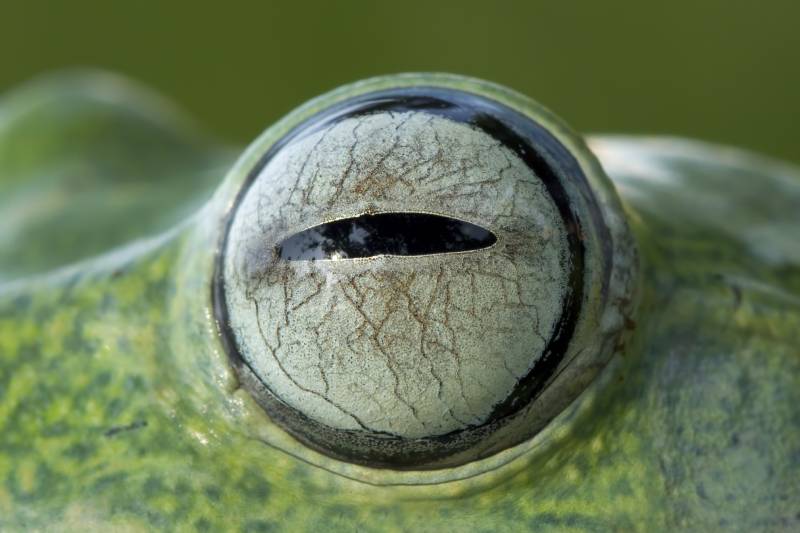
Since you mostly hear frogs at nighttime, you may wonder if they can see in the dark, and if so, how well? What is incredibly interesting about frogs is that they not only have the ability to see in the dark, but they also have the ability to see color in the dark. This makes their sense of sight superior to almost all other types of animals.
This ability helps them in certain situations, giving them the leg up as predators, and it prevents them from becoming prey. In this article, we’re going to discuss the frog’s eyesight so you can better understand exactly what life is like for them through their eyes.

Frogs Have Impeccable Night Vision
Often, unlike many animals, humans lack certain perceptions but see in a wide array of colors. However, toads and frogs have us beat completely. Humans, since we are diurnal, see very vividly in daylight hours but cannot decipher color in darkness.
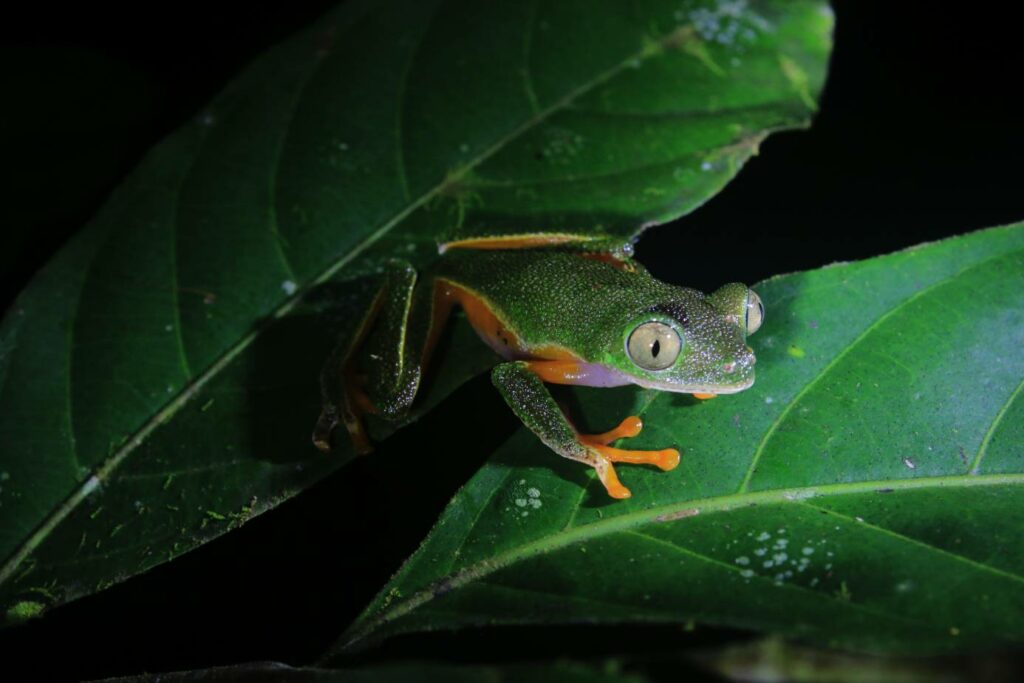
Most frogs are nocturnal, which means they are most active at night. That means that like other animals that are equipped to see at night, frogs can distinguish movement, color, and images at night. Frogs also have the ability to distinguish color in very dark environments.
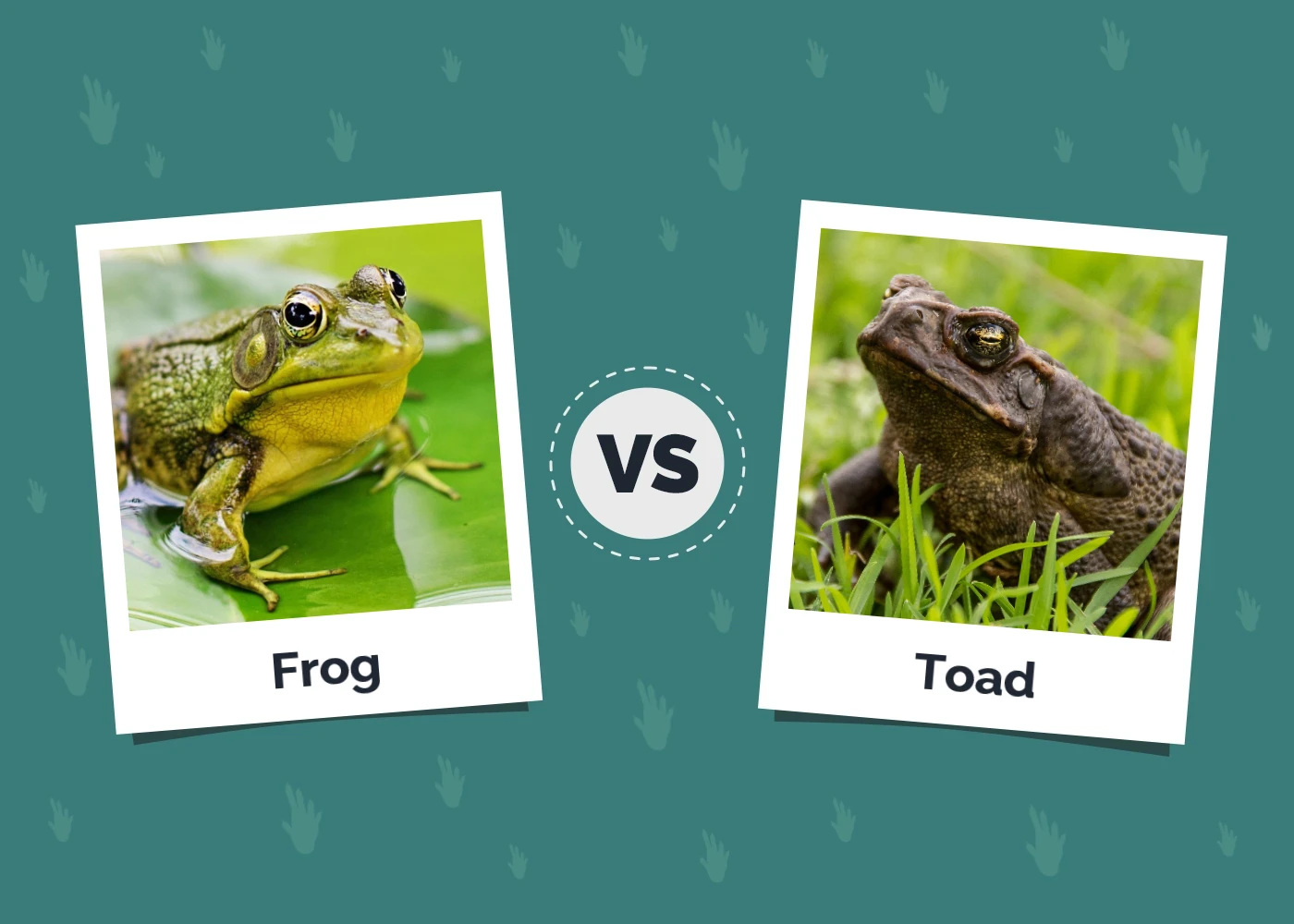
However, frogs and toads seem to be superior to all other animals with their night vision. Their complex visual systems have stunned researchers with the capability of using rods to distinguish vivid color in almost total darkness.
What Frogs Can See in the Dark
Vertebrates, like humans, have two types of visual cells located in the eye's retina. These visual cells, also called photoreceptors, are called rods and cones. Cones are responsible for color vision and require a significant amount of light to function. Rods take over in low light settings, often causing color to fade into a black and white spectrum.
Science has found out that frogs have two different types of rods in their eye that relay different sensitivities. Because it has not been found in any other vertebrate, researchers have diligently been trying to uncover exactly what it is that frogs see.
Initially, it was suspected that frogs could see in extremely low light conditions. However, researchers at Lund University were amazed at their findings.
Almut Kelber, Professor of Sensory Biology, says, “It’s amazing that these animals can actually see color in extreme darkness, down to the absolute threshold of the visual system. These results were unexpected.”
Researchers wanted to dig further to determine to what extent frogs and toads use color vision at night. They suspected that they used this trait while searching for a mate and hunting. Research displayed that frogs and toads use a limited amount of their color information early when it comes to finding a mate.
However, the opposite is true when hunting for food. In low light conditions, when we humans lose our ability to see in color, frogs and toads continue to see a wide spectrum of color vision, which is incredibly advantageous over their prey.
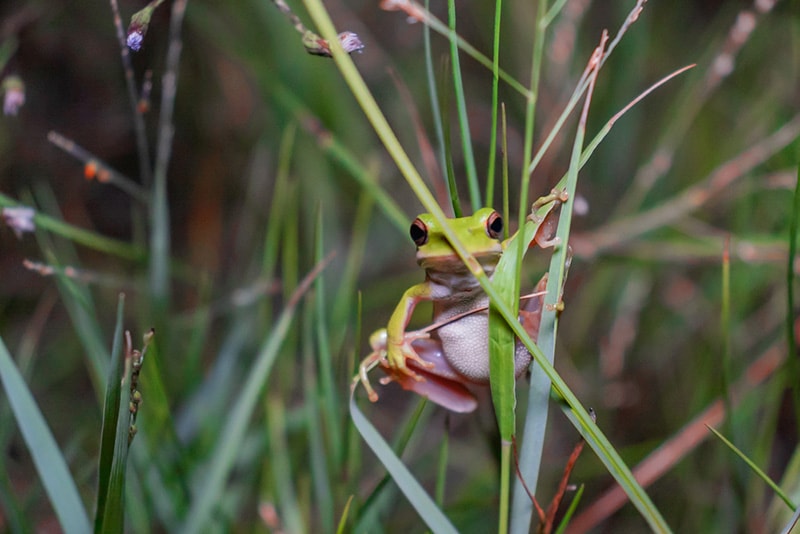
Are Diurnal Species Different?
According to studies, diurnal frogs have visual differences from their nocturnal cousins. While nocturnal frogs have special rods, diurnal frogs have lenses that filter out UV light to allow them to use their visual capabilities a little differently.
Professor Ron Douglas and his team experimented with 85 frogs and salamanders to test visual spectrum characteristics. They found that diurnal frogs tend to have UV-blocking pigments in the lenses of their eyes. The lenses of nocturnal frogs allow a little bit more of the UV light to reach the retina.
The UV-blocking characteristic is thought to sharpen vision so frogs can communicate better through body language and detect prey.
Eyes Help Frogs Eat
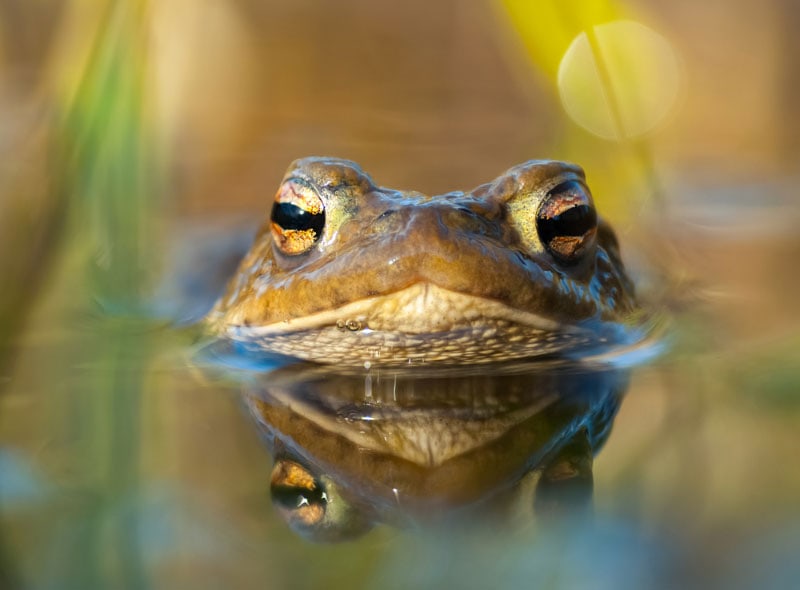
You read that right. Eyes help frogs eat. The bulging eyes help a frog when it swallows food. The eyes pull down into the roof of the mouth to help push food down the throat. Since frogs cannot chew, this little extra assistance comes in handy.
You might wonder, if a frog can’t chew, why do some of them have teeth? With few exceptions, frogs only have upper teeth, used to hold onto prey rather than grind or chew. It takes less than a second for frogs to sling their tongue out to capture prey.
Final Thoughts
Now you know that not only can frogs and toads see in darkness, but they can see impeccably well. These invertebrates put others to shame with their visual capabilities in extremely low light settings. Even diurnal frogs have very sharp, keen eyesight, even in low light.
Hopefully, you’ve learned some interesting information about these amazing amphibians. As science develops, we will learn more about the peculiar and unique capabilities of animals like these.
Featured Image Credit: Evgeny Haritonov, Shutterstock
Get Hepper In Your Inbox


Pet care tips from our vets and experts, straight to your inbox.
You may opt-out at any time. View our Privacy Policy for more information.
Ashley Bates, a freelance writer with a passion for pets, is currently studying animal therapy. She is a mother to four children and 23 pets, both furry and feathery. Ashley actively volunteers at local shelters, advocates for animal welfare, and rescues animals in distress. Her mission is to promote awareness, education, and entertainment about pets to help prevent animal homelessness. She specializes in the care and well-being of dogs and cats.
Join the conversation
Ask a question, share your story, or send private feedback.