Hepper is reader-supported. When you buy via links on our site, we may earn an affiliate commission at no cost to you. Learn more.
Frog vs Toad: Vet-Reviewed Differences (With Pictures)


In this article
At a glance, toads and frogs seem indistinguishable from one another in terms of the sort of animal that they are. As with many types of animals, there is stunning species variation amongst this group of amphibians when it comes to size, shape, and color. However, overall, they both look somewhat similar, behave the same way, sound the same, and appear to live in the same kinds of habitats.
After extensive and continued study, scientists agree that the two animals share enough characteristics that they have been placed in the same order as amphibians called Anura. But below this level of classification, they diverge from one another somewhat. Research shows us that they share morphological, physiological, and life history traits that make them scientifically indistinct from one another at the order level of classification. However, there are nuances regarding the expression of these traits which place frogs and toads in different families.
There are about seven extant toad families, the most diverse and well-known of which is the Bufonidae, the true toads. There are more than 25 extant families of frogs. Some of the better-known and species-rich frog families are the Hylidae (tree frogs), Microhylidae (narrow-mouthed frogs), Ranidae (true frogs), and Rhacopharidae (moss frogs).
Important

Visual Differences
At a Glance
Frog Overview
Characteristics & Appearance
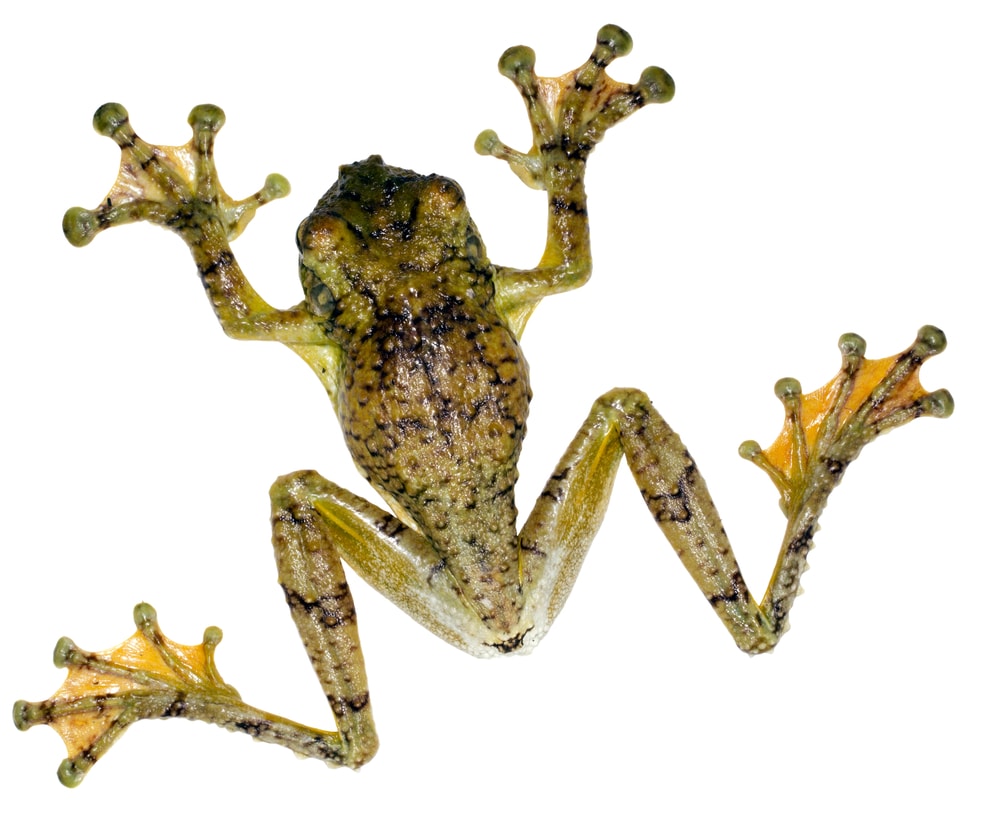
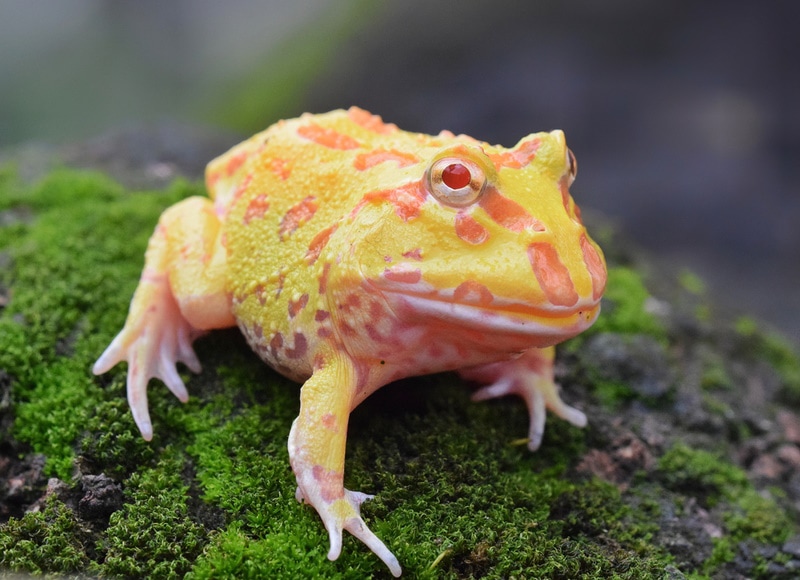
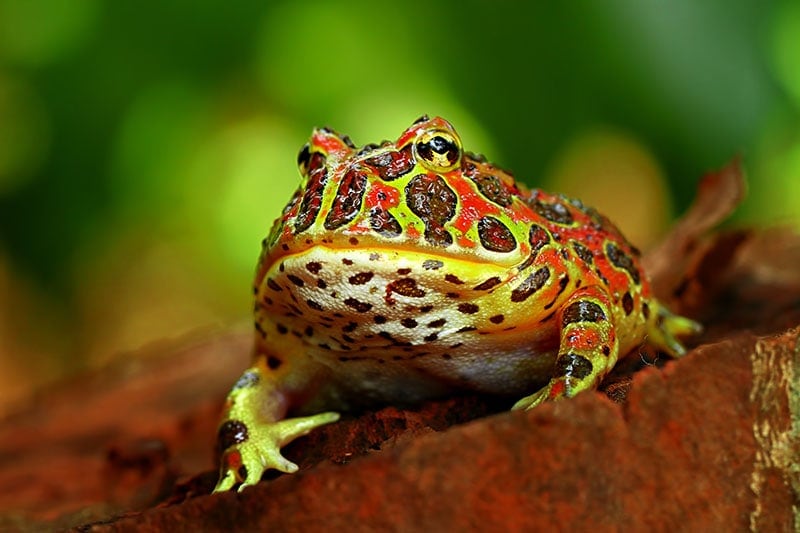
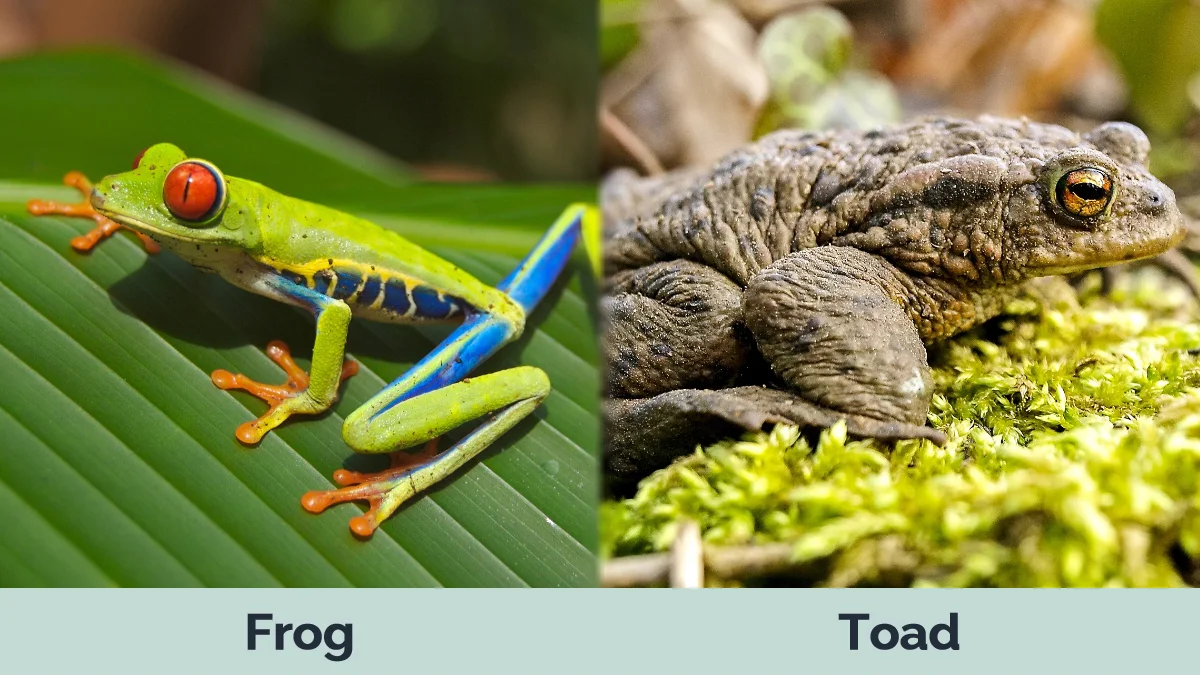
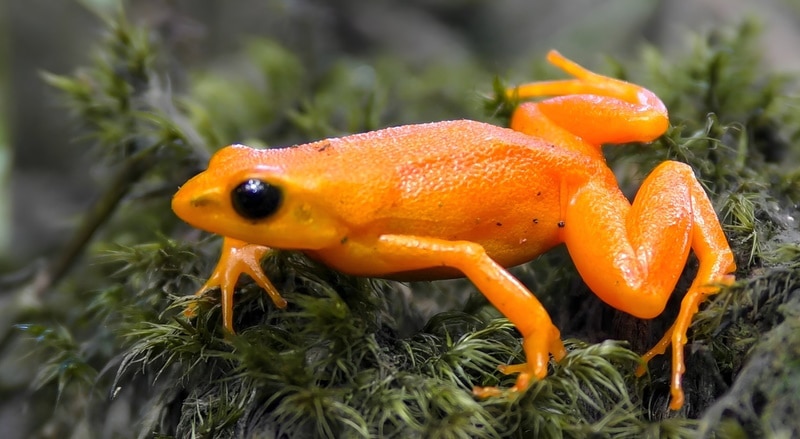
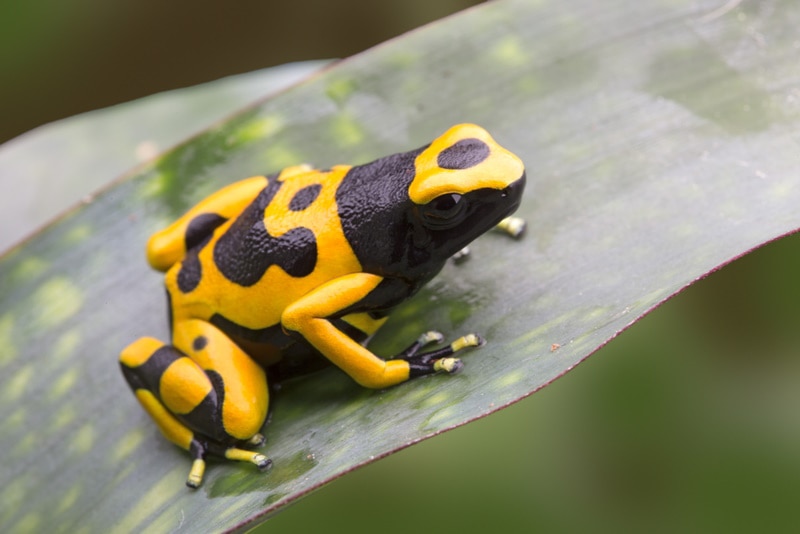
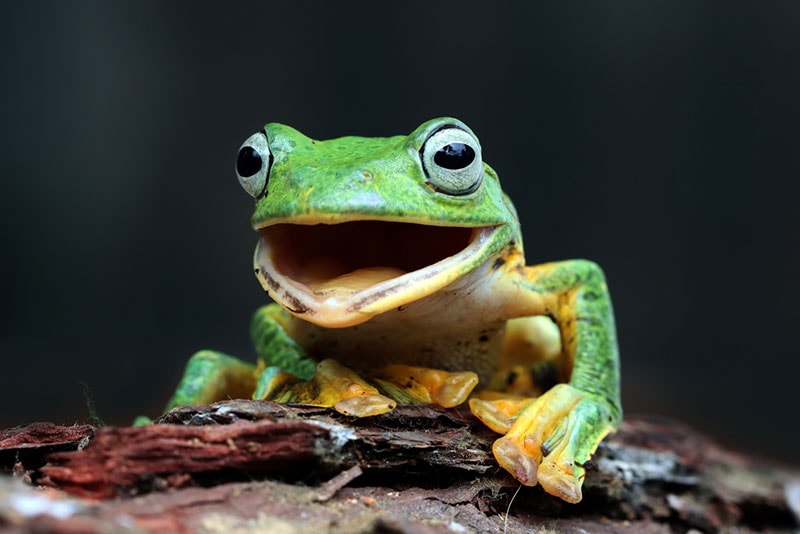
Frogs differ greatly in terms of their size, color, and skin patterning. Throughout the world, you can find frogs with exotically patterned and colorful appearances, although some are more plain to look at. They have smooth, slippery skin.
Some frogs have teeth located at the top of their mouths. Their teeth are not involved in the capture or chewing of prey but, rather, they play a role in the swallowing process. They prevent the prey from escaping or being regurgitated and help it move down into their stomachs. Only one species of frog has true teeth on both their upper and lower jaw.
Their bodies are longer rather than round, and they have long legs that are well-adapted for jumping. Frogs are perhaps best known for their ability to jump great distances.
Habitat & Distribution
Most frogs live primarily in water, such as streams and ponds that are surrounded by vegetation. There are several exceptions such as tree frogs and other so-called terrestrial frogs which spend much of their time in other habitats such as grasslands and forests.
Reproduction
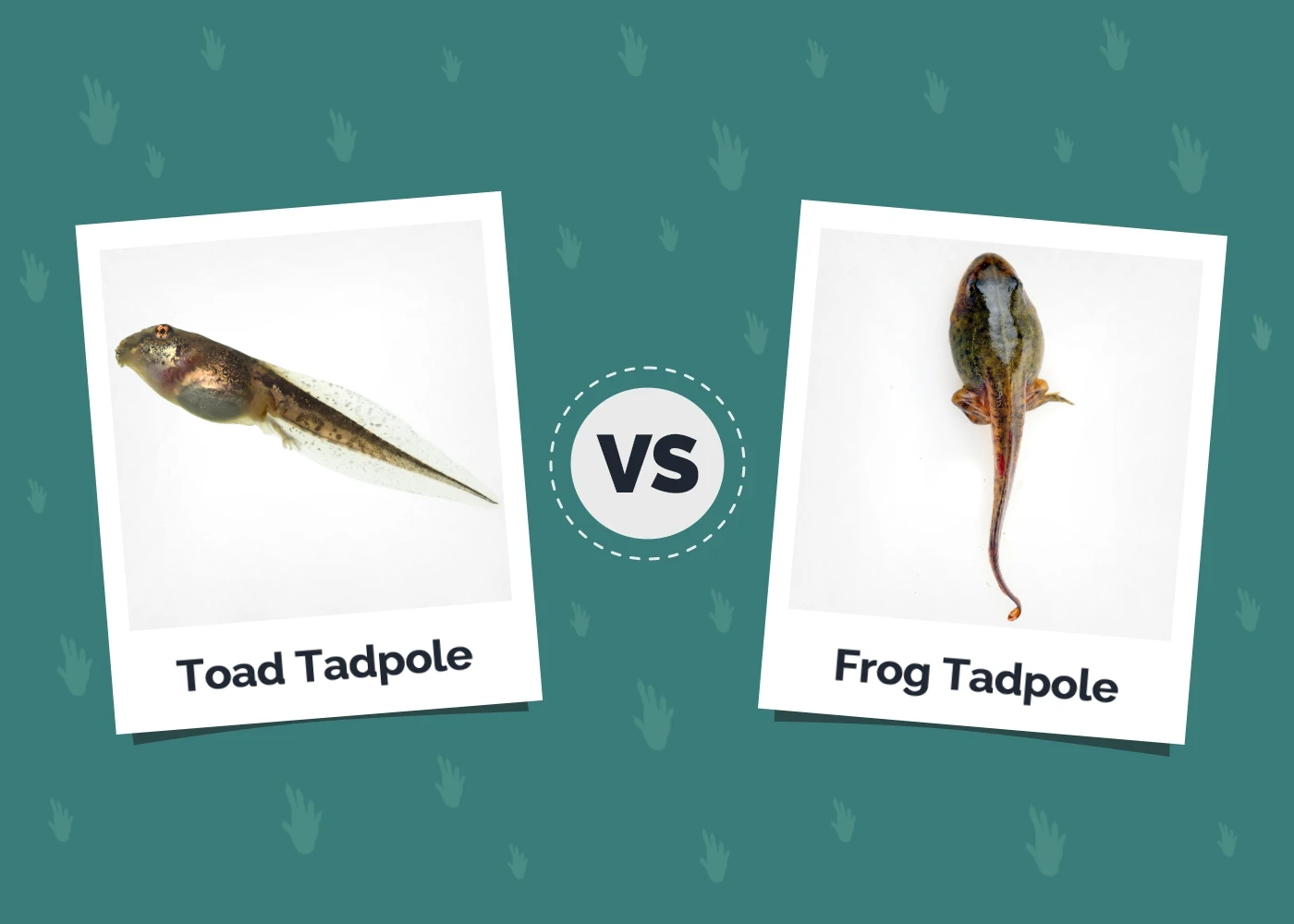
Female frogs lay their eggs in massed clusters. Fertilization occurs externally meaning that the sperm from the male frog fuses with the eggs after or, in some cases, while they are being laid. A defining characteristic of amphibians is that they have a larval aquatic phase with gills and an adult phase that has lungs. Frog tadpoles have long tails relative to their bodies and develop gold flecks within a few days of hatching.
Toad Overview
Characteristics & Appearance
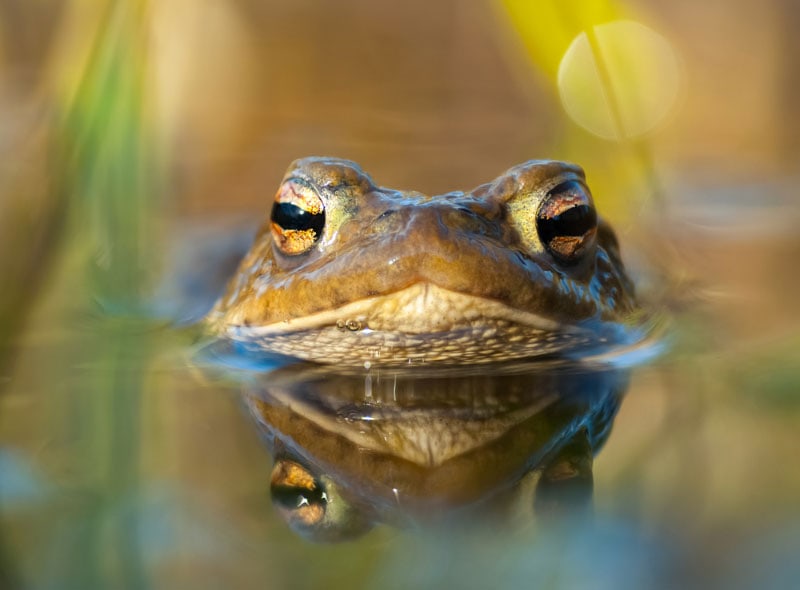
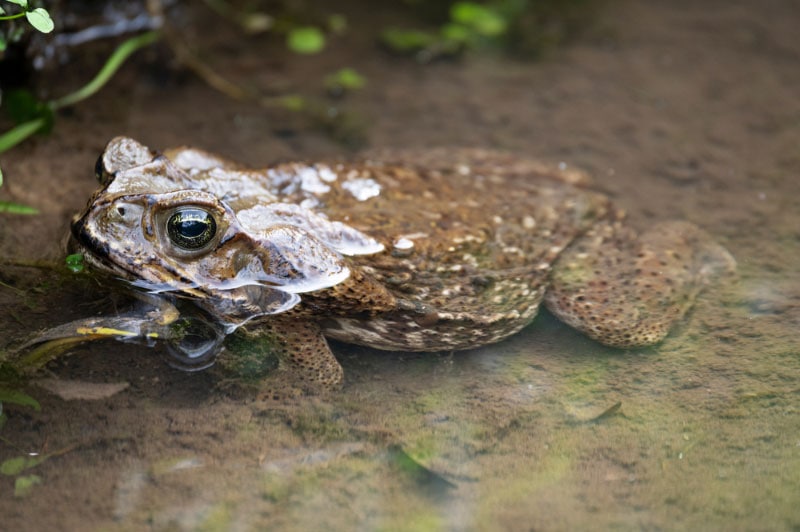
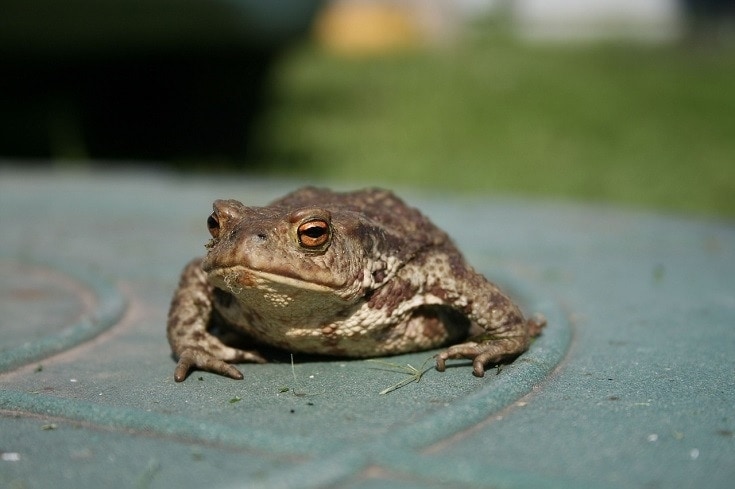
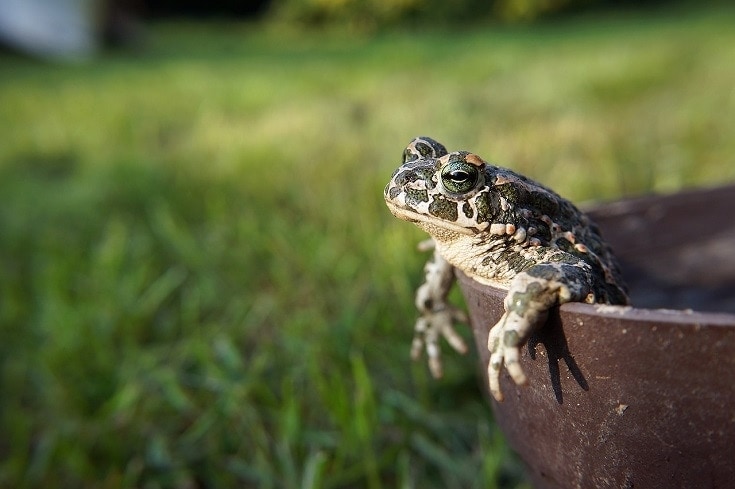
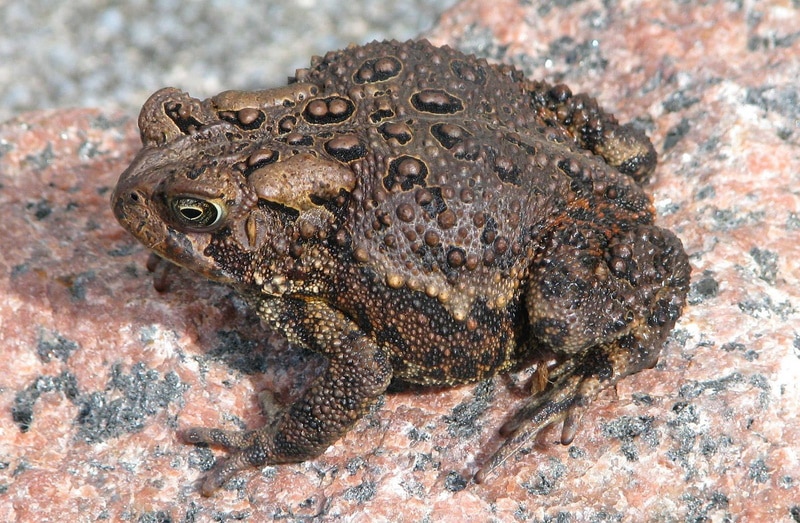
The wonderful and exotic array of colors and designs exhibited by frogs contrasts with toads, which generally occur in dull browns, khakis, and black. Their skin is drier and warty, with warts being particularly prevalent over their parotid glands. These glands produce a toxin called bufotoxin that helps protect them from predators. Although unlikely to be dangerous to humans, bufotoxin can irritate the skin and could be dangerous to pets that may be tempted to chomp down on a toad.
Toads have short, squat bodies with short legs that make them very poor jumpers. They walk, crawl, or make small hops to move around.
Most toads have smaller, less protuberant eyes than those of frogs. Additionally, their eyes feature a crest over them. Unlike frogs, toads tend to hop rather than jump.
Habitat & Distribution
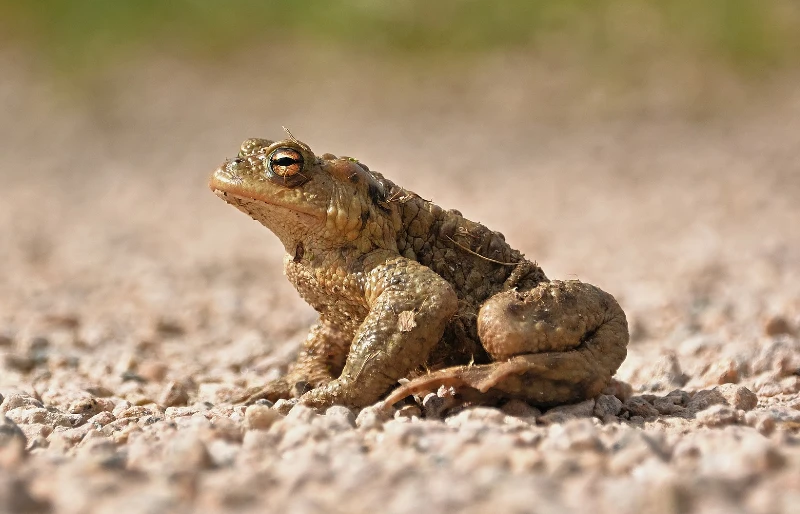
Toads generally live on land, although they do require and prefer moist habitats.
Reproduction
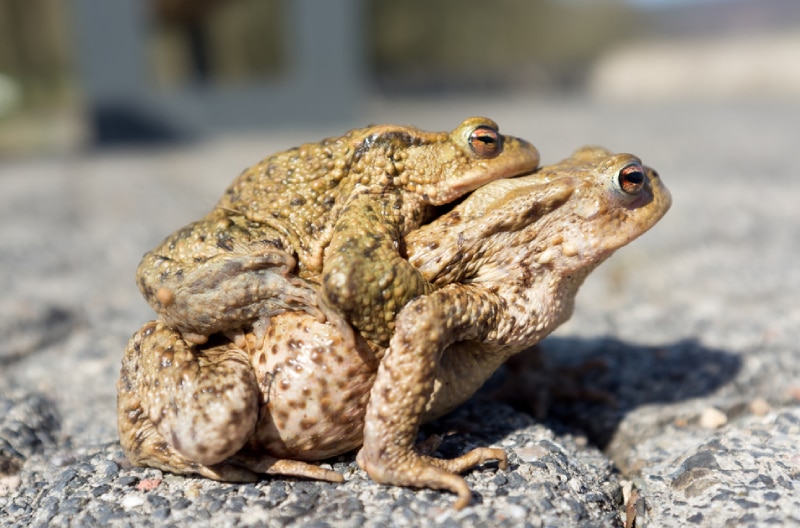
Although they live on land, toads return to water to mate and spawn. Female toads lay their eggs in long string-like structures whilst the male deposits his sperm over them. Indicative of the adult phase of the toad, their tadpoles are more rotund with shorter tails than those of frog tadpoles, and they remain a dark-brown or black color throughout this phase.
What Are the Differences Between Frogs and Toads?
As you may have gathered from reading the above overviews of the frog and the toad, there are many similarities in these amphibians’ respective life histories. However, there are several marked differences that set them apart from one another. Let’s compare the two side by side.
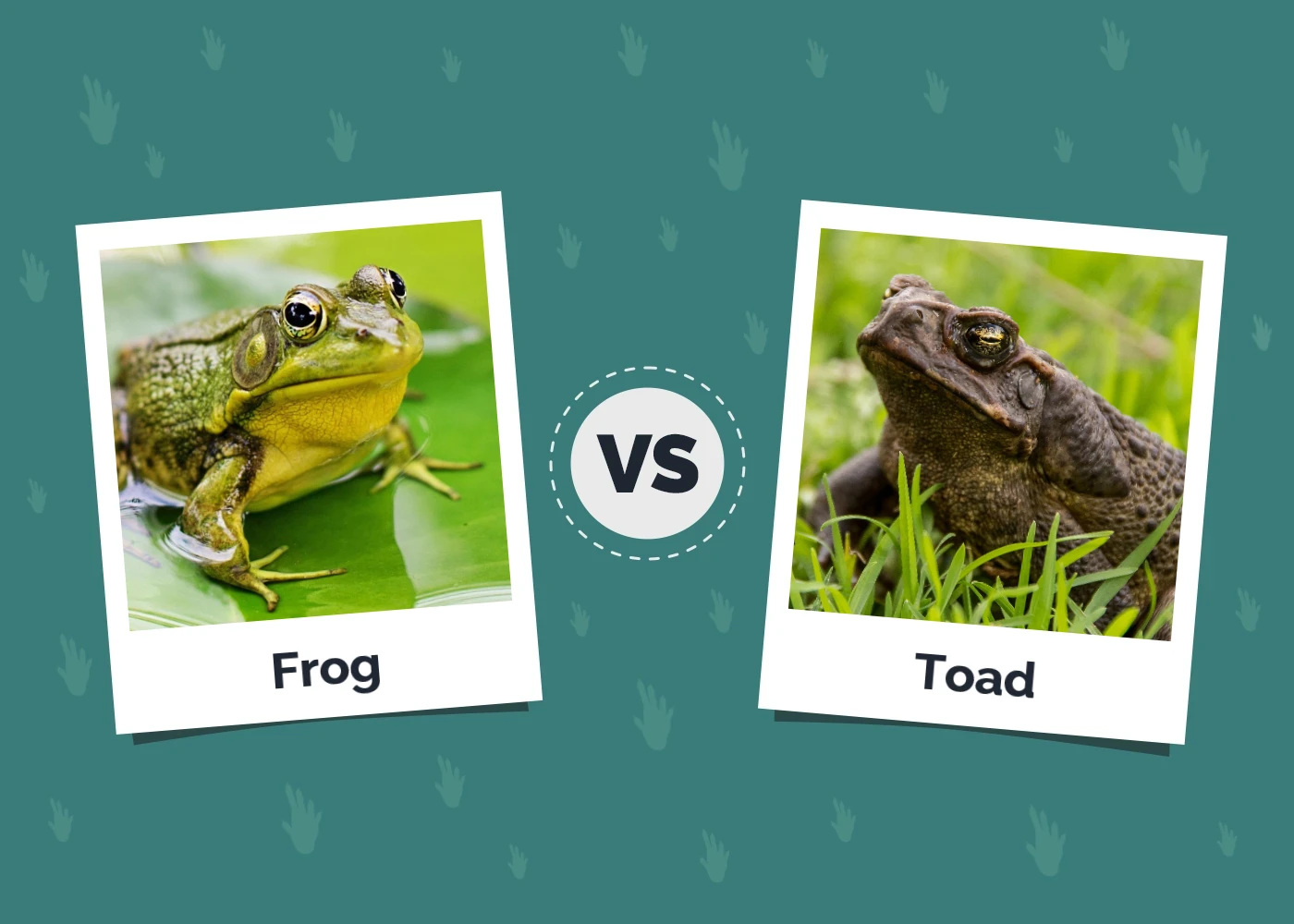
Regarding their appearance, toads have rougher, warty skin compared to the smoother, almost slimy skins of frogs. Many toads have a crest above their eyes. Frogs are sleeker with longer bodies and legs compared to their squat, short-legged relatives, the toads. Patterning and colors present in each further establish the frog as the fairer of the two. Most toads, including their tadpoles, will only ever be an unexciting shade of brown or black, while frogs can be found in stunning patterns and exotic colors.
True toads only have horizontal pupils and they possess parotid glands on their heads. Frogs may have horizontal or vertical pupils, and they don't possess parotid glands like true toads do.
Another marked difference regards their spawn. Frogs spawn in clumps whereas toads spawn in strings.
Another significant difference is that most frogs have teeth, whereas true toads do not. On the other hand, toads have parotid glands (visible near the base of their eyes), which most frogs lack.
Lastly, their preferred respective habitats differ in that most frogs live almost exclusively in water (tree frogs being a notable exception), and toads prefer a terrestrial habitat, returning to water only to reproduce.
Frogs and Toads as Pets
Frogs and toads fall into the “exotic” pet category. They are unusual pets compared to dogs, cats, horses, and the sort. They also generally always remain wild animals that are kept in captivity rather than animals that become domesticated and integrated into everyday human life.
They do make very rewarding pets. Owning and caring for a frog or toad is a wonderful way for children to learn about the biology, needs, and sensitivities of animals. However, the decision to take on a pet frog or toad should not be taken lightly. New owners, children, and adults alike need to be aware of the commitment involved in owning one. Amphibians need to be set up comfortably in a paludarium and provided with a very specific level of care. Furthermore, frogs and toads kept in captivity can live up to three times longer than the average dog or cat, so it is a long-term commitment.
Frogs and toads should never be removed from the wild to be pets. There are plenty of captive-bred choices available.
Conclusion
We hope you enjoyed this crash course on Anurans! If you had ever been puzzled as to why there were two separate names for a single animal, you now have the answer. There are certainly sufficient differences between frogs and toads to warrant their designation to different families of the order Anura.
Related Read:
Sources
Featured Image Credit: Left - JillWellington, Pixabay | Right - sandid, Pixabay
Get Hepper In Your Inbox


Pet care tips from our vets and experts, straight to your inbox.
You may opt-out at any time. View our Privacy Policy for more information.
Eleanor is a high school Math and Science teacher and freelance writer. She lives in the lush KwaZulu Natal Midlands of South Africa with her six-year-old son, horse, cat and three chickens. As an animal devotee, science graduate and life-long learner, she is overjoyed to be able to turn her passions into helpful articles for pet parents. Eleanor and her son love to explore their beautiful country in their spare time. Road-tripping to interesting camping destinations is a favorite pastime. They particularly enjoy relaxing near the ocean, in the mountains or surrounded by African wildlife.
Eleanor is a high school Math and Science teacher and freelance writer. She lives in the lush KwaZulu Natal Midlands of South Africa with her six-year-old son, horse, cat and three chickens. As an all-time animal devotee, science graduate and life-long learner, she is overjoyed to be able to turn her passions into informative and helpful articles. Eleanor and her son love to explore their beautiful country in their spare time. Road-tripping to interesting camping destinations is a favorite pastime. They particularly enjoy relaxing near the ocean, in the mountains or surrounded by African wildlife.
Join the conversation
Ask a question, share your story, or send private feedback.