Hepper is reader-supported. When you buy via links on our site, we may earn an affiliate commission at no cost to you. Learn more.
Are Wolf Spiders Poisonous to Cats? Vet-Reviewed Bite Signs & Safety Tips


In this article
Humans know to be wary of creepy crawlies like wolf spiders, but cats often see them as more of a toy than a threat. If your cat starts batting a wandering wolf spider around, there’s a good chance they’ll take some defensive steps to put playtime to a stop. Fortunately, while a cat may get a nasty welt, wolf spider bites generally aren’t dangerously poisonous enough to cause serious harm to cats.

Do Wolf Spiders Bite Pets?
Wolf spiders generally don’t attack creatures they can’t kill. At the same time, they have a certain defensive threshold that will cause them to strike if you cross it. And if you have a cat, you know they don’t have the same sense of boundaries.
Curious cats will often toy with any creature they find interesting, much to the chagrin of their owners. A wolf spider is an ideal plaything, but they’ll bite if threatened. Your cat may get a bite on the nose if he goes in for a sniff or on the leg as he paws at the spider.
Are Wolf Spiders Venomous?
Wolf spiders are hunters; they use their fast legs to chase down prey rather than spinning a web to catch them. Upon capturing insects like grasshoppers and earwigs, wolf spiders bite to inject a neurotoxic venom. The venom paralyzes their prey, making them easier to consume.
As the venom works to subdue small creatures up to the occasional frog or small reptile, it doesn’t significantly affect larger animals that aren’t on the wolf spider’s menu. Humans don't react to bites other than developing a temporarily painful, reddened, and swollen double puncture wound. Wolf spider bites do not cause necrosis, as many had previously thought, but they may inspire an allergic reaction.
Signs of a Wolf Spider Bite
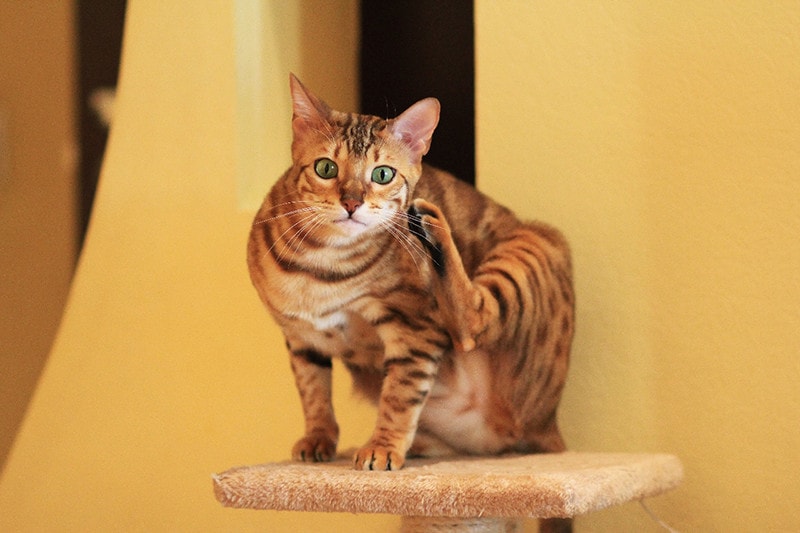
With so much fur covering the skin, noticing the two torn lesions on your cat that indicate a wolf spider bite isn’t easy. Instead, you may see odd behaviors or changes in movement, as wolf spider bites can be painful, especially for a smaller creature.
Common signs of a wolf spider bite on your cat include:
More severe reactions could include vomiting, nausea, cramping, muscle rigidity, and lack of coordination. If your cat has suffered a spider bite, clean the wound with soap and water and follow up with your vet.
Are Wolf Spiders Poisonous to Cats?
Although their bites may be painful for your cat, wolf spiders will likely only create mild discomfort if your cat eats them. Your cat’s stomach acids should neutralize the minor amount of venom they ingest, allowing them to pass the spider without issue.
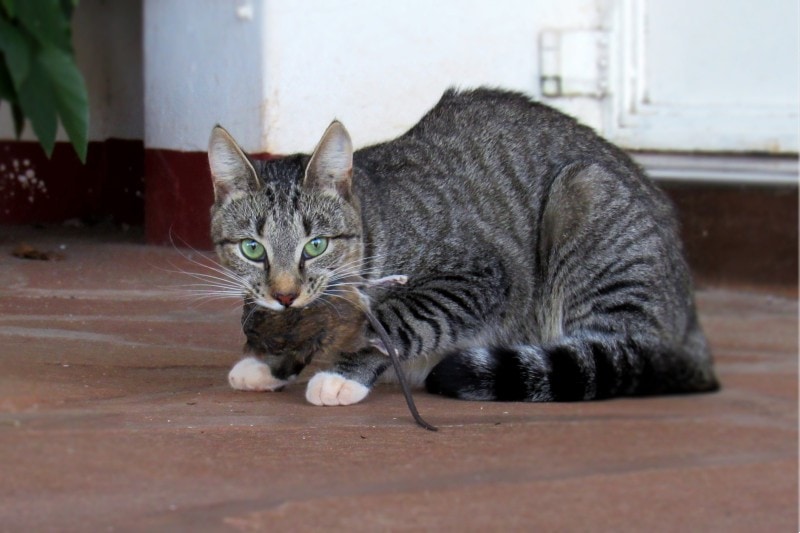
Cats often ingest the bugs they’re attacking, and, in most instances, there’s little cause for concern. The most dangerous spider for a cat to eat is the black widow or its eggs, as their venom is spread throughout their body.
Identifying a Wolf Spider
There are over 2,300 wolf spider species worldwide; thankfully, none have an intensely toxic bite. They can be easy to mistake for some of their more dangerous counterparts, especially the brown recluse, so proper identification can go a long way to ensuring you give your cat the appropriate care. Fortunately, a spider bite will likely come from a wolf spider since brown recluses are even more solitary and less widespread.
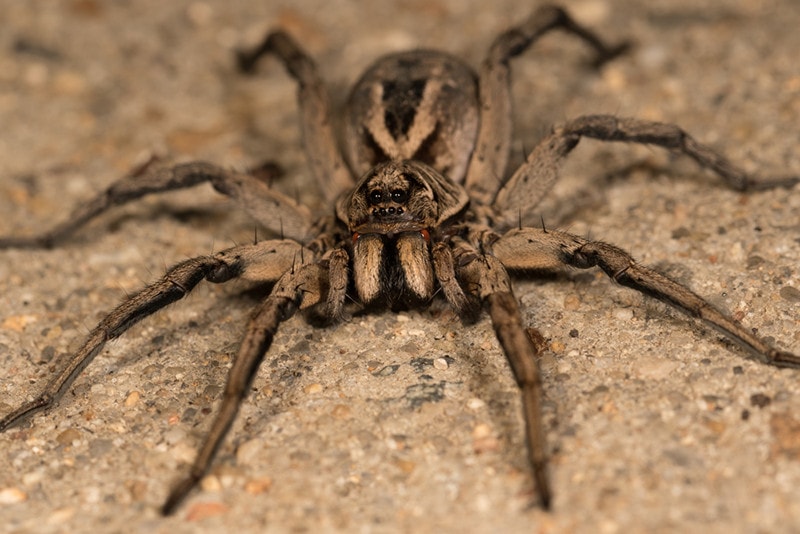
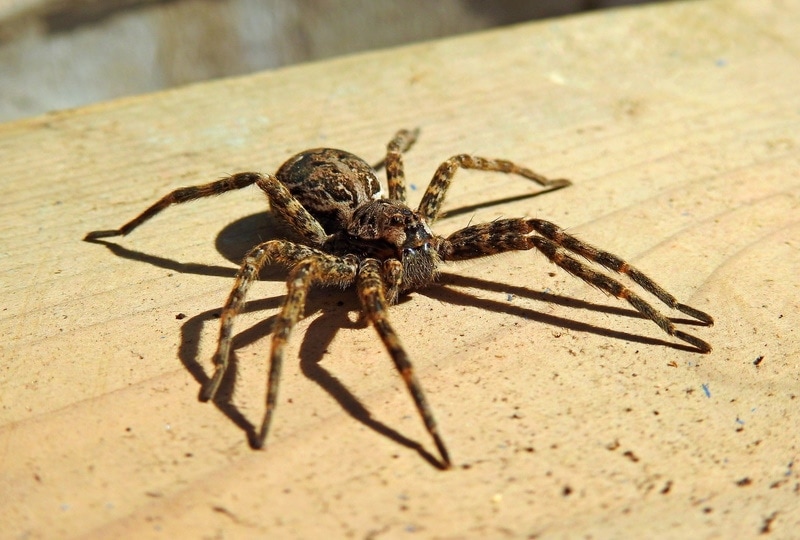
A wolf spider grows to 0.5–2 inches long. They can appear in assorted neutral colors, including brown, tan, black, and gray. Their variegated markings usually appear as stripes running the length of their hairy bodies, and they have prominent fangs.
The wolf spider’s eyes are the most notable feature. Three rows contain eight eyes—four small ones on the bottom, two large eyes above those, and two mid-sized eyes at the top. Shining a flashlight on the spider will cause the two large eyes to twinkle brightly, a handy way to look for spiders in the dark.

Which Spiders Are Dangerous to Cats?
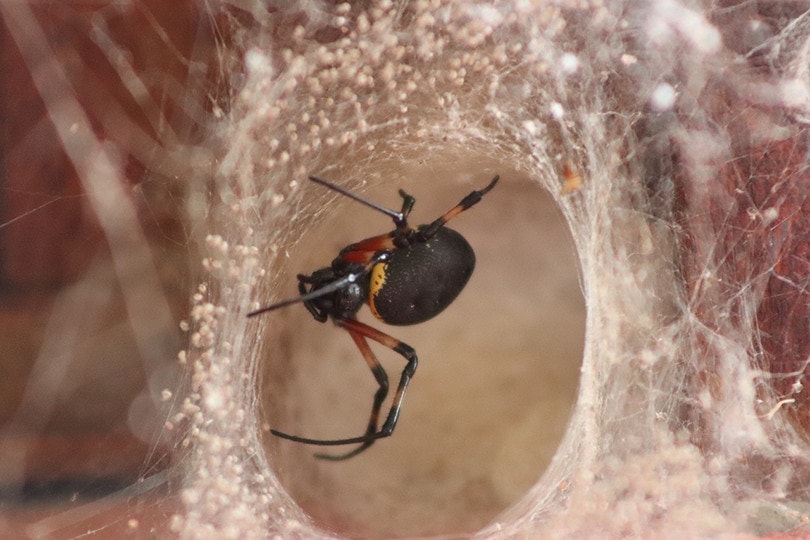
Widow spider and brown recluse bites are the most likely to cause intense reactions in your cat. Cats are particularly sensitive to black widow venom, which contains alpha-latrotoxin, affecting numerous nerve pathways.
Dangers of Black Widow Bites
Signs of black widow envenomation include spasms, hypertension, abdominal rigidity without tenderness, and vomiting. Spreading muscular pain and cramping often begin within the first 30–60 minutes, leading to more intense tremors, ataxia, and paralysis. Black widow venom is deadly to cats in many cases and requires immediate antivenom administration.
Brown Recluse Bites
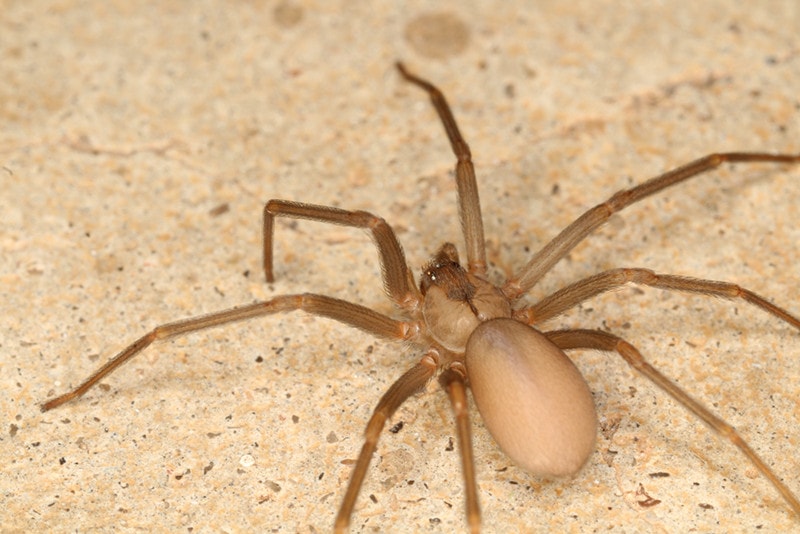
Brown recluse venom isn’t as potent as black widow venom but is necrotic, causing cell death around a growing ulcer. Painful swelling, vomiting, lethargy, and fever are common signs of a brown recluse bite. The lesion, like wolf spider bites, can also make your cat susceptible to infection. In rare cases, the venom can cause kidney failure and liver damage.
Treating a brown recluse bite is similar to treating a wolf spider bite. Clean the sore with soap and water, apply a cold compress, and elevate the affected limb. Your vet may prescribe pain medication and antibiotics for infection, administer IVs, or perform blood transfusions in extreme cases. Monitor your cat for worsening discomfort over the next several days after a brown recluse bite, and follow up with your vet if their condition doesn’t improve.
How to Keep Your Cat Safe From Wolf Spiders
Wolf spiders and their more poisonous relatives have similar habits of sheltering in various nooks and crannies and keeping to themselves. If you’re worried about your cat running into a wolf spider, here are a few tips for keeping them safe:
Fall is a common time to see wolf spiders in the home as they seek out warmer environments. Humid areas where they face fewer disturbances are preferred hiding spots, such as garages, basements, closets, and sheds. Although they can be beneficial bug killers around the home, you may have to call in a pest control expert if your wolf spider problem becomes too much to handle.
Final Thoughts
Any showdown with a wolf spider is a David and Goliath battle your cat will undoubtedly win. They may limp away with a temporary injury, but wolf spider bites are unlikely to cause a severe reaction needing veterinary attention. Clean and care for your cat following a bite, monitor for signs of distress, and take preventative steps to keep any future wolf spider interactions to a minimum.
Featured Image Credit: Katarina Christenson, Shutterstock
Get Hepper In Your Inbox


Pet care tips from our vets and experts, straight to your inbox.
You may opt-out at any time. View our Privacy Policy for more information.
Nicole is a lover of animals of all sizes but is especially fascinated with the feline variety. She’s the proud mom of Baby, a Burmese, and works every day so he can relax in the sunshine or by the fire. She’s always had a cat in her home and has spent countless days with others, observing behaviors and softening up even the grouchiest of the lot. Nicole wants to share her kitty expertise with you so you and your cat can live happy, healthy, and care-free.
Join the conversation
Ask a question, share your story, or send private feedback.