Hepper is reader-supported. When you buy via links on our site, we may earn an affiliate commission at no cost to you. Learn more.
How Do I Identify & Treat Bug Bites on My Cat? 14 Tips & Tricks


In this article
Getting bitten (or stung) by an insect is no picnic, but as annoying as it is for us, it’s even more so for our furry friends. After all, they can’t tell us when they’ve been bitten or what it was that got them. That means it’s up to us to notice when our pets are acting in unusual ways, identify the cause, and treat it.
This may be an even more challenging job for those of us with felines, as cats tend to hide when they’re injured or not feeling well. But if your cat has been the recipient of a bug bite, there are signs you’ll notice. Then it’s time to identify what bit your pet and how to treat it.
Here you’ll find seven common bug bites found on cats, plus seven tips and tricks on identifying and treating them!

The 7 Common Bug Bites & Tips to Identify Them
When it comes to bugs that bite our cats, we mostly think of fleas and ticks, but there are more that can cause your kitty harm and discomfort. You’ll likely realize your cat has been bitten by something when you see it constantly scratching, rubbing its paws against its face or elsewhere, or showing signs of being ill.
1. Fleas
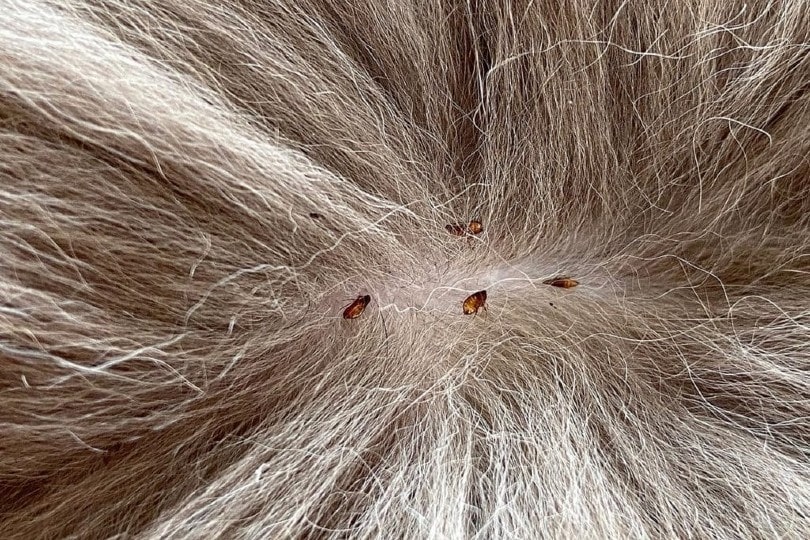
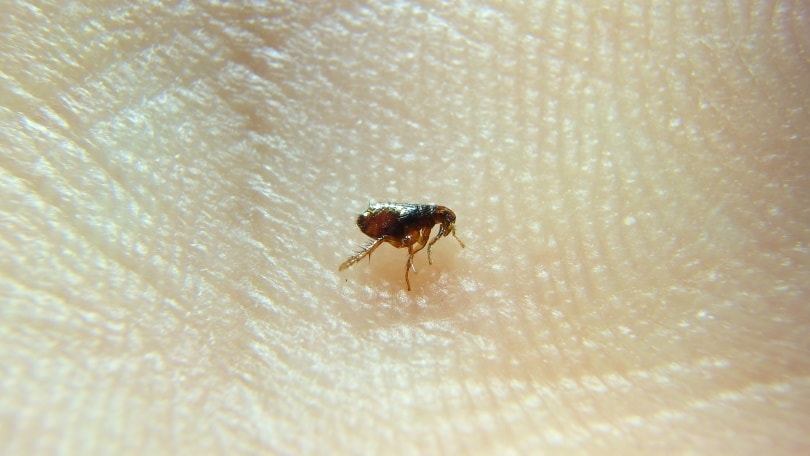
We’ll start with fleas because they’re the most common bug bite your cat will receive. These tiny bugs are some of the most annoying (and bloodthirsty) around. They’ll hop onto your cat, then congregate on the neck, base of the tail, head, perineum, and groin, where they gorge on blood and irritate your feline’s skin. And it isn’t just all that biting that irritates kitty; the saliva of fleas is an allergen, which makes skin itchier and irritated. This results in your cat scratching or chewing at itself constantly.
How do you recognize flea bites? They’ll be small, raised, pink or red, and have a very faint circle of red around them. They may be singular bites or clusters. If your pet is very allergic, you might even find skin lesions that are red, swollen, and oozing.
2. Ticks
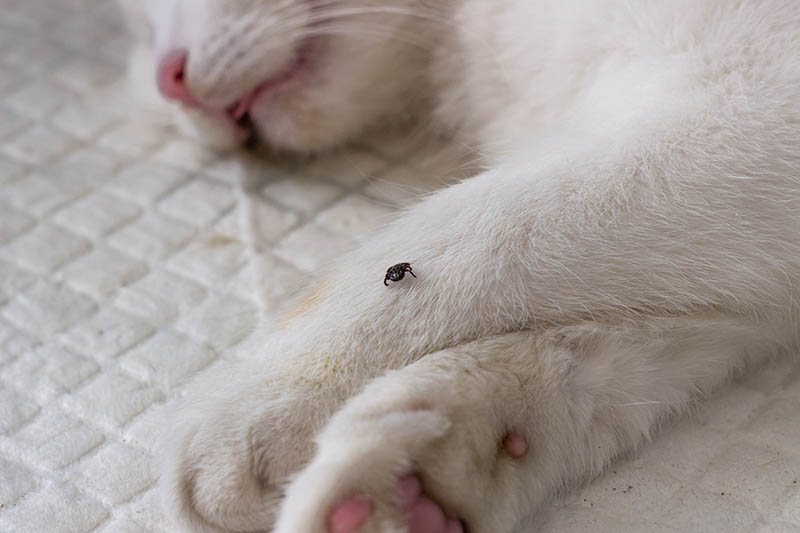
Ticks are probably the second most likely bug bite a cat will get (though inside cats won’t be as prone to these as those that live outdoors). These bloodsuckers find their way onto your kitty, then find a place to latch onto so they can bite and drink to their hearts’ content.
Most often, you’ll find them around the ears, head, legs, and flanks. Chances are you’ll notice the actual tick before you notice a bite (especially if the tick has just fed and is engorged). But the actual bite will be red (and may look like a bullseye), and if the tick is no longer there, it may be swollen.
3. Flies
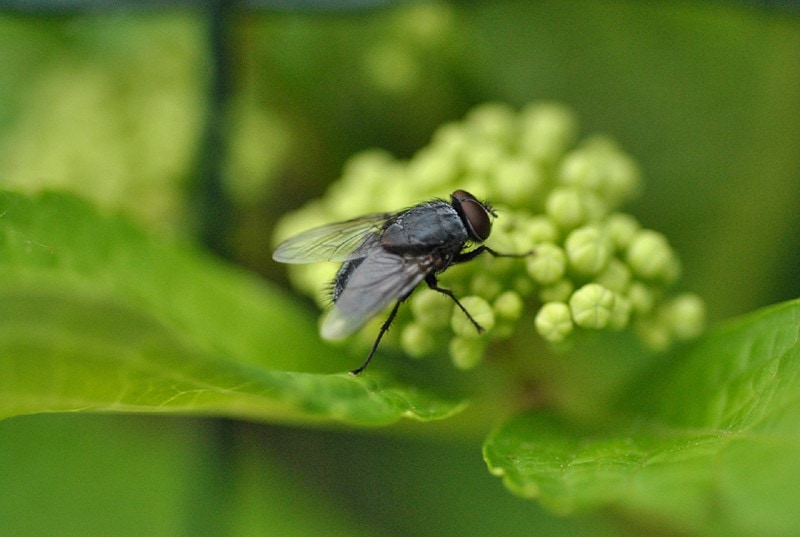
You knew black flies are incredibly annoying, but did you also know that these bugs bite? So, if you find a bug bite on your feline, it might have come from one of these guys. These bites can appear anywhere on the body but are more likely to be on the inner thighs or stomach. They appear as bright red bullseye circles about the size of a nickel.
Unfortunately, that’s not all, though. These bugs may also lay eggs on your kitty’s skin, which can result in larvae crawling around or burrowing into the skin, which leads to infection and swelling.
4. Mosquitos
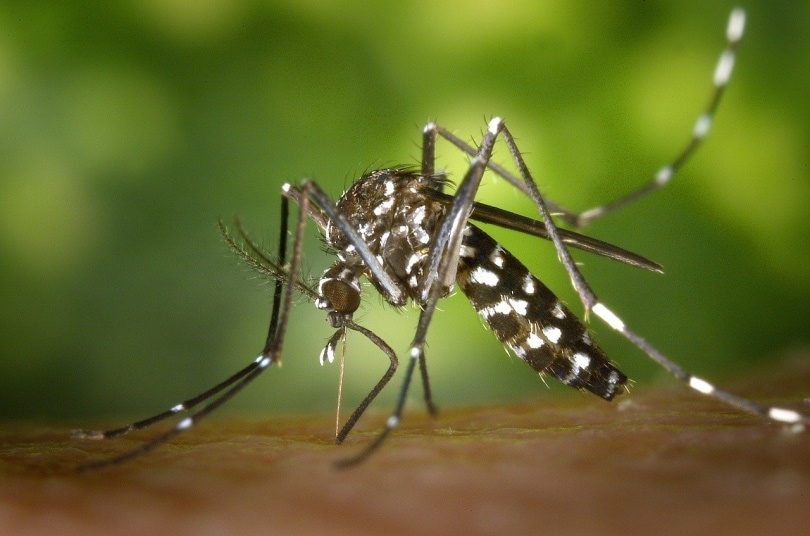
Mosquito bites are the absolute worst! The itchiness, the swelling…these bug bites are simply unpleasant, and they’re unpleasant for your cat as well. Mosquito bites on our feline friends will look the same as they do on us—red, swollen, and with possible hives—and can appear anywhere on your pet’s body.
5. Mites
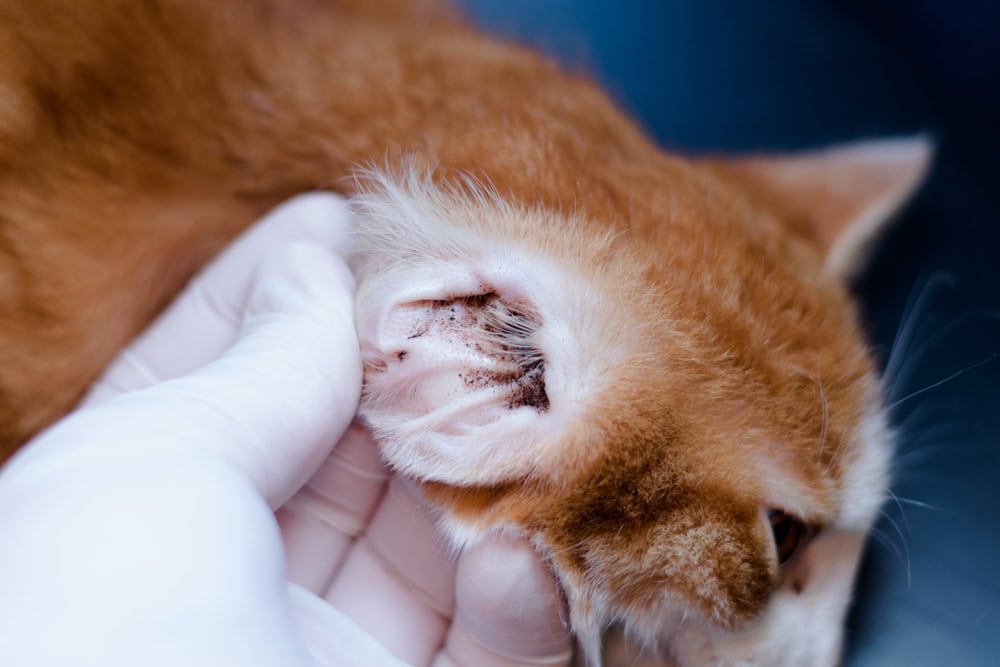
Mites are teeny, tiny insects that burrow their way deep into the skin so they can feed. The result is inflammation and, quite often, infections from bacteria or yeast. Mite bites can show up anywhere on your cat’s body, but most commonly, you’ll locate them in areas with less hair, the ears, groin, and armpits. These bites can be recognized by their redness and inflamed state, as well as the hair loss around them.

6. Ants
This is another bug bite your indoor cat will be less likely to get, but ants can and will bite your pet. Where on the body these insects bite will depend on whether your kitty was standing or lying down when the ants came by—cats that are standing will most likely get bitten on the feet, but those lying can be bitten anywhere. Ant bites will be red, swollen, and itchy.
7. Stinging Insects
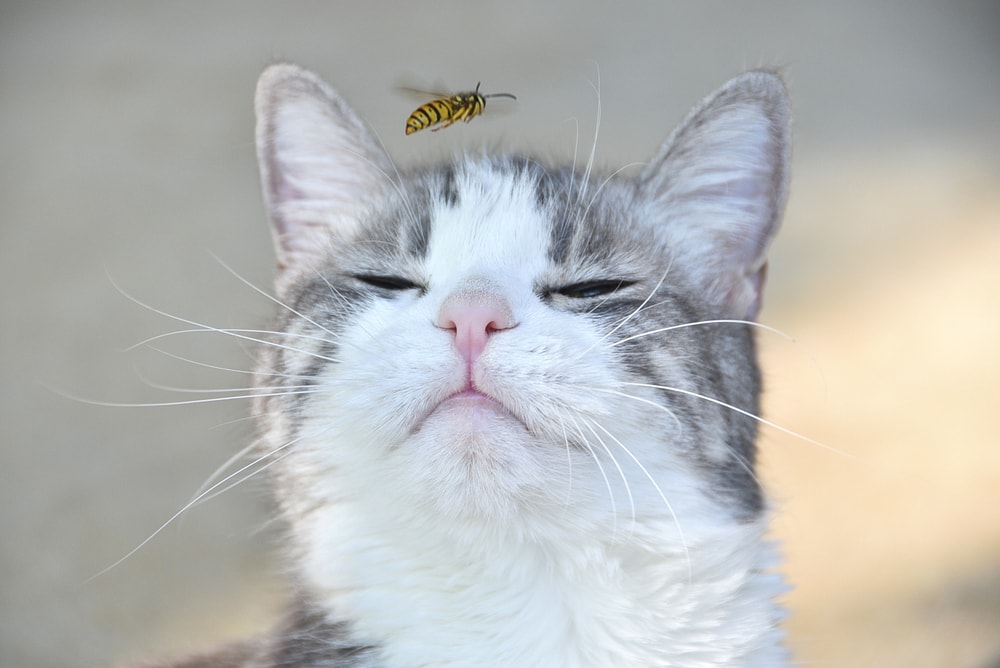
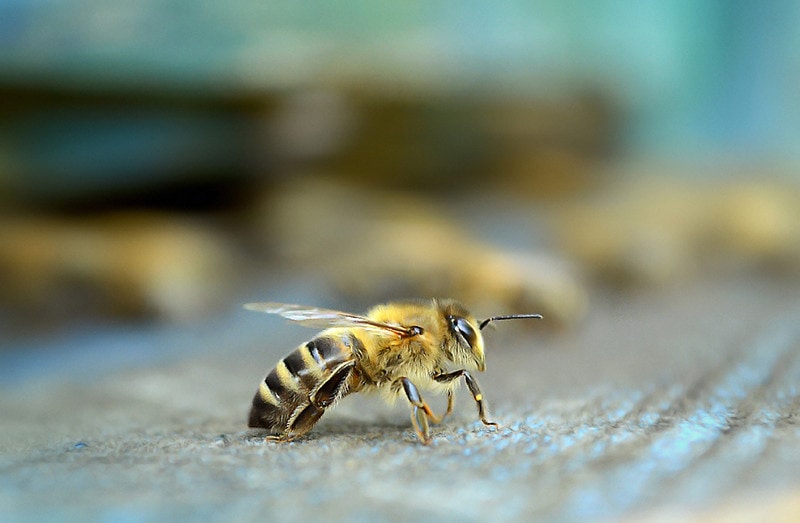
Though insects such as wasps, bees, and hornets don’t bite, they can definitely sting and cause pain for your pet! Stinging insects can sting anywhere on your cat’s body and cause quite a bit of pain. Insect stings show up as itchy, red, swollen spots; they may also lead to hives. If your pet is allergic, the venom from these stings can even result in vomiting, stumbling, diarrhea, and low blood pressure.
The 7 Tricks on Treating Bug Bites on Your Cat
Now that you know the seven most likely bugs to bite your feline, it’s time for some tips and tricks on how to treat these bug bites!
1. Look for foreign objects.
If your cat has been stung, instead of bitten, it’s important to identify which insect stung your pet. Bees sometimes leave their stingers lodged within the animal or person they’ve stung, and that stinger can keep secreting venom into your feline.
If it’s a bee that stung your cat, you’ll want to take a credit card (or something similar) and scrape it against the sting to remove the stinger. Don’t use tweezers; that could actually squeeze out even more of the venom into your kitty!
2. Treat swelling.
You can help ease the swelling of a bug bite on your cat by applying a cold compress or cold pack. Wrap a bag of frozen fruit or veggies in a towel, then lay it against the bug bite. Don’t directly lay something frozen against your pet’s skin, though, as it could cause damage!
3. Treat itchiness and redness.
You have a couple of ways to treat redness or itchiness when it comes to bug bites on your cat. One is by using hydrocortisone cream on the bites—with this one, you’ll need to ensure your cat isn’t licking the area; though it won’t be toxic if your cat ingests the cream, licking it will keep the cream from doing its job.
You can also use a topical antihistamine cream, like Benadryl. This will help lessen how much histamine is being released, which will soothe redness and itchiness.
4. Check the product’s ingredients.
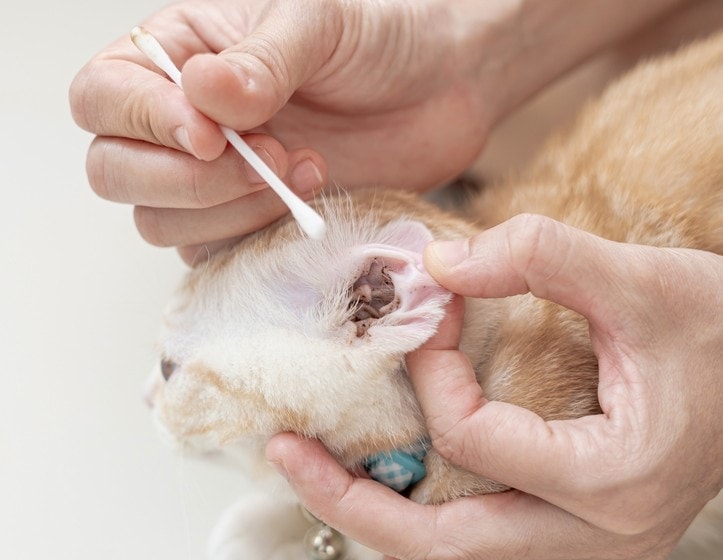
There are things you should avoid using on bug bites, though. One is bug-bite products that contain ammonia as the active ingredient. Ammonia can be absorbed via the skin, and since it is corrosive, it can cause health issues. It can also cause irritation to the respiratory system when inhaled.
You’ll also want to avoid products that contain zinc, such as calamine lotion. Zinc can be toxic to felines if ingested.
5. Don’t panic.
One important thing to remember about your kitty getting bug bites is not to panic! So long as your pet isn’t experiencing anything more than some redness, swelling, and itchiness in the bite area, it should be absolutely fine. And most bug bites won’t result in anything too serious unless your feline is particularly sensitive to bug bites.

6. Prevent bug bites before they occur.
If you’re very concerned about your cat getting bitten by a bug, then prevent the problem before it even occurs! There are plenty of topical treatments to prevent fleas and ticks from getting on your pet, as well as flea collars. And for the rest of bug life, there are insect repellents that are pet-safe just double-check that what you’re using is safe for kitty before applying (and check with your vet if you aren’t positive!).
7. Call your vet.
Last but not least, if you can’t identify a bug bite or think it may be serious, call your vet! Your cat’s veterinarian is always the best person to talk to when you aren’t sure if your cat needs to visit them or how you should treat something. So, don’t hesitate to give them a call if you’re unsure about a bug bite!

Conclusion
If your cat is bitten or stung by a bug, don’t panic! Instead, try to identify what kind of bug bite it is, then treat the redness, itchiness, and swelling. The majority of the time, a bug bite won’t be too serious, but if you think it is or are just unsure how bad it is, give your vet a call to find out their recommendation on what to do.
See Also:
Sources
Featured Image Credit: Jumpstory
Get Hepper In Your Inbox


Pet care tips from our vets and experts, straight to your inbox.
You may opt-out at any time. View our Privacy Policy for more information.
Misty Layne lives out in the woods in small-town Alabama with her two Siamese—Serafina and Jasper. She also has an array of stray cats, raccoons, and possums who like to call her front porch home. When she’s not writing about animals, you’ll find her writing poetry, stories, and film reviews (the animals are, by far, her favorite writing topic, though!). In her free time, Misty enjoys chilling with her cats, playing piano, watching indie and foreign films, photographing abandoned places, and catching up on her never-ending TBR list.
Join the conversation
Ask a question, share your story, or send private feedback.