Hepper is reader-supported. When you buy via links on our site, we may earn an affiliate commission at no cost to you. Learn more.
Blood Clots in Cats (Aortic Thromboembolism) – Vet Reviewed Signs, Causes & Care

In this article
Feline aortic thromboembolism (ATE) is a serious condition. It occurs very suddenly, is very painful, and has life-threatening consequences. Cats suffering from ATE are in often significant distress. Understandably, cat owners who find their cat with this condition are also very distressed.
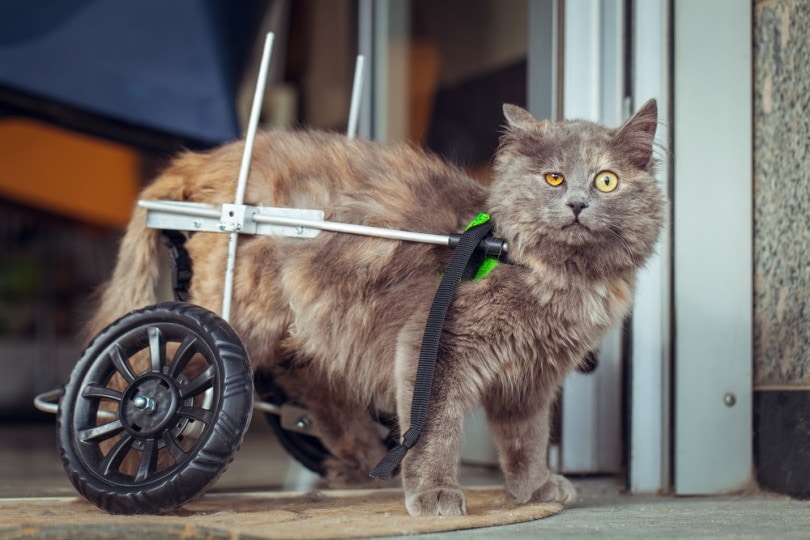
In brief terms, ATE occurs when a blood clot travels from the heart and lodges in the artery that supplies blood to the back legs, causing the cat to appear in pain with paralyzed back legs. It is usually related to heart disease and can be very difficult to treat. This article will explore ATE in more depth—what it really means, as well as the signs, causes, management, and prognosis of the condition.

What is Aortic Thromboembolism?
Here, it helps to start with some definitions. The aorta is the main artery pumping oxygenated blood from the heart to the rest of the body. A thrombus is a large blood clot that has formed in the bloodstream, and an embolism is a thrombus that has become lodged in an artery “downstream”. Piecing these together, aortic thromboembolism refers to a blood clot that has become lodged in the aorta.
In the case of ATE, the blood clot originates in the heart, typically in a chamber of the heart called the left atrium. It travels a long way down the aorta and blocks the aorta at the point where the aorta splits to supply blood to the back legs. This split is sometimes referred to as the “saddle”, so you may hear ATE referred to as a “saddle thrombus.”
The lodging of this clot at the saddle cuts off the blood supply to the back legs. The back legs are unable to move, and they become cold and extremely painful. Most cats with ATE have underlying heart disease, though a large number of cats show no prior signs of this heart disease. Some cats with ATE also have heart failure, leading to fluid around the lungs or chest wall. We’ll touch on this in more depth when discussing the causes of ATE.
What Are the Signs of Aortic Thromboembolism?
The signs of ATE are sudden and drastic. The below list includes characteristic signs, though every cat with ATE will have a different set of signs:
- Sudden paralysis of one or both hind legs (i.e. the back legs “aren’t working”)
- Sudden onset of pain
- Distressed vocalizing or meowing
- Labored breathing (sometimes resembling panting)
- Toes of the back legs are cold to touch
- Occasionally, vomiting
What Are the Causes of Aortic Thromboembolism?
The question remains—why does the blood clot form in the first place? This is due to the underlying heart disease that we briefly mentioned. Indeed, more than 80% of cats with ATE have underlying heart disease.
The specific heart condition is usually hypertrophic cardiomyopathy, which is the most common form of heart disease in cats. In this condition, the walls of the heart, which are made of muscle, become thickened and stiff. The result is that the heart has difficulty pumping blood to the rest of the body. When not pumped out to the body, some blood starts to sit stagnant in enlarged heart chambers. Though a few factors are at play, it is really this stagnant blood that allows the clot to form. Once this blood clot exits the heart and lodges within the aorta, the signs of ATE develop.
There are two important things to mention at this point. The first is that not all cats with heart disease develop ATE. As it turns out, it’s very difficult to predict which cats with heart disease will go on to develop ATE. The second point is that, despite having underlying heart disease, most cats with ATE do not show any signs of heart disease. They are asymptomatic, or what vets may refer to as sub-clinical. They give away no warning signs, and ATE is the first catastrophic sign that any heart disease is present.

How Do I Care for a Cat with Aortic Thromboembolism?
There are no home remedies for cats with ATE, and these cats do not get better unless there is urgent veterinary care. Even then, the outcome may be poor. For these reasons, if you suspect that your cat has ATE, you should contact your local vet or the nearest vet emergency center immediately.
What Are the Treatment Options for Cats with Aortic Thromboembolism?
If your vet suspects that your cat is suffering from ATE, there are two options:
1. Treatment
If you decide to attempt treatment, most vets will refer cats with ATE to a specialist center, which usually has emergency care units (ICU), 24-hour monitoring, and access to veterinary cardiologists (heart specialists). Cats being treated for ATE require:
- Pain relief
- Oxygen supplementation
- Anti-clot medications (blood thinners)
- Heart medications for underlying heart disease
- Warmth and physiotherapy
- Regular feeding, possibly via a stomach tube
Even with the above treatment, the prognosis remains poor and the risk of recurrence is high. You’ll find more on this in the FAQ.
2. Euthanasia
As hard as it is, having your cat put to sleep peacefully may be the most humane option. This is what many cat owners elect to do, as the pain and distress that their cat is experiencing can be hard to control. Further, the long-term prognosis is poor and ongoing management of heart disease is crucial. Of course, every cat’s signs differ, and every cat owner’s situation is different, but we think it’s important to understand that euthanasia for cats with ATE may be the most compassionate thing you can do.
Frequently Asked Questions
What Is the Prognosis for Cats with ATE?
Unfortunately, the prognosis for cats with ATE is poor. It also varies based on several factors, which we’ll touch on below.
A study of cats with ATE in the general practice setting found that only 12% of cats survived until 7 days after diagnosis. Only 27.2% of cats in this study survived past 24 hours. Of those cats that do survive the initial presentation, the average length of their remaining life varies from 50 days to 350 days.
Prognosis is worse if:
Survival rates are likely higher at emergency/referral hospitals than they are in general practice clinics.
Can Surgery Be Performed on Cats with ATE?
Surgery to remove the clot is currently not recommended for cats with ATE. Cats with ATE are considered to be very high-risk patients for surgery due to their heart disease and a large inflammatory response to the clot.
My Cat Has Been Diagnosed with Heart Disease. Can We Do Anything to Prevent ATE?
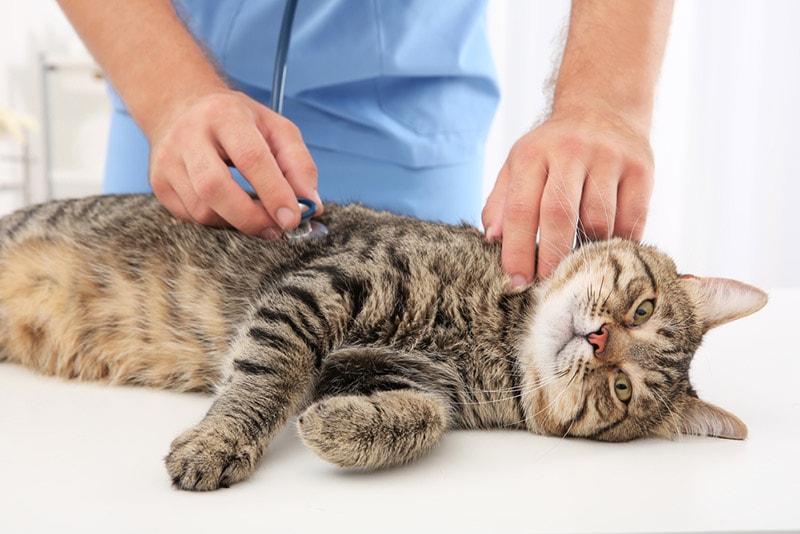
There are no studies evaluating the effectiveness of preventative treatment in cats considered “at-risk” of developing ATE (i.e. cats with diagnosed heart disease). However, many vets will start heart medications based on an ultrasound of the heart. Some ultrasound findings may also warrant pre-emptive treatment with anti-clotting medications, which in theory reduce the risk of ATE. Every cat is different, so it’s best to be guided by your veterinarian or a veterinary cardiologist.
My Cat’s Back Legs Aren’t Working Properly. Do They Have ATE?
Not necessarily. There are several possible causes of reduced hind-leg function in cats, including toxins, tick paralysis, slipped disks, injuries, and road traffic accidents. Any cat having difficulty using their legs should be promptly seen by a veterinarian.

Conclusion
ATE is a devastating condition for cats. As a cat owner, the decision to attempt treatment or compassionately euthanize your cat is both difficult and stressful. The prognosis for cats with ATE is variable, and often a large number of factors will contribute to your decision. Always put your cat first, and always be guided by your veterinarian.
Undoubtedly, the best way to prevent ATE is to detect and treat heart disease early. This demonstrates the importance of regular vet visits, even for unrelated appointments such as vaccinations, during which a physical examination is performed. If you have any concerns about your cat, don’t hesitate to contact your veterinarian.
Sources
Featured Image Credit: AnnaStills, Shutterstock
Get Hepper In Your Inbox


Pet care tips from our vets and experts, straight to your inbox.
You may opt-out at any time. View our Privacy Policy for more information.
Joe is a veterinarian from Sydney, Australia and has two beautiful Golden Retrievers who love the ocean as much as he does. Joe completed his Bachelor of Veterinary Biology and Doctor of Veterinary Medicine at the University of Sydney in 2020, and his areas of particular interest include internal medicine, wound management and oncology. His passion for veterinary medicine comes not only from helping pets, but also from helping their owners and working with wonderful teams of people. When he's not working, you can find Joe exercising, cooking, and exploring Australia’s wilderness. He has worked for 2 years at a busy mixed practice on New South Wales’ mid-north coast, treating animals of all sizes.
Joe is a veterinarian from Sydney, Australia. He has two beautiful Golden Retrievers who love the ocean as much as he does. When he's not working, he can be found exercising, cooking, and exploring Australia’s wilderness.
Education
Joe received a Bachelor of Veterinary Biology and Doctor of Veterinary Medicine from the University of Sydney in 2020.
Experience and Interests
Joe has worked for 2 years at a busy mixed practice on New South Wales’ mid-north coast, treating animals of all sizes. The areas of particular interest to Joe include internal medicine, wound management, and oncology. His love for the profession comes not only from helping pets but also from helping their owners and working with wonderful teams of people.
Join the conversation
Ask a question, share your story, or send private feedback.