Hepper is reader-supported. When you buy via links on our site, we may earn an affiliate commission at no cost to you. Learn more.
Bumblebee Dart Frog Care Guide: Lifespan, Diet, Pictures & More
In this article
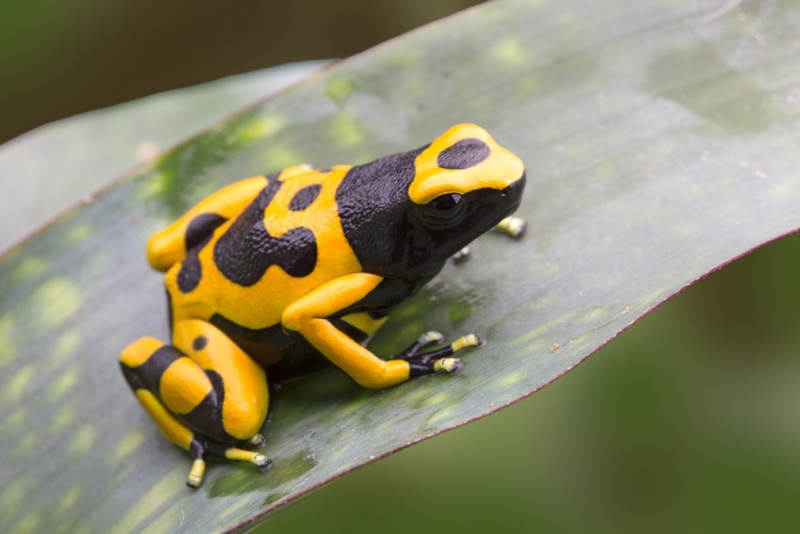
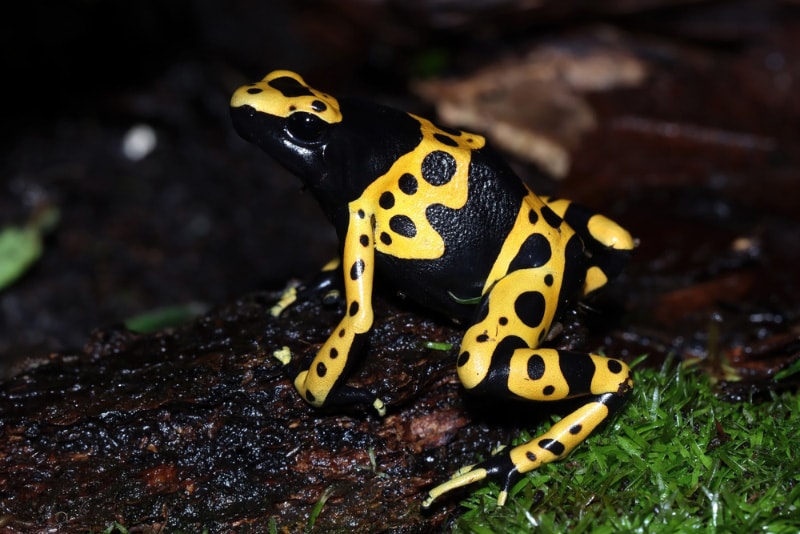
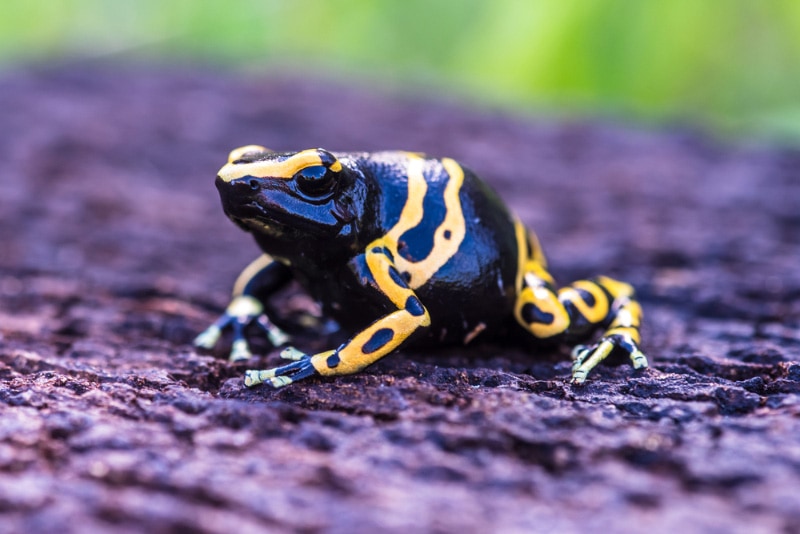
If you have ever seen a Bumblebee Dart frog, you’re unlikely to forget it. They're one of the most striking frogs in the amphibian kingdom. They’ ae named for their yellow color and resemblance to bumblebees. They have bright yellow skin with black stripes and spots and aren’t very hard to identify. All poison dart frogs produce toxic secretions through their skin, but the Bumblebee Dart frog is considered the most poisonous one.
| Size: | Up to 2 inches long |
| Lifespan: | 10+ years |
| Color: | Yellow with black bands and spots |
| Suitable for: | Beginning or experienced reptile owners |
| Temperament: | Curious, intelligent, bold |
| Diet: | Springtails, isopods, fruit flies |
| Tank Set Up: | Barks and mulches with live or artificial plants, sphagnum moss |
| Minimum Tank Size: | 15-to-20-gallon tank for adults |
| Suitable Tank Mates: | Male/female pairs, but only with Bumblebee Dart frogs |
The Bumblebee Dart frog is from the Dendrobatidae family. Its scientific name is Dendrobates leucomelas. The frog is from South America, but if you’re going to keep one as a pet, you certainly don’t want to adopt a wild one because of their toxicity. In the article below, we’ll discuss the Bumblebee Dart frog’s unique traits and care requirements.
Bumblebee Dart Frog Breed Characteristics

Bumblebee Dart Frog Overview
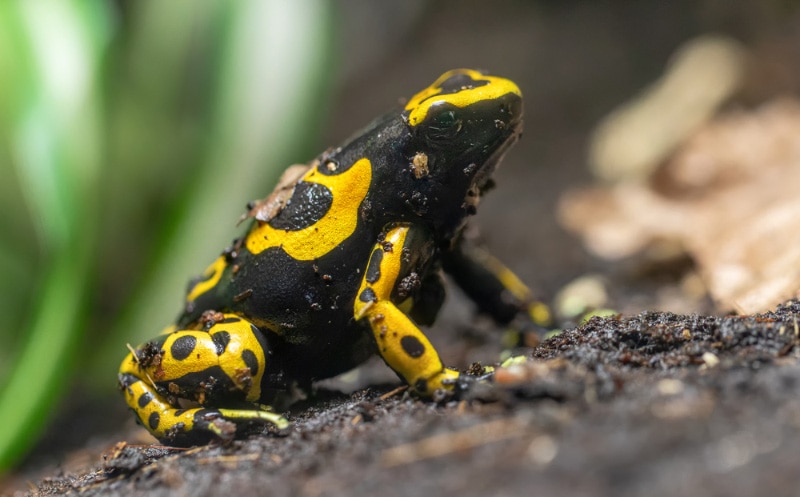
The Bumblebee Dart frog is from Venezuela, and its natural habitat is usually found in tropical rainforests. It lives on the floor of the forest and can be found up to 20 feet off the ground as well. The breed lives near water and is primarily active during daylight hours, which makes them diurnal.
With their wide and flat toes, they are skilled at gripping and climbing trees. However, the toes of the dart frog aren’t webbed, so they aren’t very good in water when it comes to swimming. As we previously mentioned, they are poisonous. They release a toxin through their skin that not only poisons their predators but also leaves a very bad taste in their mouths. The color of the frog's skin scares off predators.
The Bumblebee Dart got its name because many indigenous people used to dip their darts in the frog’s poison to kill their enemies. Interestingly, the Bumblebee Dart frog is considered one of the loudest frogs in the Poison Dart family.
They use croaking as another one of their many methods for scaring off attackers. They’re also called the Yellow-Banded Poison Dart frog and the Yellow-Headed Poison Dart frog.
Bumblebee Dart Frog Cost
If you’re considering purchasing a Bumblebee Dart frog, it won’t set you back very much, at least not for the purchase price. The price of the frog depends on the size and age you’re looking for, and they typically cost between $45 and $80. They are pretty popular frogs because they are quite active and extremely curious. Since they are easy to breed, they are less expensive than other breeds of Dart frogs. They are also quite hardy, so you shouldn’t worry about many health problems.
However, it is important to remember that the price of the frog isn’t the only cost you’ll incur. You need to set up a tank, get food, and more. In the following sections, we’ll discuss everything you need for your Bumblebee Dart frog.
Care Guide & Tank Set Up
As with anything else to do with a reptile, the first thing you need to do is set up a tank for your reptile friend. We’ll talk about what it takes to set up your tank and how you need to take care of your little Bumblebee Dart frog below.
Tank Size
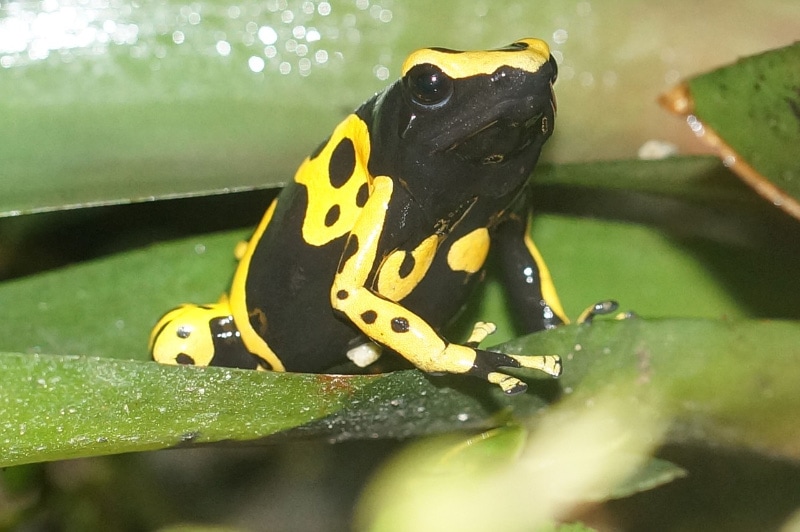
For two adult Bumblebee Dart frogs, you need between a 15- and 20-gallon tank. While the breed is mostly terrestrial, they will use up vertical space if they have it. Ensure you consider this when shopping for the frog’s enclosure.
Substrate
You want the substrate to be moist and include a bit of sphagnum moss and a variety of barks and mulches. If you add some leaves and plants to the mix, your Bumblebee Dart will have a place to cover up if they feel the need to.
Humidity
Humidity levels for this breed should be no lower than 80%. However, the closer you can get to 100%, the better it’ll be. Remember, the correct humidity levels are essential if you want your Bumblebee Dart frog to survive.
You can help keep your frog safe and wet enough by occasionally misting them with a spray bottle of water. However, You should also keep a bowl of water in the tank. Keep the water in a shallow, wide dish to keep it from turning over.
The water should always be clean, of course, but it’s also best to use bottled water or filtered water instead of tap water; unfiltered tap water contains chemicals that could hurt your frog.
Lighting
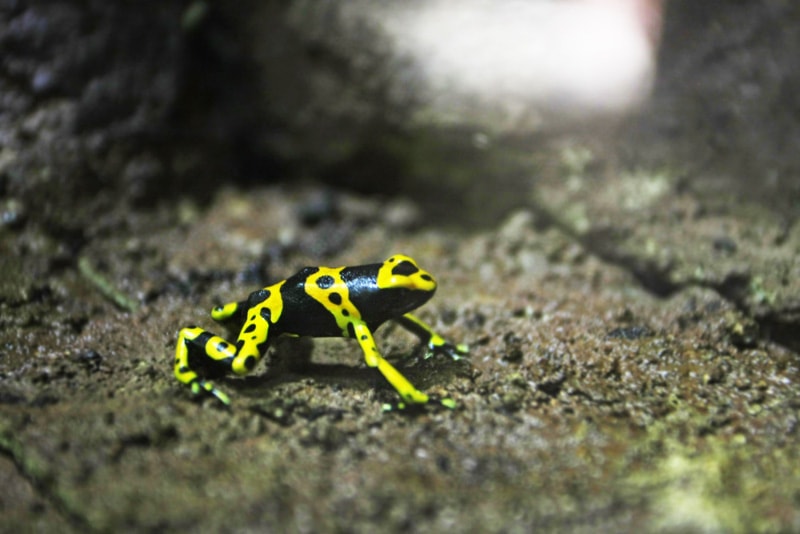
Bumblebee Dart frogs don’t require much light to stay healthy. In fact, if you keep a 20-watt bulb in the enclosure, they should be fine. The frog needs just enough light to be able to see their food. Just remember that any fluorescent light you use shouldn’t impact the temperature in the enclosure.
Heating
As for heating the enclosure, you want to keep the temperature between 72 and 80 degrees Fahrenheit during the daylight hours. You can allow the temperature to drop to 70 degrees at night, but any lower, and they can get sick.
Under no circumstances should the temperature go over 85 degrees, which could be fatal. To keep this from happening, make sure to monitor the temperature in your enclosure constantly and check the thermometer.
Things to Know When Owning a Bumblebee Dart Frog:
Now that you know all there is to know about setting up a space for your new Bumblebee Dart frog, you also need to know a few other things about owning one. We’ll discuss the food, diet, lifespan, and health conditions to watch out for.
Food & Diet Requirements
It’s best to feed your Bumblebee Dart frog a steady diet of crickets and fruit flies. The fruit flies are inexpensive, and you can purchase them in colonies. A young frog can eat 20 to 30 fruit flies in a day, whereas an adult frog can eat 50 to 75. You can dust the fruit flies with a vitamin and calcium supplement that will keep the frog healthy and happy as they grow. You should feed young frogs twice a day and adults once a day.
Water/ Liquid Requirements
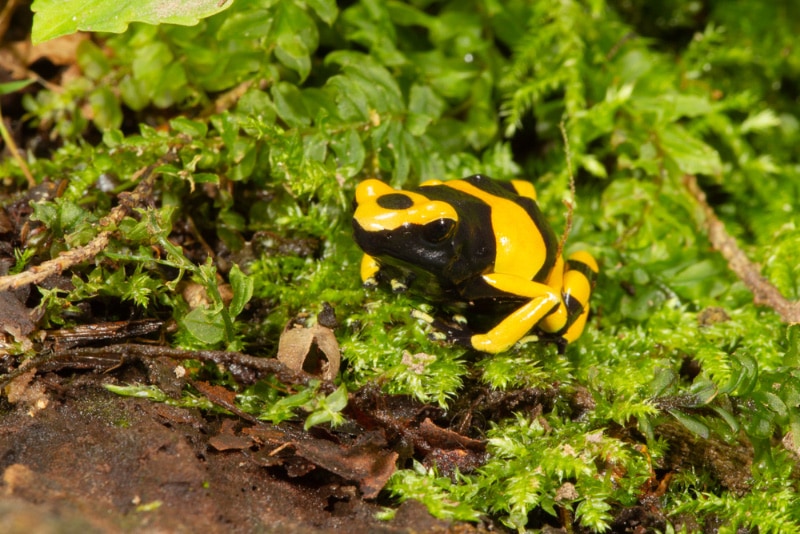
It’s best to mist your Bumblebee Dart frog three to four times a day to keep their skin hydrated. As mentioned, you should keep a bowl of water in the frog’s enclosure. Make sure that the bowl is wide and shallow so that the frog can submerge themselves but still keep their head above water at the same time.
Size & Growth Rate
This is a small frog that only reaches between 1.5 to 2 inches at full growth. The tadpoles take about 6 to 18 weeks to mature fully. The tadpole’s growth is also affected by the water temperature and their diet.
Lifespan and Health Conditions
The Bumblebee Dart frog lives for 10+ years, but some have been known to live up to 20 years. However, as with any pet, there are health conditions that you need to watch out for.
Male vs. Female
There are very few differences between the males and females of the Bumblebee Dart frog breed. The females are a bit larger and rounder than the males, but that is the only difference.
The 3 Little-Known Facts About Bumblebee Dart Frog
Now that you know more about Bumblebee Dart Frogs, you might be wondering what else there is to learn. We have a few interesting facts below you might enjoy.
1. Bumblebee Dart Frogs Shouldn’t be Handled Often
It is best to avoid handling your Bumblebee Dart frog if you can help it. It’s not because of the toxins on their skin, however. It’s because they have fragile skin and can easily be hurt. There’s also a slight chance that the toxins in their skin could cause a reaction if you rub your eyes on your nose after handling the frog. That’s why it’s extremely important to always wash your hands after handling your frog.
2. Bumblebee Dart Frogs Are Extremely Territorial
The Bumblebee Dart frog lives in small groups, and they are known for being extremely territorial. They attack neighboring colonies and ward off intruders with their loud calls.
3. Dart Frogs Aren’t Poisonous in Zoos
Dart frogs aren’t poisonous when they are in zoos. They are on a controlled diet that keeps them from eating foods that cause toxins to build up in their skin.
Final Thoughts
The Bumblebee Dart frog is a good pet for first-time adult owners and expert frog keepers. If you follow the tips above, it’ll be easier for you to take care of your new amphibian. It’s also important to note that though the frog emits a toxin through their skin, you usually can’t get sick from handling them. However, they don’t like to be picked up or handled frequently, but when you do, ensure you wash your hands afterward. You’re unlikely to react strongly to their secretions, but it’s better to be safe.
You Might Also Be Interested In:
Featured Image Credit: Dirk Ercken, Shutterstock
Get Hepper In Your Inbox


Pet care tips from our vets and experts, straight to your inbox.
You may opt-out at any time. View our Privacy Policy for more information.

Patricia is a pet and coffee writer and a published author under the pen name Skylar McKinzie. When she isn’t writing, Patricia enjoys spending time with her two cats and dog. Since she was a young child, she has been a pet lover and enjoys nothing more than cuddling with her pets, Mystery, and her two cats, Binx and Link. Mystery has been with her family since the day she was born, as has Link. Binx was found under the house as a kitten, taken inside, and has been a part of the family ever since. Patricia loves sharing her knowledge of animals and finds joy in helping out at the local rescue shelter whenever she can.
Join the conversation
Ask a question, share your story, or send private feedback.