Hepper is reader-supported. When you buy via links on our site, we may earn an affiliate commission at no cost to you. Learn more.
Oriental Fire-Bellied Toad Care Guide: Lifespan, Diet, Pictures & More

In this article
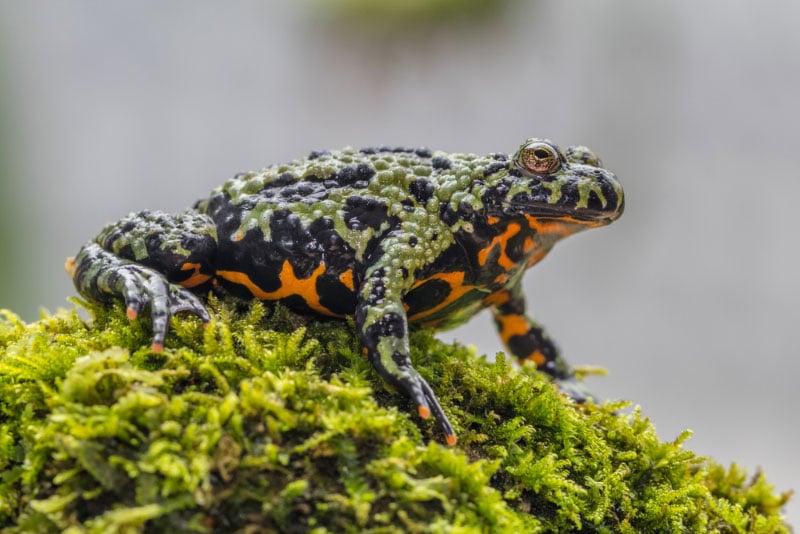
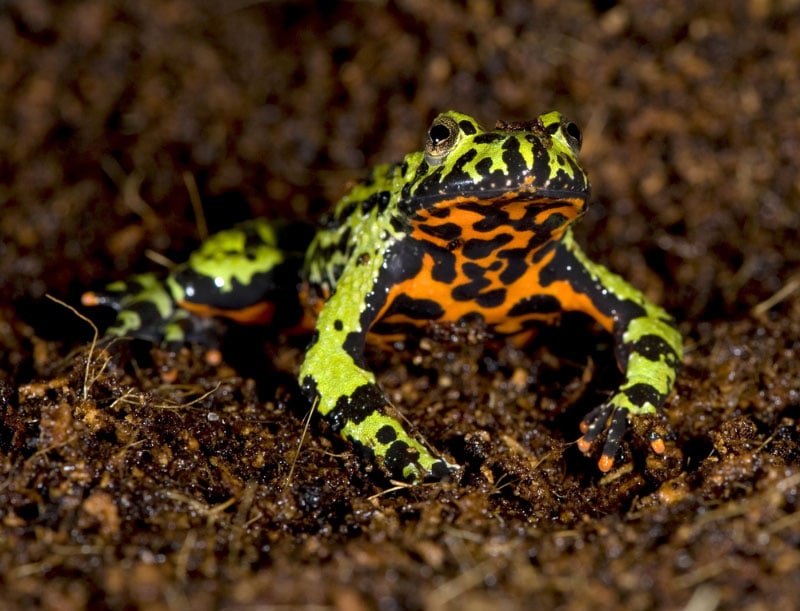
The Oriental Fire-Bellied toad is both aptly named and incorrectly named! This fascinating creature is actually a frog rather than a true toad, and the bright colors on its stomach convey an important message. Oriental Fire-Bellied toads are a popular pet in the US, and it’s important to know how to care for them; our guide will give you all the information you could possibly need to keep your Fire-Bellied toad healthy and happy!

| Size: | Up to 2 inches long |
| Lifespan: | Up to 20 years |
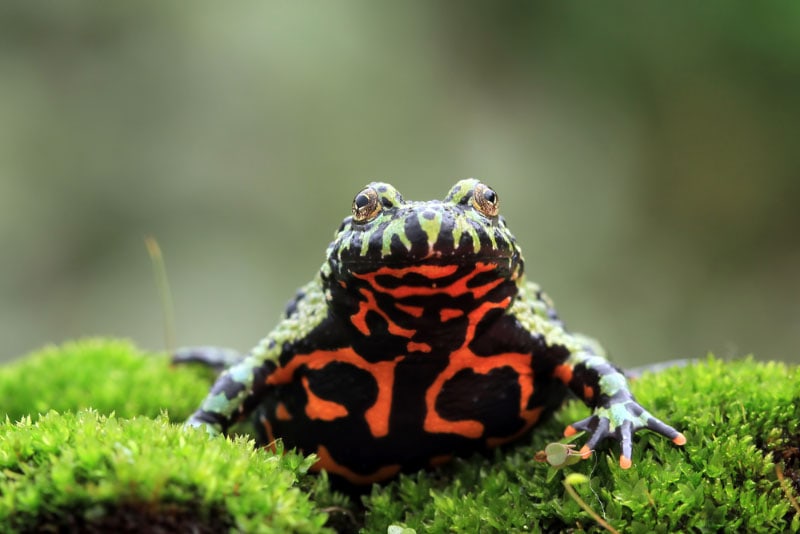
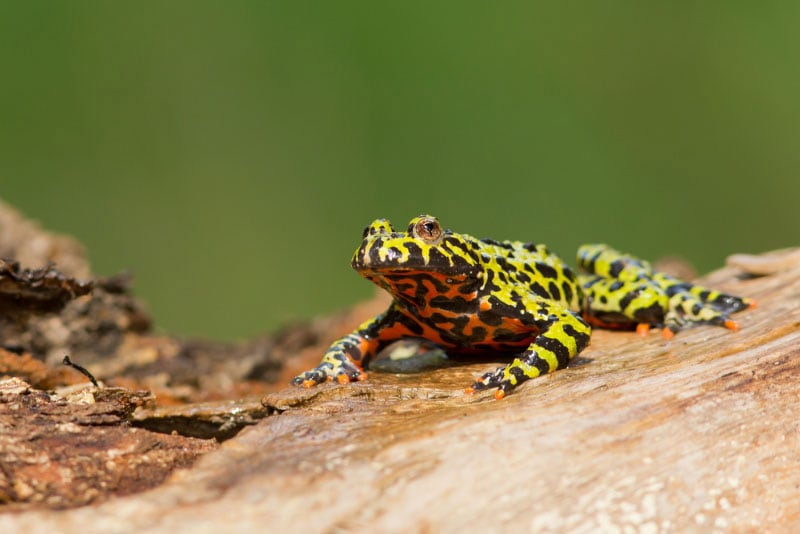
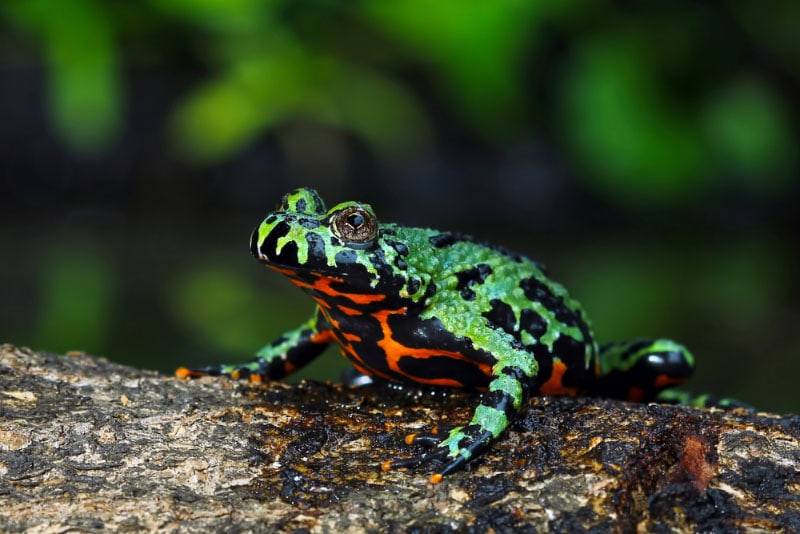
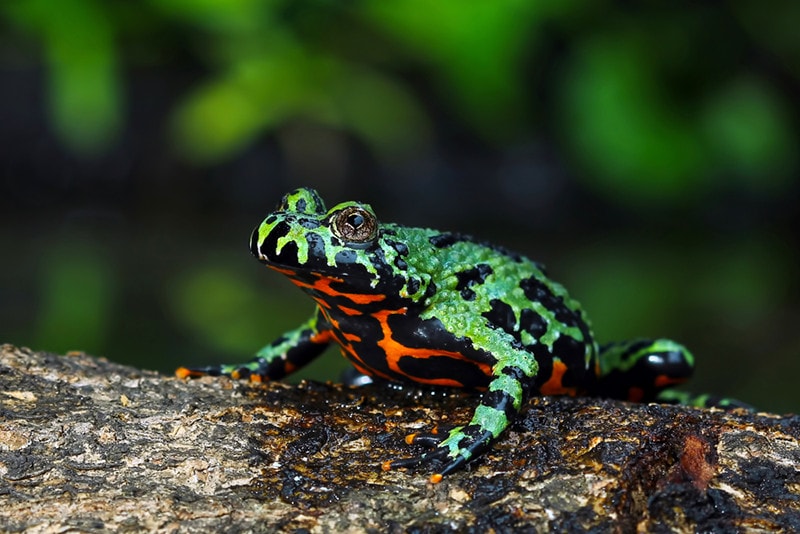
| Color: | Bright to dark green, black mottling on the back, bright yellow to red, black-spotted abdomen. |
| Suitable for: | Beginner amphibian owners |
| Temperament: | Diurnal, active, friendly |
| Diet: | Carnivorous as adults: crickets and wax worms |
| Tank Set-Up: | Humid tank, primarily land with a large bathing area |
| Minimum Tank Size: | 10 gallons for one frog |
| Suitable Tank Mates: | Other Oriental Fire-Bellied toads of the same size |
These beautiful amphibians have some interesting traits that set them apart from other frogs and toads kept as pets. The Oriental Fire-Bellied toad is poisonous! They secrete a milky substance from their skin to ward off potential predators (if their bright warning colors don’t do the trick), which is created from the food they eat in the wild. In captivity, the Oriental Fire-Bellied toad is either minimally poisonous or not at all.
Oriental Fire-Bellied Toad Characteristics
Oriental Fire-Bellied Toad Overview
Oriental Fire-Bellied toads are native to Russia and China and live in forested areas, meadows, and rivers. Fire-bellied toads are semi-aquatic, so they need land and water sources to keep them healthy! In the wild, this is often in pools or streams.
The Oriental Fire-Bellied toad is a gregarious frog, meaning it lives in social groups in the wild. They also hibernate in these groups of around five to six individuals at a time. They can be kept with tank mates of the same species, but they should be the same size since larger Fire-Bellies can eat smaller ones!
These frogs are named toads because of the warty protrusions on their backs. However, the Oriental Fire-Bellied toad prefers to live in the water like other frogs; keeping this in mind when setting up the tank is essential.
Oriental fire-bellied toads aren't a threatened species and make great pets for those new to owning amphibians. They're small, relatively easy to care for, and more active during the day. That means they're a very interesting pet to watch!
Oriental Fire-Bellied Toad Cost
Oriental Fire-Bellied toads are popular pets that are usually easy to find. Despite hailing from #China, Russia, and parts of Korea#, the frogs are often either bred in the US or exported out of these countries. The Oriental Fire-Bellied toad isn't usually expensive to purchase. The frog can cost between $25 and over $100, but the higher prices are generally reserved for albinos or other "morphs" of the frog. Normal Oriental Fire-Bellied toads usually cost closer to $25.
Because of the long lives of these frogs, there may be Oriental Fire-bellied toads available for adoption, too! Aside from the cost of the frog, you'll need to purchase and set up other pieces of equipment before they arrive.
This is where it can get more expensive! A tank for an Oriental Fire-Bellied toad should be at least 10 gallons (for one frog), which can cost $50 or more. Bigger is better, and you'll need more room for more frogs; that is where the price ramps up.
Care Guide & Tank Set Up
There are specific requirements your Oriental Fire-Bellied toad will need to stay happy and healthy regarding the tank size and environmental setup. These will change depending on your environment and how many frogs you wish to keep, but the ranges and minimums are explained in more detail below.
Tank Size
The minimum tank size for an Oriental Fire-Bellied toad is 10 gallons; however, the bigger you can go, the better. Tanks should be sturdy and made of glass for optimum temperature control. Because Fire-Bellied toads are social animals, they should live in small groups. You’d need at least 20 gallons for three to four frogs, but the more room, the better.
Just ensure the roof is secure and any branch furnishings you use aren’t too close to the lip of the tank. These frogs are excellent climbers!
Substrate
The setup of your oriental Fire-Bellied toad’s tank should include an area of water where they can submerge themselves and plenty of land space. They like to float with their heads out of the water and only their toes touching the bottom, which gives you an idea of how deep the water needs to be. You should always dechlorinate any water in your frog's tank and change it regularly. This can be contained in a ceramic pot or other shallow receptacle and buried within the substrate at one end.
The substrate can be built up as a shallow ramp down into the water, usually comprised of coconut husk fiber. Plants and cork bark can be added as a top layer, but ensure the coconut husk is dampened (but not wet) to keep the humidity up. Stones and live plants can also be added, as long as your frog has places to escape onto land and bathe comfortably.
Humidity
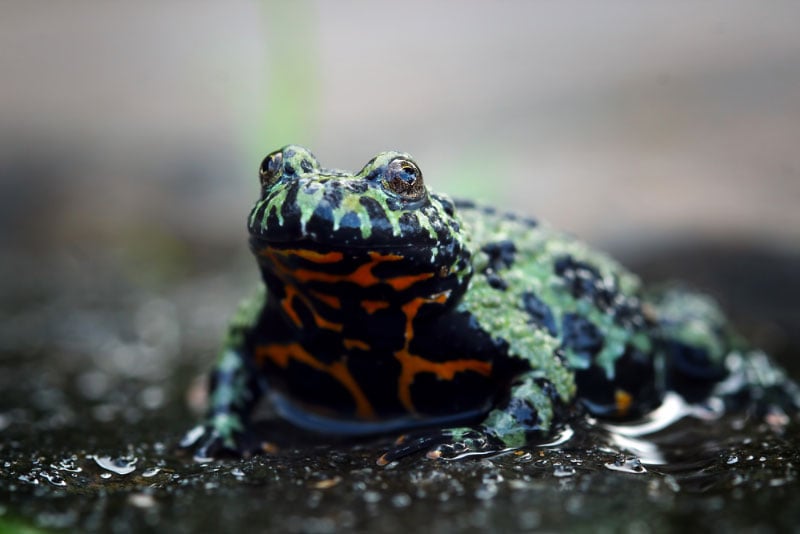
Your Oriental Fire-Belly’s skin is delicate and needs a specific humidity level in their enclosure to keep them happy and comfortable. Between 30% and 70% humidity is required, and the right balance of water and living plant life combined with daily misting is usually enough to keep the humidity correct. Misting systems can provide your Oriental Fire-Bellied toad with moisture continuously, but daily hand misting is enough to correct the humidity even if it falls below 30%.
Lighting
Because Oriental Fire-Belled toads are diurnal (meaning they’re active during the day), a good light and day-night cycle is essential to promote natural behavior. While the frogs don’t need UVB lights as reptiles do, they need to have clear light and dark cycles to regulate their feeding, mating, and other natural behaviors. A low-level UVB bulb may be needed if you have live plants in the tank.
Heating
Heating is the most crucial factor in Oriental Fire-Bellied toad care. Thankfully, in most homes, the ambient temperature will be sufficient to keep the frogs happy (between 65 and 78 degrees Fahrenheit being the optimum). Any temperature below this isn’t necessarily dangerous (down to around 50 degrees), but temperatures above 82 degrees are life-threatening. A reliable thermometer can help you monitor the temperature.
Things to Know When Owning an Oriental Fire-Bellied Toad
Like any pet, the Oriental Fire-bellied toad has special requirements for keeping them healthy and happy. In this section, we’ll discuss the finer details of Oriental Fire-Bellied toad care!
Food & Diet Requirements
Oriental Fire-Bellied toads eat a very varied diet in the wild, so it’s essential to replicate this in captivity. When they’re tadpoles, they eat plant matter and tiny animals called protozoans. However, the frogs you’ll keep in your home are all meat eaters!
A diet of the following can be provided on a rotating basis:
Remember that the Oriental Fire-Belied toad is a voracious eate; they should only be given crickets and other small prey that can fit into their mouths comfortably! Adults can be fed around two to three times a week, and crickets should be dusted with a nutrient powder or gut-loaded before being fed to your frog.
Water/ Liquid Requirements
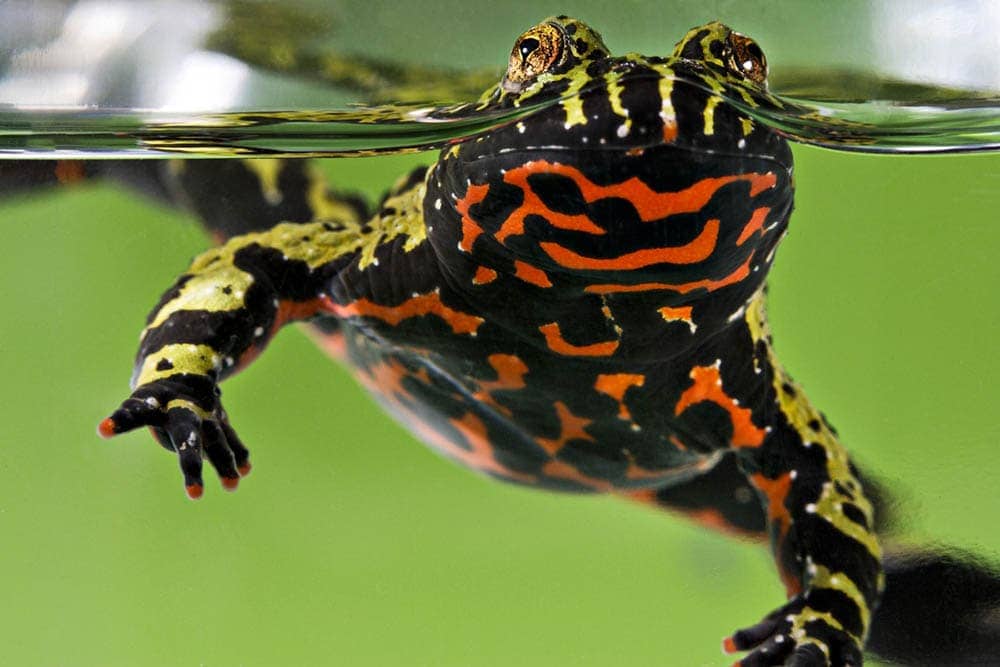
Your Oriental Fire-Bellied toad will need a semi-aquatic tank. One to 2 inches of dechlorinated water should be more than enough for your frogs, particularly if your tank is planted with live plants. They will help maintain the water quality; if you use a container, the water changes will be easier. Change the water once every few days if possible, as this will help keep your frog healthy and tank clean.
Size & Growth Rate
Oriental Fire-Bellied toads aren’t large frogs; the adults of the species only reach around 2 inches in length when fully grown. Once fertile frogspawn is laid, the tadpoles inside will take around 3 to 10 days to mature and exit the egg (depending on environmental conditions).
After that, the tadpoles will grow rapidly, undergoing metamorphosis into froglets within 5 months of hatching. Juvenile Oriental Fire-Bellies aren’t as brightly colored as their adult counterparts, looking drab and brown until they reach full maturity at around a year old.
Varieties
Unlike other amphibians and reptiles, there aren’t many different varieties (known as “morphs”) of Oriental Fire-Bellied toads available. The following are all Fire-Bellied toads found in captivity:
Lifespan and Health Conditions
Oriental Fire-Bellied toads live several years. They can commonly live for 12 or even 15 years or more, and there have been cases of these frogs living for over 20 years! Because of their longevity, it’s important to fully commit to owning and caring for one. The Oriental Fire-Bellied toad is subject to some health conditions, which are listed below.
Male vs Female
There are some fundamental differences between male and female Oriental Fire-Bellied toads, which include how they look. Because of how the males mate with the females (in a position known as amplexus), they need something to help them stay locked onto the female’s back. Males have more muscular forearms than females do, and they will show darkened nuptial pads (fingertips) when they’re ready to mate.
While these are still subtle changes, there is one way to distinguish between the two sexes: how they sound. If your frog calls out regularly, they are almost certainly a male! Female Oriental Fire-Bellied toads can squeak out calls if they are distressed, but the males will issue a loud and rhythmic sound that’s produced in a very interesting way.
3 Little-Known Facts About Oriental Fire-Bellied Toads
1. Male Oriental Fire-Bellied Toads Can’t “Ribbit”
While this sounds silly, and they can make (loud!) noise, males of the species can't croak or call in the same way other frogs can because they lack a resonator in their throats. Usually, the vocal sack sits at the front of a frog’s throat, which enlarges to help push the sound out louder and over longer distances. Because male Oriental Fire-Bellied toads don’t have one, they have to inhale to call, which produces a different sound.
2. They Can’t Catch Flies With Their Tongues
The Oriental Fire-Bellied toad can’t extend its tongue to catch prey like other frogs can. They need to lunge forward and bite down on their meal, expending a large amount of energy to do so. Especially if they miss!
3. They Have a Special Defensive Strategy
Oriental Fire-Bellied toads have a few tactics to ward off predators and stop them from attacking. The first is their bright color scheme; their yellow and orange patterned abdomen clearly signals potential predators to stay away. To reiterate this, the Oriental Fire-Bellied toad will rear up and flex its spine to show more of its belly.
If that doesn’t work, they’ll flip completely onto their backs to display their alarming colors. As a last fail-safe, they excrete a milky poison from their skin to ensure they taste nasty, which irritates the eyes and mouths of any who go near!
Conclusion
The Oriental Fire-Bellied toad is a common pet for a reason. Their beautiful colors and diurnal antic make them very interesting pets to keep, and even more experienced exotic pet owners love to watch them interact. They’re also a long-lived species and can reach 20 years or older! The Oriental Fire-Bellied toad has special attributes that make it unique among other frogs and toads. Because they’re a hardy species that aren’t expensive, they make an excellent introduction to amphibian keeping for beginners.
Sources
Featured Image Credit: Kurit afshen, Shutterstock
Get Hepper In Your Inbox


Pet care tips from our vets and experts, straight to your inbox.
You may opt-out at any time. View our Privacy Policy for more information.
Beth is a mom to two babies: one with four legs, and one with two. Beth has years of practical experience as a veterinary care assistant, working in both the operating room and in consult, expanding her knowledge to gain certification in her favorite subject: feline behavior and well-being! When she's not writing about her favorite topics (cats, dogs, and creature comforts), she's looking after her two-year-old daughter and her energetic eight-year-old Nebelung, Kiba. When she gets a moment's respite, Beth loves to read fiction books. Horror is her number one genre, with fantasy and rich history being her second option.
Join the conversation
Ask a question, share your story, or send private feedback.