Hepper is reader-supported. When you buy via links on our site, we may earn an affiliate commission at no cost to you. Learn more.
Can A Cat Recover From Hind Leg Paralysis? Our Vet Explains

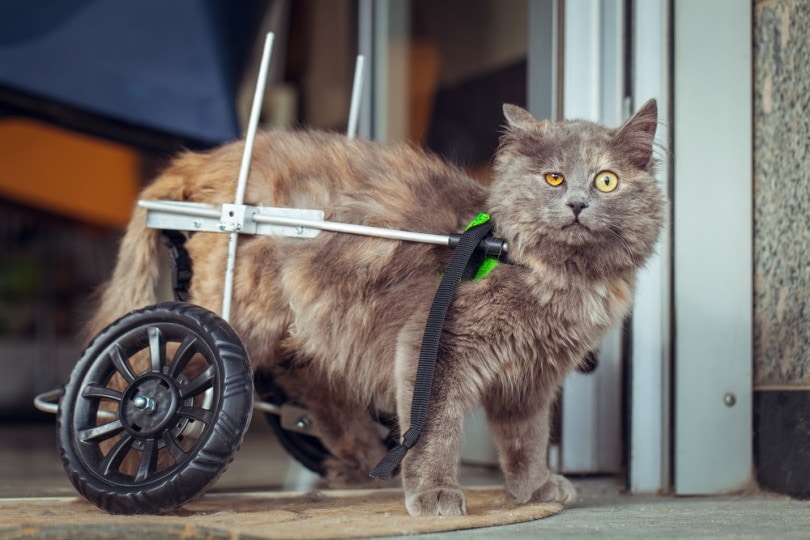
Sudden onset of hind limb paralysis in a cat is a painful process that can affect your cat without any warning. While there are a few different causes, the most common cause is underlying heart disease. Whether or not your cat will be OK depends on the cause of the paralysis, and whether both legs or just one hind leg is affected. However, statistically speaking, your cat has a variable probability of recovery once affected, as many factors are involved in determining a prognosis.
Keep reading to find out what the most common causes are, what to look for in terms of signs at home, and what you should do if your cat becomes paralyzed.

Hind Limb Paralysis
Hind limb paralysis in cats is exactly what it sounds like—inability to use one or both hind limbs. Paralysis is the complete or partial loss of function of a part of the body. When affected, some cats will be seen dragging one or both back legs. They are unable to feel and/or move their affected leg(s). Therefore, they cannot stand, walk, or move in a normal way.
This is different from paresis, which is loss of some but not all function, and often referred to as weakness in veterinary medicine. Paresis is often seen as “wobbly” or “drunk” walking. An animal will oddly cross their limbs in front of one another instead of moving them in a straight line when walking or running. Your cat may be heard or seen scuffing the knuckles or top portions of its’ paws along the ground when walking, instead of planting them firmly while stepping.
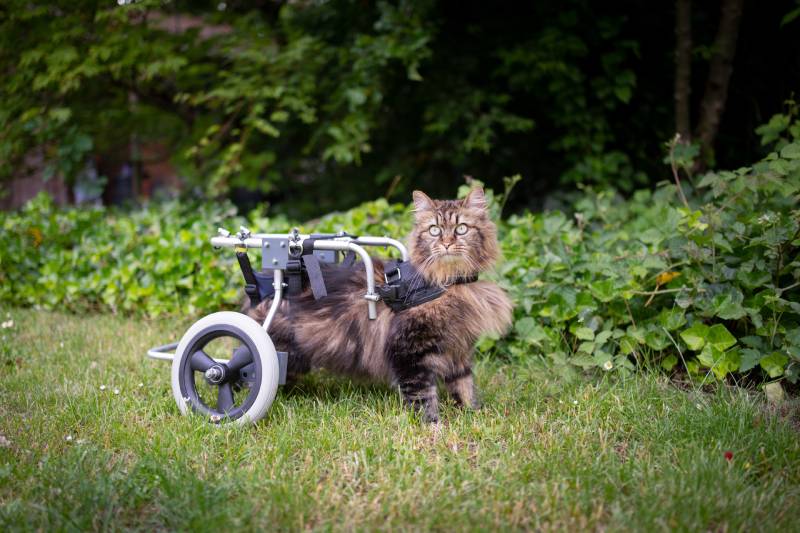
When hind limb paralysis occurs, it's typically very painful. You may hear your cat scream, howl, or vocalize like you’ve never heard before. You may rush over to find them lying there, unable to move their back legs. At other times, the episode is involved with a traumatic event, such as a fall or an accident. Cats that recover often require mobility assistance during the recovery and rehabilitation process.
Causes of Hind Limb Paralysis
Trauma
Trauma is the main cause of hind limb paralysis in cats. This occurs most commonly in roaming cats that are hit by a vehicle, or pets that fall from a great height (for example, from an apartment building). It can also be caused by inappropriate handling of a pet (for example, if a child pulls on the leg of a kitten too hard).
The resulting trauma can cause injury to the nerves that innervate the muscles of the hind leg, leading to paralysis. Depending on the extent of paralysis and injury to the nervous system, there may or may not be pain associated with this form of paralysis. Recovery and prognosis factor in multiple variables and the extent of injury as well.
Tick Induced Paralysis
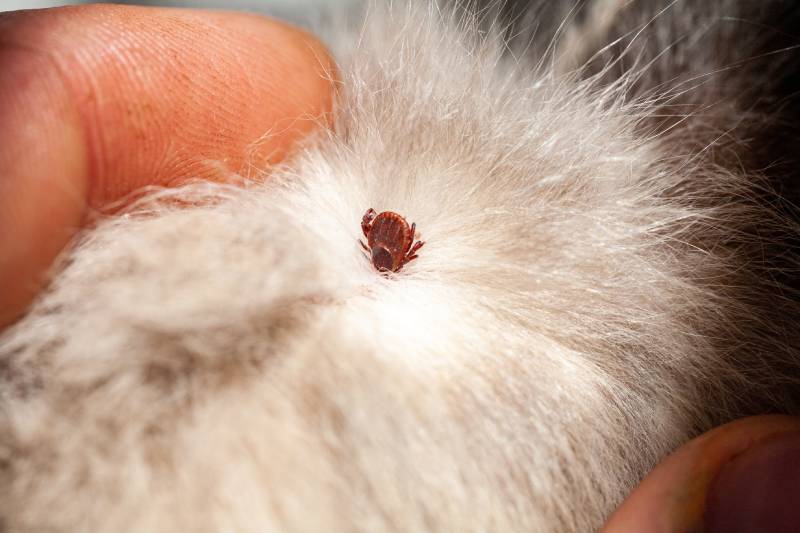
Some ticks of the Dermacentor and Ixodes genera have the ability to secrete neurotoxins in their bite. If these ticks bite your cat, they can inject these toxins into your cat’s bloodstream. The initial sign of this toxicosis is hind limb weakness, which may later also extend to the forelimbs. Paralysis of all limbs may follow as well. In severe cases, cats may struggle to breathe as a result of these toxins.
Blood Clots Without Heart Failure
At other times, blood clots can form in the absence of heart failure. Though rare, this can also lead to hind limb paralysis in cats if the clot lodges in the arteries that supply the hind legs.
Cardiac Disease
Heart disease is another reason that hind limb paralysis might be seen in cats.
In general terms, this means that the cat's heart has a structural abnormality, making it difficult for the heart to pump out blood normally. Instead of the heart squeezing every little bit of blood out into the arteries with each pump, some heart conditions will leave blood swirling around in some of the chambers. The longer this blood stays within the chamber(s) instead of being pumped around the body, the higher chance it has to develop a clot in that chamber. Eventually, part of the clot can break off and travel around the body, becoming lodged in arteries, and cutting off blood supply to the areas supplied by that vessel.
In cats, the most common site where this blood clot eventually lodges is the aortic trifurcation as it branches off to the left and the right into each back leg. If the clot becomes stuck at this exact intersection, the blood flow to both back legs is cut off. This condition is extremely painful and is termed as FATE (Feline Aortic Thromboembolism). It is also sometimes referred to as Saddle Thrombus, as it usually happens in the hind legs.
If the blood clot goes to one side or the other, this is when you will see a cat with paralysis of only one of its legs.
While the blood clot can also affect the front legs, the most common area we see embolisms occur in cats is in the hind legs. About 72% of cats with FATE have both rear legs affected. Though blood clots can also occur in the absence of heart disease, the correlation between heart disease and FATE in cats is very high (around 90% of cats with FATE have heart disease). In addition, roughly 76% of cats get diagnosed with a heart condition after their first FATE episode.
Intervertebral Disc Disease
While this is certainly less common in cats than dogs (estimated to be only 0.02-0.12% incidence in cats), some cats can suffer from an extruded disc. This can occur from congenital abnormalities, trauma, or potentially cancer. Your cat will have similar signs as discussed above, which can range from paresis to complete paralysis. Just like a blood clot, this is an extremely painful experience. Your cat will howl, cry, and may even try to bite you when you touch them.
Other Diseases
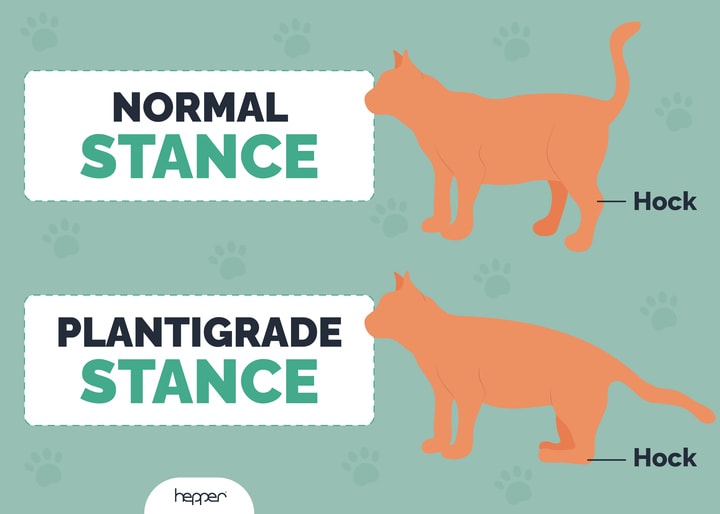
Finally, paralysis can result from other conditions and ailments, such as cancers involving the nervous system. Furthermore, cats that are diabetic may have hind limb weakness and sit on their hocks, also known as a plantigrade stance.
Can My Cat Recover?
There are several factors that determine your cat’s chances of recovery from hind-limb paralysis:
Some Factors That Determine Recovery Potential
Unfortunately, cats have a very small chance of recovery from complete paralysis of the hindlimbs and total loss of nerve function.
First and foremost, your veterinarian needs to find a cause. If your cat has underlying heart disease, your veterinarian also has to determine if your cat is dealing with a heart failure episode, in addition to having a blood clot.
If a cat has congestive heart failure (CHF) while suffering from a blood clot, their prognosis worsens.
If your cat is suffering from a nerve rupture (neurotmesis), he/she may need emergency surgery to have the best chance at recovery. This is a very specialized surgery that only board certified veterinary surgeons or veterinary neurologists perform.
Time is also of the essence. You would need to get your cat to the veterinarian immediately for a diagnosis to be made and relevant treatment or intervention to be administered before a prognosis can be given.
In most cases of nerve injury or paralysis, your veterinarian is only able to provide you with an accurate prognosis after a period of treatment to assess your cat’s response to any surgery, medication, and intervention. This duration typically lasts around 1–2 months.
If voluntary movement, pain perception, and your cat’s spinal reflexes improve within 1–2 months of the episode, the prognosis is generally good and favorable. However, if this isn’t the case, your veterinarian might not be able to preserve the limb. Your cat may undergo a surgery for limb amputation to improve their quality of life if your veterinarian deems it useful for your cat and on a case-by-case basis.
If conditions involving the heart or other issues (such as cancer) are causing your cat’s paralysis, then the prognosis will depend on the extent and progression of the disease itself. Issues involving tick paralysis generally have the best prognosis, as long as the ticks are promptly removed and appropriate care and medication is provided to your cat.
Conclusion
Hind limb paralysis is a painful and often sudden onset condition that some cats may experience. It can be caused from something as inconspicuous as a tick bite to something as complicated as a heart issue. Depending on the cause of the paralysis, your veterinarian may opt for medical intervention, surgical intervention, or a combination of the two.
Though prognosis depends on the underlying cause and varies on a case-by-case basis, it is best to follow your veterinarian’s advice to ensure the best possible outcome for your cat.
Related Read: Can a Cat Recover From a Stroke? Our Vet Answers
Sources
Featured Image Credit: Morrowind, Shutterstock
Get Hepper In Your Inbox


Pet care tips from our vets and experts, straight to your inbox.
You may opt-out at any time. View our Privacy Policy for more information.
Dr. Luqman grew up with an extreme fondness for animals and turned a childhood dream into reality by becoming a veterinarian. His goals are now focused on helping pet owners understand their pets better in order to ensure the best quality of life for all pets globally. He is passionate about wildlife, exotic pets, pet owner education, and animal welfare. Luqman has 3 years of professional experience working with a variety of animal species. He has skills in demonstrating proper animal husbandry and training some exotic species, such as parrots. Additionally, he has decades of personal experience with keeping many exotic pets: freshwater fish, parrots, songbirds, chickens, ducks, turtles, and hamsters.
Dr. Luqman grew up with an extreme fondness for animals and turned a childhood dream into reality by becoming a veterinarian. His goals are now focused on helping pet owners understand their pets better in order to ensure the best quality of life for pets all around the world. His passions are wildlife, exotic pets, pet owner education, and animal welfare.
Education
Luqman received his degree from Universiti Putra Malaysia.
Experience
Luqman has 3 years of professional experience working with a variety of animal species. He has skills in demonstrating proper animal husbandry and training some exotic species, such as parrots. Additionally, he has decades of personal experience with keeping many exotic pets: freshwater fish, parrots, songbirds, chickens, ducks, turtles, and hamsters.
Join the conversation
Ask a question, share your story, or send private feedback.