Hepper is reader-supported. When you buy via links on our site, we may earn an affiliate commission at no cost to you. Learn more.
8 Signs of Nerve Damage in Cats to Watch Out For (Vet Answer)

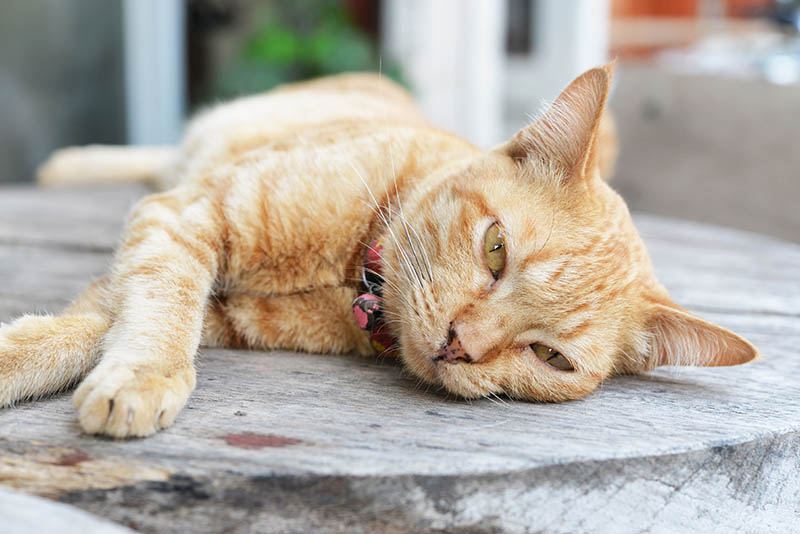
Nerves are the fibers responsible for carrying messages from the brain or spinal cord to the rest of the body, and vice versa. Think of them as the electrical wiring transmitting sensory information around the body, enabling cats (and other mammals) to function. When we think of nerve damage, we often think of traumatic causes first, such as injuries, falls, and road traffic accidents. However, auto-immune diseases, tumors, metabolic diseases, and toxins can also be responsible.
So, what happens if a cat’s nerves get damaged? Due to the vast number of nerves in the body, and the multitude of specific nerve functions, the signs of nerve damage are variable. Anything from limping and over-grooming to vocalizing and abnormal urination can be caused by nerve damage. The eight most common signs of nerve damage to watch out for in cats have been outlined below.

The 8 Signs of Nerve Damage in Cats
1. Limping
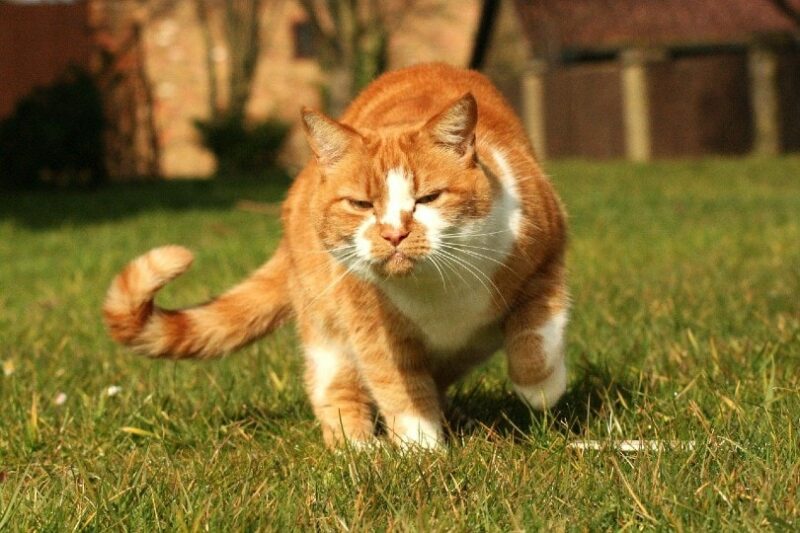
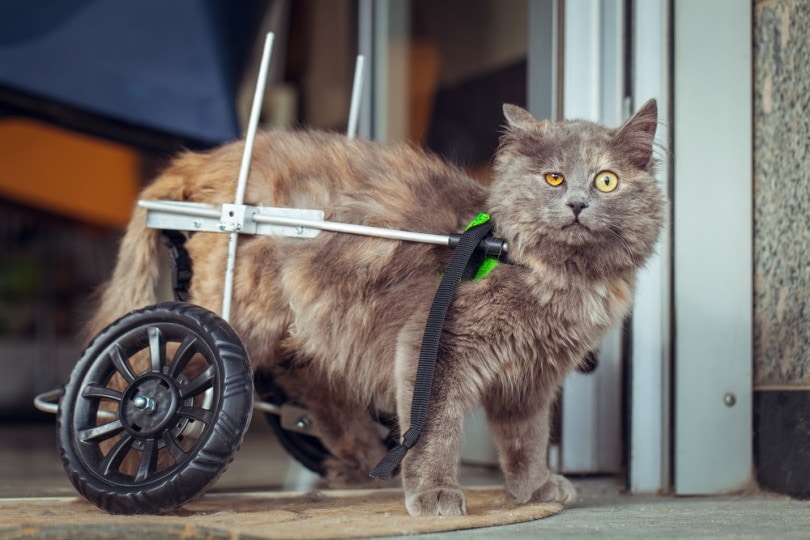
Limping is defined as an abnormal gait, either when walking or running. While limping is usually attributed to an injury, such as a muscle sprain or bone fracture, nerve damage can also cause changes to a cat’s gait. Trauma to the sciatic nerve in a back leg, or to the bundle of nerves known as the brachial plexus in the front leg, will cause a cat to limp. Other causes, such as paralysis caused by ticks or degenerative diseases, will cause weakness and reduced function in either two or four limbs. Whatever the cause, it’s important to know that a limping cat may have nerve damage.
2. Chewing/grooming
Cats are generally very good at hiding or masking their pain. However, cats with nerve damage will often give us a clue by over-grooming the affected area. This occurs because nerve damage is painful, and they are trying to alleviate or address the pain by licking the sore spot. Even if you do not notice your cat chewing, you may notice a wet patch of fur or some hair loss at the site of the nerve damage.
3. Muscle Wasting
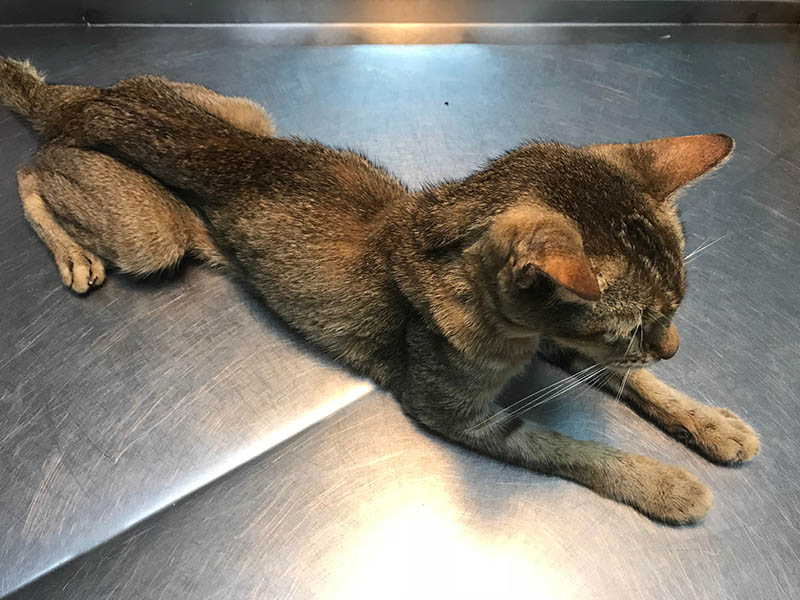
Muscles are innervated by nerves. This means that muscles are told to do their job by the nerves. If nerves are damaged, and therefore not working, muscles become underutilized and have reduced tone. This leads to the wasting of the affected muscles. This may be seen in the legs, on the back, or around the face. Cases of severe nerve damage will lead to muscle wasting very quickly, and will thus be more conspicuous.
However, muscle wasting can also occur more slowly, over weeks or months. This, combined with the abundance of hair covering the muscles, means it may take an astute eye to detect muscle loss.
4. Vocalizing
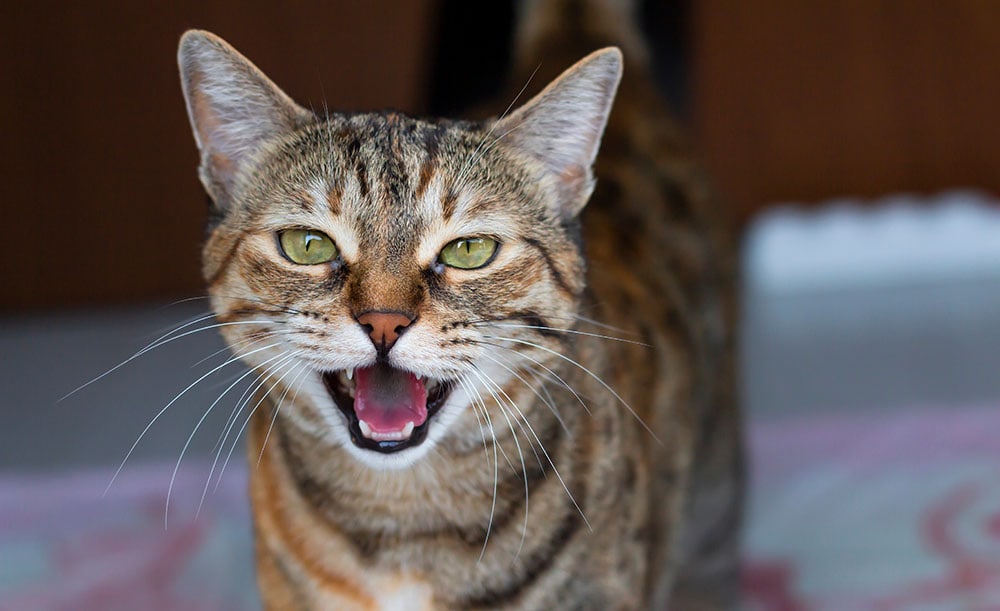
Vocalizing or “meowing” more frequently is usually a sign of pain or stress in cats. This tends to be seen in cases with traumatic or painful nerve damage, as well as nerve problems causing a cat significant distress, such as paralysis. However, slow-progressing and non-painful nerve injuries may not cause an increase in a cat’s vocalization. Additionally, if the nerves supplying the larynx (voice box) are damaged, cats may lose the ability to meow altogether.
5. Flat Footed Stance
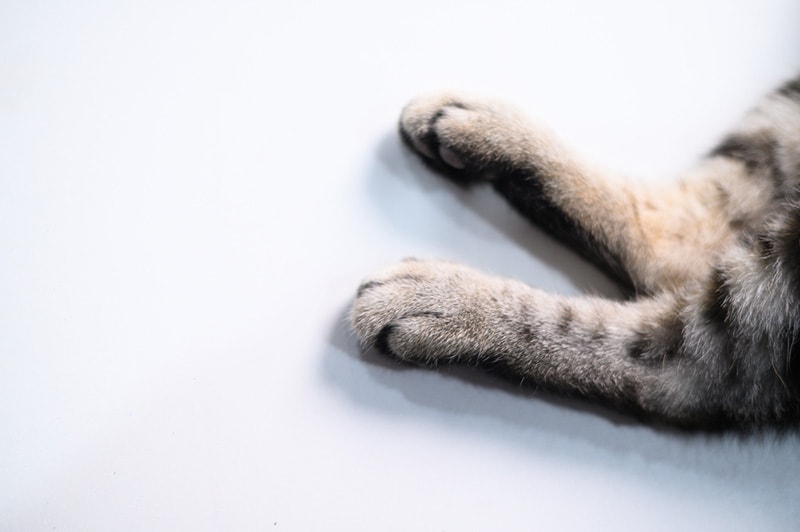
This one is a bit unusual, and it is seen with complications caused by diabetes. It is believed that up to 1/100 cats suffer from diabetes. Cats with poorly controlled diabetes have nerve dysfunction in their lower legs, causing a characteristic flat-footed stance. Weakness or difficulty moving is also often noted by owners. Thankfully, once insulin therapy is commenced, many cats make a partial or complete recovery.
6. Facial Weakness
Weakness or paralysis of a cat’s facial muscles is relatively rare. A condition called idiopathic facial paralysis causes the inability to blink, drooping of the ears, drooping of the lips, and drooling. The cause of this disease remains unknown. A second condition called trigeminal neuritis results in loss of function of the jaw, presumed to be caused by nerve damage. These cats cannot close their mouths and have difficulty eating and drinking. Most of the signs resolve within one month of their onset, even without treatment.
7. Labored Breathing
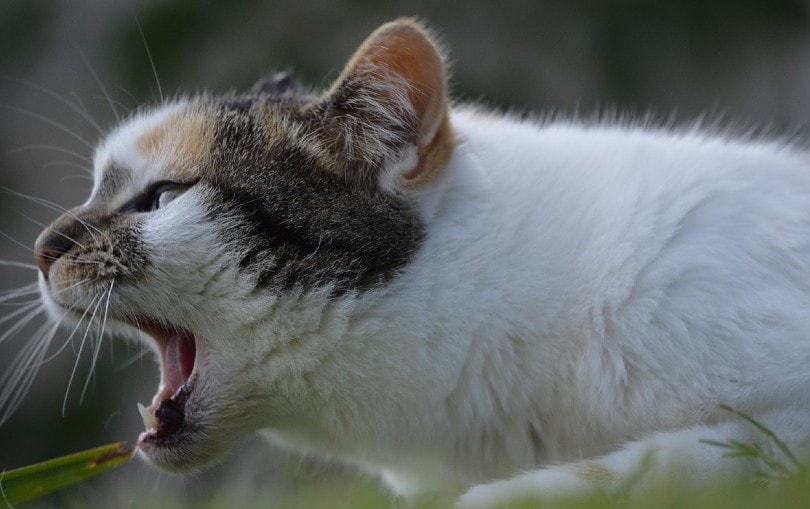
Changes to breathing can be caused by respiratory diseases such as asthma and pneumonia, as well as heart failure. However, damage to the nerves in the larynx (voice box) or upper airways can also cause difficulty breathing. Additionally, nerve problems that result in difficulty swallowing, such as myasthenia gravis, can lead to aspiration of food into the lungs. This can cause severe pneumonia and, thus, difficulty breathing.
8. Changes to Urination/Defecation
Damage to the nerves that tell the body when and how to urinate or defecate is fairly common in cats. Usually, this is the result of an injury to the pelvis and its associated nerves in a road traffic accident. Tail-pull injuries (when the tail gets stuck in a door) can also stretch and break the nerves. Signs are variable—some cats will urinate or defecate outside of the litter tray due to incontinence, whereas other cats will lose the ability to pass urine or stool altogether. These nerve injuries can be very challenging to manage. Nerve function can take weeks to return, and sometimes it fails to return at all.
Conclusion
Nerve damage in cats has a number of causes and thus results in a number of signs. Limping, over-grooming, vocalizing, flat-footed stance, facial weakness, breathing changes, and changes to urination/defecation are some of the most common, though other signs are possible.
Nerve damage should always be taken seriously, as loss of nerve function can severely affect a cat’s quality of life. If you notice any of the above signs, prompt veterinary intervention will often lead to the best outcome.
Featured Image Credit: megaflopp, Shutterstock
Get Hepper In Your Inbox


Pet care tips from our vets and experts, straight to your inbox.
You may opt-out at any time. View our Privacy Policy for more information.
Joe is a veterinarian from Sydney, Australia and has two beautiful Golden Retrievers who love the ocean as much as he does. Joe completed his Bachelor of Veterinary Biology and Doctor of Veterinary Medicine at the University of Sydney in 2020, and his areas of particular interest include internal medicine, wound management and oncology. His passion for veterinary medicine comes not only from helping pets, but also from helping their owners and working with wonderful teams of people. When he's not working, you can find Joe exercising, cooking, and exploring Australia’s wilderness. He has worked for 2 years at a busy mixed practice on New South Wales’ mid-north coast, treating animals of all sizes.
Joe is a veterinarian from Sydney, Australia. He has two beautiful Golden Retrievers who love the ocean as much as he does. When he's not working, he can be found exercising, cooking, and exploring Australia’s wilderness.
Education
Joe received a Bachelor of Veterinary Biology and Doctor of Veterinary Medicine from the University of Sydney in 2020.
Experience and Interests
Joe has worked for 2 years at a busy mixed practice on New South Wales’ mid-north coast, treating animals of all sizes. The areas of particular interest to Joe include internal medicine, wound management, and oncology. His love for the profession comes not only from helping pets but also from helping their owners and working with wonderful teams of people.
Join the conversation
Ask a question, share your story, or send private feedback.