Hepper is reader-supported. When you buy via links on our site, we may earn an affiliate commission at no cost to you. Learn more.
Can Bearded Dragons Eat Mice? Vet-Reviewed Nutrition Facts & FAQ


In this article
Bearded dragons are among the most popular pet reptile options for people worldwide. They have a docile nature and usually like to socialize with people.
As a responsible beardie owner, you should provide everything that your little friend needs for proper development, and the most important thing is nutrition. Bearded dragons are omnivores that need a well-balanced diet that contains plant- and meat-based products.
In a beardie’s natural environment, food is often sparse, so they consume all kinds of available plants and animals, raising the question: Can bearded dragons eat mice?
The simple answer is yes, beardies can eat mice. However, doing so can have a negative effect on beardies, which is something that you should be aware of before including mice in your beardie’s diet.
In this article, we cover all the health risks and benefits of bearded dragons eating mice and whether this is a treat that should be included in your beardie’s diet!

Health Benefits of Mice for Bearded Dragons
Generally speaking, while bearded dragons can eat mice, it’s not recommended. That said, they do have a couple of benefits for beardies.
Has High Protein Content
Mice usually contain a large amount of protein, which is beneficial for bearded dragons and their development. However, beardies can get protein from other foods, including insects like crickets and worms, which are often more nutritionally balanced and easier to consume.

Promotes Hunting Instincts
Offering live mice to your bearded dragon could promote your beardie’s hunting instincts. However, mice can often be larger than bearded dragons, making the hunting experience a struggle rather than an enjoyable experience.
Health Risks of Mice for Bearded Dragons
High-Fat Content
Bearded dragons mainly need protein in their diets, while their fat and carbohydrate intake should be relatively low. Mice contain high amounts of fat, which could disturb your beardie’s system and lead to several problems, including weight gain, obesity, and heart disease.
Consuming too much fat could also cause bearded dragons to become unable to absorb other necessary nutrients, such as calcium, which are crucial for proper development.
Nutritional Imbalance
A bearded dragon’s diet should be based on protein. Mice contain too much fat, so consuming them could lead to a nutritional imbalance in your beardie. There are much better and safer options for your beardie that will contain more valuable nutrients and minerals.
Choking
Mice can be quite large. If one is larger than your beardie, there’s a serious risk of choking, as they won’t be able to swallow this prey safely.
The body composition of bearded dragons enables them to consume insects and other small prey, but oversized prey can become a real challenge.
Disease
Mice are often carriers of various diseases, viruses, and infections, including Salmonella, that could cause gastrointestinal problems in your bearded dragon and eventually pass on to you. Eating mice could also lead to other parasitic and bacterial infections, causing further health issues, including allergies, irritations, and even anemia.
Mice can carry different viruses, such as the multistate lymphocytic choriomeningitis virus, that can severely impact reptiles and lead to neurological problems in your beloved pet.
Distress
Many beardies would struggle trying to tackle a large prey like a mouse, which could lead to distress and anxiety. Beardies are not used to consuming oversized prey, so sticking to smaller insects and safer foods is better for them.
Frequently Asked Questions
Should Bearded Dragons Eat Mice?
Bearded dragons can eat mice, but that doesn’t mean they should. If you have a healthy bearded dragon that has a well-balanced diet, there’s no need for them to eat a mouse. It could cause a nutritional imbalance and lead to several health problems.
However, consuming mice could occasionally be beneficial, especially for pregnant or postpartum beardies or ones that have recently been sick.
Still, before offering mice to your bearded dragon, it’s best to consult a veterinarian with experience in reptiles. They will be able to determine if there’s a need for a change in your beardie’s diet and will either approve or disapprove of your pet eating mice.
What Kind of Mice Are the Safest for Beardie Consumption?
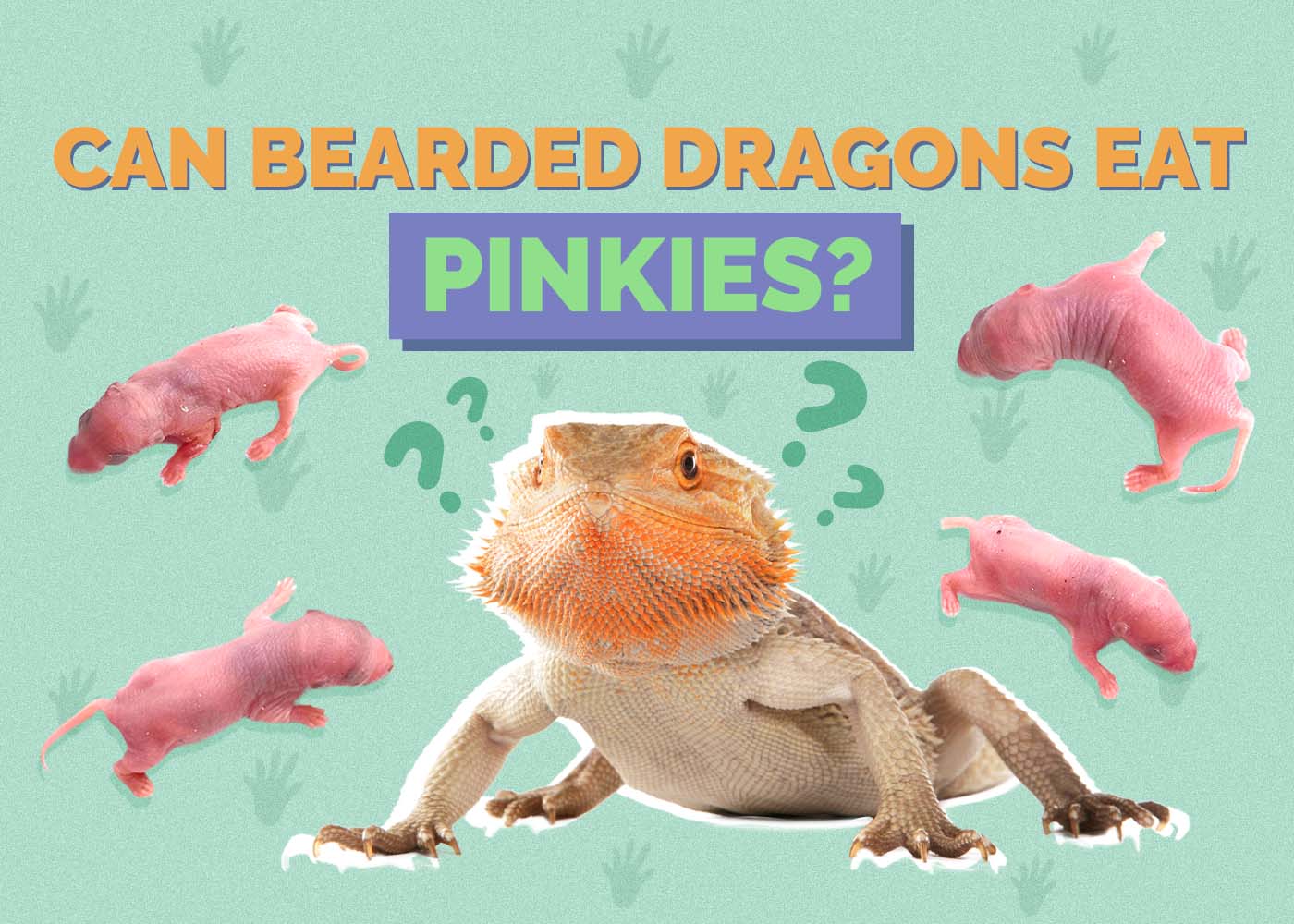
If you are allowed to give mice to your bearded dragon, you’ll need to know the kind of mice that are the safest for beardie consumption. While many mice varieties for pet reptiles exist, your beardie should only eat one kind: pinky mice. These mice are less than 5 days old, have soft bones, and lack any hair.
After 5 days, a mouse’s body starts to develop, its bones become denser, and its fur grows out, which is when these rodents become too hard to digest.
How Many of These Rodents Can Bearded Dragons Eat?
Owners who want to let their bearded dragons eat mice should do it with caution and in moderation. If you decide on this, your beardie should ideally only eat one to two pinky mice monthly. More frequent feedings could cause problems in your bearded dragon.
How Can You Safely Feed Mice to Bearded Dragons?
While you can feed mice to bearded dragons, such an action carries more risks than benefits. Still, if you decide to do so, here’s how to do it safely:
- Only go for pinky mice; you can get these frozen at most pet stores.
- Keep the mice in your freezer until it’s time to feed your beardie.
- Before feeding a mouse to your beardie, let it defrost by keeping it in hot water for 15–30 minutes.
- The mouse should be between 86°F and 95°F before your bearded dragon eats it.
- After your beardie is done eating, remove any mice leftovers and clean the enclosure.
Conclusion
Bearded dragons can eat mice, but there are safer and more nutritional options for your beardie, such as crickets, mealworms, and Dubia roaches.
Eating mice carries potential risks and could put your beardie’s health in jeopardy. However, it can also have a few benefits, which is why some people might still decide to feed them to their beardies. If you do so, try to follow these tips for safely feeding mice to bearded dragons to reduce the risk of possible complications.
Related Reads:
Sources
Featured Image Credit: MainelyPhotos, Shutterstock
Get Hepper In Your Inbox


Pet care tips from our vets and experts, straight to your inbox.
You may opt-out at any time. View our Privacy Policy for more information.
Visnja is a content writer that covers various topics such as DIY, pets, home improvement, travel, gardening, and more.
She is a young mom and a college student, who didn’t have enough time to balance her personal and work life, so after multiple years of working a regular 9 to 5 job, she decided to pursue her passion and make a living out of it. She has been writing for a couple of years, helping people find valuable and interesting information online.
Join the conversation
Ask a question, share your story, or send private feedback.