Hepper is reader-supported. When you buy via links on our site, we may earn an affiliate commission at no cost to you. Learn more.
Can Bearded Dragon Eat Mealworms? Vet-Reviewed Nutrition Facts & FAQ


In this article
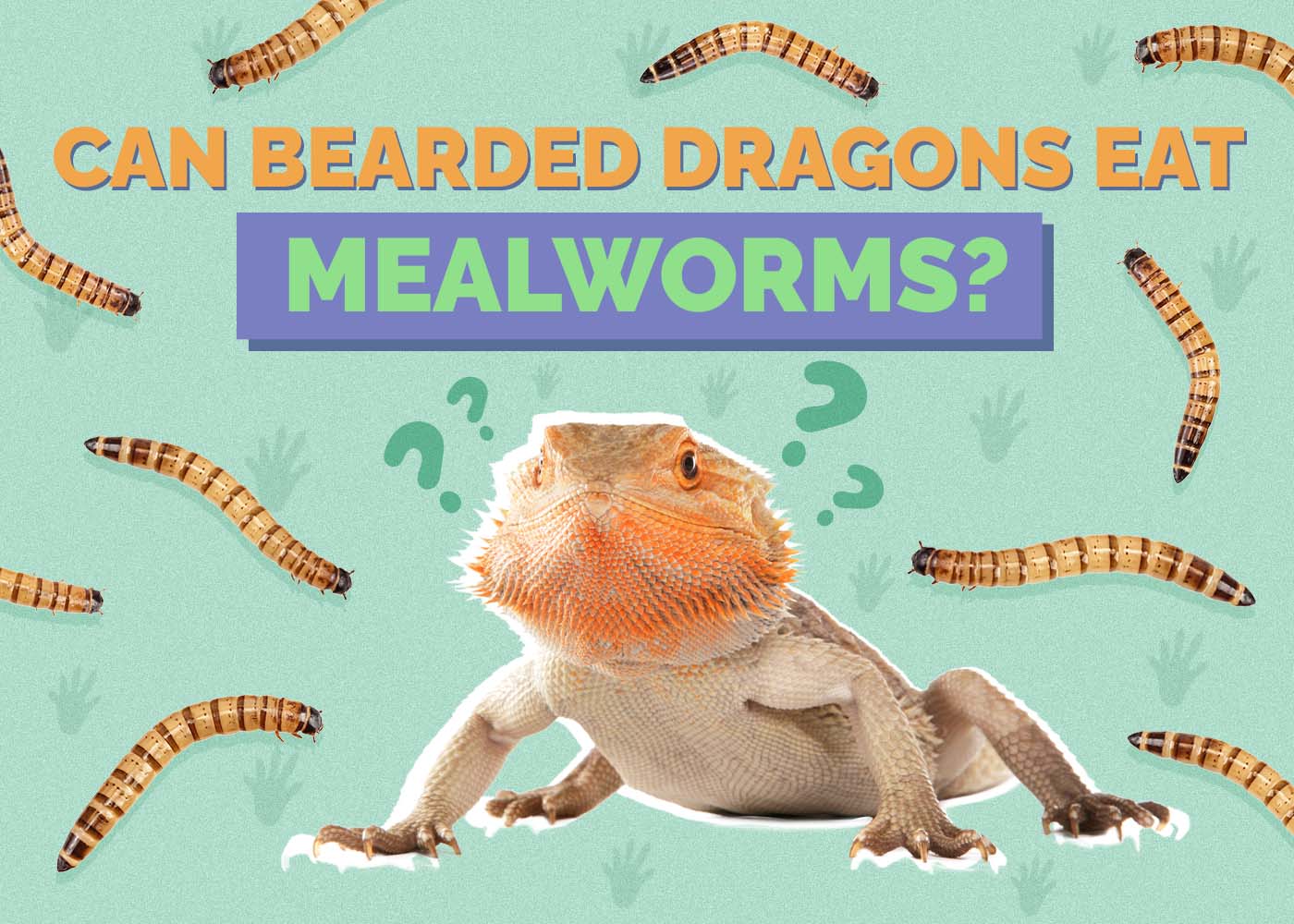
Bearded dragons are omnivores, meaning they need a diet of both plant and animal (insect) material. You have probably seen several types of insects at your local pet store and wondered which would be appropriate to feed your beardie. Mealworms are one of the most widely accessible options, but are they safe for your pet?
Yes, bearded dragons can eat mealworms; however, there is a caveat. Mealworms shouldn’t ever be the staple insect of your beardie’s diet and should only be offered occasionally as a special treat. The best source of information for feeding your bearded dragon depending on their age and health is a specialist exotics veterinarian. Read on to learn more.

Why Can’t Mealworms Be a Staple Insect?
Mealworms are great as an occasional treat for your reptile pal, but they should not be its primary source of protein.
Little Nutritional Value
Mealworms are higher in fat and lower in protein than other insects, therefore offering poor nutritional balance. They contain around 13% fat, compared to a cricket’s 6%. As with humans, a beardie with a diet too high in fat can become obese, putting it at risk of health conditions and shortened lifespan.
Think of mealworms as a juicy cheeseburger. While you’d likely enjoy eating one daily, it won’t provide optimum nutrients. A slice of pizza once per week is unlikely to do any lasting harm; the same applies to mealworms.
Poor Calcium-to-Phosphorus Ratio
Bearded dragons need a calcium-to-phosphorus ratio of around 2:1. They need more calcium than phosphorus as the latter inhibits proper calcium absorption. Therefore, a beardie with too much phosphorus in its diet cannot utilize calcium properly.
Bearded dragons also require vitamin D3 to help utilize calcium and phosphorus in their diets. Most healthy beardies will make their own D3 when they have the proper husbandry in their enclosures, so it’s not always necessary to supplement with D3.
Mealworms contain much more phosphorus than calcium. Depending on your source, the ratio can be as high as 1:5, so they’re not an insect to indulge in too often.
How to Offer Mealworms to Your Bearded Dragon
Here are some tips on how to keep and serve mealworms to your beardie.

Keeping Them Alive
Keeping your mealworms at room temperature will eventually lead to them becoming beetles. Your pet should not eat them at this stage. To keep your worms well-preserved, put them in your refrigerator. This will incite a deep sleep and allow them to keep for months. You can keep your worms active by putting oatmeal flakes in the plastic container. Add some apple or celery pieces for hydration; your worms should last two weeks.
Never feed dead worms to your pet.
Dust With Calcium
Generously dust your pet’s insects with calcium before feeding. Calcium supplementation may not be necessary when feeding staples such as black soldier fly larvae as they’re naturally high in calcium.
Feed by Hand
If the thought of creepy crawlies doesn’t bother you, try feeding your beardie by hand. Hang the worm in front of the side of its face so it can see it wriggling. It’ll use its long tongue to grab the worm from your hand.
Feed in a Bowl
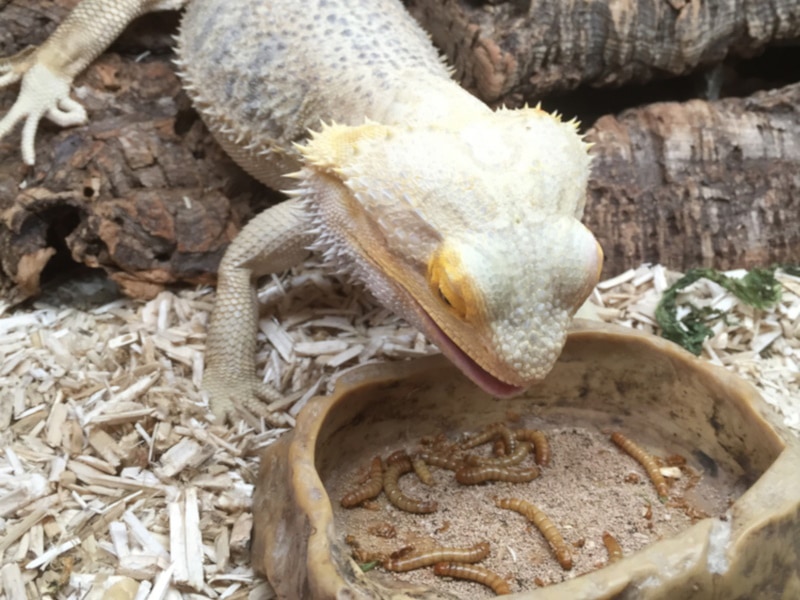
If you’d rather not be hands-on with your bugs, place them in a shallow bowl or plate. Choose a bowl with sides that aren’t too high, as it’ll be difficult for your beardie to get at its bugs.
Feed Them at the Appropriate Age
Mealworms have a hard outer shell called the chitin. Baby beardies can encounter difficulties digesting the chitin and may even get an intestinal blockage from doing so. As such, only offer mealworms to your bearded dragon once it’s an adult.
What Are Better Staple Insect Options?
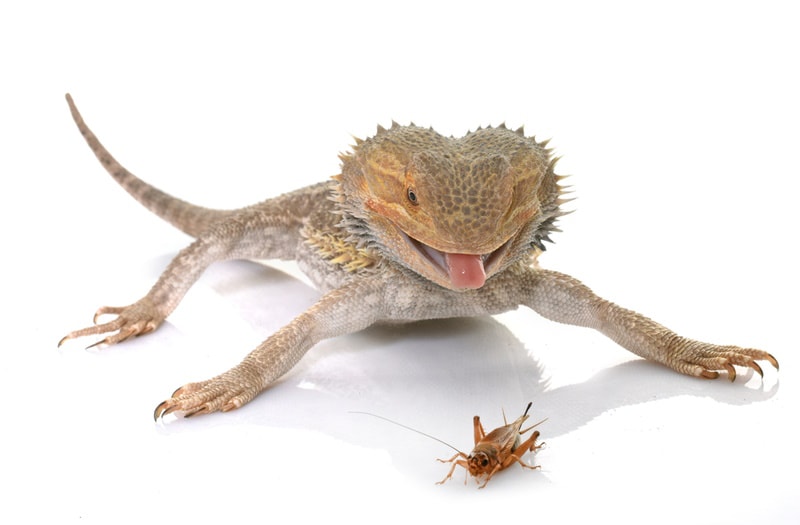
So now that you know that mealworms shouldn’t be used as a staple insect, you might wonder what the better options are.
Great staple insects include:
*Captive hornworms only, as the wild ones are toxic.
What Other Protein Options Work Great as Treats?
Other protein sources you can occasionally use as treats include:
Pinky mice are newborn mice that haven’t developed claws or teeth yet. As such, they’re easy for adult beardies to digest. Do not feed pinky mice to a baby or juvenile beardie. Additionally, do not offer them more than once a month; the less you offer this protein source, the better. However, we know some bearded dragons love them, so stick to once a month if you must.
Final Thoughts
While mealworms make a great treat occasionally for your beardie, they’re not a great insect to feed often. Because of their high fat/poor calcium content and hard outer shell, they are best reserved as an occasional treat for adult bearded dragons.
Related Read: Can Bearded Dragons Eat Worms? Vet-Approved Facts & FAQ
Sources
Featured Image Credit: Joshua A Houck, Shutterstock
Get Hepper In Your Inbox


Pet care tips from our vets and experts, straight to your inbox.
You may opt-out at any time. View our Privacy Policy for more information.
Chantelle's life revolves around two passions: writing and animals. Raised on the prairies of Canada amidst a menagerie of pets, she now lives with five cats, two guinea pigs, and a bearded dragon. Together with her husband and child, Chantelle delights in being an exemplary animal parent, going as far as installing wall-mounted cat shelves to give their cats an indoor playground. When she's not cozying up with her cats or snapping their amusing antics, she enjoys venturing into the Rocky Mountains, binge-watching her favorite Netflix shows, and indulging in spontaneous reading adventures.
Join the conversation
Ask a question, share your story, or send private feedback.