Hepper is reader-supported. When you buy via links on our site, we may earn an affiliate commission at no cost to you. Learn more.
Can Cats Eat Ants? Health & Safety Guide
In this article
If your cat spends time outside, you've probably noticed him eat lots of strange things. One of those things is probably ants. Whether they just see the ants on the sidewalk or on their food, they may see them as something else they can eat. But is it okay for cats to eat ants?
If your cat eats ants, it generally doesn't cause any problems and you have nothing to worry about. However, there are certain instances in which eating ants can be bad for your cat. In this article, we'll tell you everything you need to know about cats eating ants as well as what to watch out for.

Why Do Cats Eat Ants?
Why cats eat ants really just depends on the surrounding circumstances. Is your cat chasing and eating ants, or are they just crawling on his food? In either case, it rarely has anything to do with the fact that your cat is hungry and wants a tasty snack.
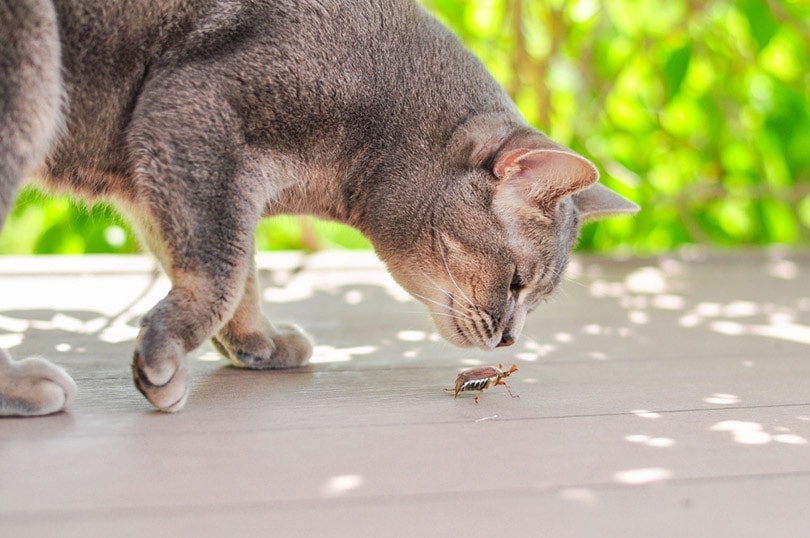
Although cats are carnivores that need protein as their main nutrient, and ants can provide that nutrient, ants don’t have nearly enough protein in them to entice your cat to eat them as food. If your cat is chasing and eating ants that are just crawling on the sidewalk, it likely has more to do with his natural hunting instincts.
If your cat is chasing and eating ants that were just crawling around minding their own business, it’s probably just because they see them as something they can easily catch. Catching ants (and other bugs) is a fun activity for a cat because it helps them hone their hunting skills and provides them with mental stimulation.
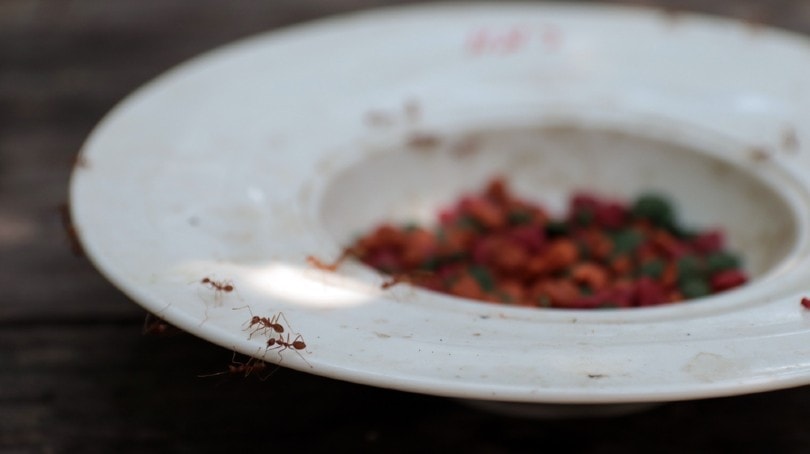
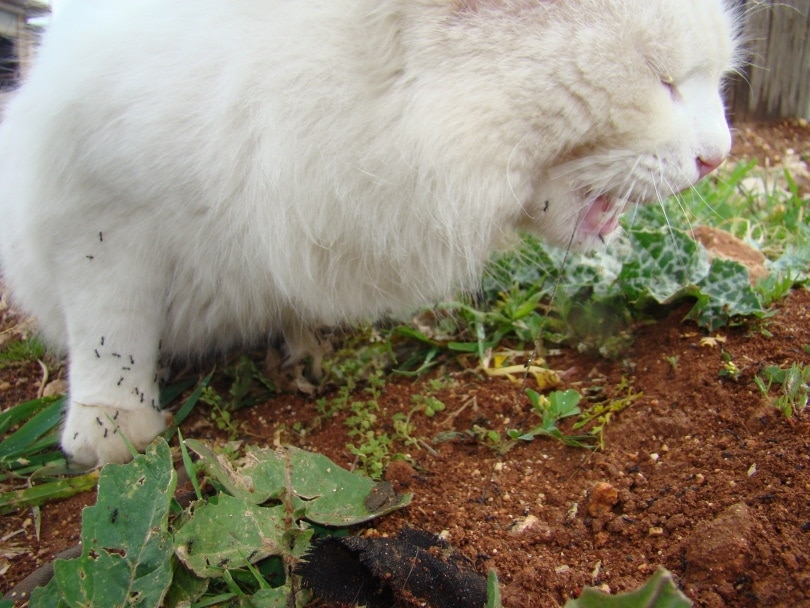
Now, if ants are crawling on your cat’s food, it’s a different story as to why your cat is eating them. There’s one simple reason: the ants are on his food, but he can’t move them himself so he just eats them along with his food.
Although some cats won’t eat their food if it has ants on it, other cats just don’t care especially if they get hungry enough. As long as the ants don’t bother your cat or cause him any harm, your cat may see no reason why he can’t them as well.
Is It Safe for Cats to Eat Ants?
If you’re concerned about your cat being poisoned by toxic substances that are found in ants, you don’t have to worry. Most ants don’t contain any substances in their bodies that pose a major danger to cats, so they are safe from that standpoint. However, there are other instances in which eating ants might be bad for your cat.
Fire Ants
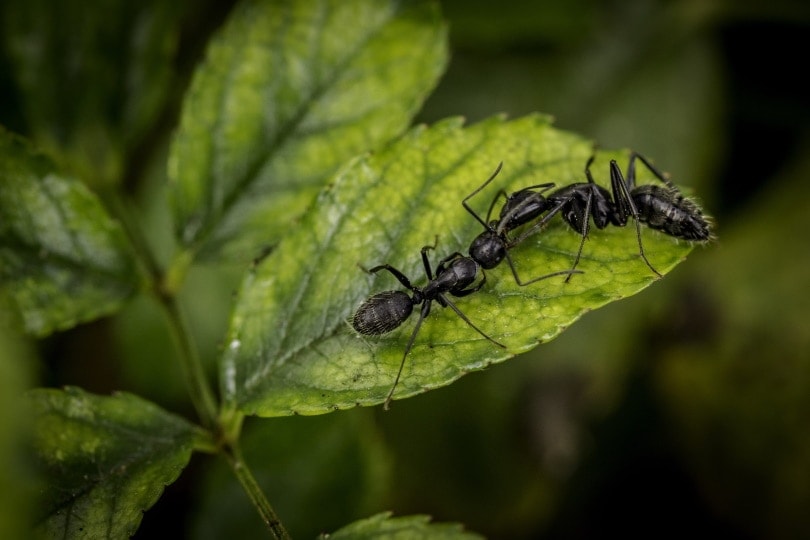
Some ants (particularly fire ants) do contain a substance called formic acid. Formic acid is essentially ant venom that they use to disable or kill other insects. Although eating one fire ant usually won’t harm your cat, he may experience irritation in his mouth and throat if he eats a lot of fire ants.
Insecticides
Another issue you have to look out for with ants is whether they were treated with insecticides. For example, let’s say that you have several ant beds in your yard that you or a pest control specialist has killed through the use of poison.
If your cat eats an ant that came from a poisoned ant bed, some of the poison found in the insecticide is likely to end up in your cat’s bloodstream. Again, eating one ant isn’t likely to cause any harm to your cat.
However, if your cat eats several ants (and we’re talking several, as in more than just 10 or so), then that increases the amount of insecticide in your cat’s bloodstream, which could end up making your cat sick.
The bigger issue comes into play if your cat comes into direct contact with the insecticide itself. For example, if your cat is digging around in ant beds or you leave the insecticide out, your cat could accidentally ingest some of it.
This is more likely to cause harm to your cat, as the amount of poison your cat is exposed to will be much higher than it would be if he ate a single ant. If your cat does come into contact with an insecticide, it’s a good idea to call the ASPCA’S animal poison control hotline, or another animal poison control center just to be safe.
Diseases and Parasites
Another cause for concern with your cat eating ants is the risk of diseases and parasites getting transmitted to your cat. Although this is less likely to happen than if your cat ate something such as a mosquito or a flea, some ants do carry diseases that can affect your cat.
Some of the diseases that ants can carry can be bacterial, such as salmonella. They can also carry parasites such as tapeworms. Both of these (along with other diseases that can be transmitted through ants) can affect your cat’s health.
Again, the chances of this happening aren’t as high as they are with fleas and other insects. But in a lot of cases, it can be hard to determine where exactly your cat got salmonella or tapeworms from. So if your cat eats a lot of ants, that might be something to consider.
What Could Happen If Your Cat Eats Too Many Ants?
Your cat eating too many ants is not usually cause for concern, unless one of the above scenarios applies. And again, what could happen just depends on the situation.
For example, if your cat ate fire ants, it could cause some discomfort in his mouth as a result of the ants biting him. Your cat could drool excessively or even have trouble breathing if too many ants bite him in the throat area. Formic acid can also elicit an allergic reaction in some cats.
Coming into contact with insecticides, either directly or as a result of eating too many ants, can also cause your cat to have other signs as well. He may experience vomiting, pain, and depending on how much poison he came into contact with, possible seizures or paralysis. Coming into contact with too much insecticide can even result in death. Call an animal poison control center or get your cat to a veterinarian immediately if you notice any signs or unusual behaviors.
If your cat has a disease or parasite transmitted to him through ants, the exact signs he will show will just depend on the particular disease or parasite. But, since it can be hard to determine where some bacterial diseases and parasites came from, it’s a good idea to let your vet know if you think your cat has been eating ants.
How to Keep Ants Off of Cat Food
If your cat won’t eat his food because there are ants on it, or you’re just worried about your cat eating ants, there are ways to keep cats off of cat food. Keep in mind that if your cat eats his food outside, you will need to stay on top of keeping ants away or they’ll just keep coming back.
First, make sure you store cat food in an airtight container to keep ants out. Ants are also attracted to crumbs, so make sure to wash the food bowl out after your cat is done eating as well as clean around the area where the food is.
One of the most effective ways to keep ants off of cat food while in the bowl is to make a water moat around the bowl. You can do this by first getting a container that is larger but shallower than the food bowl (a pie tin or something similar). You want your cat to still be able to get to his food.
Fill the container with enough water to cover the bottom but not spill onto the food. Then place the food bowl in the center of the container and add food to the bowl. Ants can’t swim that well, so either they won’t cross the water at all or will drown in the process. Just replace the water in the container as needed.

Final Thoughts
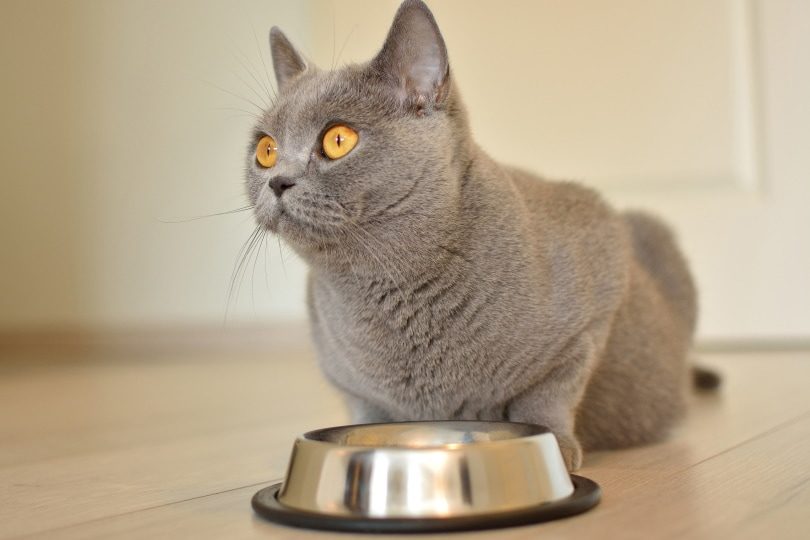
Cats mostly eat ants for fun or because they are on their cat food. The good news is that most of the time, eating ants won’t harm your cat. However, there are certain instances in which it might not be safe for a cat to eat an ant. If you’d rather be safe and don’t want your cat to eat ants, watch him closely while he is outside and check his food to make sure that there are no ants on it.
See Also:
Featured Image Credit: Piqsels
Get Hepper In Your Inbox


Pet care tips from our vets and experts, straight to your inbox.
You may opt-out at any time. View our Privacy Policy for more information.

Savanna is a former science teacher who is now a full-time freelance writer. She currently lives in the U.S with her daughter and husband. Other members of her family include a long-haired chihuahua named Penny, three cats (Bubba, Kittylina, and Thunder), and a turtle named Creek. Her passions include gardening, traveling, and protecting wildlife and natural resources.
Join the conversation
Ask a question, share your story, or send private feedback.