Hepper is reader-supported. When you buy via links on our site, we may earn an affiliate commission at no cost to you. Learn more.
Can Cats Eat Butter? Vet-Reviewed Facts and FAQ


In this article
If your cat steals food at every opportunity, butter might be their kryptonite. Many cats love to get into butter because of its high cream and fat content, which can be irresistible for felines. And some owners swear by giving cats a buttery remedy for hairballs. But if your cat is a fiend for butter, you might wonder if it’s really safe for them.
Before you start stressing, don’t worry—butter’s not poisonous to cats. If your cat loves butter, a little bit every now and then won’t hurt them! Although butter has some lactose in it, it usually doesn’t have enough to cause problems for cats. The high fat in butter can be a cause for concern, but for most cats, it won't be a problem in small amounts.

Butter and Lactose Tolerance
One reason to be careful about giving butter to your cat is the lactose found in dairy products. Like most mammals, adult cats can’t stomach lactose. However, butter is fairly low in lactose. A small pat of butter only contains about half a gram of lactose, making it fairly safe in small doses. And even if your cat goes hog wild on the butter, lactose reactions shouldn’t be life-threatening, just annoying. You can expect your cat to have an upset stomach and a stinky litter box, but not anything worse.
Fat Content of Butter
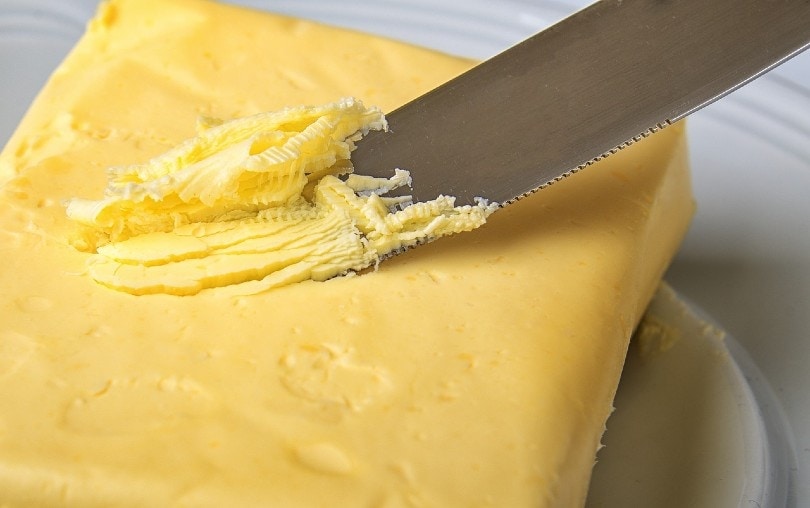
Another possible hang-up for cats is the amount of fat found in butter. Like humans, cats need a balanced diet of fat and proteins to be healthy and happy. But unlike humans, cats don’t need a significant amount of carbs. Cat food should be at least 26% protein and 9% fat, though higher amounts of protein are better because a mouse, for example, has around 55% protein and 45% fat.
Fat and protein both contain essential nutrients and calories, but fat is much more calorie-dense—this means that a pound of fat has more calories than a teaspoon of protein. All these calories can be bad news if your cat is overweight or not active.
Butter is very high in fat and very low in protein, so it can throw your cat’s diet out of balance. An all-butter meal would leave cats missing out on essential nutrients and amino acids that only come from meat proteins. But if your cat is healthy and active, the amount of fat in a dollop of butter is going to be perfectly fine.
FAQ
Can Butter Treat Hairballs?
Butter is also a popular home remedy for hairballs. The theory behind this one is that a bit of butter coating the throat will help hairballs slide out easily and stop cats from choking. So far, there’s no research one way or another on whether this actually works, but it is not the only option. For example, one hairball remedy entails using Vaseline instead, which serves the same purpose, but since it is not digestible, it does not add calories to your cat’s diet.
Cats are designed to self-groom, with barbed tongues that smooth out fur and brush free any loose hairs. It’s only natural that a few of those loose hairs get swallowed every now and then, and normally, those should pass undigested and be excreted in feces. However, sometimes, hair gets entangled and builds up in a cat’s stomach, forming those famous hairballs. Cats should vomit to get rid of them before they cause an obstruction. The coughs may sound scary, but usually before long, the hairball will come out cleanly. Extremely big hairballs do pose a risk of choking, but this is a very rarely reported issue.
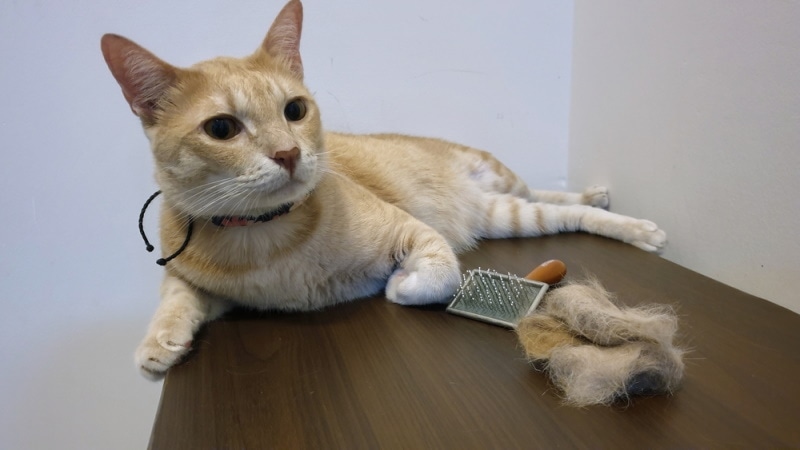
If your cat gets lots of hairballs, instead of feeding them butter, try preventing the problem at the source. Regular brushing will clean up loose hairs before they get into your cat’s stomach—and everywhere else! It might not eliminate hairballs completely, but a quick brush a few times a week will certainly help. It is also important to avoid feeding only dry food to your cat; swapping to or adding moisture-rich foods might significantly assist with this problem.
Healthy Snacks for Cats
If you don’t want to give butter to your feline, what alternative snacks are there for cats?
If you want to give your cat a tidbit of food here and there, you want to look for snacks that are high in proteins and healthy fats and that don’t have any harmful ingredients. Most meats are a great choice for cats. Be aware of fatty cuts of meat, as too much fat can be bad for cats, and the calories will quickly add up. Also, be aware of higher sodium cuts of meat. It’s best for cats to avoid having very large amounts of sodium in their diet, so high-sodium meats like bacon are best as an occasional nibble and not a full meal.
Chicken, turkey, pork, beef, and lamb are all good choices for cats. Many cats especially love the cuts that humans don't, like heart and liver meat. Dairy products that are low in lactose, like butter and hard cheeses, are also fairly safe occasional snacks. And of course, you can always buy commercially prepared cat treats. No matter what kind of snack you share, portion size matters—excess food can cause health problems no matter how healthy it is.

Final Thoughts
Cats love treats, and it's okay to offer a bit of butter as a treat occasionally. Although its high-fat content can be unhealthy for overweight cats, most cats won’t be bothered by it, and its low lactose levels make it safer than most other dairy products for kitty tummies.
See Also:
Get Hepper In Your Inbox


Pet care tips from our vets and experts, straight to your inbox.
You may opt-out at any time. View our Privacy Policy for more information.
Chelsea Flake Mortensen is a writer with a passion for pets. She grew up around everything from cats to chameleons and loves working with all kinds of animals. Chelsea has a BA in English and Creative Writing from Brigham Young University.
Chelsea loves reading, writing, sewing, and board games. She's lived in half a dozen US states and two countries. She is currently living in New England with her husband. Her articles have been featured in various magazines and literary journals for children and adults. Her writing has been translated into over 40 languages.
Join the conversation
Ask a question, share your story, or send private feedback.