Hepper is reader-supported. When you buy via links on our site, we may earn an affiliate commission at no cost to you. Learn more.
How to Prevent Hairballs in Cats: 6 Vet-Approved Methods

In this article
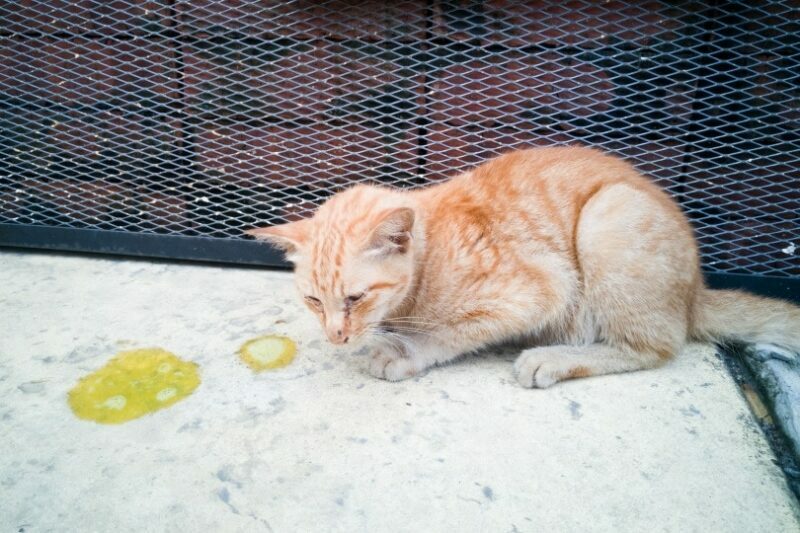
The dreaded hairball, with the noise, the mess, and the cleanup, is definitely not one of our favorite parts of cat ownership (though our cats are still worth it!). Some cats tend to throw up hairballs more than others, and if you are the owner of such a cat, you probably want to reduce the instances of these goopy messes.
There are a few measures that you can take to reduce the frequency of hairballs. We go over why cats throw them up, when you should be concerned, and how to slow things down. Hopefully, you’ll have fewer messes to clean up soon!

The 6 Methods for Reducing Hairballs in Cats
There isn’t any way that you can stop hairballs altogether, but you can minimize how many your cat expels.
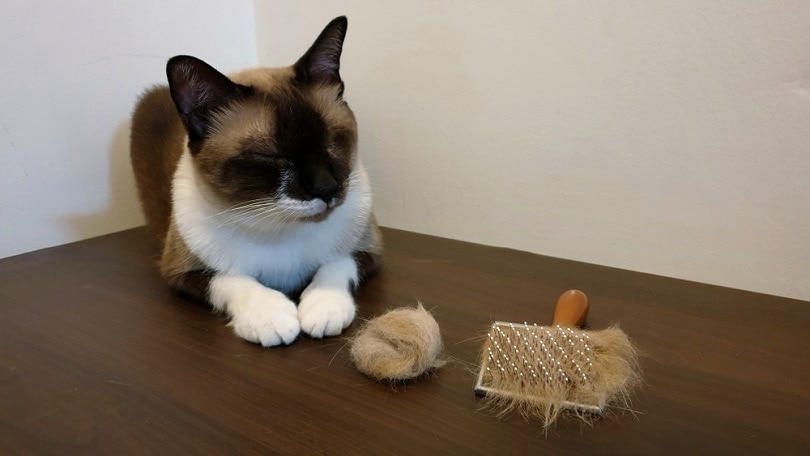
1. Brushing
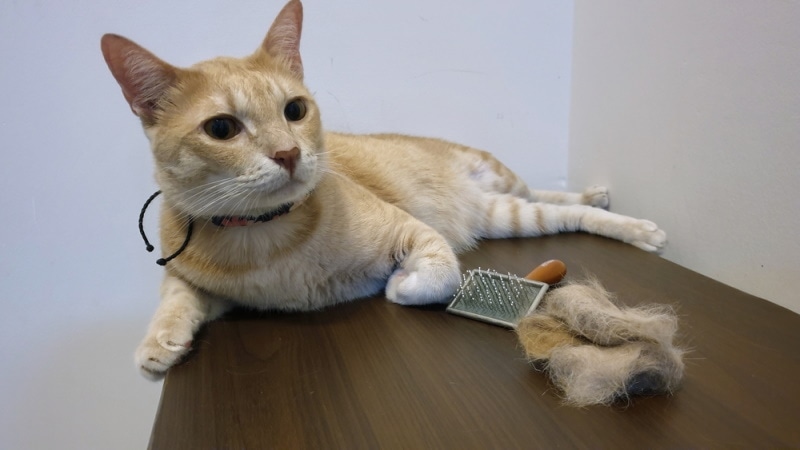
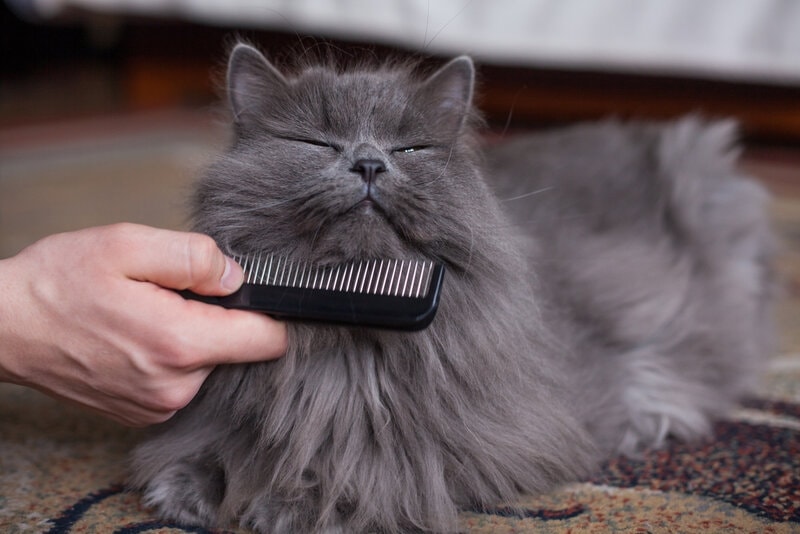
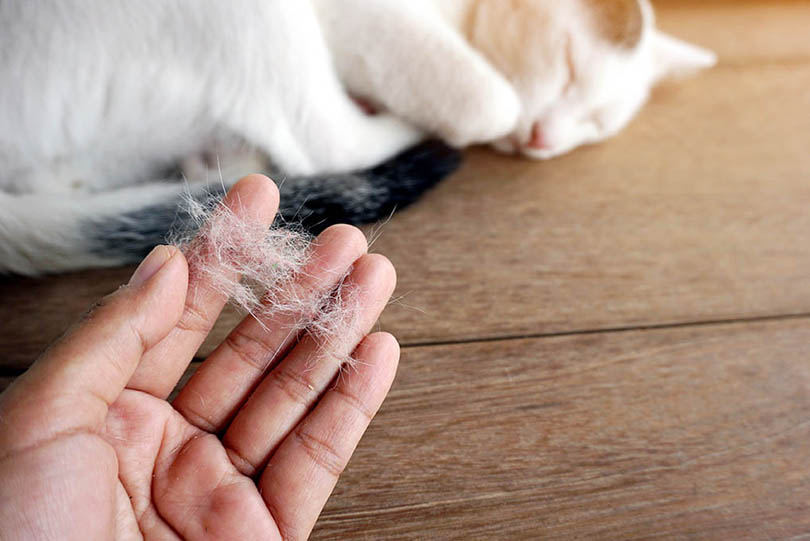
The more frequently you brush your kitty, the more loose fur you’ll remove, which means less hair that your cat will ingest. Grooming is usually a fantastic bonding exercise, but if you happen to have a cat that isn’t a fan, try these tips:
- Start by allowing your cat to inspect the brush. A good sniffing (and probably biting) will help your cat become more familiar with it.
- Brush your cat when they’re calm and sleepy, not during or directly after playtime.
- Just brush a bit at a time, and use treats and praise. The moment that your cat starts getting riled up, stop and try again later or the next day. Give your cat a treat that they love but don’t get to have that often.
Hopefully, after a while, your cat will grow to love being brushed, and you’ll cut down on a large amount of the excess fur.
You can also use a deshedder, which is designed to remove your cat’s excess fur (and helps remove mats and tangles).
Massage brushes like Furbliss can work well for cats that don’t enjoy being brushed. It acts as a deshedder and gives your cat a gentle massage. Even better are grooming gloves, so you can groom your kitty while petting them.
Aim to brush your cat once a week at a minimum, but a long-haired cat may need more frequent brushing.
2. Baby Wipes
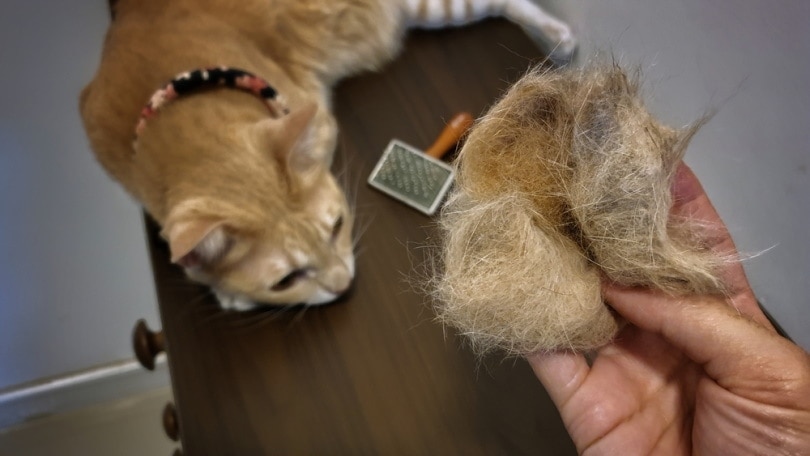
When you’ve finished brushing your cat, you can use unscented and hypoallergenic baby wipes to wipe your cat’s coat. A damp paper towel will work just as well. It’s also cheaper!
The damp paper towel or baby wipe will go the extra mile by removing any remaining loose fur after your grooming session. You can also use this method if you're in a rush and don’t have time to brush your cat.
3. Fiber
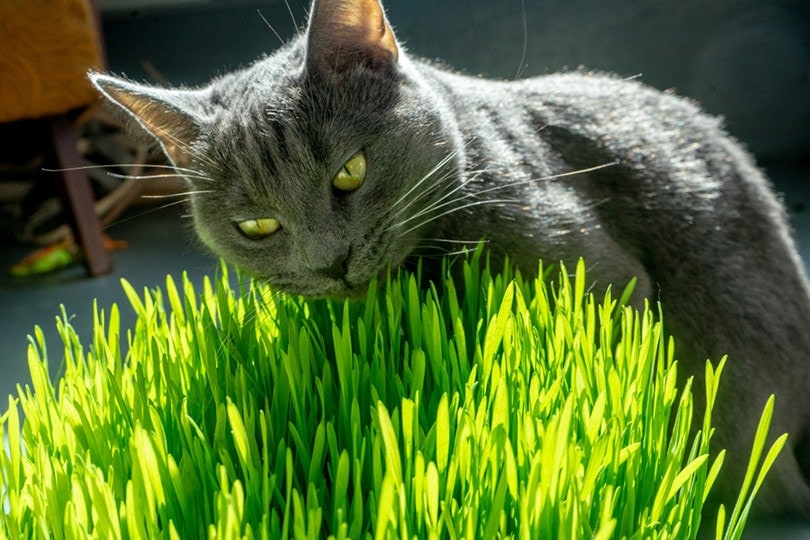
Adding extra fiber to your cat’s diet is one way to help all that hair travel through the digestive system. You can do this with:
- Apples
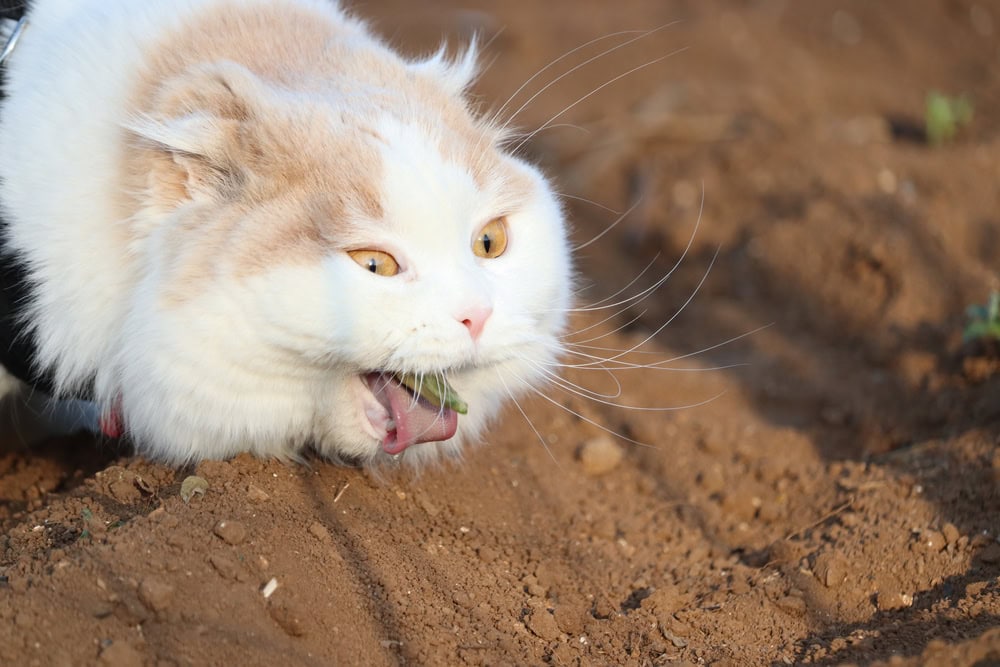
- Cat grass
- Pumpkin
- Metamucil
However, speak to your vet before adding any extra fiber to your cat’s diet, as you want to figure out just the right amount, or if this is even the right approach for your cat. Too much can affect your cat’s health.
4. Oil
Extra oil in your cat’s diet can help lubricate everything to better ease its way through the digestive tract. A small amount of fish oil can help with this. Omega-3 fatty acids can help keep a cat’s skin and coat in excellent health, but it also helps move ingested fur through the system.
5. Hairball Products
There are several products specially designed to help with hairball issues. Supplements can work at adding extra oil. There are also cat foods and treats that do a similar job.
Many of these products have ingredients like extra fiber, oil, vitamins and minerals.
6. Extra Water
You’ll want to ensure that your cat is getting enough water. One great way to do this is to get a water fountain. Cats prefer drinking from running water, and a cat fountain is a great way to give them this option. They typically drink more water from a fountain than a bowl.
Speak with your veterinarian about feeding your cat wet food. This may be in place of dry food or in addition to it. Wet food has a higher water content than dry food, so this will help get more water into their system.
Why Do They Throw Up These Things, Anyway?
Cats spend an inordinate amount of time grooming themselves — 30% to 50% of their day — which means they swallow a large amount of fur in addition to dirt, dander, and other debris.
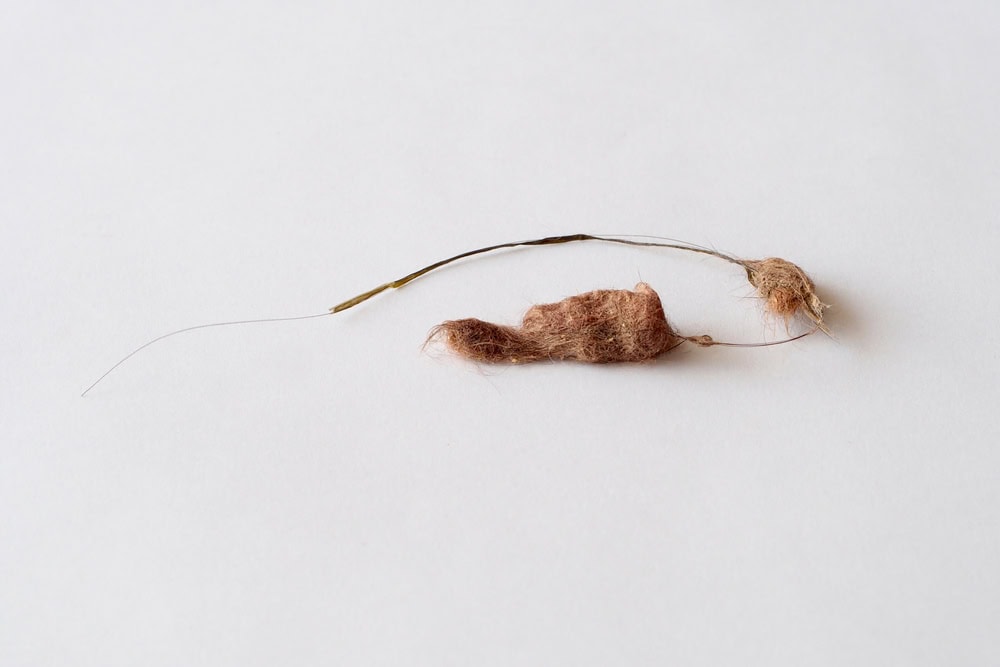
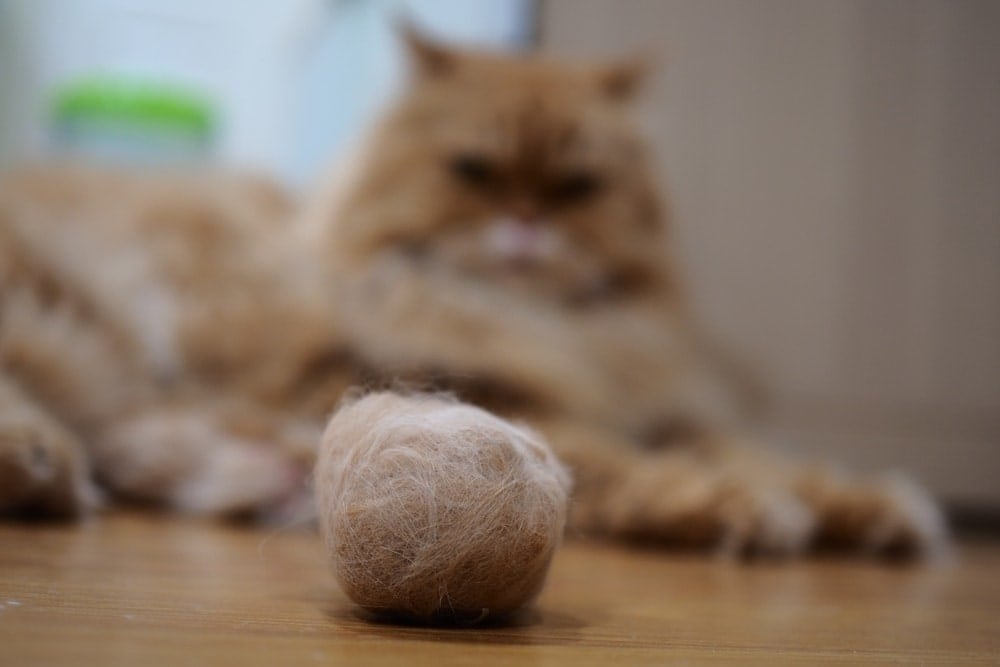
This swallowed fur usually passes through the digestive system, but some can become lodged in the stomach and accumulate into a hairball.
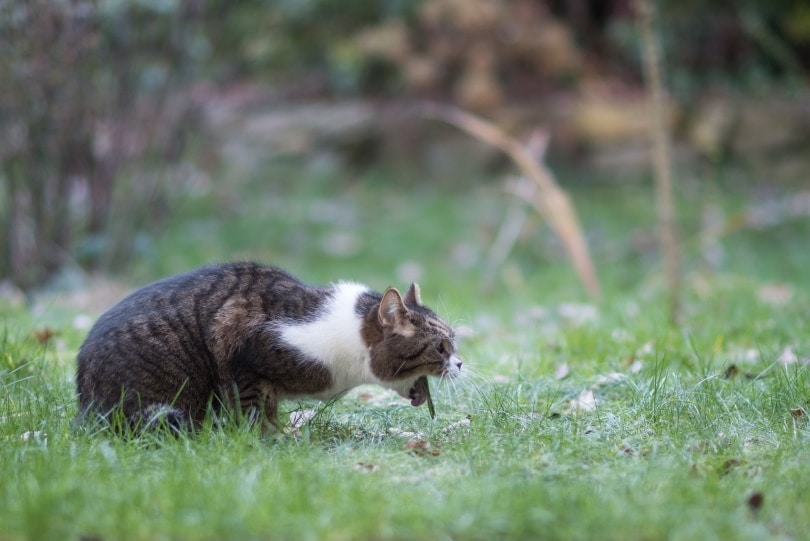
At some point, cats will eject that hairball, along with bile and saliva. Typically, the longer and more copious the fur, the more often the cat will produce hairballs, but shorthaired cats can contribute their fair share.
How Many Hairballs Are Normal?
On average, cats should produce about one hairball a week, no matter the length of their coat. So, if your cat seems to be vomiting hairballs more often than this, is retching and gagging without any result, or is not interested in eating, you should bring them to your veterinarian for an evaluation. This could be a sign of an illness.
Unfortunately, there are instances when the hairball becomes too large and bulky for the cat to throw up. In these cases, surgery to remove the hairball may be required. This is rare, but if your cat is extremely lethargic, gagging, and coughing frequently without throwing up a hairball, you should visit your vet immediately.
Conclusion
Not all of these tips will work for every cat. But a combination of one or more could make a difference. If you’re concerned about the number of hairballs that your cat is throwing up, have them examined by your veterinarian. You want to be sure they are in good health.
Hopefully, one of these suggestions will do the trick, and you’ll find yourself with fewer hairballs to clean up, a happier cat, and a happier you!
See also:
Featured Image Credit: RJ22, Shutterstock
Get Hepper In Your Inbox


Pet care tips from our vets and experts, straight to your inbox.
You may opt-out at any time. View our Privacy Policy for more information.
Kathryn was a librarian in a previous lifetime and is currently a writer about all things animals. When she was a child, she hoped to work in zoos or with wildlife in some way, thanks to her strong love for animals. Unfortunately, she's not strong in the sciences, so she fills her days with researching and writing about all kinds of animals and spends time playing with her adorable but terribly mischievous tabby cat, Bella. Kathryn is hoping to add to her family in the near future – maybe another cat and a dog.
Join the conversation
Ask a question, share your story, or send private feedback.