Hepper is reader-supported. When you buy via links on our site, we may earn an affiliate commission at no cost to you. Learn more.
Can Cats Eat Grapes? Vet Approved Facts & Advice



In this article
Grapes are sweet, delicious, nutritious fruit that many humans love. However, if you’ve ever been tempted to share your grapes with your feline companion, don’t. The question of whether cats can eat grapes is answered with a no, as it's just not worth the risk. Though they’re great for humans, this delicious fruit could be toxic to cats.
While it may be tempting to share because, after all, grapes are sweet, nutritious, and perfectly sized for cats, feeding your cat grapes could lead to a host of issues, some of which could be fatal. In this article, we’ll answer your questions about cats and grapes and tell you what you need to ensure you never feed them to your beloved pet.
If your cat has eaten one or more grapes, please contact your vet immediately, as you can always come back to this article, but your cat has a better chance of making a full recovery if treated in time.

Grape Toxicity in Cats
You likely already know that grapes are toxic to dogs, but why are they toxic to cats as well? In reality, researchers don't yet know for sure and grape toxicity in cats remains rare, but possible. Based on this information, veterinary professionals advise to be on the side of caution, as the consequences may be dire. There is no blanket dose level to determine just how many grapes you can feed your cat before it causes signs of poisoning or becomes fatal, so it is best to just feed them no grapes at all. One cat may be fine after ingesting a few grapes, while another cat in your household might get really sick and possibly die.
We know that poisoning is more likely the more grapes you feed your cat, but as with humans, every cat reacts in a unique way when it comes to different foods, so why take that chance? However, if you find your cat eating just one grape, you should still contact your vet for advice. But if you have found that your cat has ingested more grapes, your vet will recommend examining the cat and discussing signs of poisoning and how to manage them. If you spot any of the signs we’ll talk about in a later section, you need to get your cat to the vet right away.

What Are the Dangers of Feeding Grapes to Cats?
Only recently, researchers have identified the most likely culprit behind grape and raisin toxicity in dogs as a compound called tartaric acid. It damages the kidneys and causes the signs of poisoning commonly identified in dogs and less often seen in cats. This is why the American Society for the Prevention of Cruelty to Animals (ASPCA) and other reputable sources advise against feeding this particular food to your cats as well.
It becomes a bit confusing when researching grapes and cats because some cats will get sick if they eat grapes, and others won’t, and at the moment the reason behind this remains unknown. The most significant danger of cats eating grapes is the chance of kidney failure. It is possible that tartaric acid that can be found in both grapes and raisins can lead to sudden kidney failure in cats.
The amount of tartaric acid can vary in grapes by their type, how they were grown, and how ripe they are, which may explain why some dogs and cats get very sick while others seem unaffected after eating similar amounts of grapes or raisins, according to experts at Clinical Nutrition Service at Tufts University. It isn’t safe to feed your cat peeled grapes, either.
Signs of Grape Poisoning in Cats
While you may do everything you can to keep your feline pal from getting into the grapes, cats are curious and often find even those things you’re hiding from them. If you walk into the kitchen and find your cat gnawing on a grape, there are signs of grape poisoning to look out for in cats. These signs usually present themselves in a matter of hours, so it’s essential to contact your vet right away if you think your cat has eaten one or more grapes. In the first 24 hours, cats show signs of a stomach upset, followed by signs of kidney damage that may be irreversible if not treated in time.
If you aren’t sure exactly how many grapes your cat ingested, it’s best to go ahead and take them to the emergency vet so they can be given the appropriate and prompt treatment by a trained professional.

How Is Grape Poisoning in Cats Treated?
The earlier your cat can be treated, ideally just as they have ingested the grape(s), the better their chances of a full recovery are. If your cat is experiencing any signs of grape poisoning, it’s imperative not to delay getting them to the vet. The treatment will be determined according to how much time has passed since your cat ingested the grapes.
In most cases, if caught very early or just as the cat has eaten the grape(s), the vet will safely induce vomiting to get as much of the grapes out of your cat’s system as possible. Never try to induce vomiting yourself, as it can do your cat more harm than good and you are delaying getting them the treatment they urgently need. However, if your cat has ingested too many grapes or a lot of time has passed, more extensive measures will be called for. These measures include intravenous fluids and supportive treatment, as there is no cure for grape toxicity. That’s why it’s imperative to treat the cat as soon as possible after they have ingested the grape(s). Unfortunately, treatment options such as dialysis or in particular renal replacement therapy are rarely available, do not come without risks, and are only performed at some referral and university clinics for cats in acute kidney failure, often due to toxin exposure. In severe cases where the cat stops producing urine, meaning the kidneys have failed, there may not be much your vet can do if the signs of toxicity have already progressed this far.
That is why it’s so important to get your cat seen by a vet immediately, and after they receive adequate treatment, to watch them for signs of toxicity. If in doubt, take them to the vet anyway because it’s better to be safe than sorry when it comes to the life and health of your feline friend.
What Fruits Are Safe for Cats?
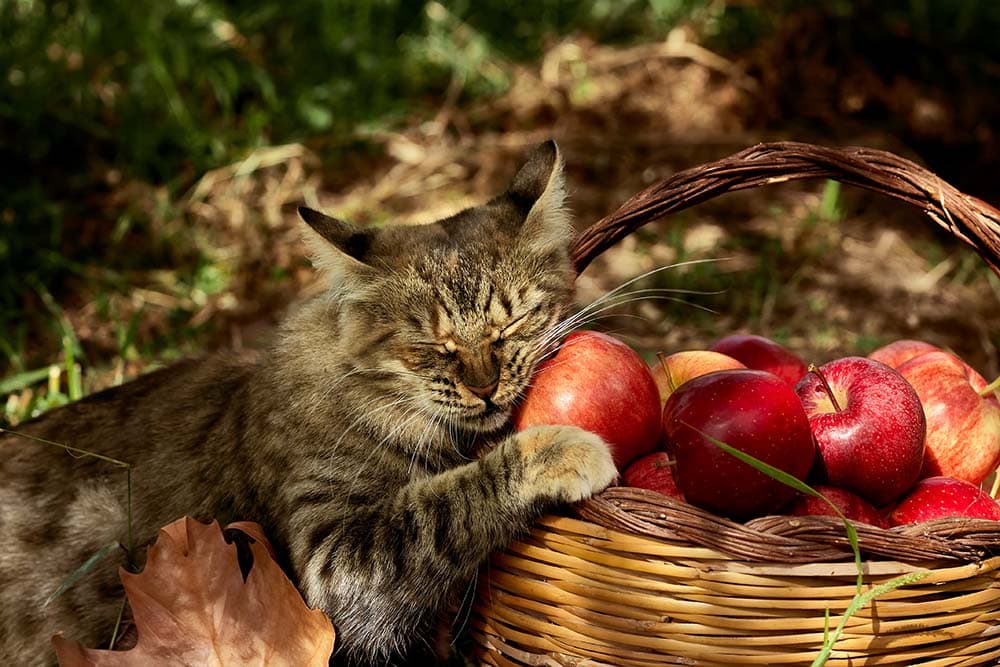
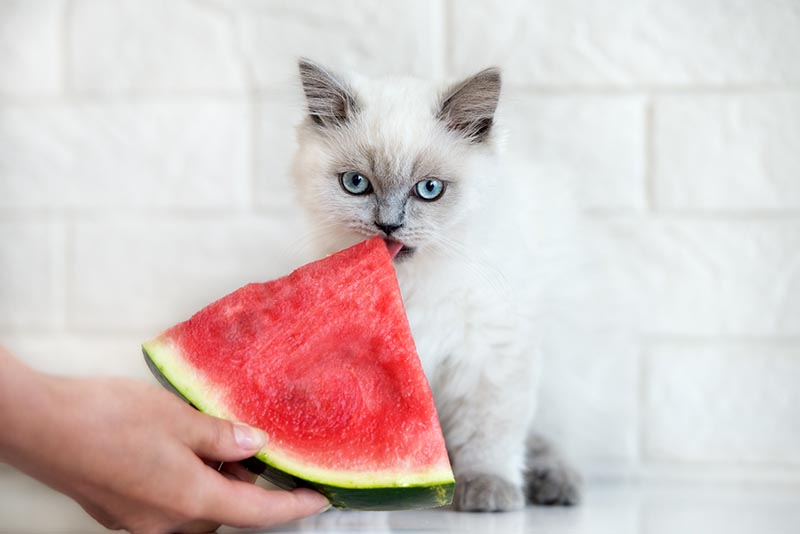
While you shouldn’t feed your cat grapes, there are fruits out there that can safely be fed to your feline companion in moderation and only occasionally. A list of those foods can be found below. However, though they are not toxic to cats, this doesn’t necessarily mean they are appropriate and may still lead to an upset stomach. If your cat is diabetic, is on any long term treatment or suffers from a digestive issue, it's important to consult with your vet first, before offering any treats rich in sugar.
While it’s okay to feed your cat these fruits, it’s still better to offer them in moderation, as cats don’t reap much nutritional benefit from fruit. Their bodies need animal protein to thrive. Many cats aren’t interested in the sweetness of the fruits above, but every cat is different. Make sure to cut the fruits into tiny pieces and remove the banana peel before giving your cat a small piece of these tasty treats to avoid them becoming a choking hazard and an upset stomach later on.


Are There Other Foods That Are Dangerous to Cats?
It’s important to note that there are other foods out there that you shouldn’t feed your cats also. Food such as chocolate, garlic, and onions can also be dangerous to your cat’s health, as they are toxic It’s best to give your cat appropriate meat-based treats instead of any of these foods.
The answer to the question of whether it’s safe for cats to eat grapes is a resounding no. While scientists now believe tartaric acid from grapes is what gets cats sick, it’s just best to err on the side of caution and keep the delicious fruit away from the pet you love. There are plenty of alternatives to choose from, so why take the chance?
For more information on what cats can eat, check out:
Sources
Food Hazards - Special Pet Topics - MSD Veterinary Manual (msdvetmanual.com)
‘In the News’: Updates on Grape Toxicity – Clinical Nutrition Service at Cummings School (tufts.edu)
Toxic Component in Grapes and Raisins Identified! | ASPCApro
Common Poisons » Veterinary Poisons Information Service (vpisglobal.com)
What causes grape toxicity in dogs? Playdough might have led to a breakthrough (aaha.org)
Applications and outcome of hemodialysis in cats: a review of 29 cases - PubMed (nih.gov)
‘Dialysis’: Renal replacement therapy - Information for vets (rvc.ac.uk)
Featured Image Credit: Jill Wellington, Pixabay
Get Hepper In Your Inbox


Pet care tips from our vets and experts, straight to your inbox.
You may opt-out at any time. View our Privacy Policy for more information.
Nicole is a lover of animals of all sizes but is especially fascinated with the feline variety. She’s the proud mom of Baby, a Burmese, and works every day so he can relax in the sunshine or by the fire. She’s always had a cat in her home and has spent countless days with others, observing behaviors and softening up even the grouchiest of the lot. Nicole wants to share her kitty expertise with you so you and your cat can live happy, healthy, and care-free.
Join the conversation
Ask a question, share your story, or send private feedback.