Hepper is reader-supported. When you buy via links on our site, we may earn an affiliate commission at no cost to you. Learn more.
Can Cats Eat Peanuts? Vet-Reviewed Health & Safety Guide


In this article
If your cat starts rubbing your legs when you’re getting snacks ready, you might be wondering if it’s okay to give your furry friend a little treat as well. If peanuts are one of your favorite snacks, is it safe for your cat to have one too?
In brief, plain peanuts are safe for cats to eat. There are a few exceptions, though, so let’s find out a little more about whether it’s a good idea to offer them to your cat. As with any food that isn’t designed specifically for cats, you should always speak to your veterinarian before offering peanuts to your cat.

Fun Facts About Peanuts
Technically, the peanut comes from the legume family, like lentils and peas. So despite their name, they’re not a true nut. Peanuts mature underground and are usually harvested 4-5 months after planting. Peanuts are also sometimes called ground peas or groundnuts because they grow underground.
Peanuts are the most popular nut snack in the U.S.A. and account for 66% of all the nuts bought. The U.S.A. produces around 3 million tons of peanuts each year, with Georgia, Texas, North Carolina, Florida, and Alabama producing the majority of the crop.
Most Americans eat 3 pounds of peanut butter per year. A 12-ounce jar of peanut butter contains roughly 540 peanuts.
There are four main varieties of peanut grown in the U.S.A.: Spanish, Valencia, Runner, and Virginia. Of the four, Runners account for 85% of production and are mostly used to produce peanut butter.

Good Things About Peanuts
Peanuts are a great source of protein, and as obligate carnivores, cats thrive on a diet that’s high in protein. Per ounce, peanuts contain 7.31 grams of protein. Peanuts are also rich in vitamin E, niacin, magnesium, copper, and biotin.
What cats really need, though, is animal protein. So while peanuts are high in protein, they don’t necessarily contain the most digestible version for cats.
Bad Things About Peanuts
Peanuts might be high in protein but they’re also high in fat. That means if your cat ate them regularly, they’d be at higher risk of becoming obese and suffering from a range of conditions developed as a result. Per ounce, peanuts contain 13.9 grams of fat. This fat is monounsaturated, also known as a “good fat,” but your cat’s digestive system isn’t designed to process nut-based fats.
Many peanuts are also coated in salt or other flavorings, which your cat definitely doesn’t need. These can be difficult for your cat to digest and can cause gastrointestinal issues.
How to Feed Peanuts to Your Cat Safely
If you still want to feed your cat peanuts, here’s how to do it safely.
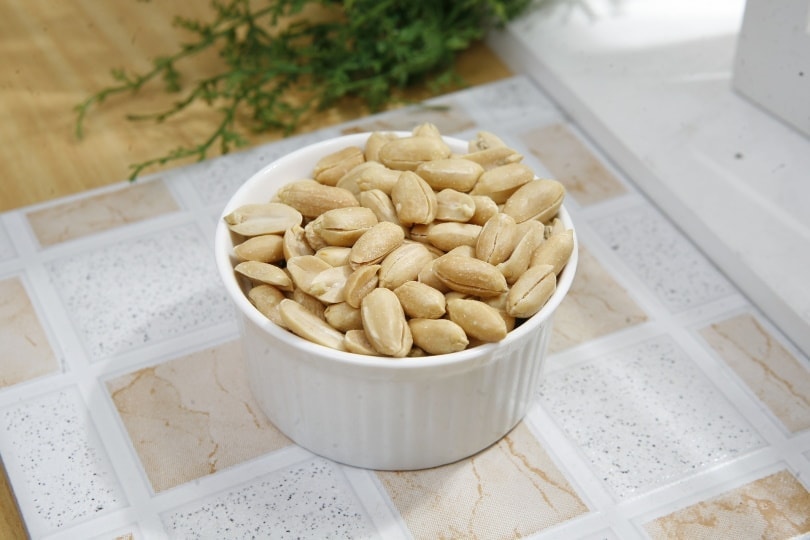
Only ever offer your cat untreated raw peanuts. The salts, spices, and other flavorings that may coat the peanuts that you like to eat could give your cat gastrointestinal issues and make them sick. Make sure the outer hard shell has been removed, as this contains no beneficial nutritional value, might be a choking hazard, or could cause an obstruction along your cat's digestive tract.
Some cats may be allergic to peanuts, so watch out for the following signs:
Signs of A Peanut Allergy
Only ever feed your cat a tiny piece of peanut, around a ¼ of a nut. Watch them carefully for any signs of discomfort, and if your cat shows any signs that they’re having trouble digesting this, don’t feed them any more. Additionally, schedule an appointment with your veterinarian to have them examine your cat thoroughly.
Can Cats Eat Peanut Butter?
If peanuts are non-toxic for cats, what about peanut butter? This is okay to give your cat as a very occasional treat, but make sure it’s a natural variety with no added salt or sugar.
One thing to watch out for is that peanut butter can be a popular bait for mouse or rat traps. If your outdoor cat develops a taste for peanut butter, be careful that they’re not allowed access to anywhere that rodent traps laced with this tasty treat.
Now that you know what you can safely feed your cat, it’s just as important to find a bowl that supports their health and well-being. With whisker-friendly bowls and a wide tray to catch any spills, our Hepper NomNom Cat Bowl is our favorite option.

- NO MESS - The 360° tray on this cat food and water bowl set has a raised design to catch and contain stray crumbs and drips. Protect your indoors and floors from wet and messy meals!
- WHISKER FRIENDLY - Shallow and wide metal containers with flat bottoms ensure your kitty can enjoy mealtime free from whisker fatigue!
- CHEW-SAFE MATERIALS - Kittens and cats love chewing on silicone and soft rubber - but it's a choking hazard. Our cat feeding station materials are anti-chew for a 100% safe feeding frenzy!
Wrapping Up
Peanuts might be one of the U.S.A.’s favorite nuts, but that doesn’t mean they’re a good treat option for our feline friends. While peanuts aren’t toxic to cats, and they do contain a large amount of protein, there’s no real reason for your cat to eat them.
You’d be better off choosing a high-protein, meat-based treat that’s been designed specifically for cats. Allow your cat to enjoy a few of those while you eat your peanuts, and you’ll both be happy!
For more information on what cats can eat, check out:
Featured Image Credit: Couleur, Pixabay
Get Hepper In Your Inbox


Pet care tips from our vets and experts, straight to your inbox.
You may opt-out at any time. View our Privacy Policy for more information.
Emma is a freelance writer, specializing in writing about pets, outdoor pursuits, and the environment. Originally from the UK, she has lived in Costa Rica and New Zealand before moving to a smallholding in Spain with her husband, their 4-year-old daughter, and their dogs, cats, horses, and poultry. When she's not writing, Emma can be found taking her dogs for walks in the rolling fields around their home...and usually, at least some of the cats come along, too! Emma is passionate about rescuing animals and providing them with a new life after being abandoned or abused. As well as their own four rescue dogs, she also fosters dogs for re-homing, providing them with love and training while searching for their forever homes.
Join the conversation
Ask a question, share your story, or send private feedback.