Hepper is reader-supported. When you buy via links on our site, we may earn an affiliate commission at no cost to you. Learn more.
Can Cats Eat Jicama? Vet-Verified Nutrition Facts & FAQ


In this article
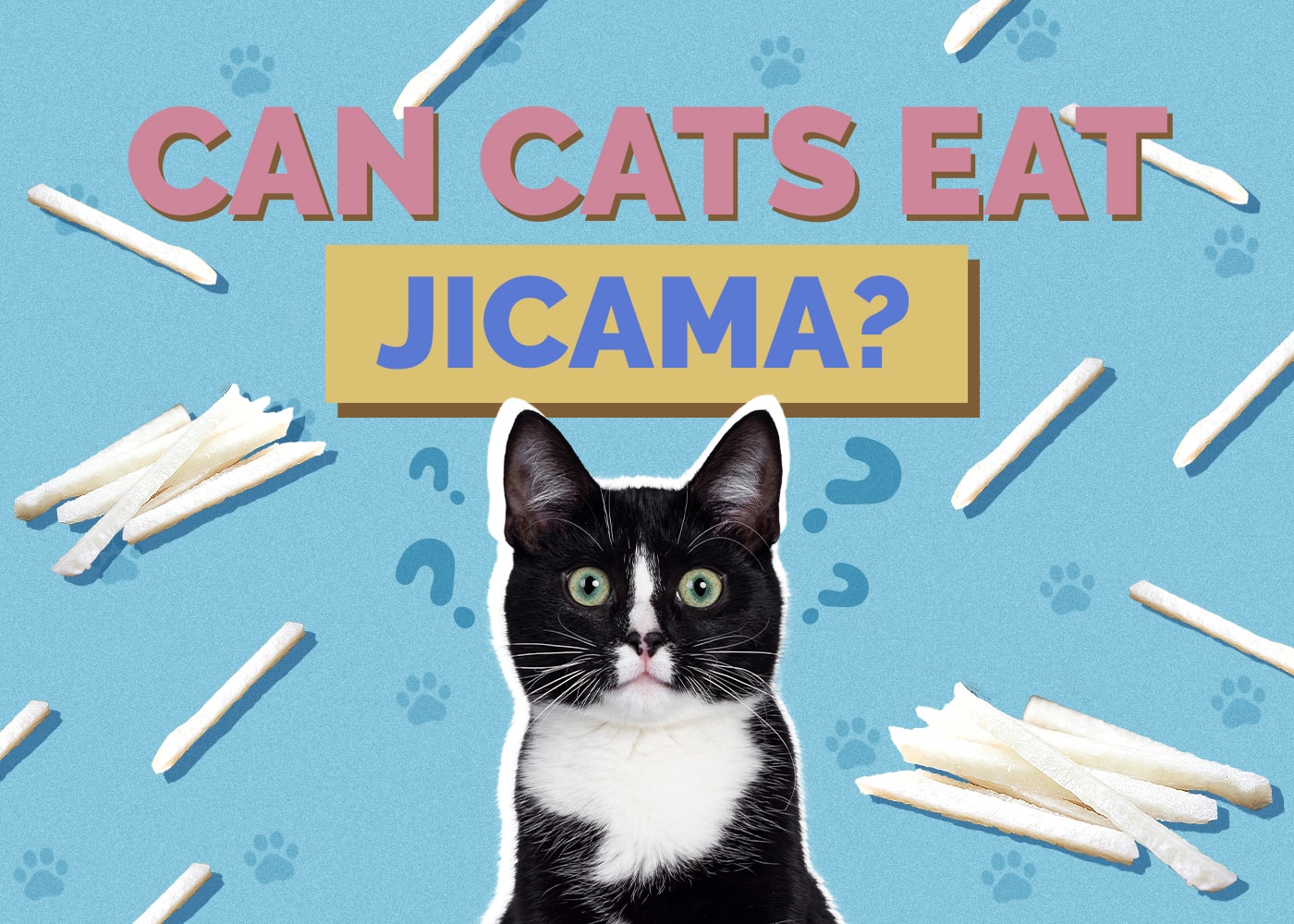
You may have seen a brown, turnip shaped root vegetable in the produce aisle of your local store. Or maybe you’ve seen something called a “jicama” for sale in your local Latin market. Jicama is a starchy root vegetable growing in popularity because of its amazing health benefits to humans.
With the growing popularity of jicama, you might be wondering if you can share this vegetable with your pets, too. If you have a cat, here’s what you need to know: the jicama is a safe vegetable to let your cat taste, and it might even add some vitamins and fiber to your cat’s diet.
But jicama won’t satisfy your cat’s nutritional needs, and the seeds and stems of the jicama plant contain dangerous toxins that need to be kept from cats. Read on to learn more about jicama and your furry feline.

What is Jicama, Anyway?
If you’ve never heard of jicama, don’t worry! Jicama is a round root vegetable with papery golden-brown skin, a crunchy white interior, and a mild taste that’s sometimes compared to a pear or water chestnut originating from Mexico. It is also called a Mexican turnip, Mexican yam, or Mexican water chestnut. Jicama has become more popular in the last few years as a superfood because it is high in vitamins, fiber, and antioxidants.
Why Cats Might Eat Jicama
Cats don’t usually show an interest in vegetables, but occasionally they are curious about what their owners eat. Some cats might try to taste jicama because you are eating it. Jicama doesn't have a strong smell, but the slightly nutty overtones could also attract a cat. Some cats also enjoy the crunchy texture of vegetables, so if your cat eats a bite, he might want more.
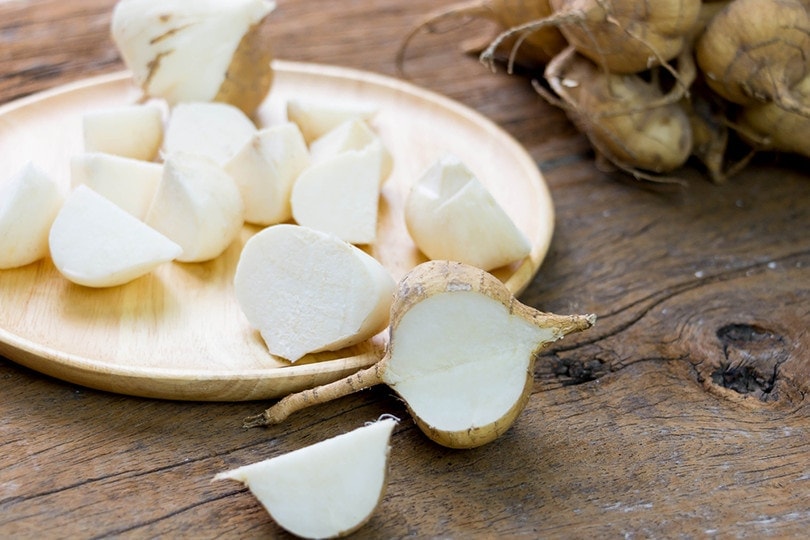
Possible Health Benefits of Jicama for Cats
Although there are many benefits to jicama, it's hard to gauge how those will translate to cats. There haven't been any studies on jicama's health benefits for cats, so we must look at cats' nutritional needs and how other vegetables help cats to understand.
Cats are obligate carnivores and get most of their nutrition from animal proteins and fats. They don’t process carbs very well, so jicama isn’t going to give them much energy. But cats need a small amount of fiber in their diet, which jicama is high in. Some of the vitamins and minerals found in jicama, including vitamin E, riboflavin, and thiamine, are a necessary part of a cat's diet. Although your cat's normal food should meet their nutritional needs, these extra vitamins can help.
How to Prepare Jicama for Cats
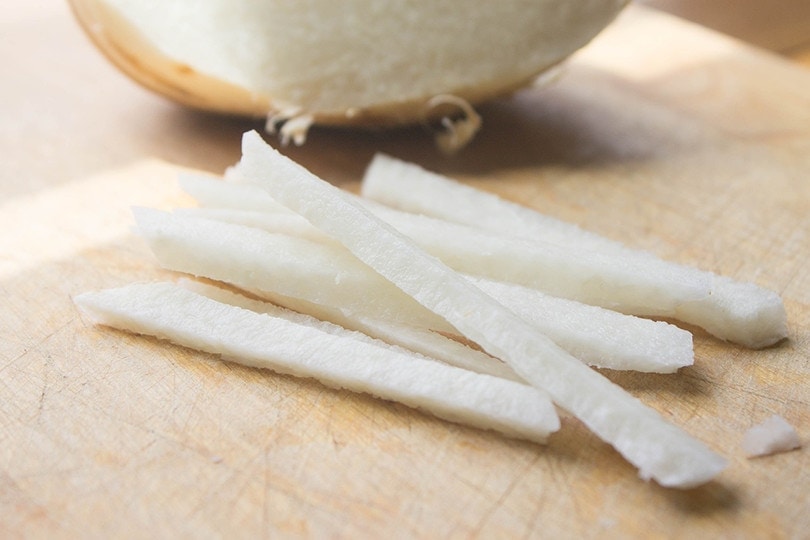
Cats can eat jicama raw or cooked. Before you cut up your jicama, peel and wash it thoroughly to remove any trace of pesticides. If you cook jicama, you should bake or boil it, not fry it in oil. You should also avoid any flavorings or spices such as salt, garlic, onion, or pepper. You can give your cat a small piece of jicama to snack on. If you worry that your cat’s diet is low on fiber, you can also try cutting up a small about of jicama to add to your cat’s wet food.
Dangers of Eating Jicama
Although jicama is generally safe for cats to eat, you should always exercise caution. One concern with feeding your cat jicama is the presence of rotenone, a naturally occurring pesticide, in the plant's stems, leaves, and seeds. Although the root doesn't contain rotenone, you should make sure to remove any stem from the plant before you prepare it.
Jicama also may have been treated with synthetic pesticides and insecticides that are harmful to cats. You should always wash your vegetables thoroughly before eating or sharing with your cat. Finally, because jicama is low in healthy proteins and fats, you should make sure that whatever your cat eats doesn't replace a good meal. Jicama is fine in small amounts, but it won't meet your cat's nutritional needs.
Now that you know what you can safely feed your cat, it’s just as important to find a bowl that supports their health and well-being. With whisker-friendly bowls and a wide tray to catch any spills, our Hepper NomNom Cat Bowl is our favorite option.

- NO MESS - The 360° tray on this cat food and water bowl set has a raised design to catch and contain stray crumbs and drips. Protect your indoors and floors from wet and messy meals!
- WHISKER FRIENDLY - Shallow and wide metal containers with flat bottoms ensure your kitty can enjoy mealtime free from whisker fatigue!
- CHEW-SAFE MATERIALS - Kittens and cats love chewing on silicone and soft rubber - but it's a choking hazard. Our cat feeding station materials are anti-chew for a 100% safe feeding frenzy!
Tempting Alternative Treats
Cats can eat lots of foods, but the best options are closer to what cats eat in the wild will be better for them in general. The best cat treats should be high in protein, with smaller amounts of fat and low carbs. Your cat can safely eat most types of meat, but cured meats and high-fat cuts are both less healthy. You can also see if your cat likes to eat cooked eggs. Low-lactose dairy products like hard cheeses are another good treat unless your cat has a very sensitive stomach.
A comfortable, regular diet is much more important than tasting new things for many cats. It can be fun to see what your cat wants to eat, but the most tempting treat is usually just an extra morsel of their ordinary food.
See also:
Get Hepper In Your Inbox


Pet care tips from our vets and experts, straight to your inbox.
You may opt-out at any time. View our Privacy Policy for more information.
Chelsea Flake Mortensen is a writer with a passion for pets. She grew up around everything from cats to chameleons and loves working with all kinds of animals. Chelsea has a BA in English and Creative Writing from Brigham Young University.
Chelsea loves reading, writing, sewing, and board games. She's lived in half a dozen US states and two countries. She is currently living in New England with her husband. Her articles have been featured in various magazines and literary journals for children and adults. Her writing has been translated into over 40 languages.
Join the conversation
Ask a question, share your story, or send private feedback.