Hepper is reader-supported. When you buy via links on our site, we may earn an affiliate commission at no cost to you. Learn more.
Can Cats Eat Vaseline? Vet-Reviewed Health & Safety Facts


In this article
No home medicine cabinet is complete without the legendary tub of Vaseline. Its uses in the home and on the person seem to be endless! But although it is proven to be safe for many personal human benefits, is it safe for our pets?
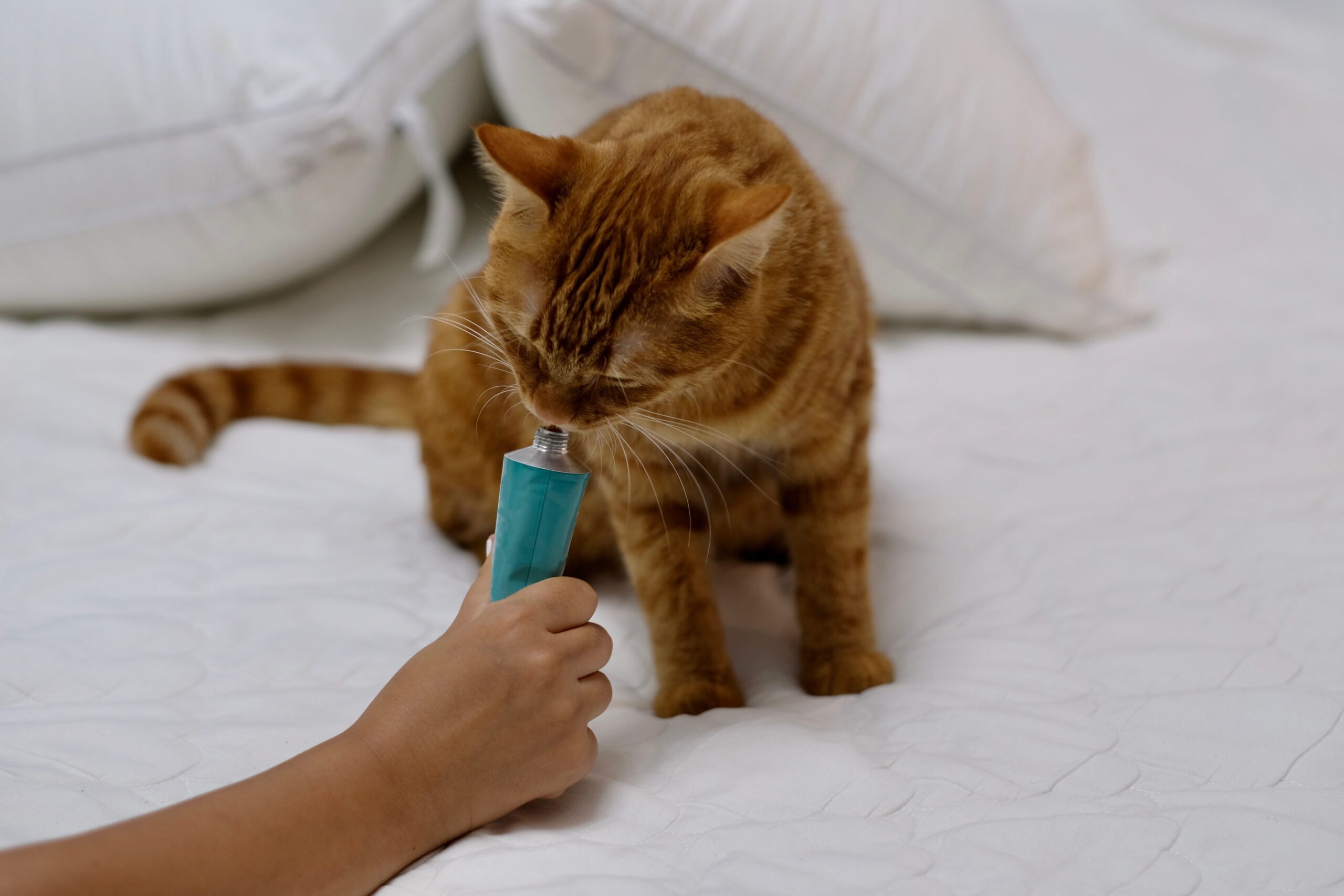
Generally, Vaseline (a common brand name of petroleum jelly, petrolatum, or white soft paraffin) is not toxic if ingested in small amounts, but it is not recommended to give your cat Vaseline to treat any ailment. Some hairball products contain petrolatum in their ingredient list; however, you should follow your vet’s guidance if your cat suffers from hairballs. There are risks associated with a cat eating Vaseline depending on multiple factors, including the type of Vaseline, your cat’s general health and age, and how the Vaseline is administered.
Read on to delve deeper into this controversial topic so you can make all the best choices for keeping your cat happy and healthy.

Is Vaseline Safe for Cats to Eat?
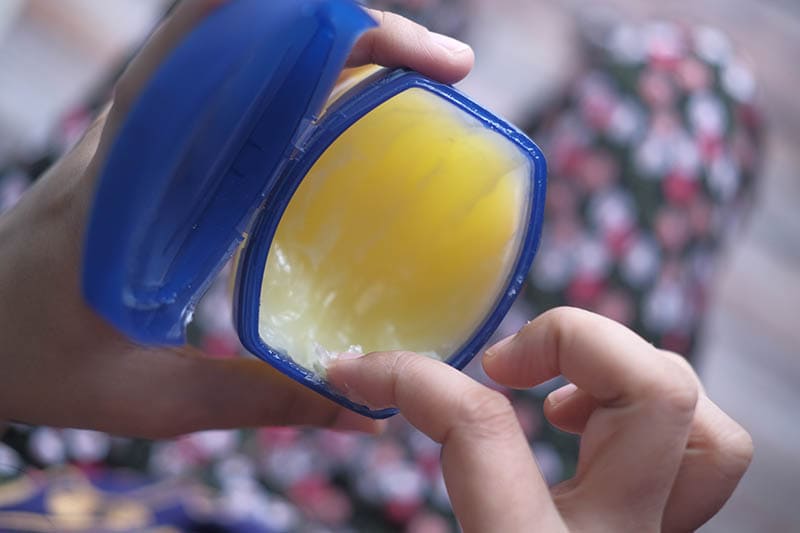
While Vaseline is a super common household product, how many of us actually know what’s in it? Vaseline is a type of hydrocarbon (a substance made up primarily of carbon and hydrogen) derived from petroleum distillation. Therefore, the main ingredient of Vaseline is actually petroleum.
The biggest hazard with Vaseline would be the product getting into your cat’s lungs and causing aspiration pneumonia, which can happen when the liquid form is accidentally inhaled. Regular Vaseline has a high viscosity, which means it is very thick, and therefore, the risks linked to aspiration are very low compared to thinner or more liquid paraffin products.
The petroleum in Vaseline is a by-product that is commonly used in human cosmetics and skin products. Vaseline is marketed as a skin protectant to be safe for external human use. However, the risks of chronic exposure to mineral oil hydrocarbons in women are being investigated.² Its chemical composition is helpful as an “occlusive” or, simply put, a moisture barrier. It doesn’t actually add any moisture as it does not absorb into surfaces but instead forms an impenetrable protective layer.
Vaseline has no nutritional value and it is minimally absorbed by the gut. Liquid paraffin given by mouth is used as a laxative because it lubricates stools and the intestinal lining. It is considered safe for cats if prescribed by your vets and when it is taken in limited amounts and in the right formulation. You should never attempt to give liquid paraffin to your cat because the risk of aspiration pneumonia is very high. Paraffin as a laxative can also be given rectally if indicated by your vet. Using this route, the risk of aspiration is minimal. However, the risk of digestive upset is still present if the dose is not adequate.
Vaseline as a Treatment for Hairballs
If you’ve owned furry friends for an extended period, then you will know there might be a lovely time of year when your home can be inundated with cat hair. Cat shedding can be year-round or seasonal. Cats may shed their coat twice a year, during spring as they lose their winter coat in preparation for summer, and in fall when they lose their summer outfit to fluff up for winter.
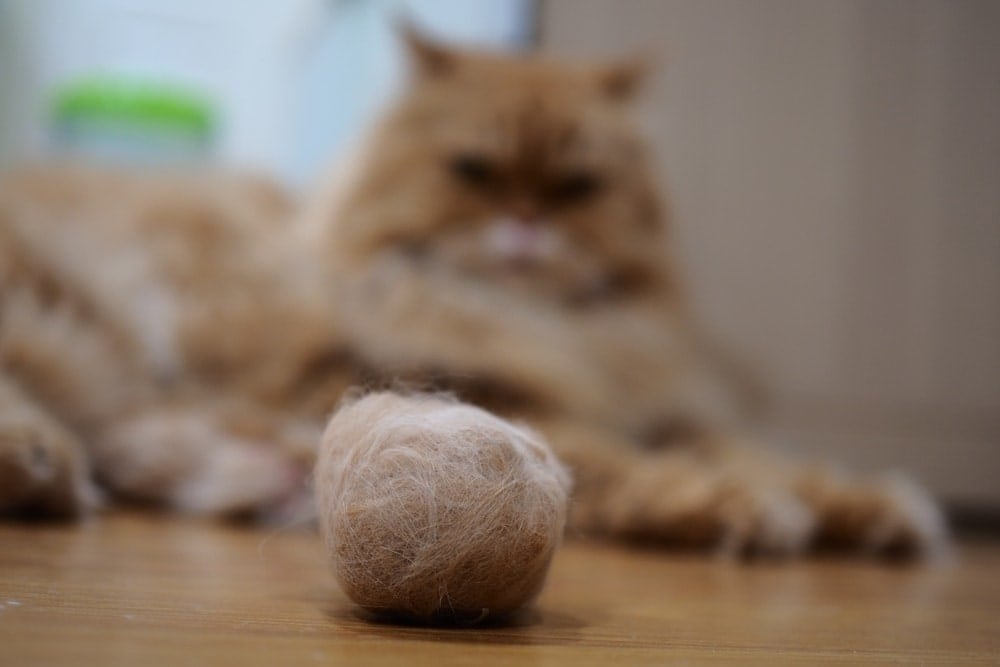
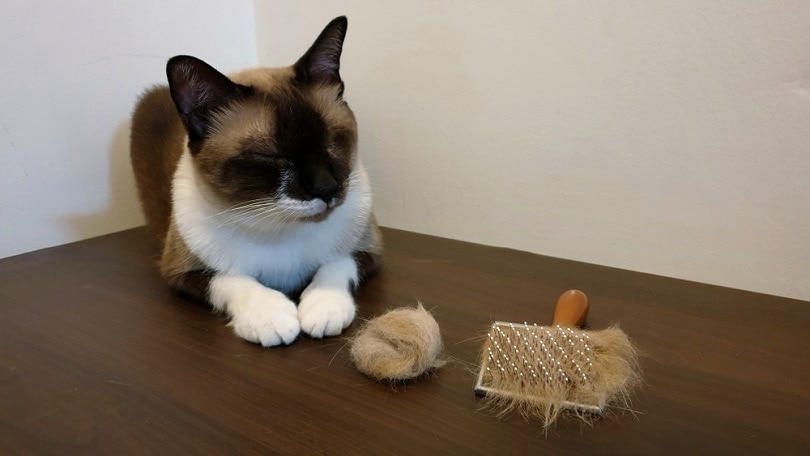
Due to their grooming habits, cats can be prone to getting hairballs any time of the year, but if they go through seasonal shedding, these times will increase that risk, as there is simply a lot more fur around for them to ingest. Smaller amounts of ingested hair will often pass through their digestive tract without a hitch. Still, more significant amounts can cause irritation and conglomerate together as a hairball.
Usually, hairballs will not get too far and be regurgitated back up. But on occasion, they will make their way past the stomach and into the intestines, where they can cause some severe issues if they become impacted and cause a blockage.
While there are some ways to avoid excess hair ingestion and reduce the risk of hairballs, you should always consult with your vet before deciding to manage the problem on your own.
Hairballs are often linked to excessive grooming, which can indicate a skin problem or a behavioral issue that needs addressing accordingly. You may find that Vaseline is recommended by a few vets for hairball treatment, but there are other cat-specific products that are better suited.
It is also featured as a home remedy for constipation in cats by some sources for these same reasons. Vaseline is not the only product with this effect; natural oils can also offer the same benefit. While there seems to be some ground that Vaseline can be an effective treatment for cat hairballs, you should exercise some natural caution as an owner.
Risks of Vaseline for Your Cat
Diarrhea
Along with the benefits of a digestive lubricant, there come some risks. Given its laxative properties, if too much Vaseline is given, your cat is at high risk of developing digestive upset and diarrhea, and diarrhea can cause dehydration if not addressed promptly.
One accidental consumption of Vaseline or one day of consumption as a hairball supplement if directed by your vet should not have any extreme ill effects on a healthy cat. Exceptions will be cats that are already ill in some way. For example, cats with chronic kidney problems who might already be slightly dehydrated can get very sick if they lose further body fluids.
Longer-term Vaseline treatment can be especially harmful to elderly cats or kittens who will lose their body condition a lot quicker than a healthy adult.
Aspiration Harm
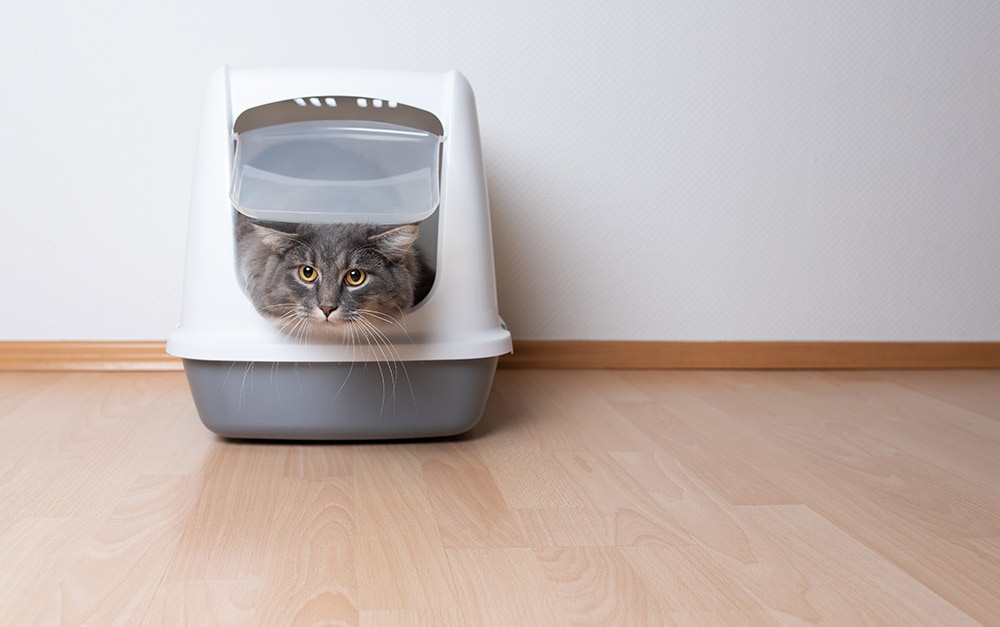
As a mineral oil, there are also some associated risks regarding aspiration of liquid Vaseline. Cats are particularly susceptible to aspiration pneumonia. This occurs when this oily substance gets to your cat’s lungs rather than their digestive system. It creates a serious problem that can be fatal.
If using Vaseline as an oral supplement recommended by your vet for your cat’s hairballs, then ensure that you never force-feed it into their mouths. If you ever use it on your cat’s skin, make sure you apply a very thin layer and try to avoid your cat licking it off. However, do not panic if this occurs, as a one-off situation like this is unlikely to end in aspiration.

Conclusion
Suppose your cat has accidentally gotten into your Vaseline tub. In that case, there is not too much to worry about if they just had a couple of licks. If your cat ate a larger amount or if you are tossing up the use of Vaseline for other purposes, such as external treatments or a hairball remedy, then we strongly advise you to contact your vet for professional advice.
As you can see, there is a range of things to consider for your cat’s health with using Vaseline orally. It’s no wonder it’s contested both between cat owners and veterinarians alike. While some home remedies may be suitable for your cat, you should always consult your vet before using any!
Featured Image Credit: JenJ_Payless, Shutterstock
Get Hepper In Your Inbox


Pet care tips from our vets and experts, straight to your inbox.
You may opt-out at any time. View our Privacy Policy for more information.
Nicole is a lover of animals of all sizes but is especially fascinated with the feline variety. She’s the proud mom of Baby, a Burmese, and works every day so he can relax in the sunshine or by the fire. She’s always had a cat in her home and has spent countless days with others, observing behaviors and softening up even the grouchiest of the lot. Nicole wants to share her kitty expertise with you so you and your cat can live happy, healthy, and care-free.
Join the conversation
Ask a question, share your story, or send private feedback.