Hepper is reader-supported. When you buy via links on our site, we may earn an affiliate commission at no cost to you. Learn more.
Can Cats Have Bipolar Disorder? Our Vet Answers

In this article
As you watch your cat go from a lazy, sleep-loving ball of fur to a hyperactive blur that is scaling walls and abseiling down curtains, you might wonder to yourself, can cats have bipolar disorder? Given the behavioral extremes that some cats exhibit, it is a reasonable thing to ask. Although we cannot completely exclude the possibility, it is highly unlikely that the ups and downs of feline behavior are because of bipolar disorder.
Let’s take a closer look at what bipolar disorder is, and how it compares to feline behavior.

What Is Bipolar Disorder?
Bipolar disorder is a complex mental health condition. The hallmark characteristic is that people with this condition have extreme highs and lows. The highs are also referred to as mania or manic behavior, while the low is severe depression.
People with bipolar disorder typically experience manic and depressive states that last for weeks or months. In humans, bipolar disorder often has a genetic link, with a person having a higher risk of developing the condition if they have an immediate relative with bipolar disorder. Stressful episodes or drug use have also been implicated as potential triggers of this disease.
There is currently no medical test for bipolar disorder, and diagnosis is based on clinical signs and history, along with extensive psychiatric evaluation. Treatment most often involves the use of mood stabilizers and antidepressant medications to reduce the extreme nature of the highs and lows.
Can Cats Be Bipolar?
As there is no test for bipolar disorder, we cannot rule it out completely, but it is highly unlikely that cats can be bipolar. The type of “mood swings” we see in our cats are usually consistent with normal feline behavior, although the highs and lows seen in some cats seem to be more extreme than others!
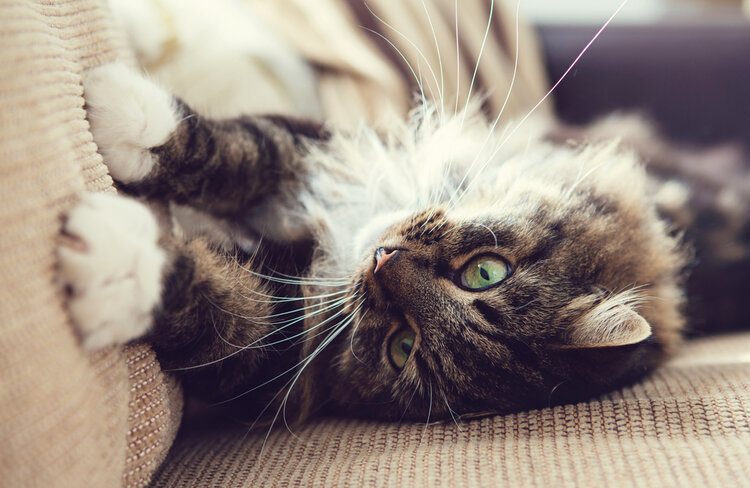
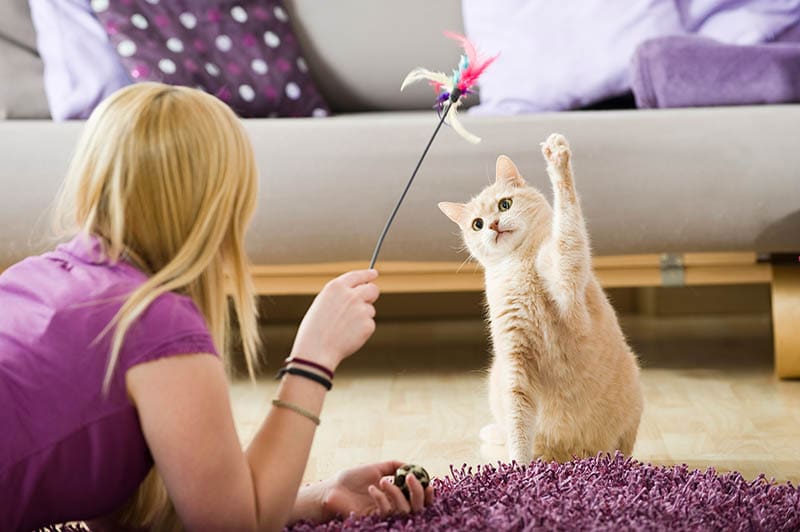
Felines in the wild generally have two modes: hunt and rest, with the resting period taking up around 80-90% of their day. Pet cats follow quite a similar pattern, with most cats sleeping around 16-20 hours per day. As we provide them with their daily meals, our pets don’t need to hunt, and certainly those that live indoors don’t usually have the opportunity to hunt. So, where does all that stored energy go? This is where feline “hyperactivity” comes into play. A cat that was sleeping soundly only moments ago, is suddenly tearing around the house, playing with toys, swinging from chandeliers and behaving like they have been possessed. Then, just as quickly as it started, the moment of madness is over, and our cat is once again curled up asleep.
It is understandable why these dramatic swings could be seen as being bipolar, but they are actually completely normal.
Can We Be Sure That Cats Don’t Have Bipolar?
We can’t, but we can take what we know about the human condition and compare it to observations in our cats, taking our differing lifespans into consideration.
In humans, the manic and depressive states tend to last for weeks or months, so for a cat, we would expect their hyperactive state to last for hours or days, and their depressive phase to linger for days to weeks.
People experiencing the depressive phase of bipolar disorder are often lethargic, unable to complete their normal tasks, and can even be suicidal. During manic periods, they may partake in risky or dangerous activities.
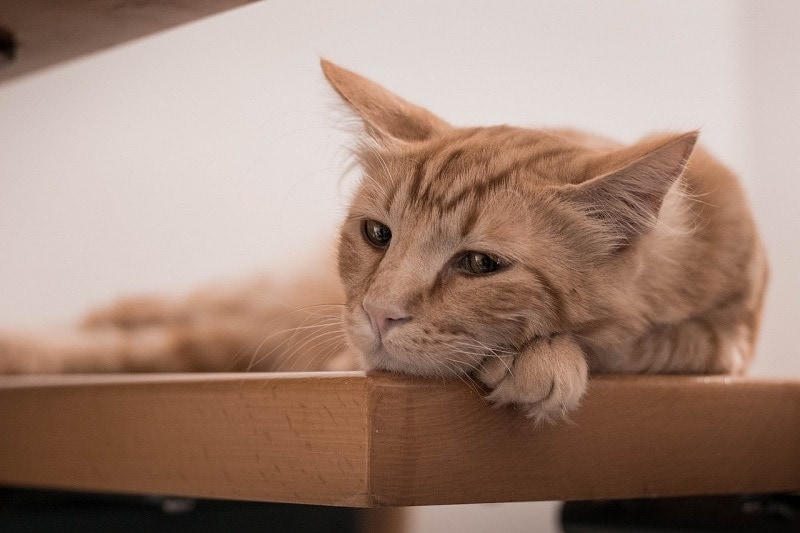
When cats are in their quiet state, they do not tend to show signs of lethargy or depression; they are simply sleepy or relaxed. Of course, sometimes it may seem like their aerobic antics are bordering on risky or dangerous!
There are some conditions which may cause our cats to undergo more prolonged periods of hyperactivity or depression, and these are generally due to specific illness or injury.
What Health Conditions Might Mimic Bipolar in Cats?
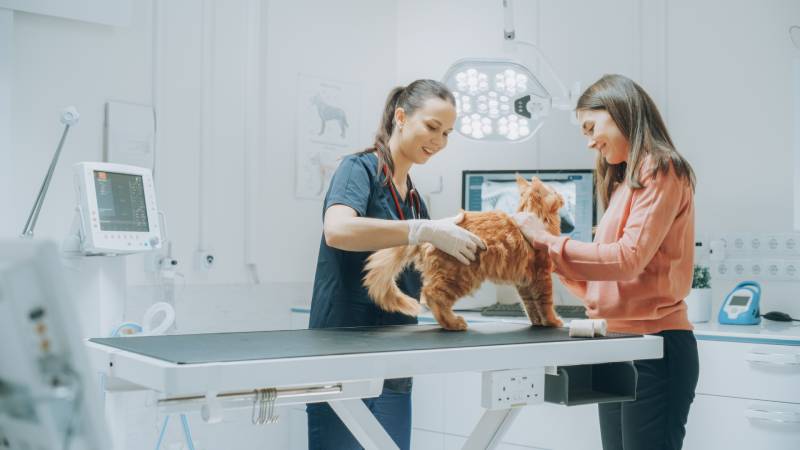
Cats that exhibit signs of depression or lethargy that affect their ability to do normal things such as eat, go to the toilet, or interact normally with their environment or people, are likely to be suffering from illness. If your cat is showing these sorts of signs, they need to be examined by your vet.
Some common conditions that may cause prolonged depression in cats include:
If your cat seems to be extra ‘manic’, is pestering your for food, losing weight, or just seems agitated or unable to relax, there are a few medical conditions that could cause these signs, including:
- Parasites - worms, fleas or mites
- Hyperthyroidism
- Skin problems
- Pain
- Stress
- Cognitive Dysfunction Disorder (feline dementia)
Some of these issues can even cause an ordinarily placid cat to become aggressive towards you or other cats.
Any behavioral changes in your cat are worth investigating, as they are most likely to be an indicator of an underlying health problem.
How Can I Calm My Hyperactive Cat?
If your cat is in the midst of a ‘manic’ episode, do not try to stop them or lock them away unless they are at risk of injuring themselves, as this is likely to cause frustration and acting out.
If your cat seems to be particularly hyperactive, especially if their behavior has recently changed, the first step is to reach out to your veterinarian. Once any medical reasons behind their behavior have been ruled out, you can explore some other ways to help your kitty feel calmer.
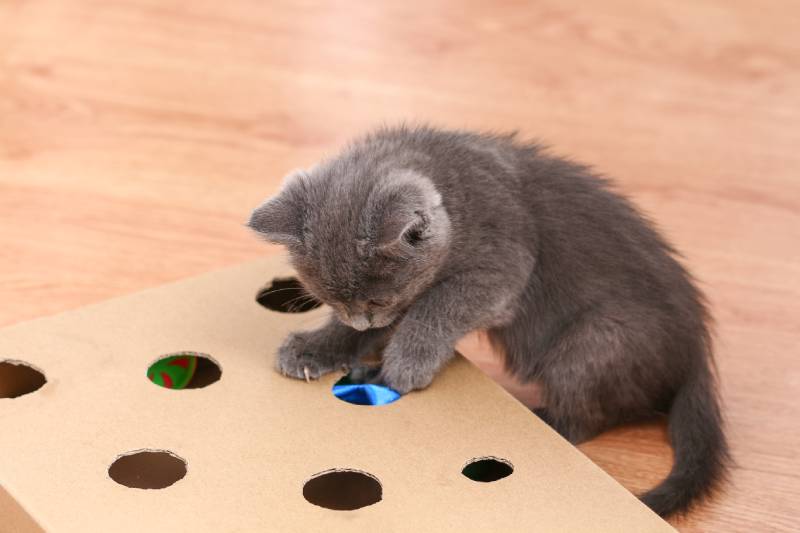
Playing with your cat and providing them with toys, activities, and cat trees to use up some of that extra energy is the best, and most rewarding way to help wear out your hyperactive cat. If your cat seems to be stressed, anxious, or on edge, there are some things you can do to help them feel more settled:
- Provide several cozy spots where they can hide away and relax.
- Use a pheromone diffuser or calming product to help them feel calmer.
- Add calming supplements to their food.
- Your vet may be able to prescribe more powerful medications in more extreme cases.
Conclusion
When your cat is sleeping peacefully one moment and wreaking havoc the next, it is completely understandable to wonder if the extremes in their activity levels could be caused by bipolar disorder. Although we cannot say for certain that cats are not affected by this condition, it is more likely that these highs and lows simply reflect normal feline behavior.
Depression and hyperactivity can occur in cats, but these are typically indicators of other health conditions and should always be followed up with your vet. But if your cat is sleeping 18 hours a day, and spends the rest of the time eating and causing chaos, then you’ve probably got yourself a pretty normal feline.
Featured Image Credit: Kristi Blokhin, Shutterstock
Get Hepper In Your Inbox


Pet care tips from our vets and experts, straight to your inbox.
You may opt-out at any time. View our Privacy Policy for more information.
Karyn has lived in the UK for the past 10 years after moving from Queensland, Australia. In 2010, she graduated from The University of Queensland School of Veterinary Science, and also holds a Bachelor’s degree in Zoology. Karyn is passionate about using evidence, experience, and owner collaboration to provide the best solutions for pets, and believes in making reliable information about animal health accessible to all. She shares her home with 5 cats, 4 dogs, and 1 husband, and when she is not practising as a veterinary surgeon, she spends her time writing, gardening, and cleaning up pet hair!
Join the conversation
Ask a question, share your story, or send private feedback.