Hepper is reader-supported. When you buy via links on our site, we may earn an affiliate commission at no cost to you. Learn more.
My Dog Ate Coffee Grounds: Our Vet Explains What to Do

In this article
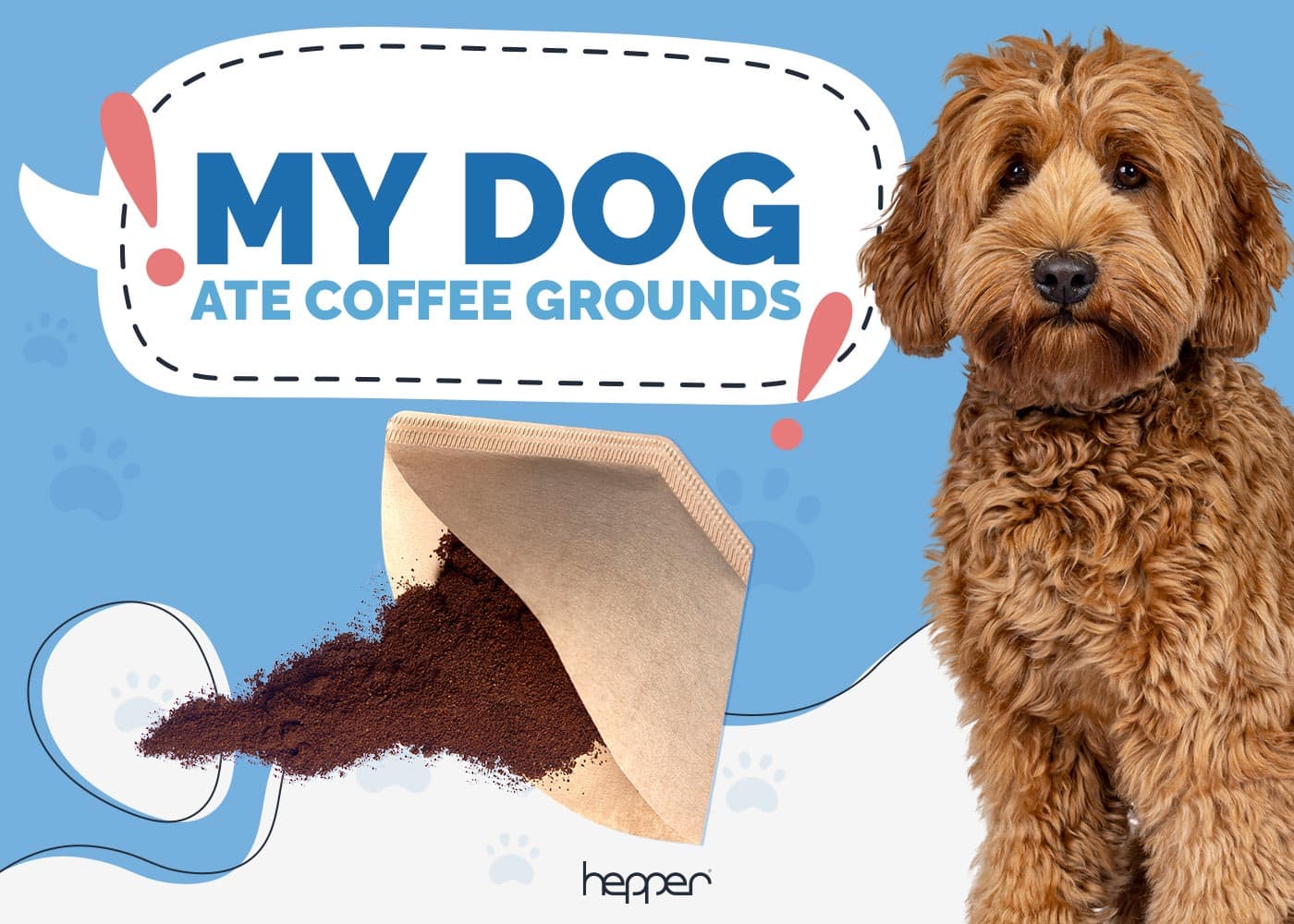
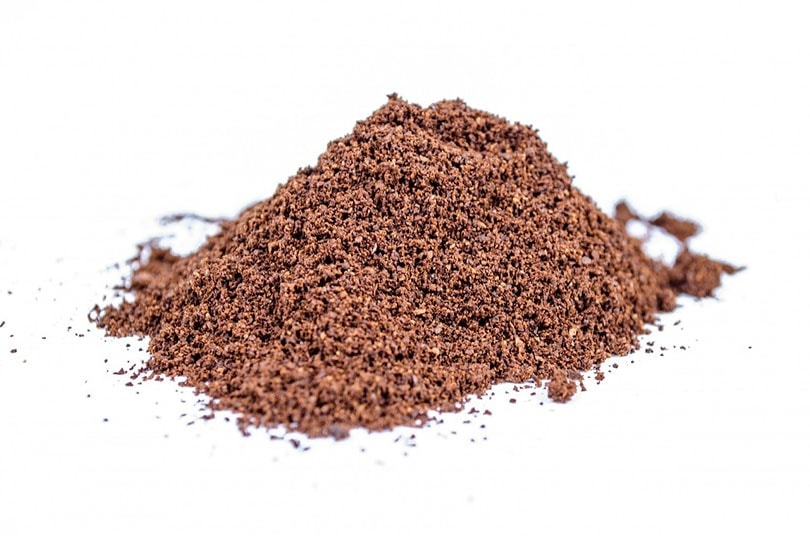
Coffee seems to make the world go round, and the drug in it—the stimulant caffeine—is a large part of that! Because some dogs are indiscriminate eaters (or, perhaps, coffee connoisseurs), the canine consumption of leftover coffee grounds can and does occur. Unfortunately, because coffee grounds still contain caffeine, this can be an emergency as caffeine is toxic to dogs.
Here, we’ll explain what you should do should your dog get a hold of coffee grounds and learn a little more about caffeine toxicity in dogs.

Immediate Steps to Take
- Remain calm. Being level-headed and not encouraging anxiety (in yourself or your pet) will help you be your dog’s best advocate.
- As soon as you are aware that consumption has occurred, work quickly. Intervening early will likely improve the outcome.
- Take away any more of the product so that no more can be consumed.
- Try to determine if you can find out how much your dog ate and when. If you have any labels or packaging with more information on the coffee, set this aside, as it may be helpful later.
- Contact your dog’s veterinary office or local emergency veterinary hospital right away. Alternatively, an animal poison control option such as the Pet Poison Helpline or ASPCA Poison Control are open 24 hours per day, 365 days per year, and employ veterinary toxicologists and specialists for this very purpose.
- Do not induce vomiting unless instructed to do so. Prior to thinking about that, a veterinarian will want to know your dog’s size and weight, age, any other major health issues, how much of the coffee grounds they ate, approximately when the consumption occurred, and if any signs are being seen.
- They will use this information to provide you with the next best step for you and your dog’s situation. They may suggest monitoring your pet, inducing vomiting in certain cases with specific instructions, and/or bringing the dog into a clinic.
- Monitor your dog for signs of caffeine toxicity, which within an hour or two of exposure can include restlessness, hyperactivity, vomiting, high heart rate, panting, hyperthermia (high body temperature), excess thirst and urination, tremors, seizures, or collapse.
Caffeine Toxicity
While caffeine can be found in coffee grounds, it is important to keep in mind that it is also commonly present in other items such as pop/soda, energy drinks, tea, diet pills, etc. As mentioned, caffeine is a toxic stimulant for dogs. It affects their cardiovascular, nervous, and gastrointestinal systems as well as having potential negative effects on their kidneys, liver, heart, central nervous system, and other organs.
Dogs are more sensitive to caffeine than people, and knowing the amount of product ingested and their weight will be imperative in determining if this is an emergency or even a life-threatening incident. For example, a young, large English Mastiff who gets a quick lick of coffee grounds may fare differently than an elderly Malti-poo with kidney failure who consumes all the coffee grounds from a leftover pot of brewed coffee.
Unfortunately, the signs seen with caffeine ingestion in dogs can start to take place as quickly as 30 minutes but often will start within an hour or two. Surprisingly, the lasting effects in dogs can continue for more than 12 hours! As mentioned, some signs to be aware of are restlessness, hyperactivity, panting, vomiting, excess thirst and urination, seizures, or collapse. In addition, an affected dog can also have abnormal heart rhythms and high blood pressure, which can be detected more easily in a hospital setting.
Treatment
Because there is no antidote to caffeine toxicity, treatment is largely supportive. If you are instructed to bring your dog into the veterinary clinic, induction of vomiting to get as much of the toxin out as possible may or may not occur depending on when the consumption took place and what, if any, signs are already being seen. Activated charcoal may also be given, including, at times, in multiple doses. This is a product given by mouth that can absorb certain drugs or harmful substances in the gastrointestinal (GI) tract to keep the toxin from being further absorbed in the body until it is able to be expelled.
Intravenous (IV) fluids can provide hydration, support kidney function, and help to excrete or flush out some of the toxins. Sedatives to help calm your dog may also be helpful or needed. In addition, medications may be utilized to address observed signs, including stabilizing the heartbeat and rhythm, bringing down high blood pressure, giving GI protectants, or treating muscle tremors and seizures. As caffeine can be reabsorbed into the body from the bladder wall, urinary catheterization or very frequent potty breaks will be helpful.
The overall prognosis depends on many factors, but prompt treatment is often the best course of action. In the majority of cases, dogs with mild symptoms will do well with the supportive treatment described above, while those showing more severe signs, such as seizures, have a more guarded prognosis.

Conclusion
Coffee grounds are a toxic substance for a dog to consume due to their caffeine content. If this occurs to your dog, it is vital that you contact your veterinarian as quickly as possible with imperative information (timing and amount consumed, weight of your dog, and any observed signs).
Their recommendations and treatment will help you give the best possible outcome for the affected dog.
Sources
Featured Image Credit: martin_hetto, Pixabay
Get Hepper In Your Inbox


Pet care tips from our vets and experts, straight to your inbox.
You may opt-out at any time. View our Privacy Policy for more information.
Dr. Rachel Ellison has worked in veterinary medicine for over a decade and loves teaching and helping others (animal and human), preventative medicine, and preserving the animal-human bond. She received her bachelor's degree in Zoology at Miami University (Oxford, Ohio) and then her Doctor of Veterinary Medicine at The Ohio State University in 2013. Dr. Ellison lives on a mountain in Utah with her husband, daughter and son, as well as their animal menagerie— a Bernese Mountain Dog, an orange tabby cat, and a Bengal/Siamese mix, as well as numerous chickens. During her free time you will find her with those she loves, cooking and baking, reading, hiking, and exploring nature and the world around her.
Dr. Rachel Ellison has worked in veterinary medicine for over a decade. She lives on a mountain in Utah with her husband, daughter, and son, as well as their animal menagerie— a Bernese Mountain Dog, an orange tabby cat, and a Bengal/Siamese mix, as well as numerous chickens. During her free time, you will find her with those she loves, cooking and baking, reading, hiking, and exploring nature and the world around her.
Education
Dr. Ellison graduated from Miami University (Oxford, Ohio) with her bachelor's degree in Zoology, and then her Doctor of Veterinary Medicine at The Ohio State University in 2013.
Experience
Over the past decade, Dr. Ellison has learned that she loves teaching and helping others (animal or human), preventive medicine, and preserving the animal-human bond. She has had experience writing both veterinary-related and non-veterinary-related articles for various companies and websites- including Hepper!
Join the conversation
Ask a question, share your story, or send private feedback.