Hepper is reader-supported. When you buy via links on our site, we may earn an affiliate commission at no cost to you. Learn more.
Can Dogs Eat Brisket? Read Before You Feed it to Them!


Dogs love human food. Most will do just about anything to get hold of a tasty bit of your dinner. However, not all human dishes are good for dogs, and many include ingredients that can cause a veterinary emergency, including chocolate and xylitol. But what about meat options such as brisket? Can your pet safely enjoy a bite or two of your slow-cooked or deliciously barbecued brisket? A small morsel is safe for dogs to consume, but you should not feed brisket as a regular part of your pet’s diet or as a treat.
Brisket comes from beef, so the cut of meat itself is perfectly safe for dogs. However it tends to be high in calories, which can cause your pet to gain weight if they eat too much. And if you season your brisket with onions, garlic, or barbeque sauce, your pet risks becoming ill since onions and garlic1 are toxic to dogs. Also, most sauces contain far too much salt and sugar for pets to consume regularly. Brisket prepared for human consumption isn't a healthy canine diet option.

What Is Brisket?
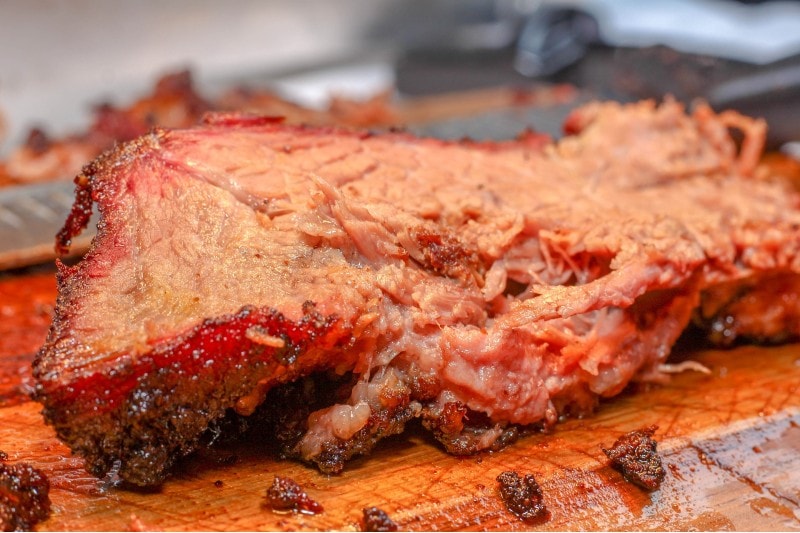
A brisket is a cut of meat that comes from a cow's breast. It usually includes at least part of the cow's pectoral muscle, which makes the cut dense and tough due to the presence of connective tissue. Initial brisket cuts are quite large, weighing anywhere from 3 to 8 pounds. Butchers divide these larger slabs into "first" and "second" cuts.
First cuts, also known as flat and center cuts, tend to be leaner than second cuts. Corned beef comes from the first cut. Second cuts, also known as point cuts or deckles, are great for barbequing as the added fat provides a melt-in-your-mouth taste. Other famous dishes made from brisket include pastrami, braised beef, and pho.
Because brisket contains so much connective tissue, it’s a relatively tough cut of meat. It's often cooked slowly at low temperatures and smoked or braised to draw out the taste. Cooking requires around 1 hour to 90 minutes per pound. There's not much you can do to speed the process along since brisket becomes tough when cooked at too high of a temperature.
Anything over about 325 degrees will most likely result in super tough meat. Many cooks swear that brisket becomes more tender if it sits for a bit. Just make sure to store the unsliced beef (along with any juices from the cooking process) in a glass container covered with plastic wrap. Store overnight, slice, and put in the oven to warm up. There are around 280 calories and 21 grams of fat in a 3-ounce brisket serving.
But I Thought Beef Was Good for Dogs?
Adult dogs without medical issues typically need to consume around 18 percent protein and 5 percent fat, and beef can be a healthy part of your pet's diet. Beef is a popular ingredient in many high-quality pet foods and contains tons of protein and nutrients such as selenium, zinc, and vitamin B12, all of which dogs require for optimum health.
Garlic and Onion Hazards
Beef on its own is perfectly good for dogs, but many of the seasonings often used to cook brisket can make dogs incredibly sick. Garlic and onions are members of the Allium genus, and both are toxic to dogs in relatively small amounts. Alliums contain a chemical that causes oxidative damage to red blood cells, often resulting in serious anemia and death. ⅓ cup of onions can be toxic to a 30-pound dog. Garlic salt, garlic powder, and onion powder tend to be even more problematic due to their increased potency.
Signs of Allium toxicity include vomiting, diarrhea, pale gums, lethargy, and lack of appetite. They can emerge anywhere from a few hours to days after consumption. Reach out to your veterinarian immediately if you suspect your pet has eaten even a small amount of onion, garlic, or a product containing one or both of these ingredients. The sooner your pet receives treatment, the better its chances of survival.

Unhealthy Sauces and Bones
Unfortunately, many sauces we use to add flavor to dishes contain salt, preservatives, and chili peppers, which can give your pet an upset stomach if consumed in sufficient quantities. Also, it can be almost impossible to find a barbeque sauce that doesn't contain garlic, and many feature garlic, onions, onion powder, and chilies.
And then there are the bones. Dogs should never be given cooked bones to chew on due to the risk of splintering. Pets who gnaw on cooked bones sometimes end up with fragments and sharp bits embedded in their mouths, often requiring expensive treatment. But most brisket cuts sold in the United States today don’t contain bones. However, some specialty shops still sell bone-in cuts if you're interested in seriously upping your meat's flavor intensity and tenderness.
While dogs can eat raw meat, including brisket, it may not be the best idea to feed your pet uncooked animal products due to the risk that either you or your pet could become ill due to bacteria such as salmonella and listeria. Wash your hands well after handling raw meat to avoid spreading potentially dangerous bacteria throughout your kitchen.
Dog-Safe Brisket
With a few preparation tweaks, it's possible for you to create a healthy riff on your dinner for your pet's occasional snacking pleasure. Consider slow cooking a small bit of brisket without sauces or seasonings for your dog to enjoy. Slice off any extra fat to ensure your buddy doesn't end up with an upset stomach or diarrhea.
And if you purchase a bone-in option, remove the bones before allowing your pet to dig in! Limit your pet's "treats" to about 10% of their diet to ensure they maintain a healthy weight, as eating too many treats can result in an overweight doggy at risk of developing conditions such as heart disease, arthritis, and diabetes.

Conclusion
Dogs shouldn't eat brisket prepared for human consumption since the cut is often seasoned with garlic, salt, and onions. Garlic and onions are poisonous to dogs, and too much salt often upsets canine tummies.
Beef is a perfectly healthy choice for dogs as it contains plenty of protein as well as vitamins and minerals critical for your pet’s health. So, a small amount of slow-cooked deboned brisket (with the fat removed) featuring no added sauces, seasonings, or additions can be a wonderful canine treat.
Related Read:
Sources
https://www.seriouseats.com/ask-the-food-lab-do-bones-add-flavor-to-meat-beef
https://vcahospitals.com/know-your-pet/onion-garlic-chive-and-leek-toxicity-in-dogs
https://www.aspca.org/pet-care/animal-poison-control/people-foods-avoid-feeding-your-pets
https://dogleashpro.com/dog-food/dog-nutrition/can-dogs-eat-brisket/#:~:text=write%20this%20article.-,Can%20dogs%20eat%20Brisket%3F,not%20safe%20for%20doggy%20consumption
https://www.thespruceeats.com/what-is-beef-brisket-p2-1805836
https://www.thekitchn.com/corned-smoked-or-braised-brisket-can-do-it-all-meat-basics-217112
https://www.mashed.com/205584/mistakes-everyone-makes-when-cooking-brisket/
Featured Photo Credit: Robert Owen-Wahl, Pixabay
Get Hepper In Your Inbox


Pet care tips from our vets and experts, straight to your inbox.
You may opt-out at any time. View our Privacy Policy for more information.
Lorre Luther a reformed lawyer from the United States, she moved to the Netherlands to follow her dream and become a writer. Currently living in Rotterdam, Lorre enjoys traveling and reveling in the astonishing beauty of our planet. As an animal lover, Lorre is convinced that cats are smarter than humans.
Join the conversation
Ask a question, share your story, or send private feedback.