Hepper blog

Search our database of over 9,984 posts with up-to-date information from our experts and veterinarians.

Hepper is reader-supported. When you buy via links on our site, we may earn an affiliate commission at no cost to you. Learn more.

Can Dogs Eat Horseradish? Vet-Reviewed Health Risks & FAQs

By Chantelle Fowler · Reviewed & fact-checked by Dr. Amanda CharlesVet Approved
Dr. Amanda Charles
Reviewed & Fact-Checked byDr. Amanda CharlesVeterinarian
Dr. Amanda Charles qualified as a vet in 2002 after graduating from the University of Liverpool and has been in small animal practice ever since. She has a postgraduate Certificate in Dermatology. She loves empowering pet parents by giving them up-to-date and accurate information and thrives off the variety that being a vet brings.Outside of work, Amanda has two very active young sons and an equally active Cocker Spaniel and Ragdoll cat, all of whom keep her very busy!View authorThe information is current and up-to-date in accordance with the latest veterinarian research. Read about our vets
Share
Ask us a question in the comments
Can Dogs Eat horseradish

There may be no condiment quite as polarizing as horseradish. It does have a bit of an acquired taste as it is very spicy in a different way from other condiments. You'll feel it all through your nose and sinuses instead of on your tongue as with hot sauce. Horseradish isn't just a sauce, however. It's a plant that's even been used to help some medical ailments like urinary tract infections and gout. But is this powerful and polarizing sauce something you should offer your pup?

While the ASPCA doesn't list horseradish as a toxic plant for dogs or cats, that doesn't mean it's something your dog should be eating. Read on to learn more.

What Is Horseradish?

Horseradish is a perennial plant and root vegetable. It belongs to the family Brassicaceae, which also includes mustard and wasabi. It is used worldwide as a spice and a spicy condiment. Horseradish sauce, which is often used in North America as a sandwich spread, is made from grated horseradish with mayonnaise or salad dressing.
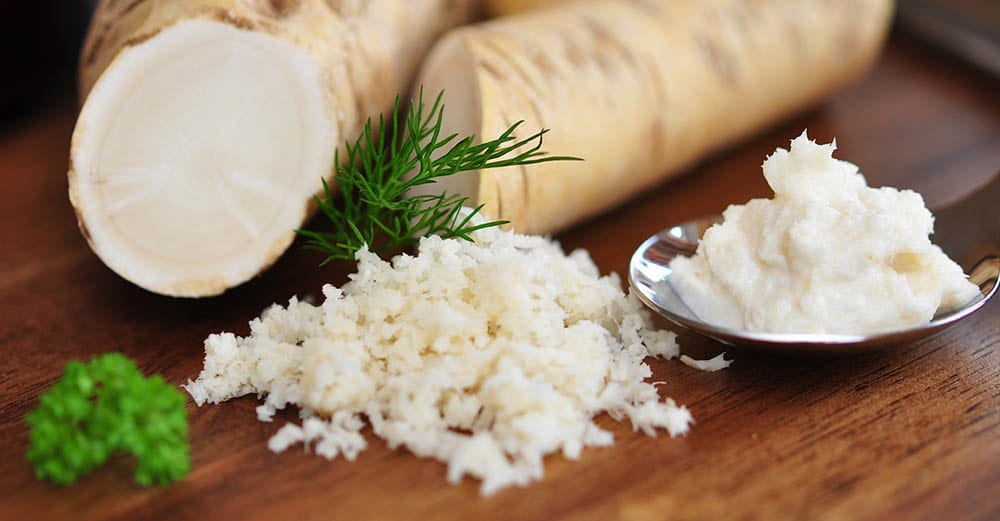
shredded horseradish
Image Credit: photocrew1, Shutterstock

Why Shouldn't Dogs Eat Horseradish?

Horseradish is known for its pungency, which is actually a defense mechanism the plant has developed against herbivores. The defensive poison and the reason horseradish is so pungent is due to the chemical isothiocyanate. When a dog chews the leaves or roots of the plant, the cells inside the plant burst and release the glucosinolate sinigrin and the enzyme myrosinase.

Myrosinase works as a catalyst, hydrolyzing sinigrin into isothiocyanate. This is one of the worst chemicals a chemist has to work with, as it smells awful and irritates the lungs and eyes. If that's too complicated, think of it this way. The chemicals and enzymes in horseradish work together to set off a "grenade" in the mouth of whatever eats it.

When your dog ingests isothiocyanate, he can experience mild to severe gastric irritation. The chemical can also irritate your pup's mouth, nose, and throat. Some dogs may react more strongly to isothiocyanate than others, so monitoring your pup for any reactions if he's been in your horseradish plant or stole a taste of your horseradish sauce is important.

What Should I Do If My Dog Ate Horseradish?

If you dropped a dollop of horseradish on the floor and your pup lapped it up before you had a chance to react, there are chances of getting stomach upset. As mentioned, this root vegetable is considered nontoxic, but you should watch for any signs of gastrointestinal upset, like diarrhea or an allergic reaction.

Allergic reactions are very uncommon, if they do occur it will be shortly after consumption and will include signs like:

If your pup exhibits these symptoms, contact your vet as soon as possible.

Final Thoughts

While horseradish is technically non-toxic for dogs, it should not be something you willingly offer your pup. The plant's chemical composition gives it a pretty harsh defense mechanism against predators, which may cause digestive upset and irritation of the mouth, nose, and throat. If your pup happens to eat horseradish, it's unlikely he will experience any long-term consequences, but monitor him for signs of gastrointestinal upset or an allergic reaction.

Sources

Get Hepper In Your Inbox

Pet care tips from our vets and experts, straight to your inbox.

List

Select all that apply.

You may opt-out at any time. View our Privacy Policy for more information.

Chantelle Fowler
Authored by

Chantelle Fowler

Join the conversation

Ask a question, share your story, or send private feedback.

Rate this post
Required to post. Only our editors see your rating.
Who should see this?

A human reviews every comment before it appears. Your email is never published.

Picked to go with this article

Can Cats Eat Horseradish? Vet-Reviewed Facts & Safety Guide

Can Cats Eat Horseradish? Vet-Reviewed Facts & Safety Guide

If you’ve ever eaten anything with horseradish, you know how intense it is! The idea of a cat willingly and knowingly eating any horseradish doesn’t seem very…

Kathryn Copeland
By Kathryn Copeland ·
Can Dogs Eat Mustard? Vet-Reviewed Facts & Safety Guidelines

Can Dogs Eat Mustard? Vet-Reviewed Facts & Safety Guidelines

Many dogs are skilled at sneaking food off tables and countertops. They may find an irresistible piece of food and gobble it up without thinking about how the…

Jessica Kim
By Jessica Kim ·
My Dog Ate Chilli or Spicy Food? Here's What to Do (Vet Answer)

My Dog Ate Chilli or Spicy Food? Here's What to Do (Vet Answer)

Have you got a taste for hot sauce and ever wondered if your dog might too? Spicy food comes in all sorts of forms, and as much as we all love to taste and exp…

Dr. Joanna Woodnutt
By Dr. Joanna Woodnutt ·
Can Dogs Eat Radishes? Vet-Reviewed Facts & Suggestions

Can Dogs Eat Radishes? Vet-Reviewed Facts & Suggestions

Some dog owners prefer to feed strictly kibble diets, while others swear by home-cooked meals with fish and meat. In any case, to keep our furry buds well-fed…

Nicole Cosgrove
By Nicole Cosgrove ·

Keep reading

More stories you might like

Can Dogs Eat Wasabi? Vet Approved Facts & Safety Guide

If you love sushi, you might think of sharing some of your Japanese takeout with your trusty canine. However, sushi is not safe for dogs, as it contains raw fi…

Nicole Cosgrove
By Nicole Cosgrove ·
Can Dogs Eat Wasabi? Vet Approved Facts & Safety Guide

Can Dogs Eat Black and Red Licorice? Are Black and Red Licorice Safe for Dogs?

If you're like us, you've gotten a headache from inconsistent answers about whether your dog can eat licorice. You've heard from some quarters that licorice ro…

Nicole Cosgrove
By Nicole Cosgrove ·
Can Dogs Eat Black and Red Licorice? Are Black and Red Licorice Safe for Dogs?

Can Dogs Have Rhubarb? Vet-Reviewed Facts & Safety Guide

If you have a green thumb and love growing your own food, you may have rhubarb somewhere in your vegetable patch. If you are a pet owner, it is also very likel…

Nicole Cosgrove
By Nicole Cosgrove ·
Can Dogs Have Rhubarb? Vet-Reviewed Facts & Safety Guide

Can Dogs Eat Brussels Sprouts? Vet-Reviewed Nutrition Facts & Risks

Despite their polarizing flavor, Brussels Sprouts are a staple of many fall and winter dinners! Dogs can eat Brussels sprouts safely, as long as a few precauti…

Beth Crane
By Beth Crane ·
Can Dogs Eat Brussels Sprouts? Vet-Reviewed Nutrition Facts & Risks

Can Dogs Have Mayonnaise? Vet-Verified Facts & FAQ

Mayonnaise is one of the most versatile condiments around. It’s popular around the world for use in all sorts of cuisines and makes a great secret ingredient i…

Nicole Cosgrove
By Nicole Cosgrove ·
Can Dogs Have Mayonnaise? Vet-Verified Facts & FAQ

Can Dogs Eat Oregano? Vet-Approved Health Facts & FAQ

Herbs and spices are an essential part of the culinary arts, with the power to enhance the flavor and aroma of our favorite dishes. Our food would be bland if…

Jana Blagojevic
By Jana Blagojevic ·
Can Dogs Eat Oregano? Vet-Approved Health Facts & FAQ

Can Dogs Eat Parsley? Vet-Approved Nutrition Facts & Safety Guide

Parsley is a popular herb because it lends a subtle flavor to soup and salads and serves as a garnish on many dishes. There are different varieties of parsley,…

Nicole Cosgrove
By Nicole Cosgrove ·
Can Dogs Eat Parsley? Vet-Approved Nutrition Facts & Safety Guide

Progressive Retinal Atrophy in Dogs: Signs, Causes & Treatment

If you’re like most dog fanatics, the day you adopt a puppy or adult dog is one of your happiest, most exciting, and most emotional days. The last thing on you…

Gregory Iacono
By Gregory Iacono ·
Progressive Retinal Atrophy in Dogs: Signs, Causes & Treatment