Hepper is reader-supported. When you buy via links on our site, we may earn an affiliate commission at no cost to you. Learn more.
Can Dogs Eat Sugar Cane? Vet-Reviewed Facts & FAQ



In this article
If you feel like chewing on sugar cane, the worst that will happen is that you'll need to give your teeth a really good clean and you’ll need some dental floss to dislodge any fibrous residue stuck in your teeth! However, while this tall tropical grass may not pose much of a threat to your health (if chewed on infrequently), is the same true for your loyal canine friend?
Sugar cane—like any form of sugar—is not inherently toxic to dogs, but that doesn't mean it's a wise addition to their diet. Sugar cane contains mainly sucrose, which is made up of glucose and fructose subunits. The consumption of a lot of sucrose can lead to a few health problems in canines, such as an upset tummy and tooth caries (although tooth decay of this form is very uncommon in dogs). Feeding your dog too much of a diet high in carbohydrates (which are complex sugars) can be linked to obesity which in turn can lead to an increased incidence of heart disease, cancer and mobility problems, but simple sugars from the odd chew on cane sugar, isn’t likely to cause obesity. Obesity-related diabetes is very rare in dogs (unlike cats), although it can happen 1.
If your dog is known to have diabetes melitus, they should categorically not be given sugar cane to chew on. A diabetic dog’s diet must be meticulously controlled for the injected insulin to have the desired effect at controlling blood sugar levels. Therefore a piece of sugar cane could have dangerous effects on a diabetic dog (more than just a tummy upset), and must be avoided.
If you’re still thinking about giving your (non-diabetic) pup a small piece of sugar cane—especially when they’re looking at you with those irresistible puppy eyes—read on as we explore why sugar cane isn’t an ideal option for your dog and the healthier treats that you could give them instead to satisfy their sweet tooth.

Sugar Cane vs. Cane Sugar
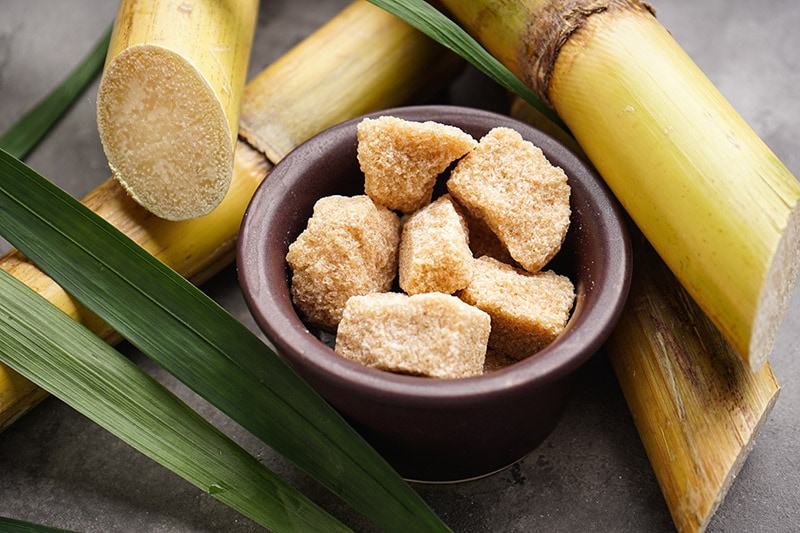
Sugar cane (Saccharum officinarum) is a perennial grass cultivated throughout the world, mainly because of its economic and medicinal virtues 2. For example, in Southeast Asian medicine, sugar cane juice is used to treat various health conditions, such as inflammation, liver problems, urinary tract infections, and even bleeding.
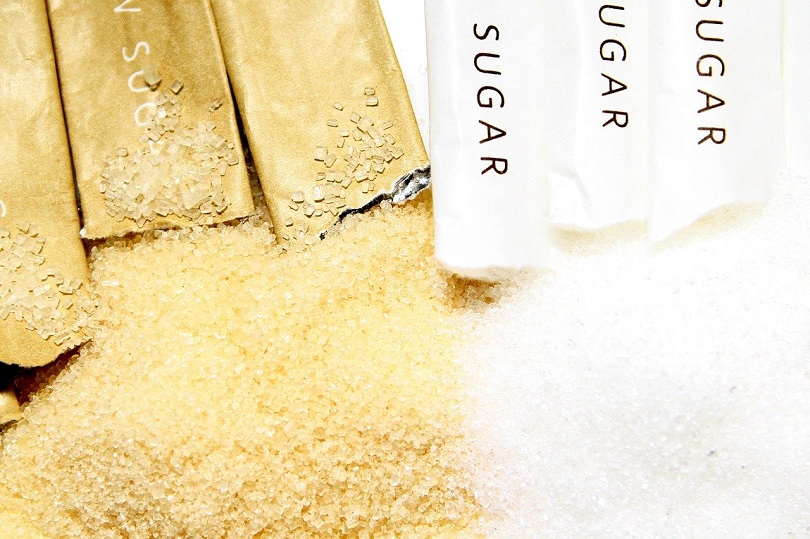
Although refined white sugar is the main product of sugar cane juice, several other types of sugars can be obtained, including:
- Brown sugar
- Molasses
- Jaggery
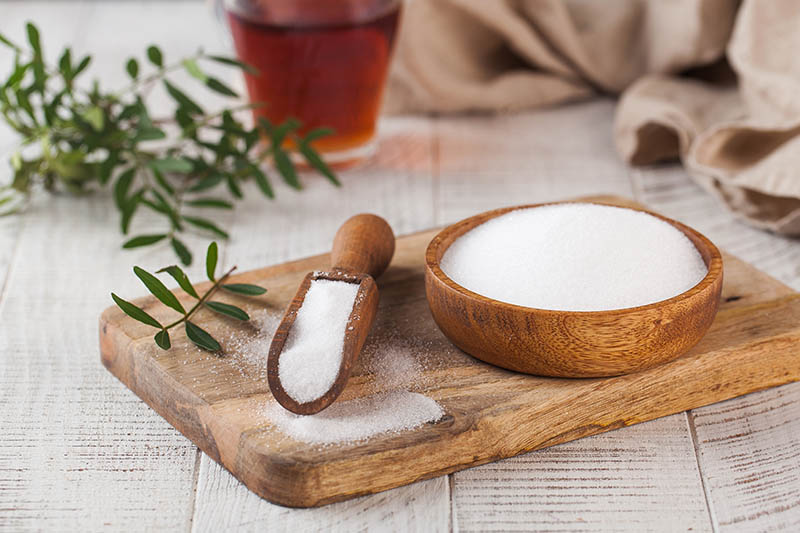
Cane sugar is simply a type of crystallized sugar extracted from sugar cane juice. For humans, consuming too much sugar has been shown to increase the risk of obesity, tooth decay, diabetes, heart disease, high blood pressure and chronic inflammation. Unfortunately, some of the same health problems can happen to our beloved canine companions, but gladly, not all of them. As mentioned above, diabetes and dental disease are only very rarely linked to excess sugar in dogs. Additionally, heart disease in dogs is more commonly linked to a genetic predisposition or obesity.
The biggest risk to your dog after eating sugar cane is an upset tummy due to the sudden overload of sugar. Very rarely, dogs can get dental disease due to a high sugar diet, but this is extremely uncommon and is linked to dogs with tooth overcrowding or a decrease in their salivary pH.

Frequently Asked Questions
Is Sugar Cane as Bad for Dogs as Regular Sugar?
In large quantities, yes, it is. Although sugar cane itself is not toxic to dogs, consuming too much of it can lead to gasto-intestinal troubles, usually in the form of vomiting and/or diarrhea. .
While sugar is not toxic to canines, human treats that contain lots of sugar, can be. For example, sweets often contain cane sugar as well as the sweetener xylitol, which is highly toxic to dogs. Chocolate contains sugar as well as theobromine and caffeine which are also toxic to dogs. Conversely, fruits contain a significant amount of natural sugar, but dogs can eat dog safe fruits in moderation.
The golden rule when it comes to treats is that they should make up no more than 10% of your furry friend's diet. If you want to reward your dog with something extra, you can add dog-friendly veggies for an increased daily intake of antioxidants, vitamins, minerals, and fiber.

What Should You Do If Your Dog Has Eaten Too Much Sugar Cane?
If you have sugarcane in your backyard or bought it in its raw or juiced form at the supermarket and you catch your dog chewing on a piece or lapping up the juice, you likely don’t need to worry too much, unless they exhibit the following signs:
- Upset stomach
- Gas
- Bloating
- Vomiting
- Bloody diarrhea
If you know that your dog has eaten a large amount of sugar cane in any form and is exhibiting these signs, it is best to contact your veterinarian immediately for further instructions.
If your dog has previously been diagnosed with diabetes mellitus and they have eaten any sugar or sugar cane, it is important that you contact your veterinarian immediately. They will advise you on what you need to do next to ensure your dog’s sugar levels are controlled.

Tips for Healthy Alternatives to Sugar Cane for Dogs

Safe sweet alternatives to sugar cane for your dog include fruits like berries, seedless apples, pears, cantaloupe, mangoes, peaches, oranges, or bananas, though all should be enjoyed in moderation. Crunchy veggies like carrots, cucumber, squash, pumpkin, or celery sticks are also excellent choices for your pup's tummy.
If you have time to spare, you could bake a batch of delicious and dog-friendly cookies! If you're in a rush, you can always choose your dog's favorite vet-approved commercial treats.
Regardless of your choice, remember to stick to the golden rule of treats, which is to limit these delicacies to a maximum of 10% of your dog's daily intake.

Final Thoughts
While we likely won't suffer after eating a piece of sugar cane, dogs can. Fortunately, sugar in any form (except xylitol) is not inherently toxic to dogs, including sugar cane. But it's still not a good idea to let your pup chew raw sugar cane or worse, drink its juice.
If this happens, there’s likely nothing to panic about but ensure it’s not a regular occurrence. If your dog is showing signs of illness after they’ve eaten sugar cane, contact your veterinarian. If your dog has eaten something you think may be toxic, call your veterinarian or the Pet Poison Helpline at (855) 764-7661.
Basically, keep your sugar cane for yourself, but feel free to share your homemade pup treats or a small amount of dog-safe sweet fruits with your beloved pup!
Sources
https://www.allrecipes.com/recipe/133123/peanut-butter-and-pumpkin-dog-treats/
https://www.aspca.org/pet-care/animal-poison-control/people-foods-avoid-feeding-your-pets
https://vcahospitals.com/know-your-pet/dogs-nutrition-and-periodontal-disease
https://www.health.harvard.edu/heart-health/the-sweet-danger-of-sugar
Featured Image Credit: SKT Studio, Shutterstock
Get Hepper In Your Inbox


Pet care tips from our vets and experts, straight to your inbox.
You may opt-out at any time. View our Privacy Policy for more information.
Genevieve, a biologist and science writer, who harbors a profound affection for capuchin monkeys, pumas, and kangaroos. This passion has led her to travel extensively, volunteering and working at wildlife rehabilitation centers in Bolivia, Guatemala, Canada, and Australia. Now residing in Argentina as a Canadian expat, Genevieve enjoys the view of horses and cows greeting her from the vast plains outside her home office window. She proudly cares for three rescued dogs—Lemmy, Nala, and Pochi—and a playful kitten named Furiosa. Sharing her extensive knowledge and love for animals brings her immense joy and fulfillment.
Join the conversation
Ask a question, share your story, or send private feedback.