Hepper is reader-supported. When you buy via links on our site, we may earn an affiliate commission at no cost to you. Learn more.
Can Guinea Pigs Eat Bean Sprouts? Vet-Approved Nutrition Facts

For any animal, a good diet is essential to good health, and it falls to us to ensure we are providing our pets with the best diet we can. When it comes to Guinea Pigs, staple foods such as hay, pellets and leafy greens must remain a constant part of their diet, but it is also important to provide your Guinea Pig with a range of different foodstuffs that offer a variety of flavors and textures, with differing balances of nutrients. Vegetables are a great way to add that variety to your Guinea Pig’s diet, and if you’ve been considering bean sprouts, you’ll be happy to know that if you are popping some bean sprouts into your salad, you can offer a few to your pet as a treat.
However, bean sprouts should only be offered in small amounts, and there are some even better options for adding some crunch to your cavy’s menu. To learn more about feeding bean sprouts to your Guinea Pig, keep reading below.

A Quick Overview of Bean Sprouts
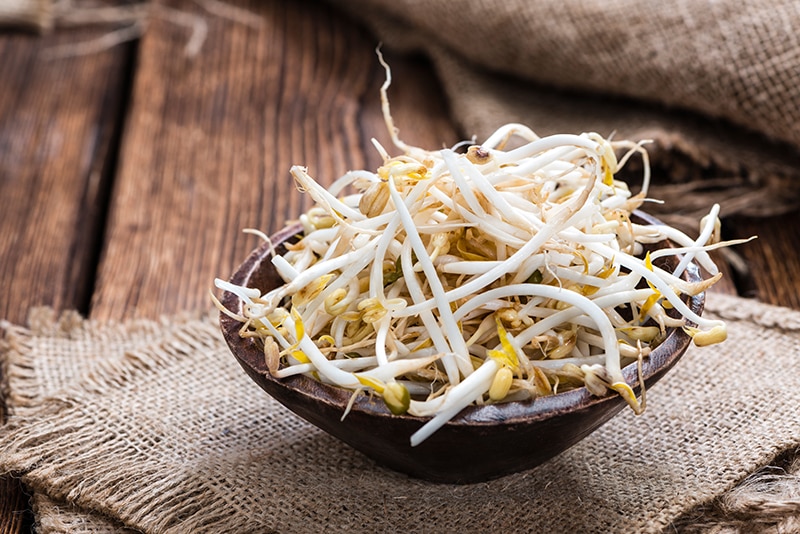
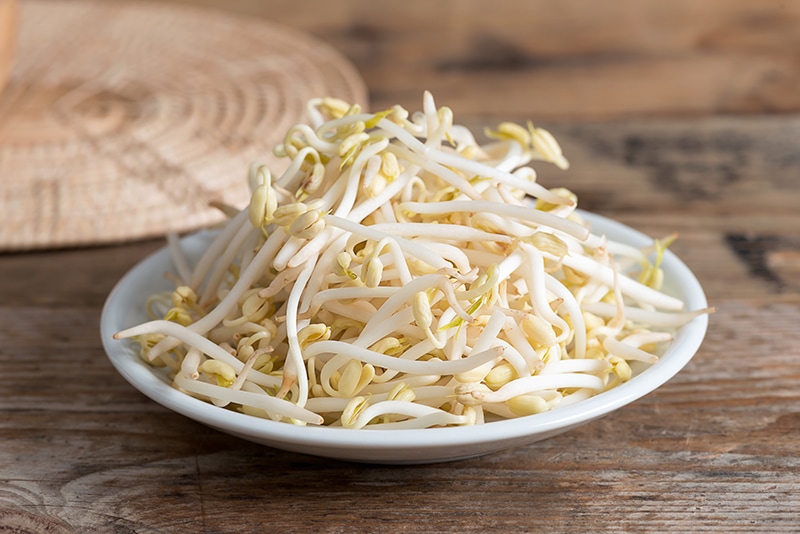
Bean sprouts are a crunchy veggie that Guinea Pigs find satisfying to munch on. They have a fresh, enticing flavor and are low in calories, so you don’t have to worry as much about obesity when offering them to your pet.
Whether you buy bean sprouts from the store or grow them yourself, they are packed with nutrients; most notably, they are a great source of protein and vitamin C. They also contain antioxidants, calcium, and iron.
In one cup of bean sprouts, you can find the following:
Calcium and Phosphorus
Both calcium (Ca) and phosphorus (P) are important minerals, but for maximal benefit, they need to be in the right proportions. When a diet contains significantly more phosphorus than calcium, this can lead to major health problems, because phosphorus will bind and absorb calcium.
The ideal diet should have a Ca:P ratio of around 2:1, and, as you can see from the information above, the amount of phosphorus in bean sprouts is more than four times that of calcium. This means that this crunchy vegetable should only ever be offered sparingly.
Are Bean Sprouts Dangerous For Guinea Pigs?
Although they are not toxic, their Ca:P ratio means that they can be detrimental if they were to be included regularly, or in large quantities. If you happen to have some bean sprouts, then you can certainly offer a few to your cavy companions, but it is not an item to put on your Guinea Pig shopping list.
What Are Some Healthy Alternatives to Bean Sprouts?
As we know, it is important to offer a variety of foods to our Guinea Pigs to ensure they are getting a good balance of nutrients, as well as keeping things a bit more interesting for them.
The mainstays of any Guinea Pig diet should consist of:
Guinea Pigs are amongst a short list of animals (including humans) that cannot synthesize their own Vitamin C, and the average cavy needs around 10-20mg of this vitamin in their food each day. It is unfortunate that bean sprouts have such a problematic Ca:P ratio, as they are a great source of Vitamin C, but there are some other great options.
If you follow the basics outlined above, you should be more than meeting those requirements, but if we want to look for some ideal alternatives to bean sprouts, try the following fresh options:
| Food Item (per 20 grams) | Ca:P | Vitamin C (mg) | Oxalate Levels |
| Raw bean sprouts | 1 : 4 | 2.7 | Low |
| Cilantro (coriander) | 1.4 : 1 | 5.4 | High |
| Arugula (rocket) | 3 : 1 | 3 | High |
| Parsley | 2.3 : 1 | 26.6 | High |
| Radishes | 1.25 : 1 | 2.7 | Low |
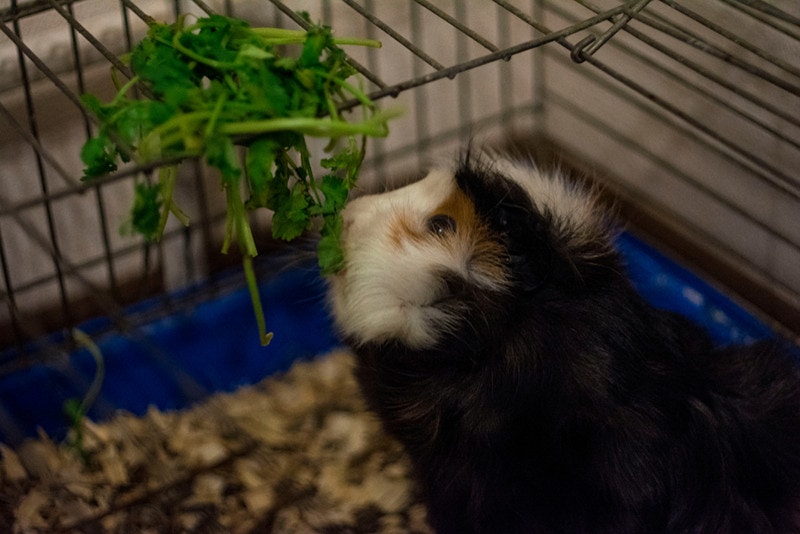
Cilantro, arugula, and parsley can offer the same level of flavor burst and crunch as bean sprouts, but with much safer phosphorus levels. These herbs are quite high in oxalates, however, so should still only be offered in small quantities. Foods high in oxalates can contribute to the formation of bladder stones, which is why these are great for spicing up some of the “less exciting” items on your Guinea Pig’s menu, but do not form part of their staple diet.
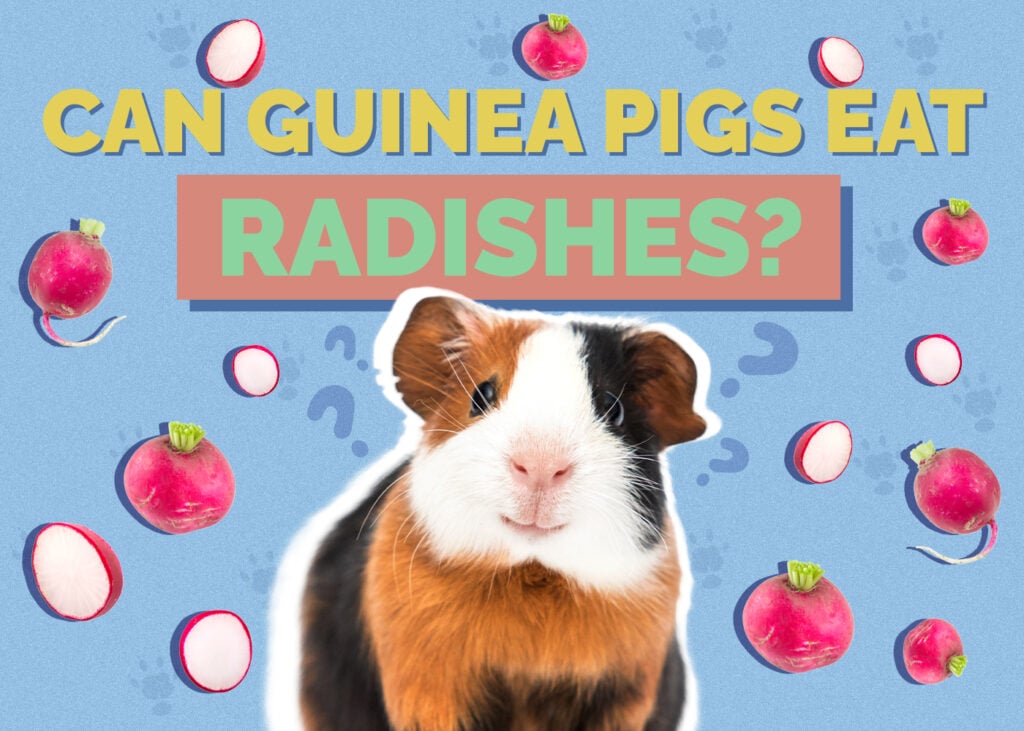
Radishes are a safe, low oxalate vegetable that boast an acceptable Ca:P and decent Vitamin C levels. Not all Guinea Pigs like them, but they are certainly worth a try!
If you want to research the nutrient values of different foods for your cavy, The FoodData Central page is a great place to start.
Summing Up
Bean sprouts are not toxic or dangerous for Guinea Pigs, and if you want to offer them a sprout or two, they will enjoy the different taste and texture. However, their unfavorable calcium and phosphorus levels mean that they should not be offered regularly. There are several better options available to spice up your cavy’s greens that also pack a punch when it comes to vitamin C. Always speak to your vet if you are worried about your Guinea Pig’s diet and health, and remember that it is important to offer your Guinea Pig a variety of food options, but also ensure they are receiving the right amounts of nutrients.
Featured Image Credit: HandmadePictures, Shutterstock
Get Hepper In Your Inbox


Pet care tips from our vets and experts, straight to your inbox.
You may opt-out at any time. View our Privacy Policy for more information.
Karyn has lived in the UK for the past 10 years after moving from Queensland, Australia. In 2010, she graduated from The University of Queensland School of Veterinary Science, and also holds a Bachelor’s degree in Zoology. Karyn is passionate about using evidence, experience, and owner collaboration to provide the best solutions for pets, and believes in making reliable information about animal health accessible to all. She shares her home with 5 cats, 4 dogs, and 1 husband, and when she is not practising as a veterinary surgeon, she spends her time writing, gardening, and cleaning up pet hair!
Karyn comes from Queensland, Australia, but has lived in the UK for the past 10 years. She is passionate about using evidence, experience, and owner collaboration to provide the best solutions for pets, and believes in making reliable information about animal health accessible to all.
She shares her home with 5 cats, 4 dogs and 1 husband, and when she is not practising as a veterinary surgeon, she spends her time writing, gardening, and cleaning up pet hair!
Education
In 2010, Karyn graduated from The University of Queensland School of Veterinary Science and also holds a Bachelor’s degree in Zoology.
Experience
Dr. Kanowski has worked in small animal practice, both in Australia and the UK, and she will be very happy if she never has to see another post-Brexit Animal Export Certificate again! Karyn has special interests in acupuncture and canine behavior and loves challenging surgical cases.
Join the conversation
Ask a question, share your story, or send private feedback.