Hepper blog

Search our database of over 9,984 posts with up-to-date information from our experts and veterinarians.

Hepper is reader-supported. When you buy via links on our site, we may earn an affiliate commission at no cost to you. Learn more.

Can Guinea Pigs Eat Plum? Vet Approved Risks & Benefits

By Nicole Cosgrove · Reviewed & fact-checked by Dr. Karyn KanowskiVet Approved
Dr. Karyn Kanowski
Reviewed & Fact-Checked byDr. Karyn KanowskiVeterinarian
Karyn has lived in the UK for the past 10 years after moving from Queensland, Australia. In 2010, she graduated from The University of Queensland School of Veterinary Science, and also holds a Bachelor’s degree in Zoology. Karyn is passionate about using evidence, experience, and owner collaboration to provide the best solutions for pets, and believes in making reliable information about animal health accessible to all. She shares her home with 5 cats, 4 dogs, and 1 husband, and when she is not practising as a veterinary surgeon, she spends her time writing, gardening, and cleaning up pet hair!View authorThe information is current and up-to-date in accordance with the latest veterinarian research. Read about our vets
Share
Ask us a question in the comments
Can Guinea Pigs Eat Plum? Vet Approved Risks & Benefits

The thought of a soft, plump, juicy plum is enough to get a lot of people salivating. Plums are low in fat, low in calories, and high in fiber. They also contain antioxidants as well as a good variety of vitamins and minerals. They are considered a healthy snack for humans, but does that mean we can feed them to Guinea Pigs?

Plums are considered safe for Guinea Pigs to eat, but only in moderation, and you should never feed the pit or stone of the fruit to your Cavie. Like the pits of a lot of fruits, plum pits contain small amounts of cyanide, and they can also pose a choking hazard. Feed about an eighth of a plum and leave the skin on; this has a high concentration of antioxidants. Only feed fruit of any kind once or twice a week as a tasty treat.

Read on for more information on the benefits, potential pitfalls, and serving suggestions when giving plums to your Guinea Pigs.

Guinea Pig Diet

Guinea Pigs are herbivores. They only eat plant matter. In fact, in the wild, they would almost exclusively survive on a diet consisting of grass, seeds, twigs, and some plants and herbs. They would not naturally eat root vegetables and would not eat fruit.

Pet Guinea Pigs should be given a diet that sticks quite closely to their wild diet. While they wouldn’t eat root vegetables and fruit in the wild, they can be given these as an occasional treat. They shouldn’t form the basis of a Guinea Pig diet, or be fed too often, but fruit and roots may be given once or twice a week. The majority (around 80%) of a Guinea Pig’s diet should consist of grass or hay, like Timothy hay, with the remainder made up of greens and leafy green vegetables. Fruit treats can be fed once or twice a week, and should not make up more than around 5% of your cavie’s diet.
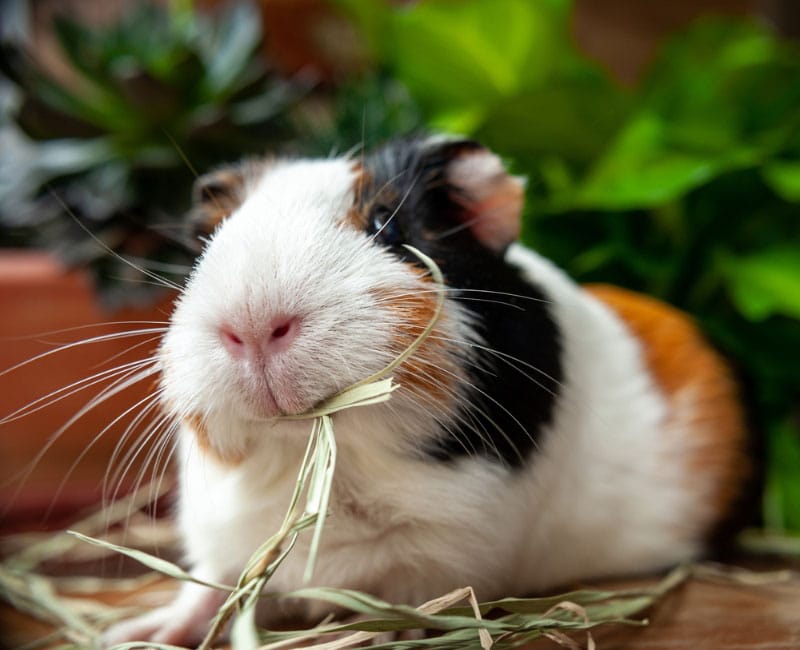
cute guinea pig eating hay
Image Credit: Thiago Janoni, Shutterstock

Are Plums Safe for Guinea Pigs?

Plums are not toxic for Guinea Pigs and although they do contain some natural sugar, they are not as high in sugar as a lot of other fruits. The pits or stones, however, are not considered good for Guinea Pigs because they contain amygdalin. Amygdalin turns into cyanide when eaten raw, and this does pose a health concern for Cavies.

The Benefits of Plums for Guinea Pigs

Plums are safe to be fed to Guinea Pigs in moderation and are one of the healthier treats you can give your pet. The potential benefits include:

  • Antioxidants – Antioxidants fight free radicals in the body, which can cause damage to cells. The greatest concentration of antioxidants in plums is found in the skin, so it can be a good idea to feed the skin as well as the flesh.
  • Vitamin C – Plums contain a variety of vitamins, especially vitamin C. Vitamin C is responsible for supporting the immune system, and reducing the risk of illness. Guinea Pigs cannot synthesize vitamin C in their bodies, which means that this essential vitamin must come from dietary sources.
  • Flavonoids – Flavonoids offer similar effects to antioxidants, and they also offer anti-inflammatory, anti-cancer, and anti-viral properties, making them hugely beneficial. They are primarily found in plant matter, so your Guinea Pig should get a decent amount of flavonoids in their diet anyway, but it certainly doesn’t hurt to have more of the protection they offer.
  • Potassium – Potassium helps maintain muscle strength and also supports blood pressure levels while protecting the cells in the body. It is an essential mineral for Guinea Pigs.

Potential Risks

Although plums do offer certain health benefits, they also carry some risks. Although these risks can be mitigated through the proper preparation and serving of the fruit, you must know of them.

  • Pesticides – Always ensure that the fruit is thoroughly washed before feeding, and ideally choose those that are organically grown to avoid the use of pesticides. The skin is one of the healthiest parts of the fruit for your Guinea Pig, so having to get rid of it because of the worry of pesticides negates a lot of the benefits of feeding this fruit.
  • Oxalates – Oxalates are naturally occurring compounds that are found in fruit and v In the case of Guinea Pigs, which are already naturally prone to bladder stones, the oxalates can form crystals in their urine that become stones. You should avoid feeding too much of any food that contains oxalates, although small amounts are generally safe.
  • Choking – The stone of the plum is a hazard. Pits pose a choking hazard to any animal that eats them, and while the size of a Guinea Pig means that it will rarely try and swallow something the size of a plum pit whole, it can happen, especially if your Cavie is too busy enjoying the flavor of the juicy fruit. Always ensure you remove the pit before feeding plums.
  • Cyanide Toxicity – Choking isn’t the only hazard that the pit poses. The pits contain amygdalin and when eaten, this becomes cyanide. Guinea Pigs are small so it only takes a small amount of cyanide to cause poisoning. The amygdalin is only released if the pit is chewed or otherwise broken open, but this is a very real risk that is easily avoided by simply removing the pit before cutting and feeding.

Preparing Plums

Always ensure that the plum is washed thoroughly to remove any pesticides and other chemicals from the exterior of the plum. Remove the pit, and then chop the fruit into about eight pieces. Give one-eighth of the fruit to your Cavie, in a bowl, and remove any of the fruit that is left after approximately half an hour.
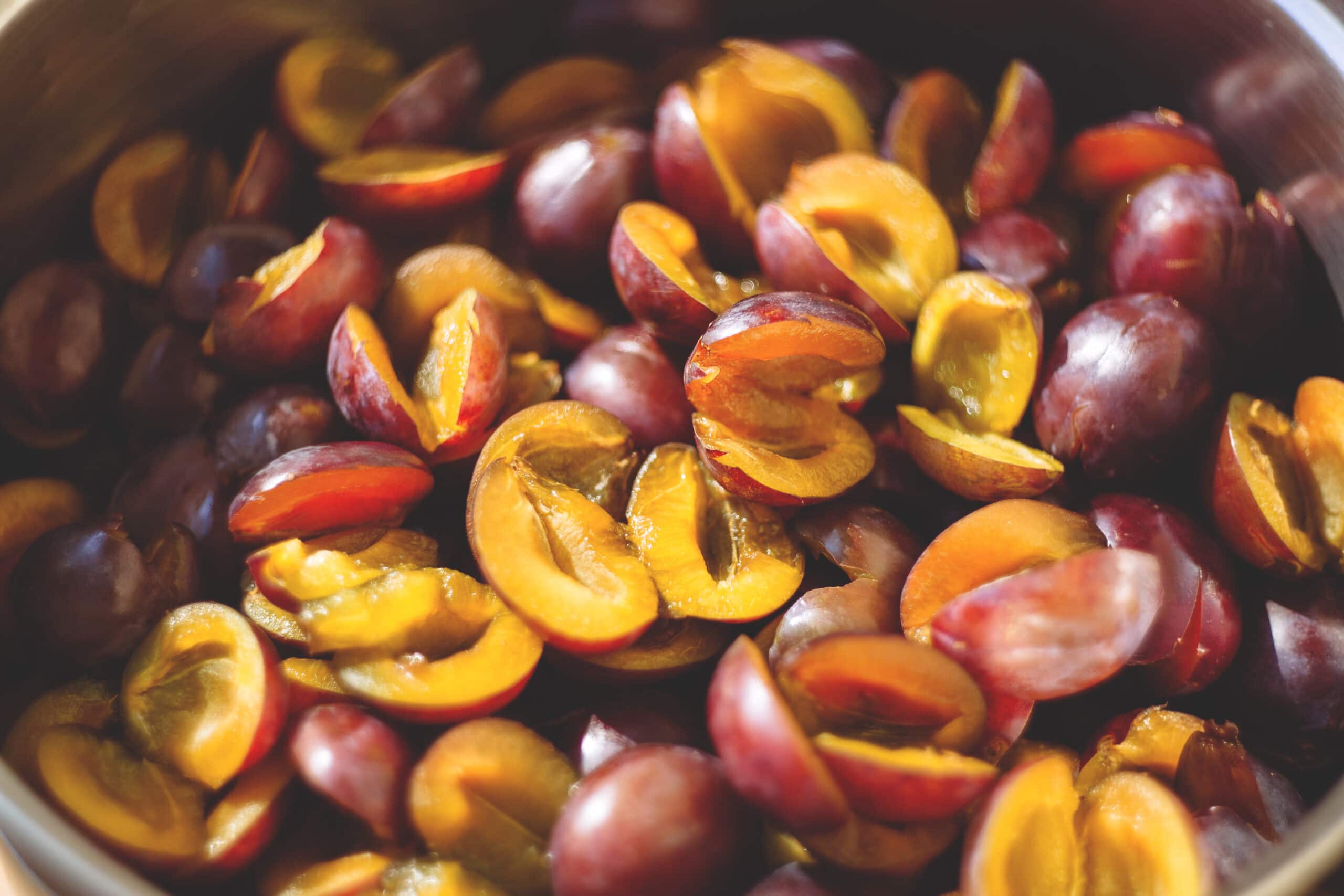
Sliced plums in a bowl
Image By: Jumpstory

How Often to Feed Plums?

Guinea Pigs rarely, if ever, eat fruit as part of their natural diet, but most of them do enjoy the natural sweetness and the juicy texture of fruits like plums. Fruit should be fed sparingly and occasionally, with a small amount given once or twice a week. It is a good idea to rotate the types of fruit given, so you can feed a small piece of plum once a fortnight or so.

Other Fruits You Can Feed to Guinea Pigs

Fruits are a tasty treat for Guinea Pigs, and plums are just one type of fruit they can enjoy. Apples are a popular choice, but you must remove the pips because they contain amygdalin and are more easily chewed than plum pits. Mango and papaya are other good options, while most berries can be fed as an occasional treat.
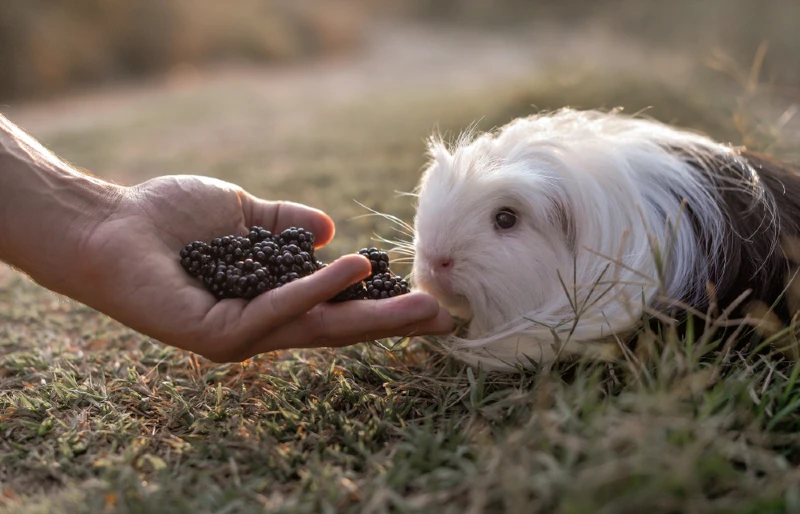
guinea pig on the grass eating blackberries from a person's hand
Image By: Hurianova Olga, Shutterstock

What Fruits Should Guinea Pigs Not Eat?

Rhubarb is poisonous to Guinea Pigs, so should be avoided, and you should remove pips from apples and stones from plums and other stone-containing fruits. Also, because they are high in sugar, you should not feed them dried fruit.

Conclusion

Guinea Pigs need a diet that is high in hay or grass. They need a lot of fiber in their diet, and the munching motion of eating grass and hay also helps maintain healthy tooth length. However, as part of a healthy diet, you can feed fruit as a treat once or twice a week.

Plums are a reasonably healthy option as a fruit treat, but you need to thoroughly wash the fruit, remove the pit, and only feed about an eighth of a plum every week or two. Other fruits you can also give include apples and mangoes but avoid giving rhubarb or any dried fruits.

Related Read:

Sources

Featured Image Credit: Neven Krcmarek, Shutterstock

Get Hepper In Your Inbox

Pet care tips from our vets and experts, straight to your inbox.

List

Select all that apply.

You may opt-out at any time. View our Privacy Policy for more information.

Nicole Cosgrove
Authored by

Nicole Cosgrove

Join the conversation

Ask a question, share your story, or send private feedback.
Rate this post
Required to post. Only our editors see your rating.
Who should see this?

A human reviews every comment before it appears. Your email is never published.

Picked to go with this article

Can Guinea Pigs Eat Cherries? Vet Approved Nutrition Facts & FAQ

Can Guinea Pigs Eat Cherries? Vet Approved Nutrition Facts & FAQ

Guinea pigs enjoy eating a variety of fresh foods. Fruit is an excellent and important part of a healthy guinea pig diet but only in moderation. There are some…

Grant Piper
By Grant Piper ·
Can Hamsters Eat Plums? Vet-Approved Facts & Safety Guide

Can Hamsters Eat Plums? Vet-Approved Facts & Safety Guide

The last thing you want to do is feed your hamster something harmfu. It’s your job to keep them healthy and safe, which means checking out any food you’re thin…

Adam Mann
By Adam Mann ·
Can Guinea Pigs Eat Peaches? Vet-Approved Nutritional Science & Information

Can Guinea Pigs Eat Peaches? Vet-Approved Nutritional Science & Information

Guinea pigs are true herbivores that require unlimited amounts of hay in their daily diet. They also need species-appropriate pellets, daily vegetables, and oc…

Chantelle Fowler
By Chantelle Fowler ·
What Fruits Can Guinea Pigs Eat? Vet-Verified Facts & FAQs

What Fruits Can Guinea Pigs Eat? Vet-Verified Facts & FAQs

Guinea Pigs are exotic rodents hailing from the Andes in South America. Because of their herbivorous natures, guinea pigs need the correct diet to thrive. Of p…

Beth Crane
By Beth Crane ·

Keep reading

More stories you might like

Can Guinea Pigs Eat Pineapple? Vet Reviewed Benefits

Pineapple is refreshing and juicy, but can we share it with our guinea pigs? Yes, you can share pineapple with your guinea pig in moderation. Thanks to the yum…

Kerry-Ann Kerr
By Kerry-Ann Kerr ·
Can Guinea Pigs Eat Pineapple? Vet Reviewed Benefits

Can Guinea Pigs Eat Cucumbers? Vet-Approved Feeding Guidelines

Guinea Pigs are one of the most popular small pets in the United States. One thing about these tame little creatures you must know if you adopt one is they eat…

Gregory Iacono
By Gregory Iacono ·
Can Guinea Pigs Eat Cucumbers? Vet-Approved Feeding Guidelines

Can Guinea Pigs Eat Apples? Vet-Verified Health Facts

A well-balanced diet is essential in keeping a guinea pig happy and healthy, so it’s important to be informed about their nutritional needs. Guinea pigs are om…

Jessica Kim
By Jessica Kim ·
Can Guinea Pigs Eat Apples? Vet-Verified Health Facts

Can Guinea Pigs Eat Nectarines? Vet-Reviewed Nutrition Facts & Safe Fruits

Every guinea pig parent knows that a cavy’s favorite pastime is munching on something leafy or some nice, crunchy hay, but what about fruits like nectarines? F…

Kit Copson
By Kit Copson ·
Can Guinea Pigs Eat Nectarines? Vet-Reviewed Nutrition Facts & Safe Fruits

Can Guinea Pigs Eat Nuts? Vet-Approved Risks, Diet, & Alternatives

Nuts may be a healthy snack option for us humans, but that doesn’t necessarily mean they are suitable to feed our beloved pets. Guinea pigs are herbivores that…

Lindsey Lawson
By Lindsey Lawson ·
Can Guinea Pigs Eat Nuts? Vet-Approved Risks, Diet, & Alternatives

Can Guinea Pigs Eat Olives? Vet-Approved Facts & Safety Guide

Guinea pig parents should feed their cavies about a teacup’s worth of fresh greens and veggies on a daily basis in addition to hay and pellets. Fruits can also…

Kit Copson
By Kit Copson ·
Can Guinea Pigs Eat Olives? Vet-Approved Facts & Safety Guide

Can Guinea Pigs Eat Blueberries? Vet-Approved Nutrition & Diet Facts

We love our little herbivorous guinea pig friends and the adorable way they down fruits and veggies. If you're looking for a more exciting variety of goodies t…

Ashley Bates
By Ashley Bates ·
Can Guinea Pigs Eat Blueberries? Vet-Approved Nutrition & Diet Facts

Can Guinea Pigs Eat Grapes? Vet-Approved Facts & FAQ

Guinea pigs are common pets and are often the first pets of many households with children. However, knowing what they can and can't eat is sometimes difficult…

Beth Crane
By Beth Crane ·
Can Guinea Pigs Eat Grapes? Vet-Approved Facts & FAQ