Hepper blog

Search our database of over 9,984 posts with up-to-date information from our experts and veterinarians.

Hepper is reader-supported. When you buy via links on our site, we may earn an affiliate commission at no cost to you. Learn more.

Can Ingredients in Dog Food Cause Ear Infections? Vet-Approved Facts & Care

By Rachel Giordano · Reviewed & fact-checked by Dr. Maxbetter VizelbergVet Approved
Dr. Maxbetter Vizelberg
Reviewed & Fact-Checked byDr. Maxbetter VizelbergVeterinarian
Maxbetter grew up in New Orleans, Louisiana, and has been interested in veterinary medicine since childhood. Being read Russian children’s stories about “Doctor Aybolit” by his grandmother, interning at the Israeli Wildlife Hospital, and working at numerous small animal hospitals have all been part of his lifelong love of animals. Maxbetter currently practices in New York City, and enjoys educating others to help them give their animals the best possible lives. He always strives to provide excellent medical care to his patients. Outside the clinic, he can be found playing basketball and soccer, performing his rap songs at open mics, and going on hikes with family and friends.View authorThe information is current and up-to-date in accordance with the latest veterinarian research. Read about our vets
Share
Ask us a question in the comments
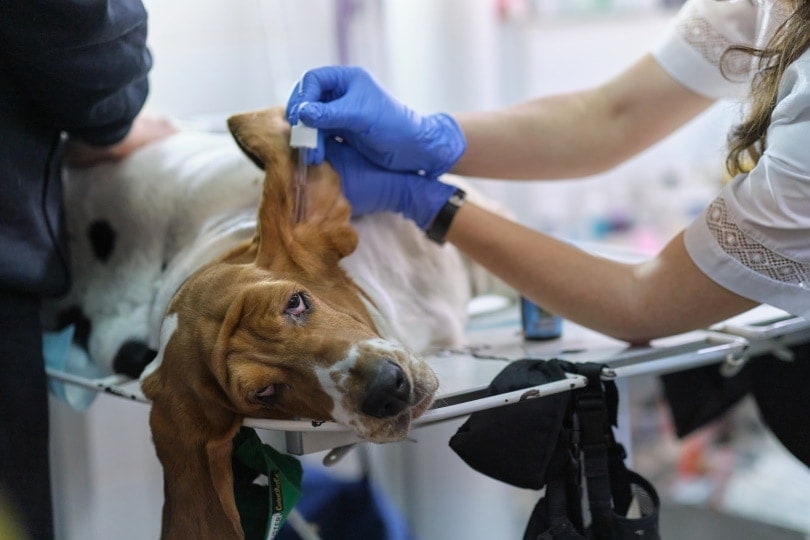
vet treating dog ear infection

Humans with allergies can often suffer from recurring ear infections. Ear infections are painful and a real nuisance, but did you know that dogs can suffer from ear infections, too? Some dogs may never have one, but if your dog is constantly getting them, it’s vital to find the culprit that’s causing them. Some dogs have food allergies that are usually from a protein source in their diet. Because of this, ingredients in dog food can most certainly cause ear infections in dogs.

In this article, we’ll explore what to look for in dog foods and how to determine the possible cause of your dog’s ear infection.

What Exactly Are Ear Infections?

Ear infections are caused by allergy triggers and are quite common. What causes them is an overgrowth of bacteria or yeast inside the ear, resulting in inflammation. There are three types of ear infections: otitis externa, media, and interna. Otitis externa is the most common, which affects the exterior portion of the ear canal. Otitis interna and media affect the inner and middle parts of the ear, respectively.

If not treated, otitis media and internet can be serious and cause deafness, vestibular signs, and facial paralysis. This is why it’s important to know what ear infections look like so that you can start treatment as soon as possible.
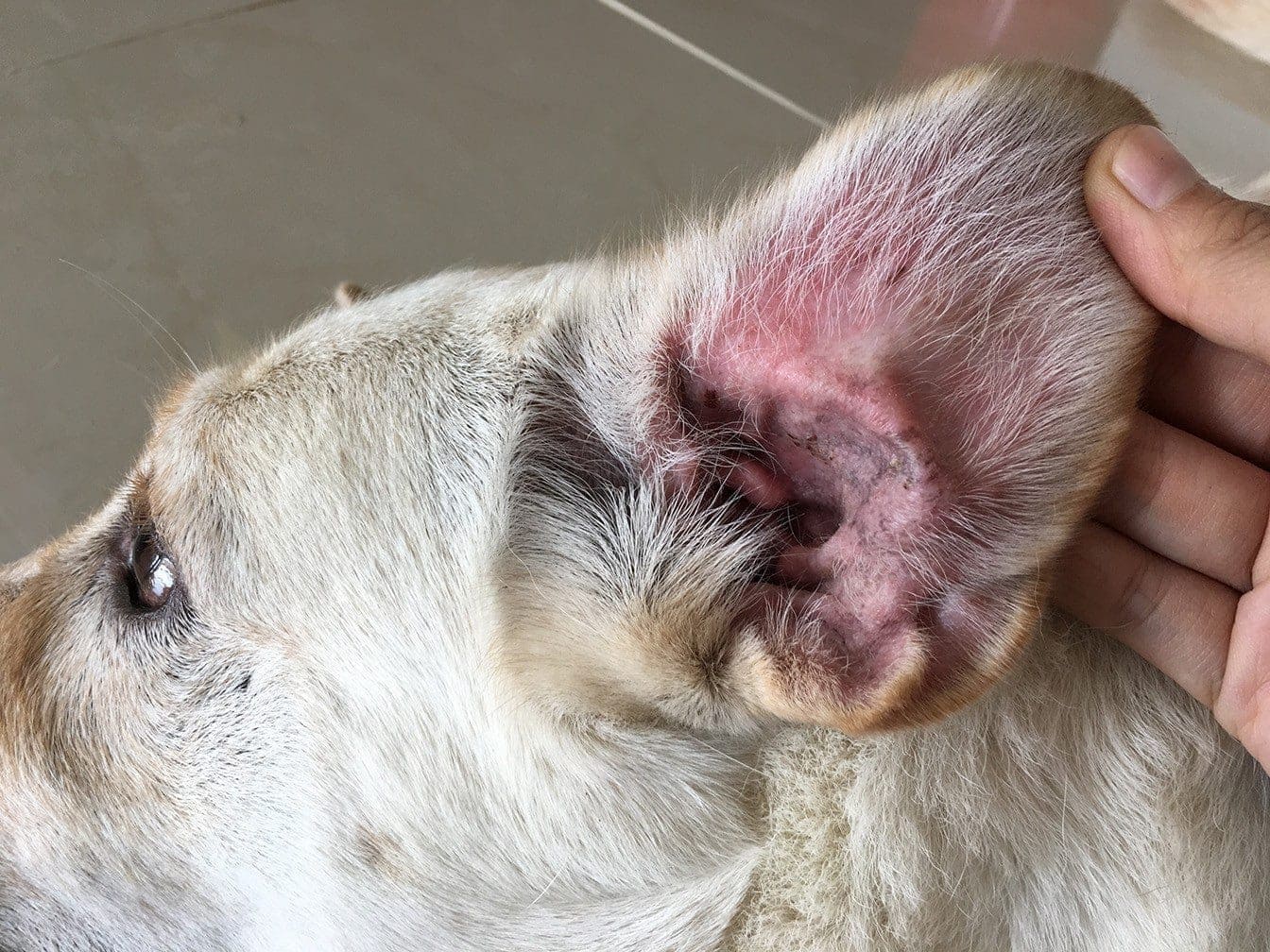
ear infection in dog
Image Credit: dawi88888, Shutterstock

What Does an Ear Infection on a Dog Look Like?

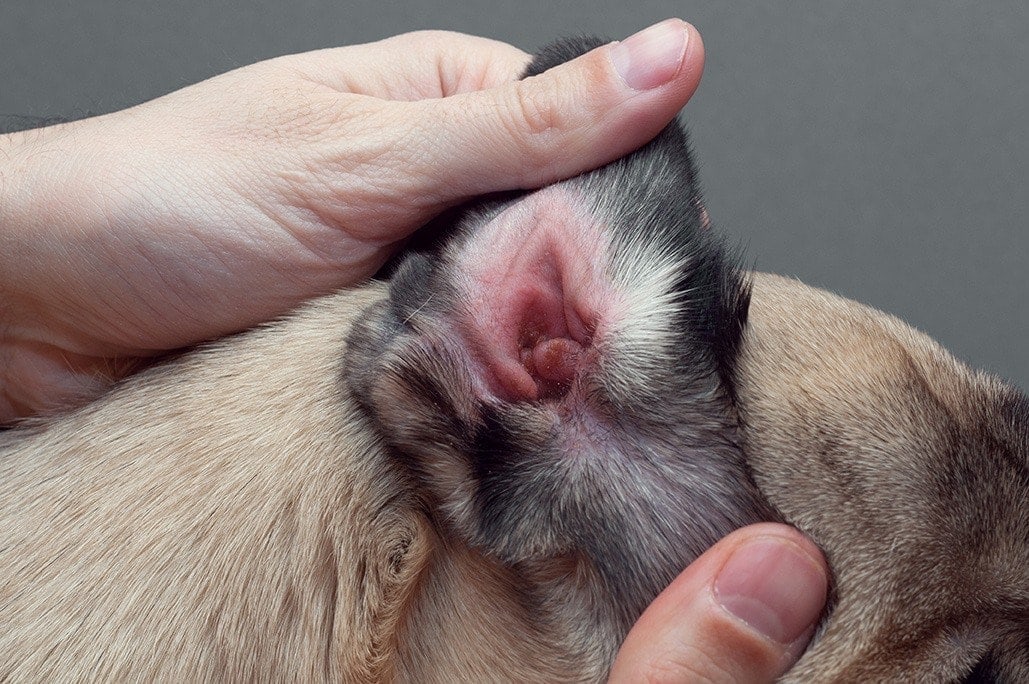
Symptoms of ear infections in dogs are not too difficult to point out. Some common signs that your dog may have an ear infection are as follows:

  • Head tilt
  • Excessive scratching of the ear
  • Redness/irritation
  • Foul odor
  • Discharge
  • Crust or scabs in the ear
  • Pain

If you notice any of these symptoms in your dog, you should take them to your veterinarian immediately for an assessment. You may be able to see for yourself if your dog has an ear infection by the telltale signs mentioned above, but your vet can be able to identify the location of the infection with the help of an otoscope or advanced imaging.

What Types of Ingredients in Dog Food Trigger Allergies?

As we’ve stated, certain ingredients in dog food can trigger food allergies, which in turn can lead to recurrent ear infections. Eliminating the triggering allergen is crucial in keeping your dog happy and healthy.

The most common culprit that triggers food allergies in commercial dog food is the protein source. Chicken is a common allergy trigger in dogs, along with dairy, gluten, eggs, beef, and soy. These ingredients are not the only ones that can trigger allergies, as additives and other preservatives can cause symptoms, too.

Gluten intolerance usually causes additional symptoms, such as vomiting, diarrhea, gas, loose stool, and mucus in the stool. Gluten intolerance can also cause itchy skin. Sometimes it takes trial and error to determine exactly what your dog may be allergic to in its food, but with patience, you should be able to decipher the problem and eliminate it from your dog’s diet.
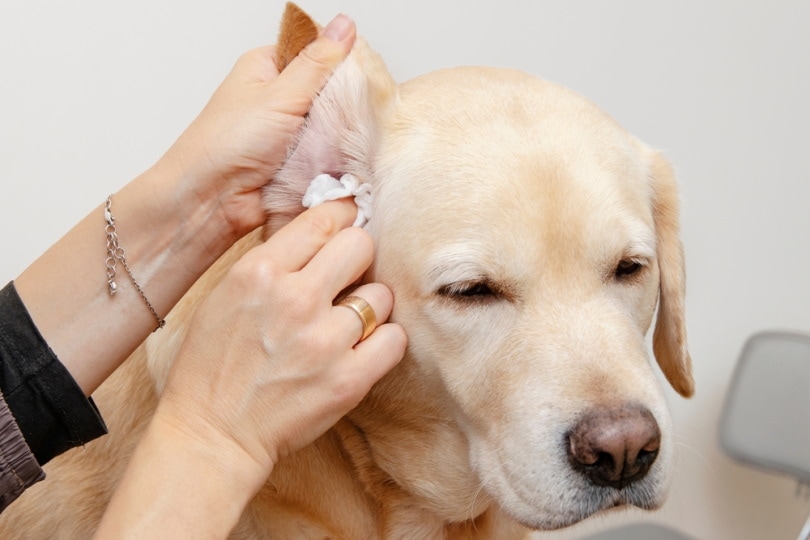
cleaning dog ear labrador
Image Credit: fetrinka, Shutterstock

How Can I Treat My Dog’s Ear Infection at Home?

First and foremost, a trip to the vet is warranted if your dog is displaying ear infection symptoms. Depending on the cause, your vet may prescribe antibiotics to knock it out, especially if it’s in the inner ear. Remember that certain ear infections can be serious and cause serious health risks, such as deafness, facial paralysis, or vestibular conditions. Because of these possibilities, we cannot recommend treating the issue alone at home.

Conclusion

Now that you know certain ingredients in your dog’s food can cause ear infections, it’s important to monitor your dog after eating to see if any unpleasant symptoms develop. Your veterinarian can assist you in finding the triggers, and it’s not a task we recommend doing on your own.

Stay vigilant and stay the course. In time, you’ll find the trigger, and once you know what to avoid in dog food, your dog can say bye-bye to ear infections.


Featured Image Credit: Yavdat, Shutterstock

Get Hepper In Your Inbox

Pet care tips from our vets and experts, straight to your inbox.

List

Select all that apply.

You may opt-out at any time. View our Privacy Policy for more information.

Rachel Giordano
Authored by

Rachel Giordano

Join the conversation

Ask a question, share your story, or send private feedback.
Rate this post
Required to post. Only our editors see your rating.
Who should see this?

A human reviews every comment before it appears. Your email is never published.

Picked to go with this article

4 Home Remedies for Dog Ear Infections (Vet-Approved)

4 Home Remedies for Dog Ear Infections (Vet-Approved)

Has your dog been rubbing their head on your couches, scratching repeatedly at their ears, or have a funky odor when up close? These are some of the first sign…

Nicole Cosgrove
By Nicole Cosgrove ·
6 Signs Your Dog is Allergic to Food: Vet-Approved Guide

6 Signs Your Dog is Allergic to Food: Vet-Approved Guide

Food allergies in dogs can be a serious problem Often, dogs are allergic to specific proteins found in their food—usually meat proteins like chicken or beef. L…

Kristin Hitchcock
By Kristin Hitchcock ·
Best Dog Foods for Yeast Infections: Let Diet Support the Treatment

Best Dog Foods for Yeast Infections: Let Diet Support the Treatment

Yeasts are part of the natural flora of your dog’s ear and skin. However, yeast infections happen when your dog’s skin or ear microbiome loses balance and exce…

Dr. Paola Cuevas
By Dr. Paola Cuevas ·
Chicken Allergy in Dogs: Vet Approved Causes & Signs

Chicken Allergy in Dogs: Vet Approved Causes & Signs

Have you noticed your dog behaving differently? Maybe they’re scratching themselves more or seem to be having stomach upset issues. This can potentially indica…

Kathryn Copeland
By Kathryn Copeland ·

Keep reading

More stories you might like

Why Do My Dogs Ears Smell? 4 Vet-Verified Reasons

One of the normal parts of owning a dog is their occasional unpleasant smell, and this can sometimes include their ears. Though small amounts of visible ear wa…

Jana Blagojevic
By Jana Blagojevic ·
Why Do My Dogs Ears Smell? 4 Vet-Verified Reasons

10 Ingredients to Avoid in Dog Food: Vet-Approved Facts & FAQ

Many pet owners tend to not read the ingredient labels on their pets' food. But more people are starting to become more aware of what should and shouldn’t be i…

Kathryn Copeland
By Kathryn Copeland ·
10 Ingredients to Avoid in Dog Food: Vet-Approved Facts & FAQ

Can Dogs Be Allergic to Gluten? Vet-Reviewed Signs & Diagnosis

The term "gluten" refers to proteins present in various cereal grains and seeds like wheat, barley, triticale, rye, flour, couscous, and farro. These proteins…

Hanh Duong
By Hanh Duong ·
Can Dogs Be Allergic to Gluten? Vet-Reviewed Signs & Diagnosis

What to Feed a Dog With a Yeast Infection: Vet-Reviewed Guide

If you have recently discovered that your dog has a yeast infection on their skin, between their toes, in their ears, or all over, you want to work diligently…

Ashley Bates
By Ashley Bates ·
What to Feed a Dog With a Yeast Infection: Vet-Reviewed Guide

French Bulldog Ear Infections: Signs, Treatment & Prevention (Vet-Approved)

French Bulldogs are known for their playful personalities, but this breed can also be prone to ear infections. Ear infections in French Bulldogs are common and…

Nicole Cosgrove
By Nicole Cosgrove ·
French Bulldog Ear Infections: Signs, Treatment & Prevention (Vet-Approved)

Can You Use Coconut Oil for a Yeast Infection in Dog Ears? Vet Approved Advice

If your dog has a yeast infection in their ears, the internet is full of potential home remedies. One of the more popular options on the internet is putting co…

Adam Mann
By Adam Mann ·
Can You Use Coconut Oil for a Yeast Infection in Dog Ears? Vet Approved Advice

Does My Dog Need Grain in Their Diet to Stay Healthy? Vet-Reviewed Facts & FAQ

As facultative carnivores, dogs can digest and obtain nutrients from various sources, including animal protein. grains, fruits, vegetables, and even some root-…

Lorre Luther
By Lorre Luther ·
Does My Dog Need Grain in Their Diet to Stay Healthy? Vet-Reviewed Facts & FAQ

Golden Retriever Ear Infections: Identification & Care Guide (Vet Answer)

Ear infections, as most people know, can be a terrible thing to experience—including pain, loss of hearing (temporary, or sometimes permanent), and a general f…

Dr. Lauren Demos
By Dr. Lauren Demos ·
Golden Retriever Ear Infections: Identification & Care Guide (Vet Answer)