Hepper is reader-supported. When you buy via links on our site, we may earn an affiliate commission at no cost to you. Learn more.
Can Parrots Eat Garlic? Vet Reviewed Health Concerns & Safety Guide
In this article
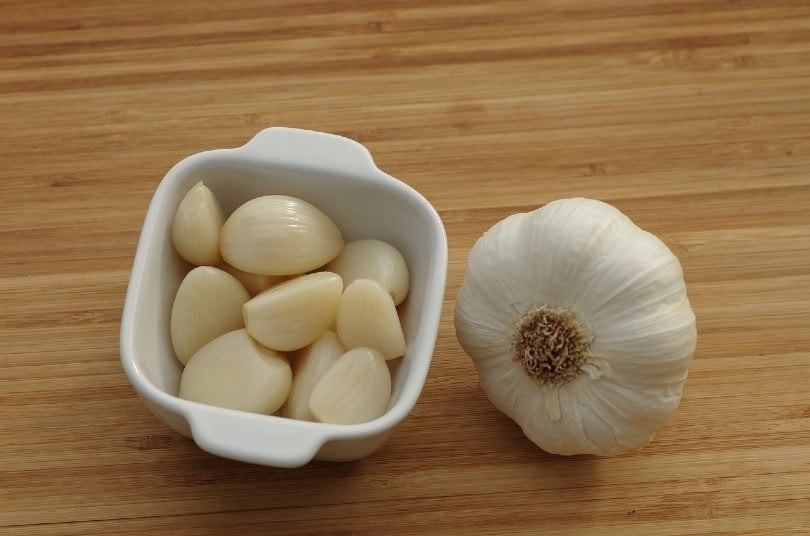
Garlic comes from the Allium sativum plant and is used worldwide in many dishes and cuisines. Most households will have garlic cloves or other forms of garlic lying around for cooking, but when you have a pet parrot, should you keep garlic out of reach? Parrots are curious and love to investigate, and your parrot may be interested in a garlic clove, which begs the question: can parrots eat garlic? Unfortunately, garlic is moderately toxic to birds and should be avoided in any form.
In this post, we will explore this topic more in-depth, so you’re armed with the information you need to keep your parrot safe.

How Toxic Is Garlic to Parrots?
According to the Pet Poison Helpline, garlic is moderately toxic to birds. Garlic contains thiosulfate, and if ingested (especially in large amounts) can cause damage to red blood cells, which can lead to anemia in birds.1
The toxic dose of garlic to parrots isn’t completely understood, especially because parrots contain a vast number of species that range in body sizes. As you can imagine, smaller parrots have a smaller toxic dose, while larger parrots can safely handle larger amounts. However, even if you have a large parrot, such as a Macaw, African Grey, Amazon, large parrotlet, etc., we would not recommend feeding garlic because the risk is just not worth it.
When researching this topic, you may stumble upon sites stating it’s fine to give a parrot a small amount of garlic in moderation. You may even read where parrot owners say their parrot ate a garlic clove and had no ill effects other than reeking of garlic. However, even though a parrot may not show signs of garlic toxicity, feeding garlic could lead to anemia, so it’s best to avoid it.
The bottom line is that parrots do not need garlic in their diet because they should receive all necessary nutrients from their pelleted food and other safe veggies and fruits.
What to Do if Your Parrot Eats Garlic
Garlic can pose a risk for health issues for your parrot. If you suspect your parrot ate garlic, regardless of the type of parrot you have, you should monitor for signs of toxicity that could include:
If you notice these signs, take your parrot to the vet immediately. Even if you do not see signs of toxicity, it’s best to contact your vet just in case. If toxicity is present, your vet can administer treatment to help. For severe toxicity, time is of the essence, so it’s important to take your parrot in for treatment ASAP.

What Other Foods Are Toxic to Parrots?
Onions, chives, scallions, and leeks are definite no-nos for birds since they are in the same family as garlic. It’s best to keep these foods out of reach from your parrot for safety. Other foods to avoid that are toxic to parrots are:
What Is an Ideal Diet for Parrots?

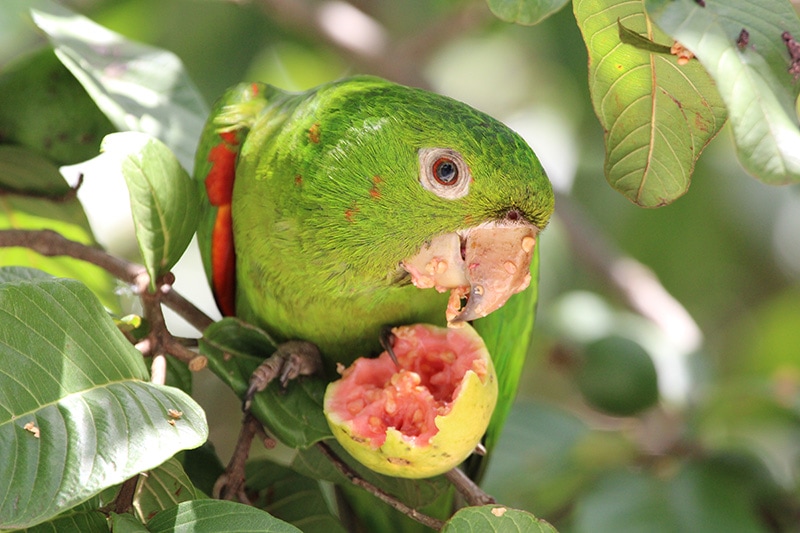
Now that we know foods to avoid, what are safe veggies and fruits your parrot can eat? Your parrot’s diet, whether you have a Macaw, African Grey, Amazon, Parrotlet, Lovebirds, etc., should consist of 70% to 80% of commercial pelleted food formulated with all necessary nutrients parrots need to stay healthy, such as vitamins, minerals, proteins, and carbohydrates.
All parrot species can benefit from adding safe, fresh veggies and fruits to their diet as well.
Safe Veggies
Bell peppers
Broccoli
Brussels sprouts
Cabbage
Carrots
Cooked beans (kidney, lentils, chickpeas, lima, navy, soy)
Cooked rice
Cucumber
Leafy greens
Spinach
Squash
Sweet potatoes
Zucchini
Safe Fruits
Apples (no seeds)
Apricot (no pit)
Bananas
Blueberries
Cantaloupe
Cherries (no pit)
Grapes
Orange
Peaches (no pit)
Pears
Raspberries
Strawberries
Final Thoughts
As you can see, there is conflicting information regarding garlic and parrots. However, even though garlic is considered only moderately toxic, it’s still best to avoid giving it to your parrot, regardless of species. Even though garlic may hold antimicrobial properties, it’s best to have your veterinarian administer treatment for bacterial, fungus, or viral infections instead of taking matters into your own hands.
If your parrot ingests a little garlic, consider contacting your vet immediately and watch for signs of toxicity. In the end, we feel it’s best to avoid giving your parrot garlic simply because it’s not needed, and the risk is not worth the possibility of toxicity.
See Also:
Featured Image Credit: gresei, Shutterstock
Get Hepper In Your Inbox


Pet care tips from our vets and experts, straight to your inbox.
You may opt-out at any time. View our Privacy Policy for more information.

Rachel Giordano is a writer and musician out of Pensacola, Florida, living there with her partner and their two dogs, Aero, a Border Collie/Sheltie mix, and Sophie, a Boston Terrier. Rachel has a Bachelor of Arts degree in communication and enjoys writing about all types of animals. When Rachel’s not dedicating her time to writing about animals, she enjoys writing thriller/suspense novels. A writer by day and a musician by night, she's passionate about educating the public about the requirements and needs of all types of animals.
Join the conversation
Ask a question, share your story, or send private feedback.