Hepper is reader-supported. When you buy via links on our site, we may earn an affiliate commission at no cost to you. Learn more.
Can Parrots Eat Spinach? Vet-Approved Facts & FAQ


In this article
Not much makes a parrot happier than munching on fresh, vitamin-rich, leafy green veggies. Spinach is an example of one of several safe and nutritious veggies that parrots can enjoy as part of a balanced and varied diet.
However, too much spinach, like too much of anything, is never a good thing, so it's wise to feed it in moderation. Read on to learn more about the health benefits of spinach and why moderation and balance are key.

Health Benefits of Spinach for Parrots
Spinach is a great source of vitamin A, which contributes to maintaining a strong immune system, healthy skin and good eyesight. Vitamin A is also beneficial for your parrot's feathers, keeping them looking bright and healthy.
Vitamin A deficiency can cause all manner of problems, including wheezing, crusty nostrils, weight loss, appetite loss, eye problems, bad breath, diarrhea, and dull-looking feathers, among other signs. Being deficient in vitamin A is especially common in birds kept on seed-only diets.
For these reasons, your parrot must get enough vitamin A in their diet. Veggies with dark flesh also contain more beta-carotene, a powerful antioxidant that converts into vitamin A, so opt for these. In addition to spinach, other good sources of vitamin A include:
- Broccoli
- Dandelion greens
- Parsley
- Swiss chard
- Sweet potatoes
- Mustard greens
- Chicory
- Alfalfa
- Turnip greens
- Collards
- Kale
- Green or red peppers
- Pumpkin
- Carrots
Note: It's ideal to offer these veggies raw to prevent the risk of vitamin breakdown caused by overcooking. If you do cook the veggies, it's best to steam or sautée them without any seasonings.
Can Spinach Be Dangerous for Parrots?
You may have heard that spinach contains oxalates, and that oxalates inhibit calcium absorption. This is true to a certain extent, but it only has this effect on the foods that contain the oxalic acid. Therefore, as long as your parrot eats a varied and balanced diet, they can get calcium and other nutrients from a number of foods, and the inclusion of spinach won't harm them.
Some worry about the possibility of kidney stones due to oxalates, but this happens when oxalates and calcium accumulate in the system. In short, feeding spinach in moderate amounts is not a cause for concern, unless your vet has advised otherwise.
Spinach is around 92% water, so even though it’s healthy for your parrot, it doesn’t contain a huge amount of nutrients per serving, but it can be filling. Make sure to offer your feathered friend no more than a leaf or two to make sure they don’t fill up on salad!

Spinach Feeding Guide
As a low-energy vegetable, you can feed some spinach along with at least three other types of low-energy vegetables (like broccoli, snow pea sprouts, kale, carrot greens, rocket, cabbage, wheatgrass, and beetroot leaves) daily for variety. Medium-energy veggies, like carrots, pumpkin, squash, sweet potato, and snow peas, should be offered only in small amounts.
You can make a fresh salad of veggies (your parrot is sure to love this) adapted to your bird's size and nutritional requirements to feed on a daily basis. Remember to remove any uneaten vegetables from the enclosure before they can spoil. Wash all the veggies thoroughly before feeding.
If you like, you can add some fruits, too, but these should be offered in lesser amounts than the vegetables, as they are high in sugar. Avoid adding lettuce to your parrot's salad as this is mostly made up of water and isn't very nutritious.

What Do Parrots Eat?
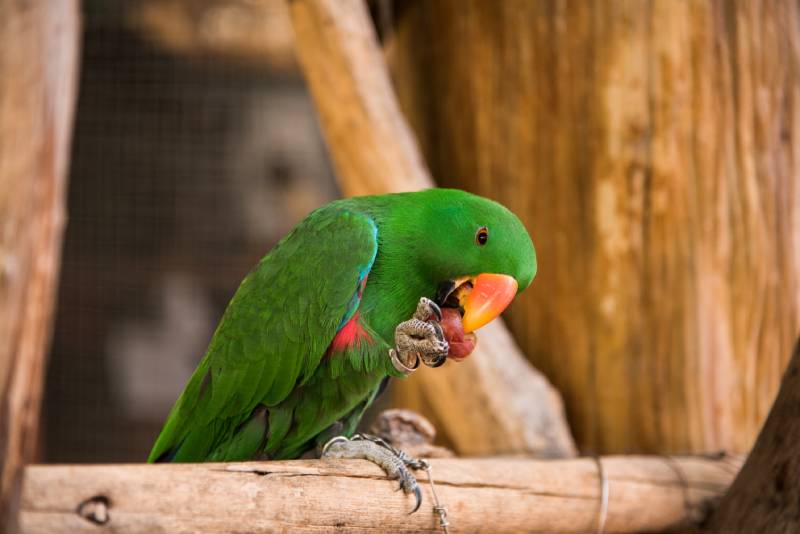
It is vital to make sure you are feeding your parrot a balanced diet that is specifically designed for their species - there is no single diet that is suitable for all parrots.
In general, a parrot's diet should consist of around 50–75% commercial pellets, fresh veggies, fresh fruits, seeds, and nuts. Fruits, seeds, and nuts should make up only a small portion of the diet due to their high sugar (fruit) and fat (seeds and nuts) content.
If your parrot needs to consume animal protein, you can also offer other high protein items like cooked chicken, turkey, or white fish, hard-boiled eggs, whole grain pasta, and brown rice in small amounts.
Since the term “parrot” is a broad umbrella comprising many species (parakeets, cockatiels, budgies, etc. in addition to large parrots), we would urge readers to speak to a vet or avian specialist about the specific dietary requirements of your pet. Lories, for example, eat a largely nectar-based diet. Some examples of foods parrots enjoy include (this is not an exhaustive list):
- Leafy green veggies
- Sweet potatoes
- Red and green peppers
- Pumpkin
- Carrots
- Beansprouts
- Peas in the pod
- Zucchini
- Beets
- Corn on the cob
- Okra
- Asparagus
- Bananas
- Apples
- Papaya
- Mangos
- Passion fruit
- Pomegranate
- Blueberries
- Raspberries
- Strawberries
- Oranges
- Walnuts
- Brazil nuts
- Pumpkin seeds
- Cooked beans
What Foods Aren't Safe for Parrots?
Steer clear of the following foods, as all of these can cause health issues for your parrot. Some, like onions, are toxic, whereas others, like processed foods, are simply unhealthy.
- Avocado
- Onions
- Garlic
- Caffeine
- Comfrey
- Rhubarb
- Peanuts in the shell (these can contain mold)
- Apple, apricot, cherry, nectarine peach, pear, and plum seeds/pits
- Uncooked beans
- Alcohol
- Dairy products
- Salty or sugary snacks
- Chocolate
- Nightshade family plant parts (for example, potato plant leaves)
In Conclusion
In a nutshell, parrots absolutely can eat spinach—which is a good source of vitamin A—but be sure to provide plenty of other veggies too for good balance. Parrots derive all the nutrients they need from a variety of vegetables, especially leafy greens, in addition to quality commercial pellets and small quantities of fruits, seeds, and nuts. Not getting enough variety in their diets can cause parrots to suffer from nutritional deficiencies.
Again, it is important to make sure you are feeding your parrot a balanced diet that is suited specifically to their species - there is no “one size fits all” when it comes to parrot nutrition.
See Also:
Sources
https://www.liverpool.ac.uk/media/livacuk/veterinaryscience/Parrot,diet.pdf
https://www.seavs.com/pet-care-information/parrot-diet-care/
https://resources.bestfriends.org/article/best-parrot-diet-toxic-foods-avoid
https://www.healthline.com/nutrition/foods/spinach#plant-compounds
https://www.northernparrots.com/blog/why-parrots-need-vitamin-a/
https://www.ftbrescue.com/post/2018/02/18/oxalates-what-you-need-to-know
https://theparrotsocietyuk.org/site/index.php/parrot-information/veterinary-advice/hypocalcaemia/
https://nilesanimalhospital.com/files/2012/05/Vitamin-A-Deficiency-in-Pet-Birds.pdf
https://www.petmd.com/bird/conditions/digestive/c_bd_Vitamin_A_Deficiency
Featured Image Credit: Ponce_photography, Pixabay
Get Hepper In Your Inbox


Pet care tips from our vets and experts, straight to your inbox.
You may opt-out at any time. View our Privacy Policy for more information.
Kit Copson is a freelance writer and lifelong animal lover with a strong interest in animal care. She has parented various furry beings over the years and is currently a proud cat mom of two—one skittish but adorable Domestic Shorthair and very chilled (unless hungry) Siamese and a —and dog mom of one—an adopted Bichon Poodle cross. When not writing about or spending time with pets, Kit can be found doodling in her sketchpad, reading, or more often than not, drinking tea.
Join the conversation
Ask a question, share your story, or send private feedback.