Hepper is reader-supported. When you buy via links on our site, we may earn an affiliate commission at no cost to you. Learn more.
Can Parrots Eat Honey? Vet Reviewed Nutrition Facts & FAQ


In this article
Honey is something that we enjoy in many forms, such as mixed into tea or cakes or just spread on warm toast! It also has a few medicinal qualities. So, it’s only natural that you may want to share this sweet stuff with your beloved parrot. But is this safe?
No, parrots should not eat honey. Honey can contain Clostridium botulinum, which is responsible for botulism, a deadly disease to which birds are susceptible.
Let’s get into the details about the dangers of honey for parrots and go over recommendations for safer treats for your pet.

What Makes Honey Dangerous for Parrots?
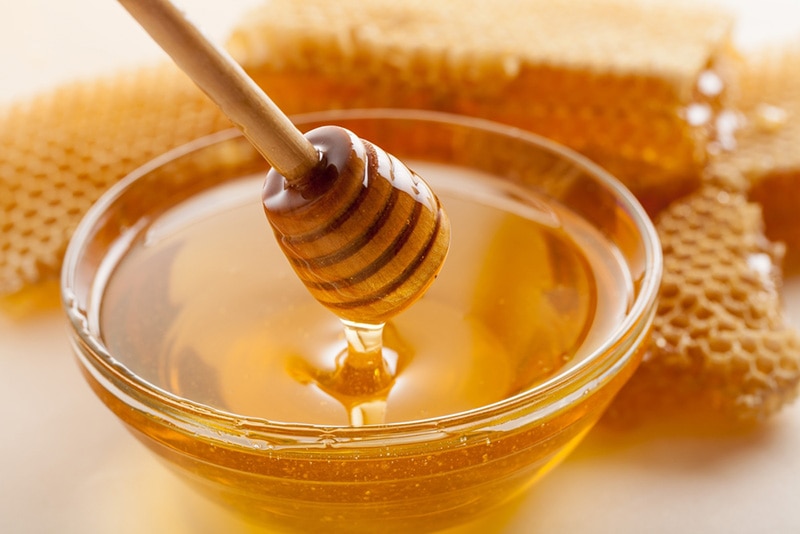
It’s kind of perplexing how honey can have so many health benefits, such as being anti-bacterial, but it can also be contain C. botulinum, the bacteria responsible for producing the toxins that cause botulism. Now, this means raw and pasteurized honey as the pasteurization process typically doesn’t kill the toxin. Since you won’t know whether your honey is botulism-free or not, it’s best not to give any to your parrot.
In birds, botulism can be lethal without proper treatment.
Signs of Botulism
Signs of botulism in birds occur when the toxin C. botulinum interferes with the bird’s nervous system. They may present with the following signs:
- Inability to fly
- Lethargy
- Limited movement
- Progressive weakness
- Paralysis of the third eyelid (which will be visible on the eye)
- Progressive paralysis
- Difficulty breathing
If you think that your parrot consumed any honey, you should contact your veterinarian, especially if they are showing any signs.
What Is a Parrot’s Ideal Diet?

Providing your parrot with a healthy and balanced diet is critical for keeping them healthy. Aim for high-quality parrot pellets, which should constitute roughly 70% to 80% of their diet, with fresh vegetables, fruits, grains, and seeds making up the remaining 20-30% of their daily diet.
The following fresh veggies are all safe for parrots:
- Asparagus
- Broccoli
- Brussels sprouts (cooked)
- Carrots
- Cauliflower
- Dandelion greens
- Endive
- Green beans
- Kale
- Okra
- Peppers
- Pumpkin
- Spinach
- Squash
- Sweet potatoes
- Turnip greens
- Yams
Fruits are considered treats and should be given in moderation. The following fruits are all safe for parrots:
- Apples (remove seeds)
- Apricots (remove stones)
- Bananas
- Blueberries
- Cherries (remove the pit)
- Grapes (dark ones are best)
- Kiwis
- Mangos (remove skin)
- Nectarines (remove stones)
- Oranges (remove seeds)
- Papayas
- Peaches (remove stones)
- Pears
- Pineapple
- Plums
- Pomegranates
- Raspberries
- Strawberries
You can also offer seeds and nuts to your parrot, but these should only make up a small amount as they tend to be higher in fat. High fat foods contain extra calories that can lead to obesity if fed in high amounts.
Bear in mind that if you ever introduce a new food to your parrot, you should discuss it with your vet first and introduce the new food slowly. This will help prevent stomach upset, particularly diarrhea.
FAQ
Is There Anything That You Can Do to Make Honey Safe?
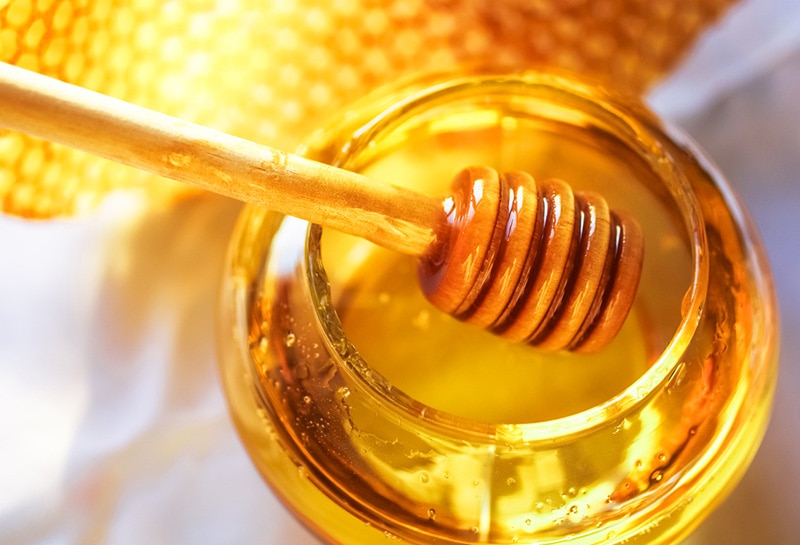
Essentially, boiling honey is the only way to eradicate the C. botulinum toxin. It should be boiled at a minimum of 185°F (80°C) for 5 minutes or more. Pasteurized honey is created by heating it at a lower level, so it isn’t enough to kill off the bacteria.
If you adequately boil the honey, you can offer it to your parrot in tiny amounts very occasionally. It doesn’t necessarily provide any advantages, though, because boiling it also tends to remove a lot of the health benefits.
Can You Use Honey to Heal Any Wounds on Your Parrot?
A 2016 study found that Manuka honey (which comes from New Zealand and Australia) has healing properties because it is known to act as an antibacterial and is effective in helping to heal wound infections.
However, parrots preen their feathers a lot, so they are likely to encounter the honey and ingest it. Boiling Manuka honey to remove any potential toxins is also pointless because the antibacterial properties will be removed and it will no longer contribute to any healing.
What Are Other Foods Parrots Shouldn’t Eat?
Several human foods and drinks are toxic and unsafe for parrots. The following should never be given to a parrot:
- Xylitol: This artificial sweetener is found in many sugar-free products. It is highly toxic and can prove to be fatal.
- Alcohol: Any kind of alcohol can depress a bird’s organs and might be fatal.
- Caffeine: Caffeine can make your parrot very sick and might lead to death.
- Avocado: Avocados contain persin, which is toxic to parrots.
- Dairy: Birds are almost completely lactose intolerant and dairy products can lead to diarrhea.
- Peanuts in the shell: Some unshelled peanuts can grow mold inside the shell, which is quite dangerous to birds.
- Chocolate: Chocolate causes vomiting and diarrhea and might eventually lead to seizures and death.
- Garlic: This can cause vomiting and diarrhea, and if given to your parrot frequently, it can lead to anemia and death.
- Mushrooms: Certain mushroom varieties can be toxic and cause liver failure.
- Uncooked beans: Uncooked beans contain the toxin hemagglutinin and can prove a choking hazard.
- Onions: Along with garlic, anything in the onion family (including chives, shallots, and leeks) can lead to digestive upset, anemia, and death.
- Salty snack foods: Things like chips or pretzels contain too much salt, which can eventually lead to dehydration and death.
- Leaves and stems from nightshade vegetables: Veggies in the nightshade family are good for parrots except for the leaves and stems, which are highly toxic. This includes those of bell peppers, tomatoes, and eggplants.
- Pits and seeds from rose family fruits: The seeds and pits of fruits in the rose family contain a toxic ingredient. These fruits include apples, apricots, cherries, peaches, pears, plums, and nectarines.

Conclusion
Botulism from honey isn’t common in birds, but it isn’t worth the risk to give honey to your parrot, as it might prove to be fatal. Parrots do tend to love sweet things, so opt for a few bites of fruit in place of honey.
Fruit is healthier and safer, though remember to check with your vet before introducing something new to your parrot. They can let you know if it’s safe and how much is enough for your pet.
Sources
Featured Image Credit: stevepb, Pixabay
Get Hepper In Your Inbox


Pet care tips from our vets and experts, straight to your inbox.
You may opt-out at any time. View our Privacy Policy for more information.
Kathryn was a librarian in a previous lifetime and is currently a writer about all things animals. When she was a child, she hoped to work in zoos or with wildlife in some way, thanks to her strong love for animals. Unfortunately, she's not strong in the sciences, so she fills her days with researching and writing about all kinds of animals and spends time playing with her adorable but terribly mischievous tabby cat, Bella. Kathryn is hoping to add to her family in the near future – maybe another cat and a dog.
Join the conversation
Ask a question, share your story, or send private feedback.