Hepper is reader-supported. When you buy via links on our site, we may earn an affiliate commission at no cost to you. Learn more.
Can Turtles Drown? Vet Approved Facts & Safety Guide

In this article
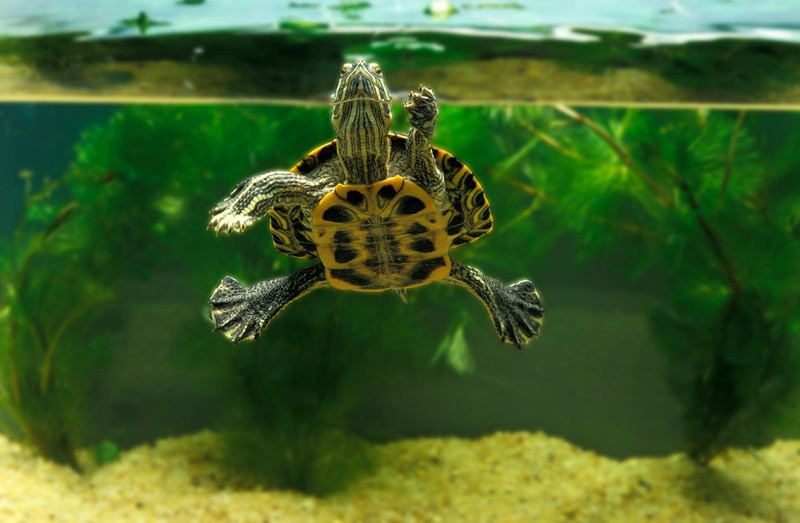
Aquatic turtles stay in the water for long periods, and you wouldn’t think of them drowning. However, turtles have lungs like us, and a turtle can drown if they stay underwater for too long. Thankfully, turtles are excellent swimmers, so drowning is rarely a risk unless something prevents them from coming to the surface. This is especially true for pet turtles living in monitored, safe enclosures. To learn more about how to keep your pet turtle safe, keep reading below.

How Long Can a Turtle Hold Its Breath?
How long a turtle can hold its breath depends on its species, age, and size. Most turtles can hold their breath for longer than 30 minutes, while some can hold their breath for several hours. For example, the Sea turtle can hold its breath for as long as 2 hours. In very cold climates, where turtles enter a period of brumation (reptile hibernation), turtles can be under a frozen lake for months, using cloacal breathing to stay alive. Cloacal breathing (affectionately called “butt breathing”) is where oxygen exchange occurs between the water and the surface capillaries in the cloaca, so they are “breathing” through their bottom!
What Is a Safe Amount of Water to Provide in Your Turtle’s Enclosure?
When setting up your pet turtle’s enclosure, you have to make sure that you are providing just enough water for your turtle to thrive while still not posing a risk to your pet’s safety. Swimming areas are necessary for an aquatic turtle’s habitat, as they provide enrichment and exercise, so you cannot avoid adding water to the enclosure.
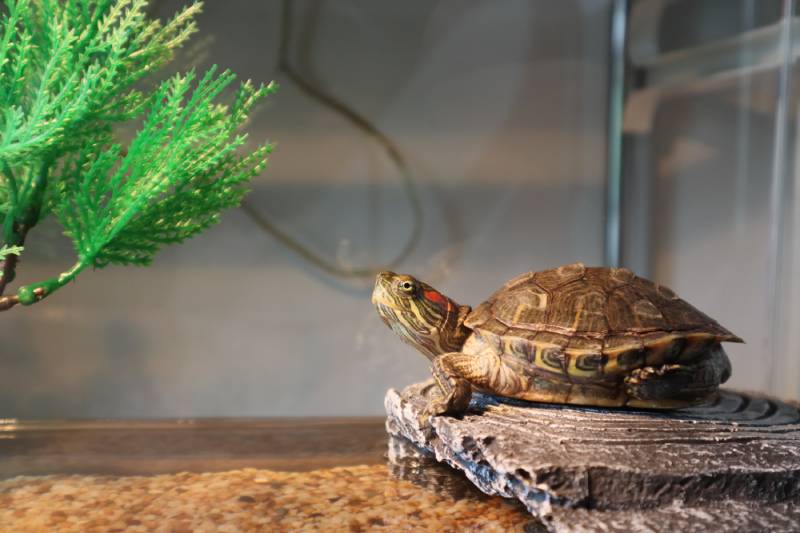
In general, a safe amount of water to add to your turtle’s enclosure is around ⅔ of the size of the tank. The other ⅓ should be dedicated to dry land so that your pet has space to pull himself entirely out of the water and dry off. This area is necessary for basking.
The water depth inside your turtle’s enclosure is also important. As a rule of thumb, a good water depth is around twice the length of the turtle’s shell. This depth is the right size to allow your turtle to dive while giving him enough room to reorient if he is flipped over.
However, you must ensure the water line is several inches below the top of the tank to prevent your pet from falling out.
Can All Turtles Swim?
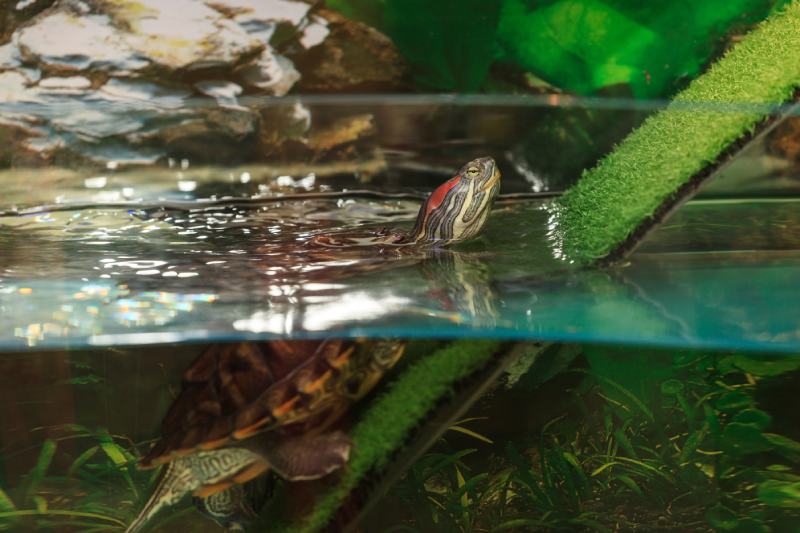
Most turtles are capable of swimming, and they can do it well. Some aquatic turtles prefer greater water depths while others favor shallow water, so your turtle’s experience and skills with swimming may vary depending on its species. Knowing the type of turtle you have will tell you of your pet’s capabilities and help you make safer, more informed decisions for your pet.
Is My Pet Turtle at Risk of Drowning?
In most instances, your pet turtle should not be at risk of drowning. Of course, this assumes that your turtle is in good health and being monitored in a proper and safe enclosure. Provided that they have ready access to adequate basking space, a healthy turtle should not be at risk, but if they are unable to get out of the water, they certainly can drown.
Apart from drowning, another risk for turtles is water overexposure. If your turtle doesnt bask enough, it cannot dry, shed old shells, or maintain a healthy body temperature. So, if you notice your turtle seems to be avoiding dry land, keep an eye on its behavior and watch for any signs of poor health. If you are concerned for your turtle's safety, contact your vet.
Providing a Safe Enclosure for Pet Turtles
Setting up a proper and safe enclosure for your turtle can be challenging if you’ve never done it before, but is also an exciting project. Here are some basic guidelines you can follow to ensure your turtle’s health, happiness, and safety.
Enclosure Size
As a guide, your enclosure should measure approximately 10 gallons of water per inch of shell length, based on the expected adult size of the species of turtle you are housing, and the basking/dry substrate area should measure half the water volume.
For example, a red-eared slider can be around 10-12 inches at adulthood, so you would need to provide (at a minimum) 120 gallons of water and 60 gallons of basking area, per turtle. And remember, always round up.
Enclosure Type
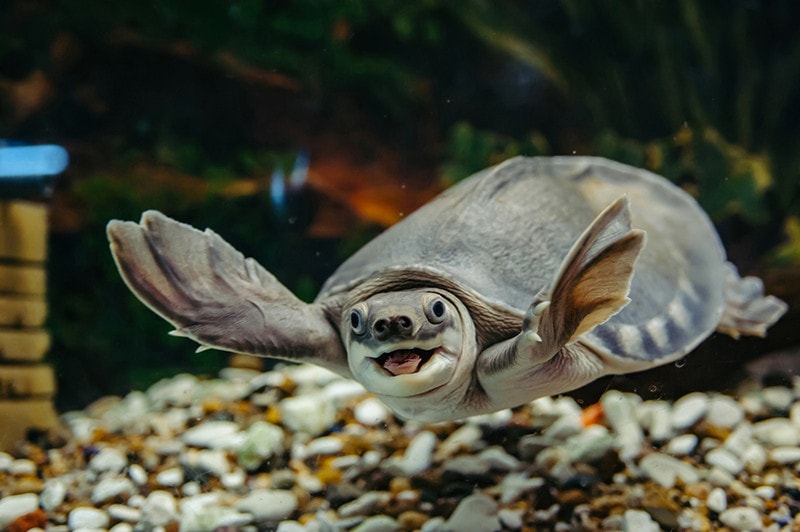
Aquariums/Terrariums are commonly used to house pet turtles, but they provide the lowest level of environmental enrichment. Custom turtle tanks are a better option, designed with turtles in mind, rather than fish. But if you’re looking for the ultimate in turtle habitat provision, you can’t go past an indoor or outdoor pond. By mimicking their natural habitat, you are providing your turtle friend with a much more enjoyable place to live, but take care to prevent escape and provide shelter to avoid predation.
Water Filtration Requirements
Water safety includes proper filtration and oxygenation. The water should be filtered during all stages of your turtle’s life. The best filtration systems include mechanical and biological filtration. Before adding water to your turtle’s enclosure, dechlorinate it to make it safe. Although pet turtles will not need to engage cloacal breathing, it is still important that their water supply be oxygenated to avoid stagnation.
To ensure that your turtle’s water is adequately filtered, you can use water-quality test kits to check for toxins in the water.
Dry and Aquatic Area Substrate Requirements
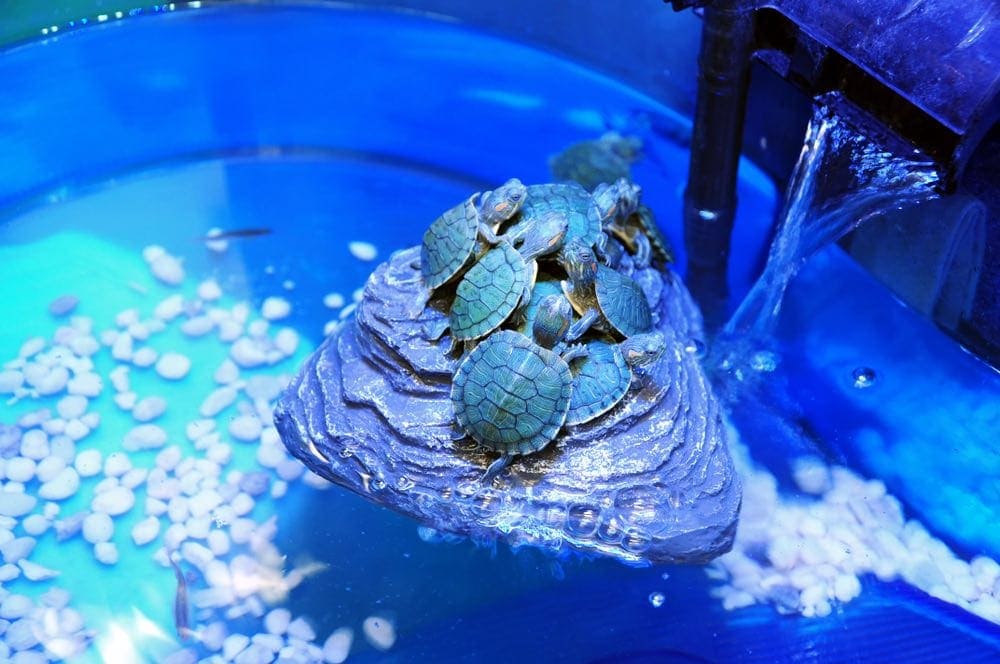
In the dry area of your turtle’s enclosure, you can use reptile mulch, coconut husk, bark, and soil as substrate. These substrates are recommended because they are biodegradable. As for the aquatic area, you will want to use river rocks. The rocks should be larger than your turtle’s head to ensure your pet doesn’t ingest any of them. Make sure your turtle has an easy, non-slip access point from the water.
Water Cleaning Requirements
Unfiltered water must be changed each day. As for filtered water, you’ll change it every week or twice a month, depending on the size of your tank.

Final Thoughts
While it is possible for turtles to drown, this risk is very low if your turtle is carefully monitored in a safe enclosure. However, since it is still possible, it is crucial to remain vigilant and ensure that the water depth in your turtle’s tank is adequate. Similarly, make sure there are no obstructions in the water that your turtle may become caught on, and easy access to their basking area. Other than that, turtles are talented swimmers, so you likely have no cause for concern.
Featured Image Credit: slowmotiongli, Shutterstock
Get Hepper In Your Inbox


Pet care tips from our vets and experts, straight to your inbox.
You may opt-out at any time. View our Privacy Policy for more information.
Pets are Jordyn’s passion, cats especially. Whenever she has the opportunity, she loves to learn about them and share her knowledge with everyone. She is devoted to her tabby cat named Jack and works hard to buy him his favorite treats and toys. Discovering new ways to better care for her pet is always on her to-do list, and she is eager to help pet parents everywhere who have similar pursuits. In her spare time, she loves to read, write, and take long walks. She has a creative spirit, which often helps her to come up with funny cat names.
Join the conversation
Ask a question, share your story, or send private feedback.