Hepper is reader-supported. When you buy via links on our site, we may earn an affiliate commission at no cost to you. Learn more.
Do Turtles Get Cold? Vet-Reviewed Facts & Safety Guide


In this article
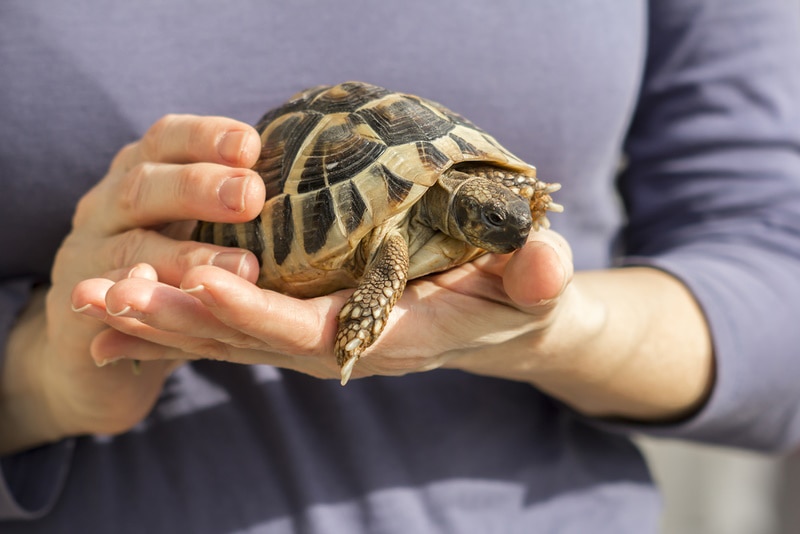
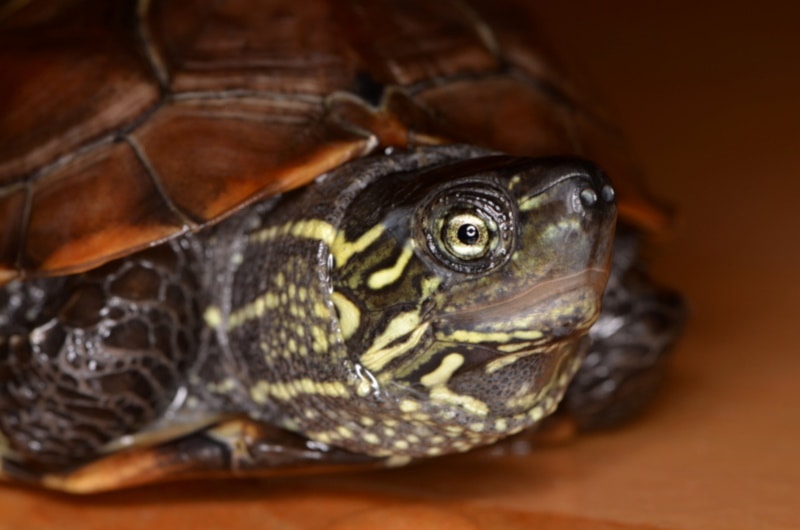
Do turtles get cold? It sounds like one of those questions that float into your mind out of nowhere at 3 am, doesn’t it? To answer this question, we need to know that turtles are exothermic, which means their body temperature is dependent on external conditions. Turtles can get too cold, and this can impact their health and even their chances of survival in some cases.
In this guide, we’ll explain why it’s important to monitor and maintain the temperature of your aquatic turtle’s water and basking area, and what can happen to turtles that get too cold.

Can Wild Turtles Survive Cold Winters?
Turtles are exothermic, which means they are unable to regulate their body temperature and rely on external, environmental sources to do so. You may have heard this referred to as being “cold-blooded”, but this isn’t accurate. Exothermic animals are only cold-blooded if they are in cold conditions; when they are in hot environments, they become warm-blooded! Mammals and birds, on the other hand, used to be called warmblooded, because they can maintain their body temperatures at a certain level, even in colder conditions. The correct term is endothermic, which means that, with the exception of extreme cold or heat, we are able to maintain our body temperatures using internal homeostatic mechanisms.
In captivity, turtles are reliant on humans to help them survive by maintaining appropriate water and basking temperatures but in the wild, aquatic turtles have to employ certain tactics to survive in the winter.
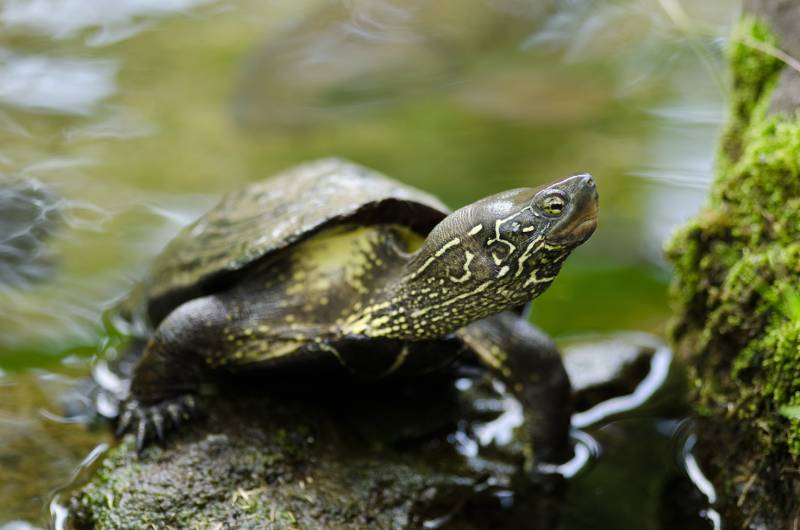
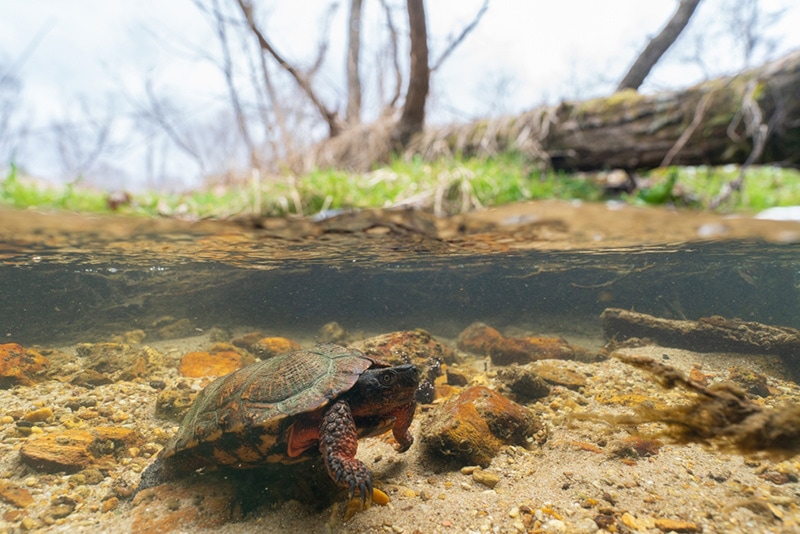
To avoid death by freezing, when their body temperature drops below 50 degrees Fahrenheit, turtles will head to the bottom of their habitat, whether that be a lake, river, or wetland. Here, though the water is still very cold, it’s not freezing. They then go into a state called brumation, which occurs when turtles burrow into banks or mud on the bottom of the water body to survive the winter, a bit like hibernation in mammals.
Because the cold temperature causes the turtle’s metabolic function to drop (resulting in a lack of appetite and lethargy), this allows turtles to survive with less oxygen. Some turtles are able to absorb oxygen from the water via their cloaca, aka butt-breathers! Others head for the surface now and again to breathe. Unfortunately, however, some turtles don’t manage to find a suitable spot to brumate, which can result in death by hypothermia.
What Temperature Should My Turtle’s Water Be?
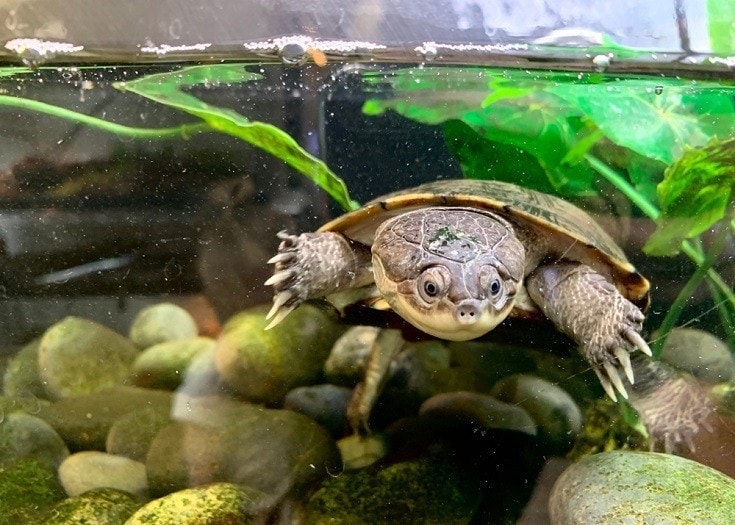
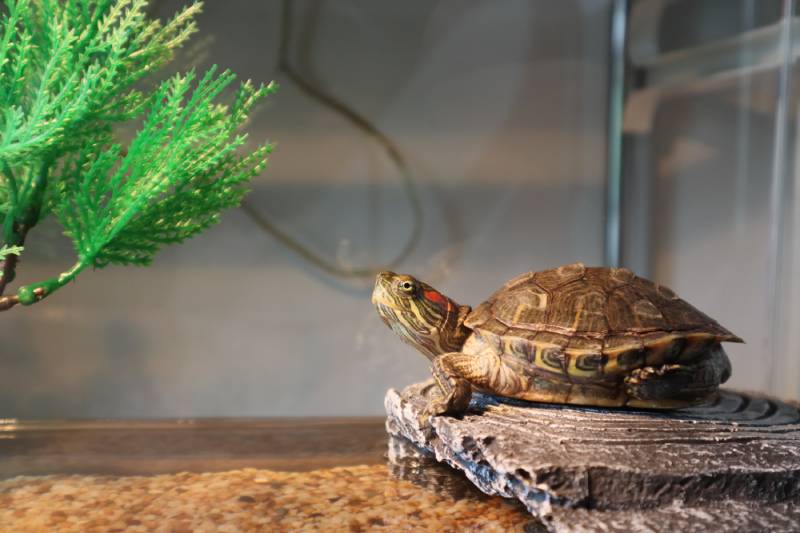
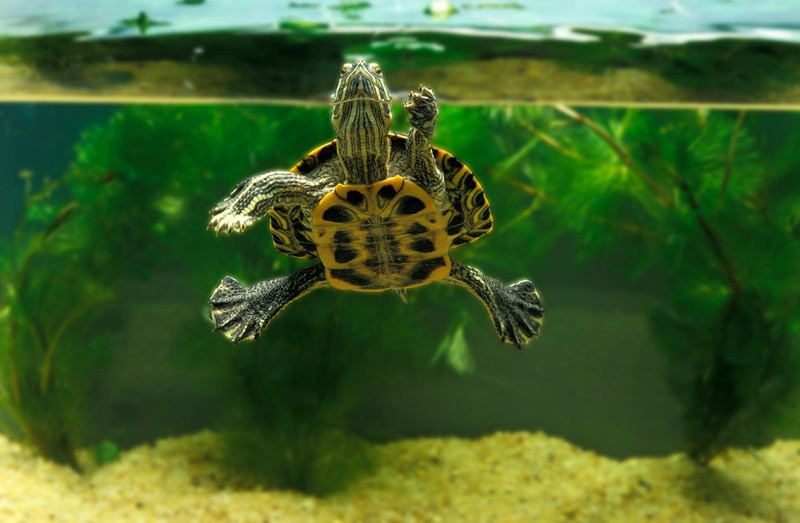
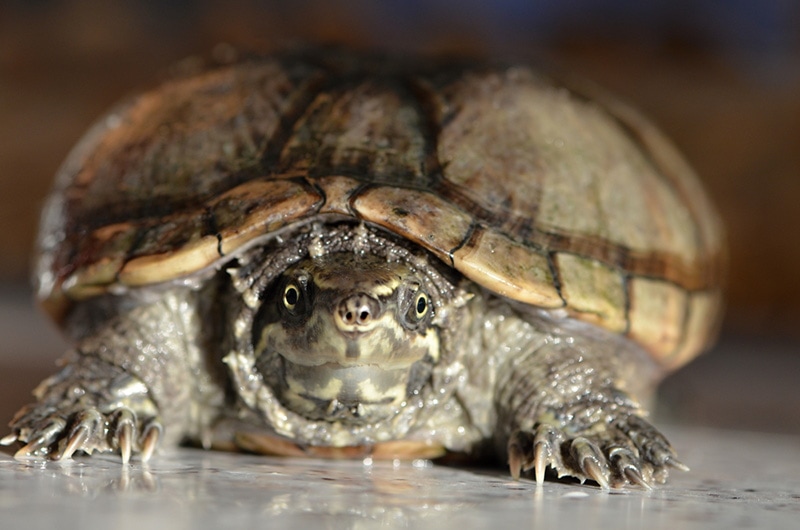
For most pet aquatic turtles, the water temperature should sit between 72–82 degrees Fahrenheit, but this can vary depending on various factors, so we strongly advise checking with your exotic specialist or vet tobe sure which temperature would be ideal for your turtle specifically.
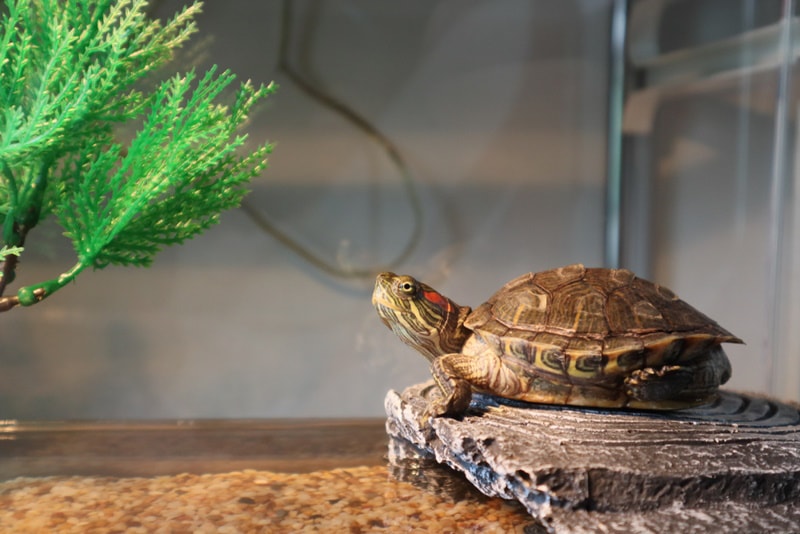
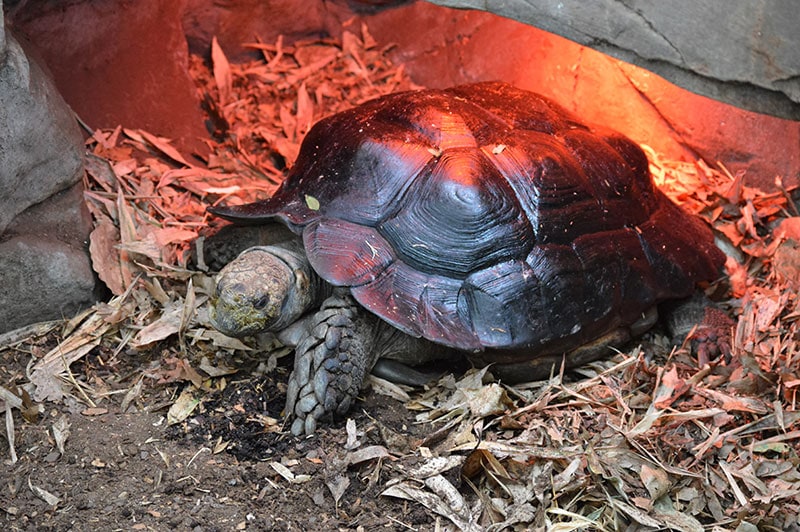
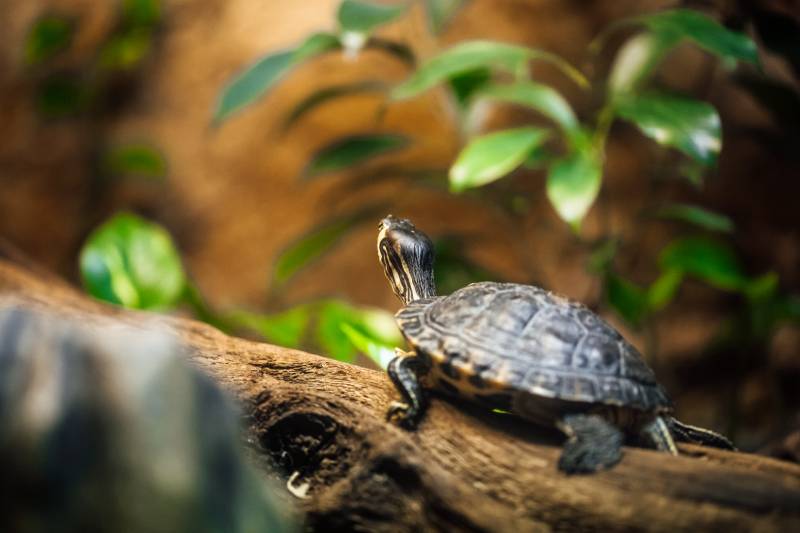
For example, sick turtles and hatchlings may require a slightly higher water temperature than adult turtles. Furthermore, some species may have slightly different requirements, depending on where their species originated. The tank should also have a basking area with a temperature that falls between 85 and 95 degrees Fahrenheit, and there should be a ‘cool’ and ‘warm’ end so they can move away or towards the heat as needed.
Maintaining appropriate water and tank temperatures helps prevent your turtle from needing to brumate, and keeps their immune system working properly. If your turtle’s metabolism drops due to low temperatures, this affects the immune system and can put them at a higher risk of disease and infection. Furthermore, turtles kept in too-cold temperatures can suffer from stress and anorexia, and become very lethargic and sluggish.
Conclusion
Though wild turtles have adapted to find ways to increase their chances of survival in cold temperatures, it’s up to us to make sure domesticated turtles live in the right lighting and heat conditions for optimal health.
Again, as is the case for bringing home any reptile, we strongly recommend discussing specific care requirements with an exotic pet vet to ensure your turtle stays healthy. In spite of the common belief that they’re easy beginner pets, turtles have very particular needs and the balance in this regard is delicate and all-important.
Related Reads:
Sources
https://www.petmd.com/reptile/care/evr_rp_how-to-take-care-of-pet-turtles
https://www.turtleskingston.com/blog/how-do-turtles-survive-the-winter
https://www.pbsnc.org/blogs/science/its-brumation-time-for-our-favorite-turtle/
https://lafeber.com/vet/wp-content/uploads/Aquatic-turtle-handout-color-copy.pdf
Featured Image Credit: Marek Velechovsky, Shutterstock
Get Hepper In Your Inbox


Pet care tips from our vets and experts, straight to your inbox.
You may opt-out at any time. View our Privacy Policy for more information.
Kit Copson is a freelance writer and lifelong animal lover with a strong interest in animal care. She has parented various furry beings over the years and is currently a proud cat mom of two—one skittish but adorable Domestic Shorthair and very chilled (unless hungry) Siamese and a —and dog mom of one—an adopted Bichon Poodle cross. When not writing about or spending time with pets, Kit can be found doodling in her sketchpad, reading, or more often than not, drinking tea.
Join the conversation
Ask a question, share your story, or send private feedback.