Hepper is reader-supported. When you buy via links on our site, we may earn an affiliate commission at no cost to you. Learn more.
Can Turtles Live in a Pond During Winter? Vet-Approved Safety Guide


In this article
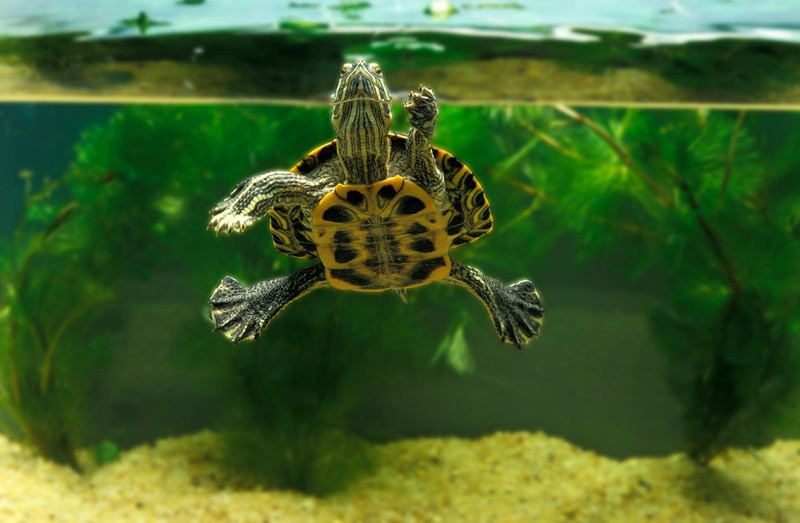
Turtles can live safely outdoors, they certainly do in the wild! And provided they have an area to sun themselves and water to swim around in, this is . Many people prefer having their turtles outside because enclosed turtles can be stinky or cramped. But can turtles live outside in a pond during the winter?
Like all reptiles, turtles are ectothermic, which means that their body temperature is dictated by that of the external environment. Because of this, you need to be careful about leaving your turtle outside during the winter. Many turtles have adapted tools to survive the coldest time of the year, but that doesn’t mean that you should let your turtle live in their pond during the winter.
Here is everything you need to know about how turtles survive the winter, how they can remain in their ponds when the air is freezing.

Wild vs. Pet Turtles
Unlike domesticated animals, turtles that are kept as pets have not undergone any physiological changes, ie. they are essentially the same as their wild counterparts. This means that they are able to adapt to a range of different environments, but are also restricted by what sort of conditions they would encounter in the wild. Most turtles are found in parts of the world that do not undergo long, freezing cold winters, but there are some that have adapted to coping with subzero temperatures.
Turtles have the ability to enter a state similar to hibernation, called brumation, in which their metabolic rate drops significantly, allowing them to almost “switch off”. Many will seek out the relative warmth of the deeper levels of water to escape a freezing surface.
How Do Turtles Survive Through the Winter?
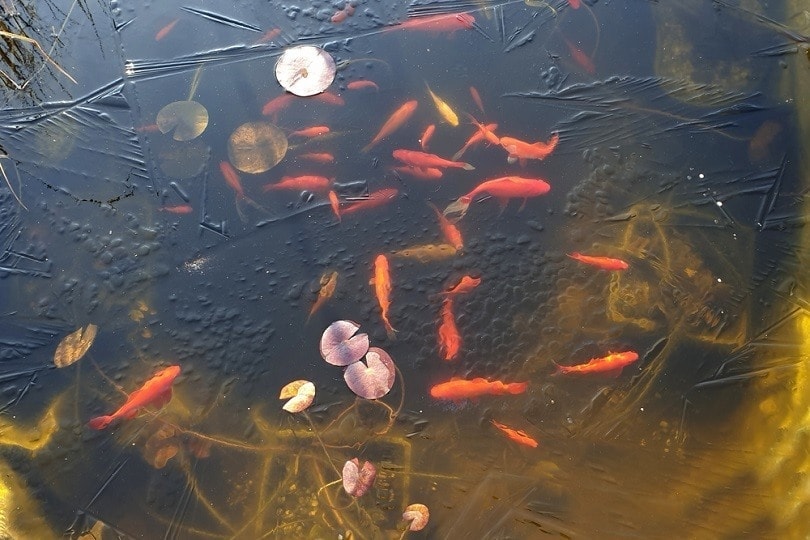
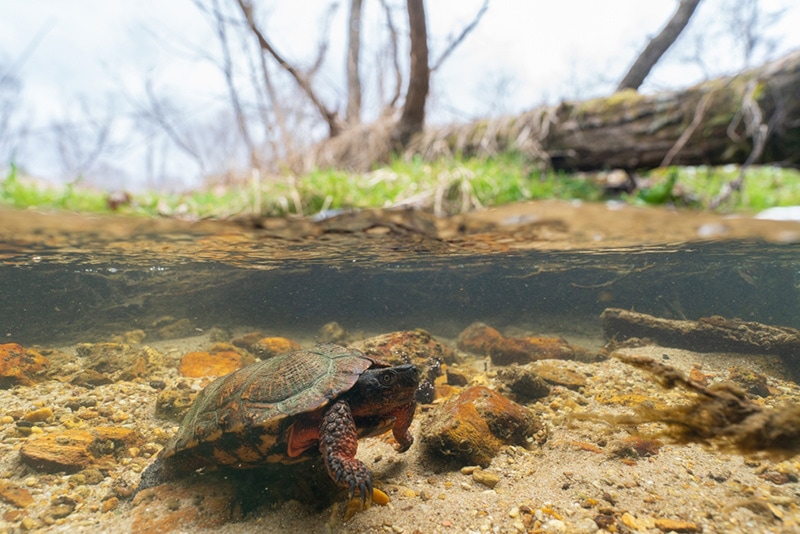
Most pond turtles survive the winter by living at the bottom of a pond, under the ice, where the water remains above freezing. Some pond turtles can remain submerged for up to 100 days as they wait for spring to arrive, coming to the surface to breathe, which may only be 4-5 times per day.
Turtles cannot breathe underwater, but during winter when their metabolic rate has dropped, their oxygen requirements are much lower, meaning they do not need to surface as often. There are some species that have evolved a neat little adaptation known as “butt breathing” to further extend the amount of time they can spend underwater.
Butt breathers have a separate little chamber just inside the cloaca where the tissue can go through gas exchange with the water, essentially absorbing oxygen through their bottoms!
Most turtles spend almost the entire season in the water or underwater in a bid to survive potentially lethal temperatures. Brumation allows turtles to survive in a slowed-down state for weeks on end while the winter is in full swing. If you let your pet turtle live outside in its pond during the winter, they will likely enter brumation and vanish for a long period of time.
Can Turtles Die During the Winter?
Yes. Turtles can die in the winter in certain situations. If turtles are caught out in subfreezing temperatures or experience too many days of near-freezing temperatures, their bodies will slow down, and they will die. If a turtle cannot enter brumation during cold periods, this can be fatal. This can happen if your turtle doesn’t have a deep enough pond to have warmer lower layers, if the weather changes rapidly and catches them off guard, or if they are in poor physical condition when the temperatures drop. This means if you leave your turtle outside during the winter and they are not ready or get unlucky, you could end up losing your turtle to the cold.
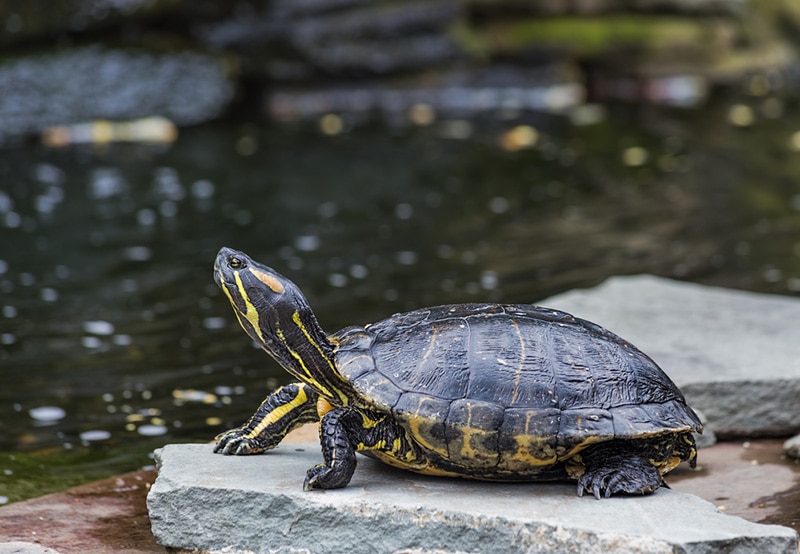
How to Keep Your Pond Turtle Safe During the Winter
The simplest and best way to keep your turtle safe during the winter is to bring it inside. Keeping your turtle inside during the winter will ensure that they will not freeze to death. This requires you to have a winter enclosure that you can set up indoors. Some people have permanent winter enclosures, and other people have temporary enclosures. You can even keep your turtle in an insulated garage or shed as long as the temperature inside the garage never approaches freezing.
If you plan on keeping your pet turtle outside in a pond through the winter, make sure the pond is deep enough that it has plenty of water beneath the surface that will not freeze, and provide extra nutrition leading up to winter.
The methods we have discussed are survival techniques; adaptations that turtles have evolved in order to survive extreme conditions. If your turtle enclosure is more of a natural habitat, then as long as you ensure they have the appropriate water depth and nutrition leading up to winter, there should be no issue with leaving them where they are. However, given that entering brumation to survive the winter puts a strain on them, if you have the ability to bring them indoors, or into a more sheltered habitat, they are sure to appreciate it!
Conclusion
Turtles can, and do, survive the winter living in ponds outside, but this is dependent on how extreme the temperature lows are, and whether the pond is of an appropriate depth to allow them to brumate in the lower levels.
There is always a risk that your turtle will not survive the winter outside, so if you are able to provide them with a winter habitat, this is the best way to ensure their survival.
Related Read: Can Turtles Hear Sound? Senses, Facts, & FAQ
Featured Image Credit: Andreas Altenburger, Shutterstock
Get Hepper In Your Inbox


Pet care tips from our vets and experts, straight to your inbox.
You may opt-out at any time. View our Privacy Policy for more information.
Grant is a freelance writer with years of experience writing about a diverse range of topics. His days are spent writing and caring for eight animals (two horses, two donkeys, two goats, and two dogs). In his free time he enjoys slowly carving out a quaint hobby farm from the Southern scrub. He currently lives in his native Florida with his wife and son.
Join the conversation
Ask a question, share your story, or send private feedback.