Hepper is reader-supported. When you buy via links on our site, we may earn an affiliate commission at no cost to you. Learn more.
Can You Crate a Cat During the Day? Vet-Approved Facts


In this article
Crating a dog or puppy can be an effective tool to help simplify potty training and prevent anxiety, chewing, and other destructive behavior. Cats may not chew up your favorite pair of shoes, but they often get into other mischief, such as scratching furniture or peeing inappropriately. If your kitty gets into trouble while you’re away, you might wonder whether you can create a cat during the day.
In certain cases, creating a cat is okay, but only for short periods. Keep reading to learn when and how to crate your cat, along with tips to train them to accept their confinement. You’ll also find strategies to keep your cat busy while you’re away during the day instead of crating them.

When It’s Okay to Crate a Cat
You may consider crating your cat to prevent destructive behavior while you’re away, and there are some specific scenarios where this option may be an especially good idea. For their safety, young kittens should typically be confined to a crate or small room when you aren’t home. Roaming the house unsupervised can be especially hazardous for tiny cats. Your vet may recommend crating your cat if they’re recovering from surgery or an illness.
If you adopt a new adult cat, temporarily crating them can help them adjust to their new home more quickly. Cats may struggle to accept a new location, and crating them for a few days can be a way to help them through this period. Crates can also keep a cat safe during home construction or moving day.
How to Safely Crate a Cat
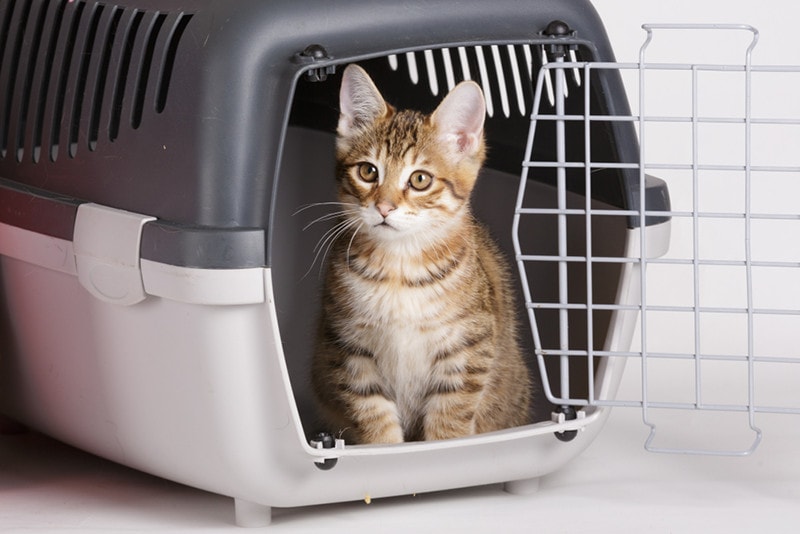
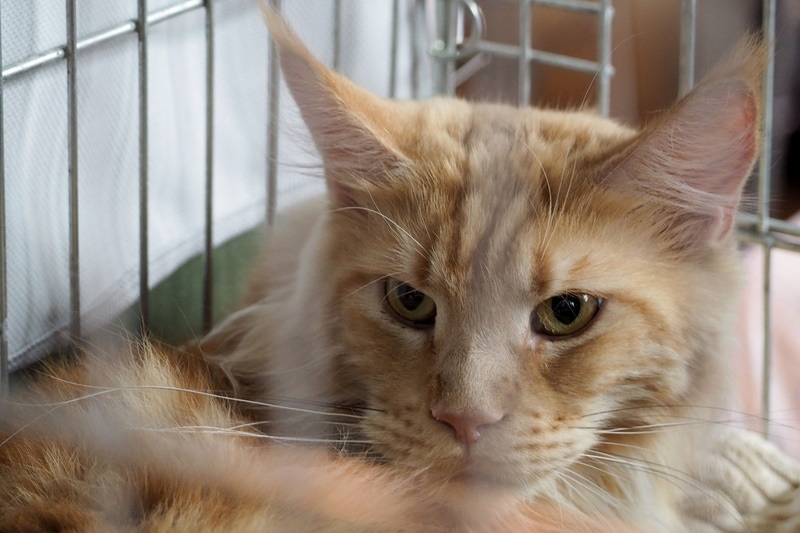
To keep your cat safe and comfortable in a crate, it needs to be the correct size. Choose a crate with enough space for a bed, litter box, bowls, and toys. Your cat should be able to move around, stretch out, sit, and stand easily.
Place the crate in a location free from drafts and out of direct sunlight to avoid temperature extremes. To help an anxious cat feel more secure, consider partially covering the crate with a blanket or towels.
Unless directed by your veterinarian, avoid leaving a healthy adult cat confined to a crate for more than two hours without a break. As comfortable as you make the crate, your cat still won’t have space to scratch, climb, jump, and perform other natural behaviors.
Helping Your Cat Learn to Accept a Crate
Even if you don’t need to crate your cat at home, learning to accept confinement is still important. It can help your cat tolerate staying in a small space at the vet’s office or if you need to board them. If you travel, your cat may need to stay in a crate during a hotel stay.
Training Kittens
Ideally, begin teaching your cat to tolerate a crate when they are still young. Adult cats are more likely to accept routines learned as a kitten. The idea is to have your cat view the crate as a safe space to relax and feel protected.
Stocking the Crate
Once you purchase and equip your crate, allow your cat to explore and get used to it with the door open. Place treats and toys inside or feed your cat in the crate to build a positive association in their mind. Continue these techniques until your cat seems comfortable with the crate, perhaps even napping inside.
Providing Treats and Support
For the next step, close your cat in the crate and sit nearby, offering encouragement and food rewards. Gradually increase the time your cat stays in the crate and your distance from them. It’s normal for your cat to vocalize or scratch at the crate for a short time.
Watch how your cat behaves, and try not to release them from the crate until they calm down. However, if your cat is extremely distressed and seems in danger of hurting themselves, let them out and talk to your vet about different training suggestions.
Alternatives to Crating Your Cat During the Day
If your cat needs to be left alone for more than 2 hours or won’t tolerate a crate, you may need to explore other solutions.
Cat-Proof Room
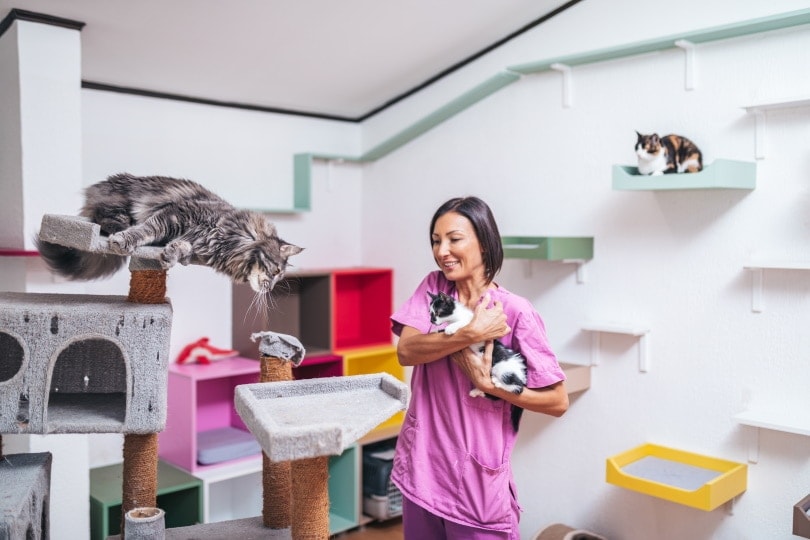
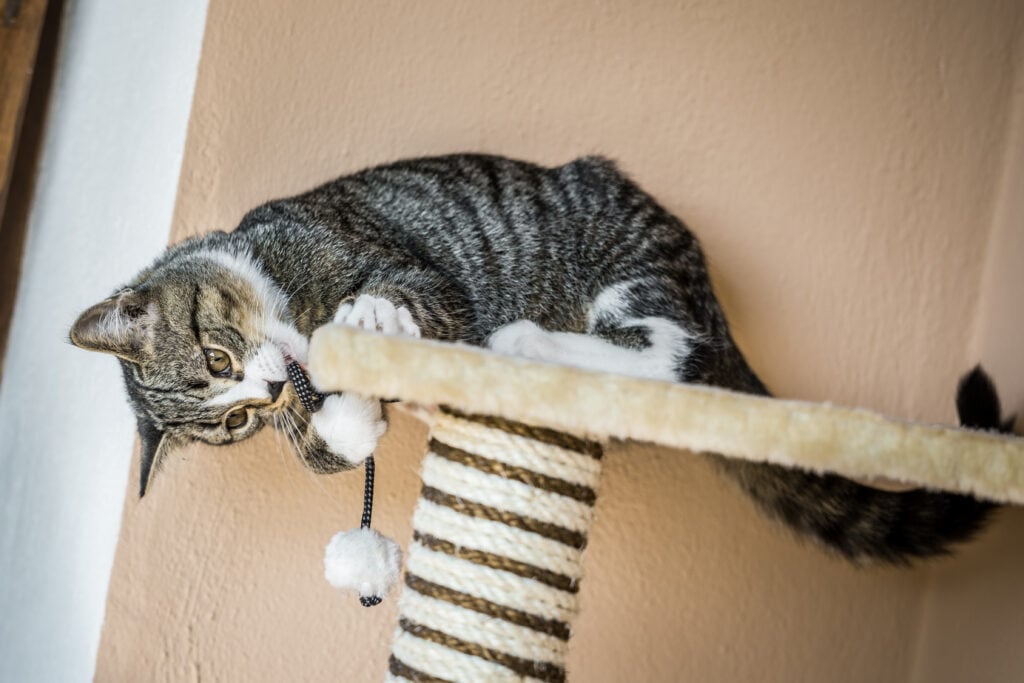
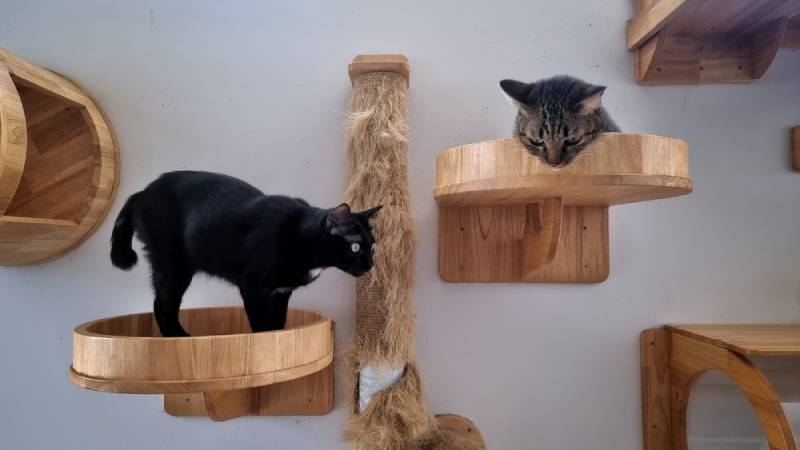
Instead of a crate, consider confining your cat to a single, cat-proof room. The extra space allows you to provide a cat tree, cat furniture, a scratching post, and room for your cat to exercise. Your cat can stay in their room for extended periods.
Entertainment
If using a cat room isn’t an option, make sure your kitty has plenty of enrichment and entertainment to keep them busy while you’re not home. Consider leaving the TV or radio on and providing a variety of toys. You could also invest in a pet camera that allows you to interact with your cat during the day.

- Premium Materials - Hepper's cardboard scratcher is made with dense, B-flute cardboard, and a metal core. Encased in a 1/2" plywood frame with gloss coating. Stable and beautiful, use after use
- High, Low and Lower - A single cat scratch pad won't keep your cat engaged. 3 unique positions keeps them coming back, and back, and back again. Finally, something to get them away from the couch!
- Activates Muscles - The Hi Lo isn't just a cat nail file to stop the chief cat couch scratcher. The deep cat scratcher wave encourages maximum musculoskeletal activation for a healthier workout
A cat scratcher can provide hours of fun daily for any cat, especially our Hepper Hi-Lo Cat Scratcher. It's a cardboard scratcher built to last and amuse (all while looking stylish in any room). It can be adjusted to three different positions – high, low, and lower – and is guaranteed to keep your feline companion engaged and entertained, away from getting into
mischief or scratching things they shouldn't. You can click here to learn more about this piece of modern cat furniture and kitty play haven.
Veterinary Help
For cats who are displaying destructive behavior or inappropriate urination, talk to your veterinarian first to rule out any medical conditions that could be responsible. Once that happens, your vet can help you troubleshoot your cat’s behavior issues and prescribe medications if needed. Your vet may suggest a referral to a veterinary behavior specialist for especially tricky issues.
Conclusion
While you can crate a cat, you shouldn’t do so for an entire day except in special circumstances. In fact, you may end up with more behavior problems than you started with if you do, as your cat may become bored and frustrated. Look for other solutions if you’re tempted to crate your cat, including those we discussed in this article. Cat behavior problems can be challenging to deal with, so don’t hesitate to ask your vet for help.
Get Hepper In Your Inbox


Pet care tips from our vets and experts, straight to your inbox.
You may opt-out at any time. View our Privacy Policy for more information.
A lifelong lover of all creatures great and small, Elizabeth got her first cat at 5 years old and at 14, she started working for her local veterinarian. After spending more than 20 years working as a veterinary nurse, Elizabeth decided to step away to become a stay-at-home parent to her daughter. Now, she is excited to share her knowledge with our pet parents. Elizabeth lives in Iowa with her family, including her two fur kids, Linnard, a husky mix and Algernon, the worldʻs most patient cat. When not writing, she enjoys reading, watching soccer, and spending time outdoors with her family.
Join the conversation
Ask a question, share your story, or send private feedback.