Hepper is reader-supported. When you buy via links on our site, we may earn an affiliate commission at no cost to you. Learn more.
Cat Poop Chart: Vet-Approved Color & Consistency Guide


In this article
Your cat’s poop can tell you a lot about their health and well-being. Most owners who scoop out their cat’s litterbox will be surprisingly aware of their cat’s poop—even if they don’t want to be. Therefore, if something is off, you’ll likely find out.
However, figuring out exactly what’s wrong with your feline based on the color of their poop isn’t easy. You can learn a lot by paying attention to the color and consistency of your cat’s feces. Below, we’ll outline some of the most common inconsistencies in cat feces and what they may mean.
Of course, if you’re questioning your cat’s health, you should contact your veterinarian. While cat poop can tell you a lot, it cannot tell you everything.

Normal Cat Poop
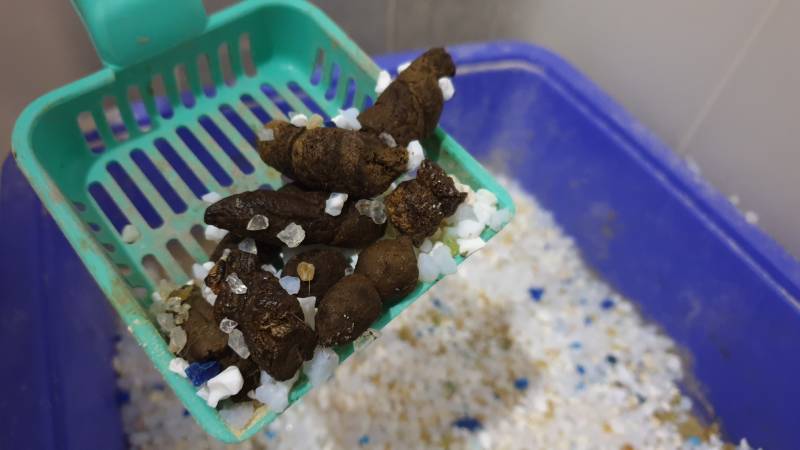
Normal cat poop should be brownish, well-formed, sausage-shaped, easy to scoop, and it shouldn’t smell particularly bad or have an extremely strong odor. The size, consistency, and color will vary slightly from cat to cat, depending on what they’re eating. However, if you scoop out your cat’s litter regularly, you’ll likely notice when the consistency or color changes.
It’s these changes that are important to pay attention to.
Many factors can affect your cat’s normal poop and may not be so normal. However, even a small amount of inconsistency is normal for most cats, as their daily diet, activity level, and hydration will vary slightly. Here are some “normal” changes you can expect to see:
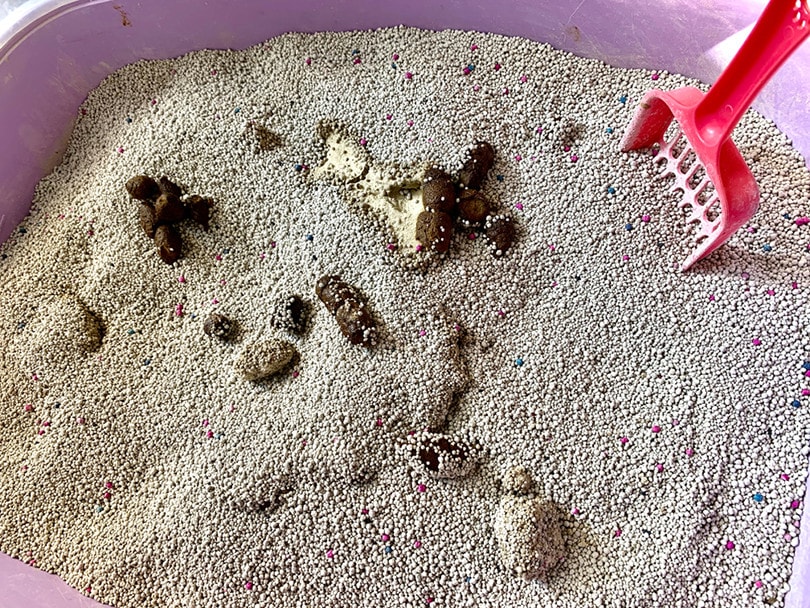

Abnormal Cat Poop
If you notice any changes in your cat’s poop, it may indicate a health problem. Monitoring your cat’s poop isn’t challenging (as long as they have indoor toileting habits) but requires paying attention. Here are some of the factors you should keep up with:
After keeping up with these changes, you may be able to determine exactly what may be up with your cat’s health.
| Appearance | Smell | Possible Meaning |
| Brown, firm, cylindrical | Mild | Normal |
| Red, soft, irregular shape | Foul | Bleeding in the lower digestive tract |
| Black, sticky, tarry | Foul | Bleeding in the upper digestive tract |
| Yellow or orange, watery or lumpy | Foul | Liver or gallbladder problems |
| Green, mucoid, or slimy | Foul | Infection, inflammation, liver or gallbladder problems |
| White, crumbly, or chalky | Mild | Raw diet, lack of bile or fat absorption |
| Gray, greasy, or oily | Foul | Pancreatic problems |
If you notice any abnormal signs in your cat’s poop, don’t panic. Some changes may be temporary or harmless, while others require medical attention. The best thing to do is to contact your vet and describe what you see. Your vet may ask you to bring a sample of your cat’s poop for testing and diagnosis.
Depending on the cause and severity of the problem, your vet may prescribe medication, dietary changes, supplements, fluids, or surgery to treat your cat.
Can Cat Food Change Poop Color?
Cat food doesn’t typically change poop color. Normal cat poop is typically brown, though the shade can vary. However, cat food may change a cat’s stool color in specific circumstances.
For instance, if your cat isn’t used to consuming much fiber, high-fiber food can make their poop lighter and bulkier. At the same time, a high-protein food can make it darker; however, these will still be in the “brown” spectrum.
Food dyes in your cat’s main meal or treats can directly affect your cat’s stool color and make your cat’s poop orange, yellow, green, or other strange shades. This isn’t typically a problem, but it can be worrisome for many cat owners. However, if the color change is abrupt or persistent, or if other signs of illness accompany it, it may indicate a health problem, and you should consult your vet.
What Does Mucus in Your Cat Poop Mean?
A small amount of clear mucus coating your cat’s normal-looking poop is generally considered normal. However, mucus mixed with soft feces generally indicates a health problem, usually located in your cat’s large intestine.
Some common issues are colitis (inflammation of the colon) due to internal parasites, infection, or a diet change. If you see a small amount of red blood mixed with the mucus, as alarming as it may seem, it’s very rarely considered an emergency. It indicates inflammation of the large intestine (the last part of your cat’s digestive tract). You should contact your vet and they will do the necessary tests to investigate the reason behind it.
Usually, these illnesses will be accompanied by other signs that your cat is sick. However, cats are notoriously good at hiding their illnesses, so you may not notice that they aren’t feeling well.
For this reason, we highly recommend calling your vet if you are concerned about your cat’s health. It can be challenging to determine if something is wrong with them without running tests first.
Conclusion
Cat poop can tell you a lot about your cat’s wellness. Cats typically have their own “normal.” Therefore, it is important to figure out what your cat’s poop normally looks like so that you can notice any abrupt changes. An oddly-colored stool can be a huge issue for many cats, indicating serious health issues, and you should contact your vet about them immediately.
If you do notice that your cat’s stool is strangely colored, take a picture and give your vet a call before scooping out their litter box. Often, the vet will want a stool sample for test purposes. If you already have it on hand, the testing process will go much faster than waiting for your cat to use the litter box again.
See also:
Sources
Featured Image Credit By: RJ22, Shutterstock
Get Hepper In Your Inbox


Pet care tips from our vets and experts, straight to your inbox.
You may opt-out at any time. View our Privacy Policy for more information.
Kristin is passionate about helping pet parents create a fulfilling life with their pets by informing them on the latest scientific research and helping them choose the best products for their pets. She currently resides in Tennessee with four dogs, three cats, two fish, and a lizard, though she has dreams of owning chickens one-day!
Join the conversation
Ask a question, share your story, or send private feedback.