Hepper is reader-supported. When you buy via links on our site, we may earn an affiliate commission at no cost to you. Learn more.
How Big Does a Cornish Rex Get? With Growth & Weight Chart (Vet-Approved)


In this article
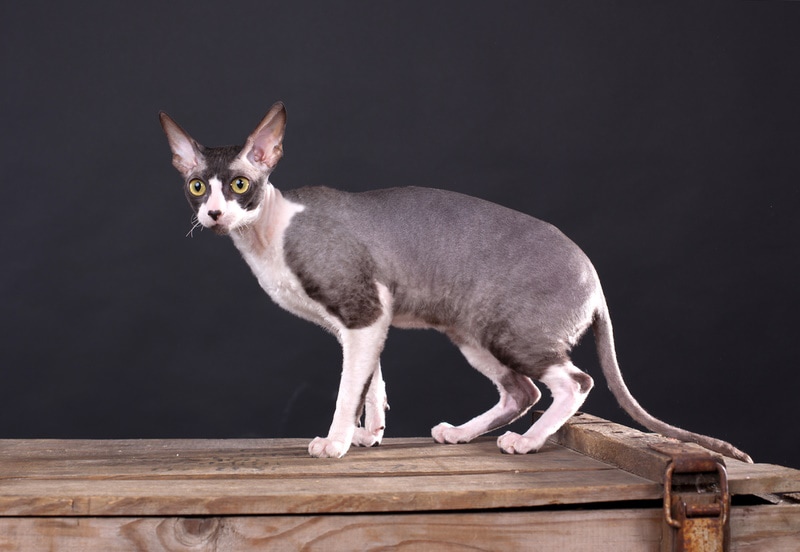
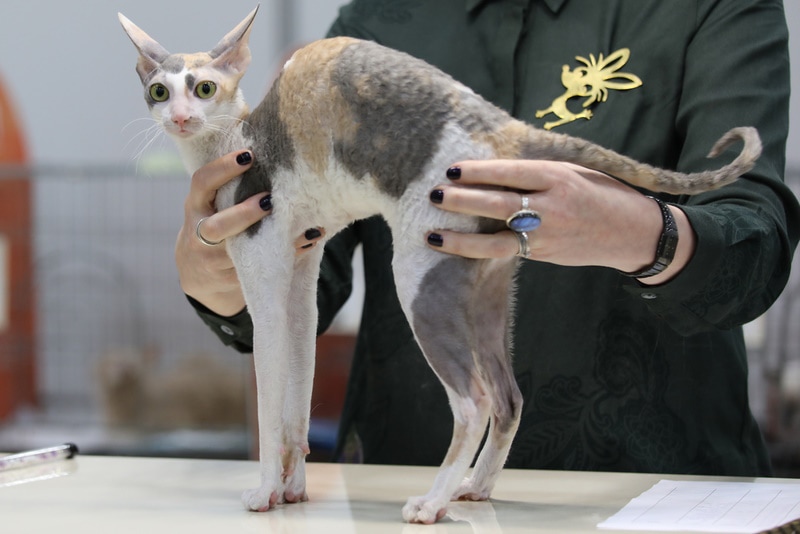
The Cornish Rex is a charming cat breed with a unique appearance. They tend to be quite friendly and affectionate and make wonderful companion pets. Cornish Rexes are regarded as small to medium-sized cats, and several different factors can affect their range in height and weight.
Cornish Rexes won’t all be the same size. However, having the general knowledge of the average size and weight of Cornish Rexes from kittenhood to adulthood can help you keep track of healthy growth and development. Here are some things you can expect to see throughout your Cornish Rex kitten’s growth stages.

Cornish Rex Breed Overview
The first litter of Cornish Rex kittens appeared in 1950 in Cornwall, England. The number of Cornish Rexes remained small until the first Cornish Rex cat was sent abroad to the US, and the breed was recognized by The Cat Fanciers’ Association in the 1960s.
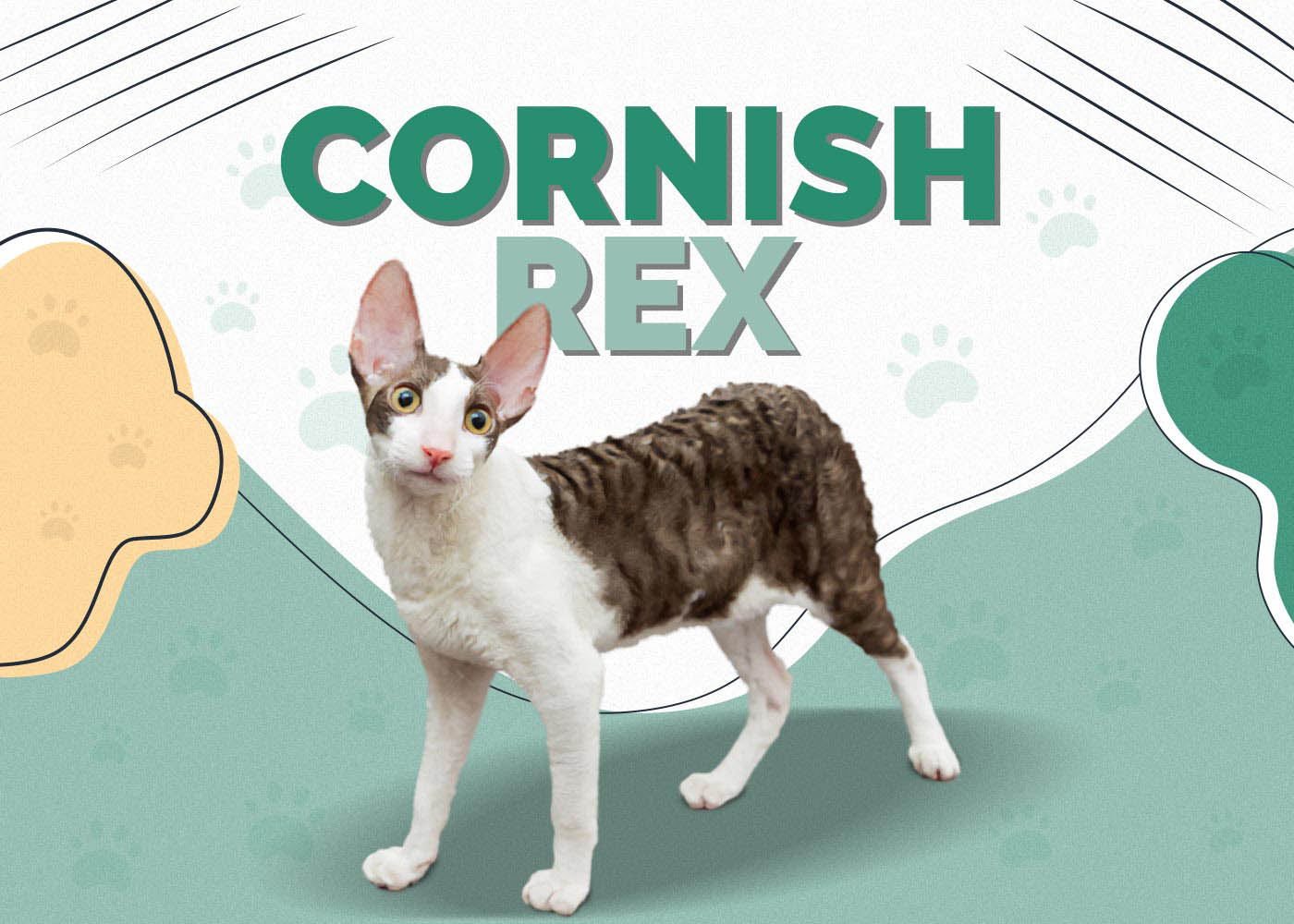
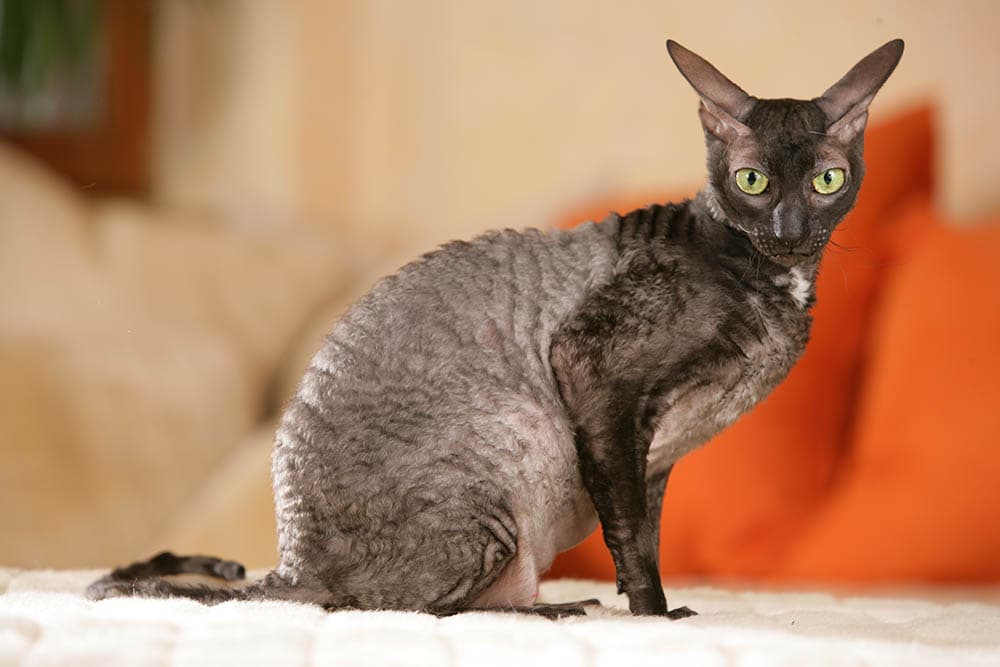
Cornish Rexes are relatively popular and widely recognizable due to their unique appearance. They’re known for their bat ears, slender features, and curly coat. Despite looking delicate, these cats are actually very active and playful. They require more daily exercise than other cat breeds. Since they’re quite agile, they’ll appreciate having cat trees and other cat furniture they can climb on.
Cornish Rexes are also known to be very loyal and affectionate with their families. They tend to develop strong bonds and don’t do well when left home alone for long hours. They may seem a bit standoffish with strangers at first. However, their curiosity seems to get the best of them, and they often eventually approach new people and warm up to them relatively quickly.


Cornish Rex Size and Growth Chart
Cornish Rexes are known to be on the smaller side, and they can weigh as little as about 5 pounds as full-grown adults. However, some can grow larger and can end up weighing about 10 pounds.
| Age | Weight Range | Size Range |
| 1 month | 0.8–1.5 lbs. | 4–5 in. |
| 2 months | 1.3–3 lbs. | 4.5–6 in. |
| 3 months | 2.5–4 lbs. | 5–6.5 in. |
| 4 months | 3.8–5 lbs. | 6–7 in. |
| 6 months | 4–6.5 lbs. | 7–8 in. |
| 12 months | 4.5–8 lbs. | 7.5-10 in. |
| 18 months | 5–10 lbs. | 8-12 in. |
When Does a Cornish Rex Stop Growing?
The time it takes for a Cornish Rex to stop growing varies. They do most of their growth before they reach a year old. You can expect their growth to slow down after they’re six months of age. Then, most Cornish Rexes will stop growing in height by the time they’re 9-12 months old, but can continue to increase in healthy weight until they’re 18 months old.


Factors Affecting the Size of a Cornish Rex
A Cornish Rex’s size will vary depending on several different factors. First, genetics will influence how large they grow. If a pair of smaller Cornish Rexes have a litter, the chances of the kittens being smaller will increase.
There are also several environmental factors that can affect a Cornish Rex’s growth. First, nutrition can impact a Cornish Rex kitten’s development. Kittens require a specific set of nutrients that support growth and development. Malnourished Cornish Rexes are at a higher risk of being smaller and developing health issues.
Exercise can also play a role in bone and muscle development. As Cornish Rex kittens explore the world around them, they engage in muscle development and grow stronger the more they exercise. Of course, it’s important not to push kittens to their limit. Too much exercise and overexerting themselves will be detrimental to their health.
Ideal Diet for Maintaining a Healthy Weight
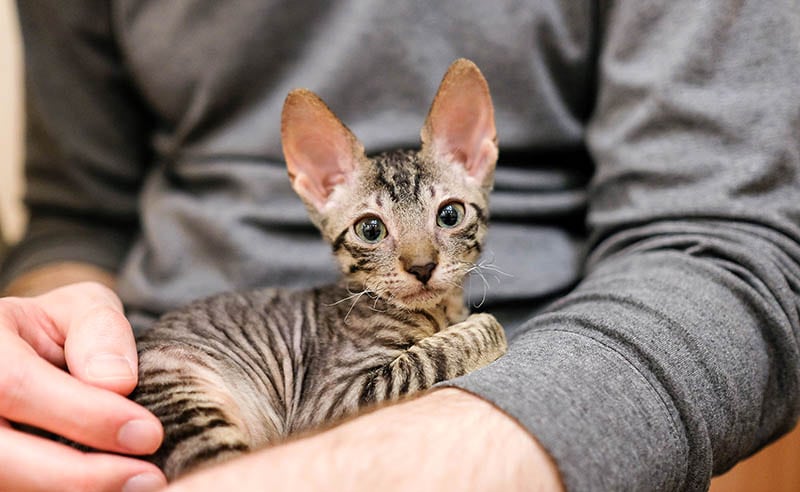
Cats naturally consume a carnivorous diet, and their ideal diet will consist of high protein, moderate amounts of fat, and lower amounts of carbohydrates. Kittens and adult cats also have different nutritional needs, as kittens require higher protein and fat to aid in healthy growth and development. So, it’s important to choose cat food specifically formulated for kittens.
Kitten formulas typically contain increased amounts of DHA, which is essential for brain and vision development. They often contain antioxidants to boost and support the immune system as well. Most kitten formulas also contain prebiotic fibers to support healthy digestion.
Cornish Rex kittens may need to consume more calories than other kittens due to their high activity levels and athleticism. Since nutrition plays such a vital role in a kitten’s development, it is best to consult your veterinarian to determine what’s best for your Cornish Rex kitten. Your veterinarian can help you figure out how much food your kitten needs to eat and what type of diet would work best for them.

How to Measure Your Cornish Rex
Getting measurements of your cat can be a challenge. They can move around a lot, which can cause inaccurate scale readings and inconsistent size measurements. So, it’s often exceptionally helpful when you have someone else who can provide an extra set of hands to assist you. One person can help keep your cat still while you measure. It is also okay to use treats if your Cornish Rex is food-motivated.
It’s best to use a flexible tape measure to get the height at the shoulder and a pet scale for small animals to take your Cornish Rex’s measurements. The advantage of using a scale for small animals is that it’s specifically designed for them and can help you record more precise weights.
The recommendation for recording your kitten’s growth measurements is at least once a week. This level of frequency will let you know if your kitten is losing weight or gaining weight too quickly. It’ll also allow you to adjust your kitten’s diet relatively quickly to ensure they’re eating the right amount of food.
Conclusion
Overall, you can expect your Cornish Rex to reach a height of between 8–12 inches and weigh between 5–10 pounds when they reach adulthood. A Cornish Rex will continue to grow until they reach about 9-12 months old. Tracking their growth weekly will help you make any necessary adjustments to their diet to ensure they’re following a healthy growth track.
Featured Image Credit: Birute Vijeikiene, Shutterstock
Get Hepper In Your Inbox


Pet care tips from our vets and experts, straight to your inbox.
You may opt-out at any time. View our Privacy Policy for more information.
Jessica is a freelance writer who spends most of her day reading and writing while her fluffy Cavapoo, Nora, naps beside her. She loves and appreciates pets and animals because there’s so much to learn from them, and they do so much for people. As a dog mom, she understands the special relationship that pet parents have with their pets. So, she loves sharing helpful information that people can use to better understand their pets. When she’s not writing, you can find her walking dogs, tending to her plant babies, or drinking her nth cup of coffee.
Join the conversation
Ask a question, share your story, or send private feedback.