Hepper is reader-supported. When you buy via links on our site, we may earn an affiliate commission at no cost to you. Learn more.
7 Vet-Approved Incredible Deaf Dog Facts: Communication, Breeds & More



Deaf dogs have a more challenging time understanding their world, and, unfortunately, that means we often have more difficulty understanding them. Misbehavior is easy to mischaracterize. When we do not know a dog is deaf, some of us are quick to write off stubbornness or aggression as a trait of a poor pet. These dogs often don't get the same consideration for adoption, and owners may be more likely to surrender them.
It’s a tragic shame because deaf dogs are no less capable of living joyous, fulfilling lives and giving all the affection and playfulness of a hearing dog. You just need patience, awareness, and a different approach. It all starts with appreciation and perspective. We will help you gain a little of both with this look at seven incredible deaf dog facts.

Top 7 Deaf Dog Facts
1. Deaf Dogs Can Be Effective Communicators
Dogs have spent thousands of years around humans, giving them plenty of time to develop an acute awareness of our communication style. Many owners will attest to their dogs knowing what they want before they even ask. The commands we teach are verbal, but dogs take in every cue they can to make decisions.
All dogs share an incredible capacity for following non-verbal signals. They’re one of the rare animals able to interpret ostensive cues behind the messages we’re trying to impart.1 Dogs will take in loads of information in something as simple as a stare. No matter the dog’s hearing ability, it turns out that gestures are more impactful than words in inspiring action.2
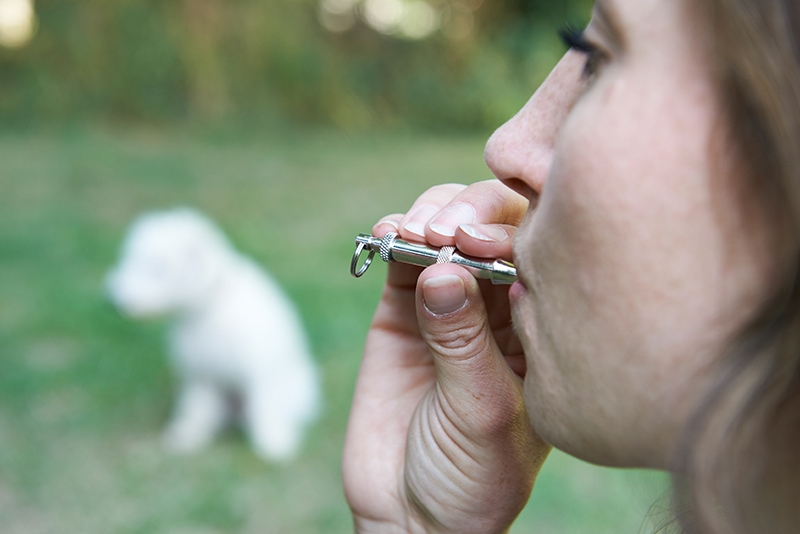
Nature doesn’t escape deaf dogs simply because they can’t hear. They’re remarkably teachable, albeit through a focus on gestures rather than sounds. It may take some helpful aids like vibrating collars and a few novel approaches to capture attention, such as the flickering of lights or a gentle pat on the side. But with adjustment, taking a deaf dog from untrainable to trials champion is a proven possibility.

2. Deaf Dogs Can Be Vocal
Deaf doesn’t mean mute, and dogs with hearing problems may offer regular reminders to that point with their loud barking. Many become even more vocal than their hearing counterparts, a common occurrence with dogs losing their sense over time. Most barking comes from frustrations due to the dog’s lack of hearing and will often occur more frequently as hearing loss progresses.
As with most training areas, deaf dogs are no less receptive than hearing dogs when learning to quell their barking instinct. It simply takes a different technique and good timing. The tricky part is connecting your cue with their barking, as they’ll often stop once you get their attention. You have to send the message while they’re barking, which isn’t always easy if you can’t get in their line of sight.
3. Desensitizing a Deaf Dog to Startling Can Be Easy
Although most evidence is anecdotal, deaf dogs are known to be easy to startle. Indeed, their inability to hear can make it hard to announce your entrance, and a sudden touch can ignite a jerky response.
Fears of aggression aren’t uncommon with easily startled dogs. Fortunately, taking any fear and attack response out of the mix doesn’t have to be any different than teaching your dog to stay.
Desensitizing takes similar conditioning, where treats indicate that startling isn’t necessarily bad. You’ll gradually get your dog used to a touch or nudge, starting while they’re awake and offering a treat as soon as they stir from the contact. Eventually, you’ll be able to wake them from a deep sleep without worrying about how they’ll react.

4. Over 90 Dog Breeds Have a Link to Congenital Deafness
Any dog can suffer hearing loss as they age. The condition occurs for multiple reasons, including drug toxicity, infection, trauma, or growing old. But a surprising number of dog breeds can develop hereditary deafness that is present at birth. Over 90 breeds have a noted susceptibility, including:
- Australian Shepherd
- Cocker Spaniel
- Whippet
- French Bulldog
- Siberian Husky
With so many popular breeds having genetic tendencies toward deafness, genetic testing is crucial, particularly for purebred dogs. Early testing before adoption will prevent unwanted surprises after the fact and better prepare owners who decide to take in a deaf dog.
5. Double Merle Dogs Have a 25% Chance of Deafness
Sensorineural deafness is a common cause of deafness in dogs. It is a congenital problem, meaning that dogs are born with a genetic defect that causes cochlear nerve cell loss. As in other animals, it stems from a degenerating stria vascularis in the cochlea due to missing melanocytes, the cells that produce skin pigment.
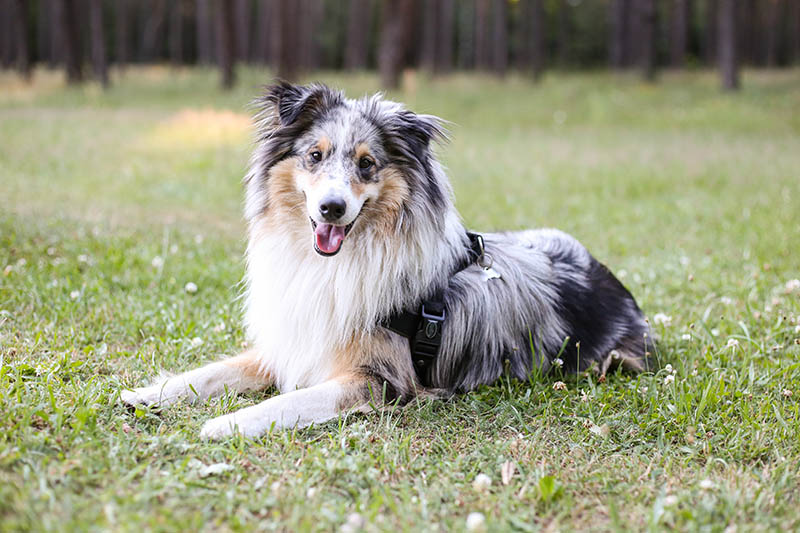
With the connection to hair color, you can guess that white-haired dogs are prone to unilateral or bilateral deafness. With the exception of the Doberman Pinscher, Puli, and a handful of other dogs, those 90 breeds we mentioned carry that white hair trait. The piebald and merle genes, in particular, are linked to a greater susceptibility to deafness in dogs, explaining the long lineup of breeds more likely to have hearing loss.
Merle dogs only require one merle (M) allele. It only takes one parent to be a merle to produce another merle. But when you breed two merles, you get double merles (MM), which distinguish themselves from their parents in several ways.
Alongside a predominantly white coat, double merles are much more susceptible to deafness and blindness. Among these dogs, studies indicate that 10% are unilaterally deaf while 15% are bilaterally deaf. Double merle breeding is considered unethical as a quarter of offspring is potentially at risk.
6. Dalmatians Have a High Susceptibility to Deafness
Dalmatians have a color pattern unlike any other dog, which has generated a decent amount of interest in the scientific community. The spotting on a white background appears from the piebald and extreme piebald genes and is closely linked to deafness.
Multiple studies have explored the prevalence of deafness in Dalmatians, appearing to place it between 18% and 30% depending on the source consulted. In a 1997 study, unilaterally deaf dogs appeared in up to 13% of cases, while up to 5% were bilaterally deaf.
7. Dog Deafness Is (Somewhat) In Our Control
Dalmatians may be more prone to hearing problems, but responsible breeding has gone a long way in helping them. A longitudinal U.K. study revealed that selective breeding caused Dalmatian deafness to drop significantly, While unilateral deafness dropped by 25%, cases of bilateral deafness were reduced by half.
Our ability to affect dog deafness with responsible breeding is excellent news. Bilaterally deaf dogs are more at risk of surrender and euthanization than hearing dogs. With more consistent parent testing and assessments at young age, we can lower the likelihood of producing deaf puppies and substantially improve the quality of life of countless dogs.

Conclusion
Deaf dogs can lead confusing, scary, and tragically short lives when we don’t take the time to understand their plight. While we shouldn't feel sorry for our pets, hearing-impaired dogs always deserve our attention and respect.
A deaf dog’s challenges often reveal themselves in bad behavior and stubbornness, putting them at an immediate disadvantage. But with a caring owner, they can overcome any setback to lead a fulfilling life and provide many years of quality companionship.
Sources
Featured Image Credit: Pezibear, Pixabay
Get Hepper In Your Inbox


Pet care tips from our vets and experts, straight to your inbox.
You may opt-out at any time. View our Privacy Policy for more information.
Nicole is a lover of animals of all sizes but is especially fascinated with the feline variety. She’s the proud mom of Baby, a Burmese, and works every day so he can relax in the sunshine or by the fire. She’s always had a cat in her home and has spent countless days with others, observing behaviors and softening up even the grouchiest of the lot. Nicole wants to share her kitty expertise with you so you and your cat can live happy, healthy, and care-free.
Join the conversation
Ask a question, share your story, or send private feedback.