Hepper is reader-supported. When you buy via links on our site, we may earn an affiliate commission at no cost to you. Learn more.
How to Train a Deaf Dog: 7 Vet-Approved Tips & Tricks



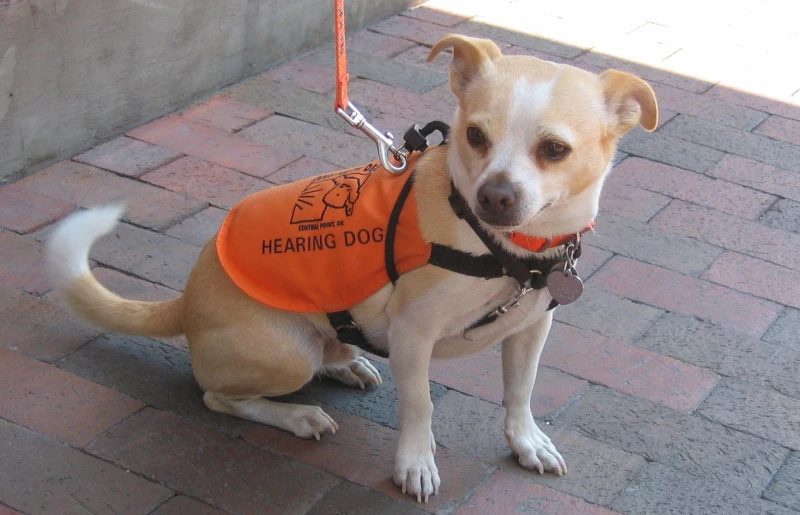
Training a deaf dog can be challenging. After all, the dog cannot hear commands. However, it’s often more straightforward than people think. Deaf dogs don’t often need extra training and aren’t any more difficult to train than other dogs—you just have to go about it a bit differently than other dogs.
Instead of using vocal commands, you’ll train a deaf dog with hand signals. This type of training is actually very common, as many hearing dogs do better with hand signals than vocal commands anyway. It’s no different than using vocal commands and the training process is basically the same.
Many trainers teach hand signals along with vocal commands. If your dog is deaf, you would only use hand signals. It’s as easy as that.

The 7 Vet-Approved Tips & Tricks to Train a Deaf Dog
1. Learn Hand Signals
You can technically use whatever hand signals you want to teach your dog. There are no wrong hand signals. However, there are some that are more common than others. Some styles of training have certain hand signals, so certain trainers may use one style of hand signals.
Either way, the rules here are the same as choosing vocal commands for your dog. You want the hand signals to be different enough so that your dog knows what you’re saying and isn’t confused. If you hold up a hand with your palm out to mean “stay,” don’t hold the hand in a similar position for any other signal.
Some people use American Sign Language for their dogs. However, this isn’t necessary. Just choose some commands and stick with them. Be sure everyone uses the same signals when handling the dog.
Here’s a quick list of signals:

2. Use the Same Rewards
You can’t exactly tell a deaf dog he is a “good boy.” However, treats and attention still work the same way they do for a hearing dog. You want to use treats, toys, and praise to make training a positive experience and let your dog know they did the right thing.
Training is all about reinforcement. Therefore, you need to reinforce the correct action whenever your dog does it. In the beginning, treats are the easiest thing. However, once your dog has the command down, it’s time to diminish the use of treats so that your dog isn’t expecting them every time.
Be sure to consider the treats your dog is consuming when providing food. You don’t want to overfeed your dog.
3. Be Patient
Deaf dogs learn just as fast as hearing dogs. However, just like with any dog, some commands are harder than others. Keep sessions short and sweet. The exact length depends on the dog’s age and intelligence.
Some breeds are made to learn, like German Shepherds and Golden Retrievers. Adults in these breeds can often be trained for up to 15 minutes at a time. Dogs that aren’t necessarily made to work and puppies need shorter times—maybe even as short as 5 minutes.
Always train in a distraction-free environment at first. However, be sure to train in several different environments, too. I made the mistake of only training in a distraction-free environment when training my first dog. He followed every command—as long as there weren’t any distractions. Dogs need to learn to follow commands in busy areas, too.
If you still need help with training your dog, we suggest speaking to an online vet for tips and tricks.
4. Use a Vibrating Collar
The only command that’s hard to teach deaf dogs is the “attention” command. This command functions to get the dog’s attention so you can give them a command. Hearing dogs can be trained on their name or the command “look.” However, if a deaf dog isn’t looking at you, you can’t give them any commands. Therefore, you need another way to get their attention.
A vibrating collar works great in this manner. Train your dog on the vibrate just like you would train a hearing dog on the word “look.” There is no reason to train a separate hand signal for look, as your dog will already associate looking at you with the vibration. Kindly note that a vibrating collar is very different from a shock collar. Vibrating collars are gentle and used to get the dog’s attention, while shock collars are used as an aversive consequence to punish unwanted behavior. Shock collars can cause fear and anxiety while vibrating collars are just a gentle nudge.
5. Start Easy
It’s vital that you start easy. The very first command you should teach is “look,” which you’ll do with a vibrating collar for a deaf dog. This command is taught by showing the dog a treat and then closing it in a fist. Put the closed hand next to your head and wait for your dog to look from the hand to your eyes. Vibrate the collar and give the treat to your dog when they do.
As your dog gets faster, you can move the hand away from your face. Eventually, you want the hand to be all the way at your side. Next, practice the command when your dog isn’t looking at you at all. For deaf dogs, you can also use this command as a recall, using it when your dog is in other rooms and out of sight.
After those commands, you can start on other essential commands, like “sit” and “leave it.”

6. Try Training Classes
Training deaf dogs isn’t much different than training a hearing dog. Therefore, it’s not absolutely necessary to find a trainer that specializes in training deaf dogs (though that can be helpful if you’re having a hard time). However, it is important that the trainer utilizes hand gestures in their class, which is quite common.
Group training classes are recommended, as they provide your dog with a chance to socialize. Individual training classes may seem like an “upgrade,” but they’re really only suitable for dogs that are aggressive and need heavy socialization.
7. Never Let Your Dog Off Leash
You can and should train your deaf dog in a recall—just in case. However, do not allow them to wander off-leash unless you’re in a fenced-in area. Your dog can easily become spooked and take off. Plus, you cannot call for your dog because they cannot hear you.
Even if your dog doesn’t become lost, they can be more susceptible to predators and other dangers. They cannot hear cars coming and won’t hear an attacker sneaking up on them. They’re much more vulnerable for these reasons.
Conclusion
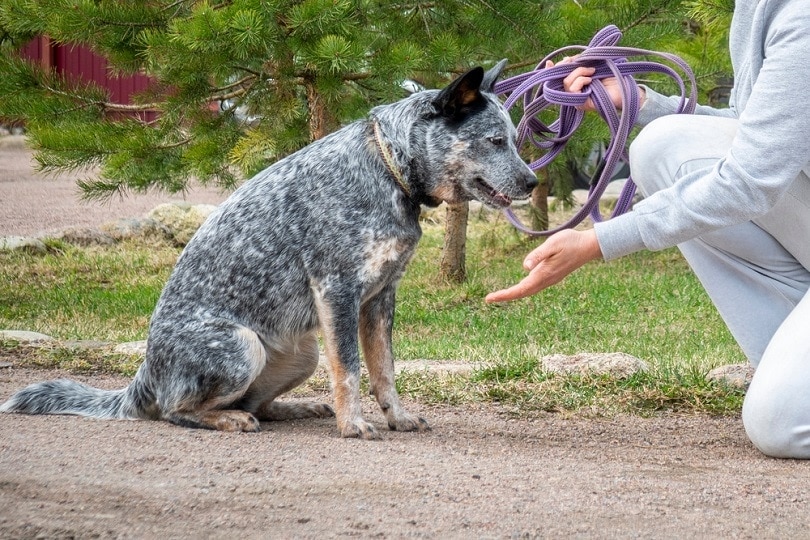
Training a deaf dog is not incredibly challenging. It is just like training any other dog but with a few changes. Instead of vocal commands, you’ll want to use hand gestures. These visual cues will let your dog know the command since they cannot hear “traditional” commands.
Furthermore, you will want to use a vibrating collar to get your dog’s attention. Otherwise, they may not look at you when you want to give them a command.
Besides that, training a deaf dog is extremely similar to training any other dog.
Featured Image Credit: megaflopp, Shutterstock
Get Hepper In Your Inbox


Pet care tips from our vets and experts, straight to your inbox.
You may opt-out at any time. View our Privacy Policy for more information.
Kristin is passionate about helping pet parents create a fulfilling life with their pets by informing them on the latest scientific research and helping them choose the best products for their pets. She currently resides in Tennessee with four dogs, three cats, two fish, and a lizard, though she has dreams of owning chickens one-day!
Join the conversation
Ask a question, share your story, or send private feedback.