




Click to Skip Ahead
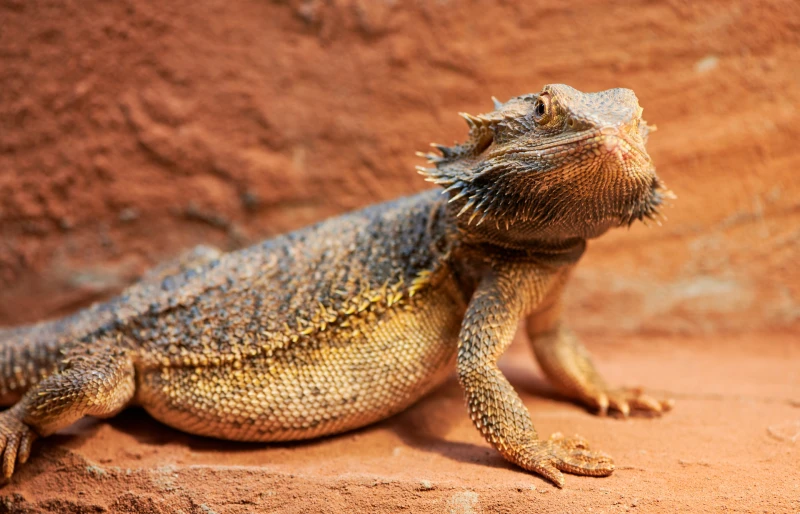
Are you freaking out because your bearded dragon is suddenly yellow or orange rather than its original brown color? Don’t worry; it’s a normal physiological and behavioral response in bearded dragons. Bearded dragons change color for several reasons, including temperature regulation, mood, communication, and sexual display. The color change may sometimes be due to health and stress conditions, though, so if you notice a sudden or persistent color change, it is always best to seek out veterinary advice.
In some cases, these lizards only change color in a certain body part, such as the tail. But they may also change color throughout their bodies. Let’s learn more about why your pet might be changing color.

Why Do Bearded Dragons Change Color?
Bearded dragons may change their color for many reasons. They have the innate ability to change color when required. Here are some reasons they might do this:
Temperature Regulation
Since bearded dragons are ectothermic—relying on external heat sources for body temperature regulation—they change color for better heat absorption.
For example, when your pet lizard is in a warm spot, such as under a heat lamp, it may darken its color. The darker color absorbs more light, helping the bearded dragon increase body temperature more efficiently. On the contrary, their color lightens when they need to cool down.
Communication
Bearded lizards might also change their color based on their mood or when they need to communicate. For instance, their color may darken when they have to express aggression or dominance.
Color changes are common in territorial disputes. Meanwhile, you’ll notice your pet lightening its color when it has to indicate calmness or a non-threatened state.

Sexual Display
Many animals change their color during sexual displays to attract potential partners. Bearded lizards are one of them. They may display vivid and vibrant colors to attract female partners during courtship and mating displays. You might notice orange and yellow patterns on your pet’s body or beard during this time.
Health
A bearded dragon’s stress level may also impact its color change. Bearded dragons often exhibit color changes when sick, uncomfortable, or distressed. Their colors often get pale and dull during times of sickness or stress.
Camouflage
Bearded dragons, like some other lizards, can alter their coloration slightly to help them blend into their surroundings. For instance, bearded dragons in the wild can change their color to yellow, tan, orange, or jet-black, depending on their surroundings. By changing their skin color, they blend in with the environment. That makes it hard for predators to find or attack bearded lizards.
Can Bearded Dragons Partition Color Changes in Different Body Parts?

Can your pet lizard be brown in one place and orange in another? Can it show three colors at once? It seems so.
A University of Melbourne study1 found that bearded dragons can partition color changes to individual body parts. Ms. Kathleen Smith, the lead researcher, found interesting evidence of this in her study. Her research showed that the color changes in a bearded dragon’s neck region are associated with social interactions with fellow bearded dragons. But when these lizards darken their back colors in cooler weather, it is for temperature regulation.
A bearded lizard can save significant hours of basking time by darkening its color. It can then use more energy during the breeding season.
According to the study researchers, a bearded dragon’s preferred internal body temperature is approximately 35°C. The lizard changes its color to dark brown in cool weather and light yellow in hot weather to maintain this internal temperature.
When a bearded dragon changes its color during cool temperatures, it reflects less light than a pale-colored lizard. While a pale-colored lizard reflects 23% of the light, a dark bearded dragon reflects only 8%, absorbing the rest to stay warm.
Ready for the interesting part?
While the back changes color, the chest and beard do not always. These body parts change color from cream to black in social interactions. The color change is in addition to push-ups and head-bobs.
How Do Bearded Lizards Change Color?
Reptiles, such as lizards, change color by changing the distribution of natural pigments in their skin cells. The most common pigment that is altered for color changes is melanin. Some reptiles can also change the arrangement of reflective crystals inside their cells. These changes alter light reflection off a lizard’s skin.
Researchers haven’t found much difference in the ways different lizards change their color. However, the range of color alteration could depend on a lizard’s habitat. For instance, lizards living in areas with red sand can produce better reds in their skin. Meanwhile, lizards in yellow sandy regions, such as Mildura lizards, have better yellow-producing abilities.
What Should You Do When Your Bearded Dragon Becomes Dark?

If your lizard changes color to become jet-black, you usually shouldn’t have to do anything. It will go back to normal soon afterward. But sometimes, the reasons for your lizard changing color could be serious and require your attention.
Temperature
As mentioned, bearded dragons get darker to absorb more heat when they’re cold. Due to this, your pet may change color every day. But if it stays black throughout the day or for multiple days, you should check if you have provided the right temperature for the lizard.
A bearded dragon should be in an enclosure with a thermogradient. It means one part of the enclosure should be warmer, making the basking spot. The other parts should have cooler temperatures.
For a basking spot, the ideal temperature is around 95°F to 100°F. Meanwhile, cooling areas should have a temperature of 75°F to 80°F.
Emotions
A bearded dragon may change its color when it feels threatened. Your pet will become darker to intimidate the threat. Some other signs of being under threat include gaping (closing and opening the mouth rapidly).
- Cage Mates: Bearded dragons prefer living alone. If you have two or three of them in the same enclosure, it could result in a stressful environment.
- Pets: Your dog or cat might be causing stress to your little pet.
- You: Your new pet may fear you since it has not socialized yet. It’s uncommon for bearded lizards to be scared of their owners since the ones you buy from a pet are captive-bred. So, they’re already used to humans. But this could still be a reason, especially if you’ve picked up a wild bearded dragon. (A practice that we recommend against).
If your lizard is emotionally distressed, provide it with a stress-free environment.
- Ensure the right temperature gradient and basking areas are available in the enclosure before you bring your new pet home.
- Review the diet and ensure clean water is available at all times, even though bearded dragons often obtain much of their hydration from food.
- If it’s brand new, let it become acclimated to its new home. Do not disturb it by tapping the cage or holding it for the first few weeks.
- Keep other pets away from your bearded dragon’s enclosure.
- Do not let kids disturb your pet.
- Create hiding places in the enclosure for the bearded dragon. You can also buy hides from a pet store.
Dominance
If more than one bearded lizard lives in the same enclosure, one might try to dominate the other. A bearded dragon may turn dark to indicate dominance. Other signs of dominance include making itself look larger by expanding its beard and bobbing its head.
If you notice these signs, separate the lizards. Otherwise, dominance may lead to aggression and injury.
Brumation
Some reptiles, including bearded lizards, operate their body functions at a lower metabolic level during winter to conserve energy. The process is called brumation.
You may notice your lizard’s color getting dull during winter. It may become jet-black when coming out of brumation. There’s nothing much you can do in this case as long as the animal is otherwise healthy. Your pet will return to its original color when the season changes.

Illness
Your pet may also get darker because of a disease.
- Weak appearance
- Lethargy
- Sluggishness
- Losing weight
- Discharge from nose and eyes
- Lack of appetite during the non-brumation period
- Sunken eyes
The undersides of a lizard turning black can be associated with a digestive tract impaction. An impaction means the digestive tract is obstructed. It may have happened because your bearded dragon ingested a foreign material, loose substrate, or inappropriate prey.
In female bearded dragons, the abdomen may turn black because they have eggs inside that they are unable to lay. In both these situations, you should take your bearded dragon to the vet immediately, since they can be fatal.
Tail Rot
Like most reptiles, bearded lizards also shed their skin. But if your pet did not shed its skin successfully, the old skin might constrict its tail. That causes the tail to rot, making it appear darker than the rest of the body.
Conclusion
Bearded lizards are interesting animals. Since they’re easy to care for, they’ve become a popular lizard species to keep as pets. But knowing about your pet’s behavioral and physical changes is important to understand if your intervention is necessary. Bearded dragons change color due to temperature regulation, tail rot, communication, mood, sexual display, and illness.
You should step in if the color change is due to dominance, aggression, or illness. Get a veterinarian’s help immediately if your pet turns black persistently, shows other signs of illness, or may have ingested a foreign object.
Featured Image Credit: Worraket, Shutterstock