Hepper is reader-supported. When you buy via links on our site, we may earn an affiliate commission at no cost to you. Learn more.
Why Does a Bearded Dragon Turn Black? 12 Likely Reasons


In this article
Bearded Dragons are fascinating lizards with a lot of quirks and behaviors that make them interesting housemates. From their head bobbing to periods of brumation, there is a lot to learn about Beardie behavior.
Changes in their appearance and behavior can be an indication of their emotions or health, and one change that you might notice in your Bearded Dragon is it turning black. It may be the beard, the belly, or its back that turns black. A Bearded Dragon turning black may not necessarily be anything to worry about, but it could also be a sign of stress, husbandry issues, or underlying illness.
Below, we look at some of the most common causes of this change.

The 12 Reasons Why a Bearded Dragon Turns Black
1. Fear
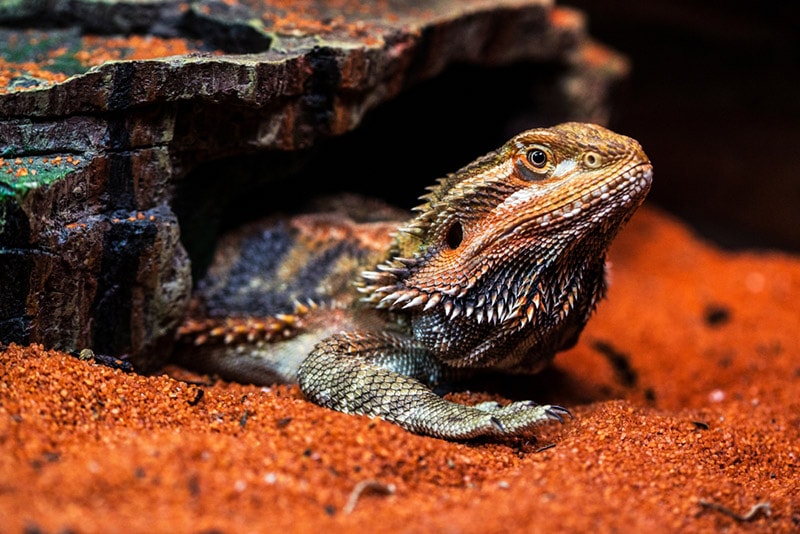
One of the most common reasons a Bearded Dragon’s beard turns black is that the lizard is scared. Typically, it will puff out its beard and turn it black to make it look more intimidating in a bid to scare off any would-be predator or attacker. Causes of fear can range from sudden handling, loud barking from the dogs, other pets nearby, or loud noises from the TV.
2. Anger
When it’s angry a Bearded Dragon may puff up its beard and the color will darken, in a similar manner to when it is scared. Generally, a Beardie gets angry when it is frustrated. If you’re attempting to pick it up when there’s food in the enclosure, or interrupting basking or resting, you may see this kind of reaction.
3. Illness
Illness is a possible cause of the beard turning black, although this is less specific and more indirect than anger, frustration, or fear. The beard turning black is not directly linked to illness, but systemic disease, pain, or discomfort can result in stress-related darkening. If your Beardie is showing other signs of illness, such as lethargy, anorexia, weight loss, abnormal feces, or changes in posture, this could be the cause and you should take them to the veterinarian.
4. Cold
Black objects absorb and retain heat better than lighter-colored objects. Therefore, if your Beardie is cold and struggling to warm up, it may darken its color so that it takes on more heat. It’s a great survival tactic. And if your thermometer says that the temperature is suitable, it may be worth double-checking using a second thermometer and verifying basking surface temperatures with an infrared thermometer.
5. Brumation
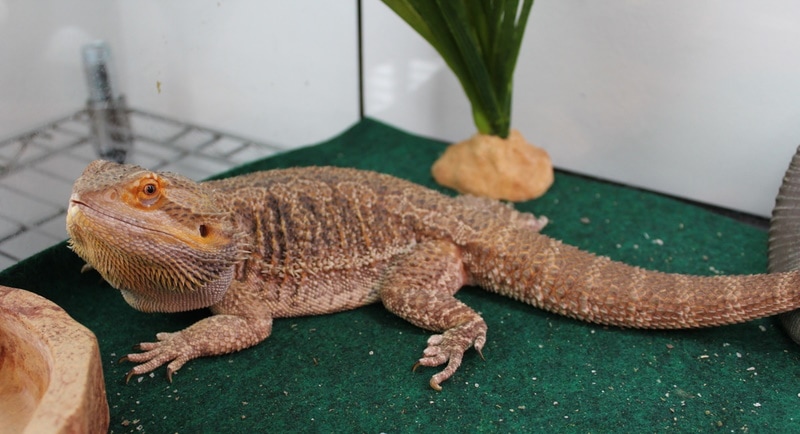
Brumation is similar to hibernation in some respects. Reptiles brumate when it gets cold, but they still need to drink water. So, rather than hibernating completely, the lizard slows its metabolism and physical activity levels significantly. They will stay in this condition for weeks or months, and periodically rehydrate, until temperature levels rise again, and they will only emerge when they go looking to take on liquids. Pet Bearded Dragons will not necessarily brumate but many do. Some Bearded Dragons may briefly develop a darker beard as their hormones and metabolism adjust during brumation, but this is not a consistent or defining sign of the process.
6. Pooping
This one is difficult to explain but some Bearded Dragons may briefly darken their beard during defecation due to straining. This certainly isn’t common and even in those Beardies that do exhibit this habit, it may not occur every time they poop.
7. New Surroundings
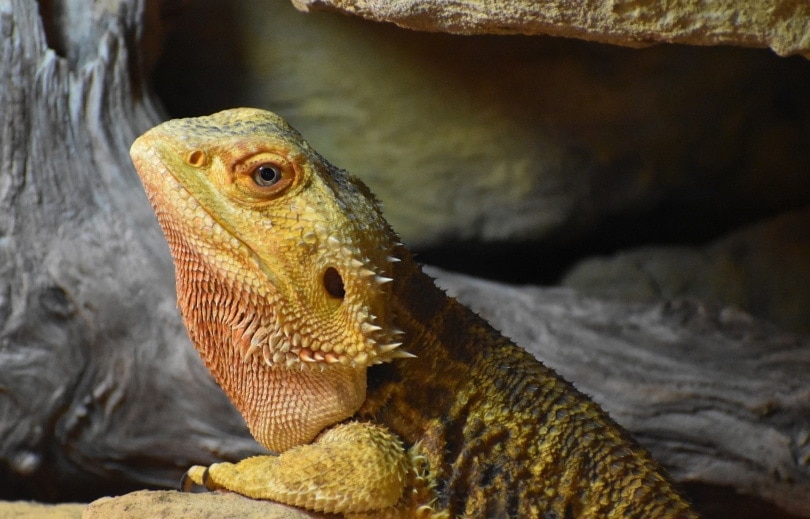
Moving to a new enclosure can be difficult for a Bearded Dragon, especially if they were in their old enclosure for a long time. This can cause stress and anxiety, which commonly manifests as beard darkening, reduced appetite, or hiding behavior.
8. Stress
Stress is a common cause of a darkening beard, and there are many possible causes of stress. If your Beardie is stressed about food, not getting the right lighting or UVB, or being handled too often, its beard may darken. Keeping more than one Bearded Dragon in the same enclosure can also cause stress and isn’t recommended, as they can easily become uncomfortable or get hurt.
9. Attraction
Another possible cause of a darkening beard is that your Beardie is getting ready to mate. Specifically, males turn their beards black as a means of attracting females. This is often accompanied by head bobbing and arm waving from receptive females. Bearded Dragons typically do not display this behavior until they reach sexual maturity at approximately 8–12 months, depending on growth rate and husbandry, so if yours is younger than this, it likely isn’t the cause.
10. Protective Behavior
Bearded Dragons can be territorial. This is especially true of male Bearded Dragons around other males. The darkening and puffing of the beard are an attempt to assert dominance and show that they have claimed a particular territory for themselves. Visual contact through glass enclosures or reflections can also trigger this response, even when housed alone.
11. Caution
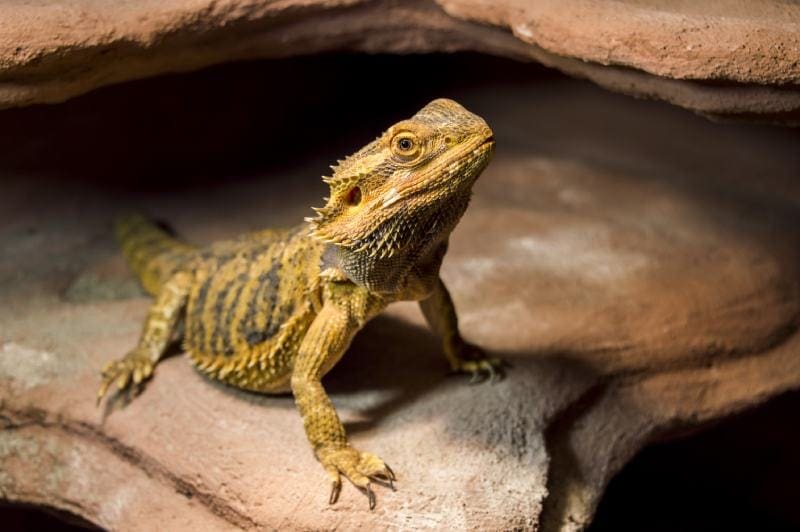
Although they can make great pets and eventually enjoy spending time with their owners, Bearded Dragons can be initially cautious around humans. This is a normal prey-species response. In the wild, they would have minimal contact with people, and this carries over even in domestic Dragons. If your Beardie isn’t used to you yet, this may be the cause of the color change.
12. Poor Health
Your Bearded Dragon may not be ill, as such, but if it isn’t in top condition, a black beard could be an indication of this. In particular, this might be caused by poor lighting, heating, or humidity levels, all of which are very important to the general health of the Bearded Dragon. Inadequate UVB lighting is a particularly common contributor to chronic stress and metabolic disease. Check these conditions and make improvements. Also, ensure that your Beardie’s enclosure has appropriate basking gradients, substrate, hides, and environmental enrichment.
Why Is My Bearded Dragon Puffing Up Its Beard?
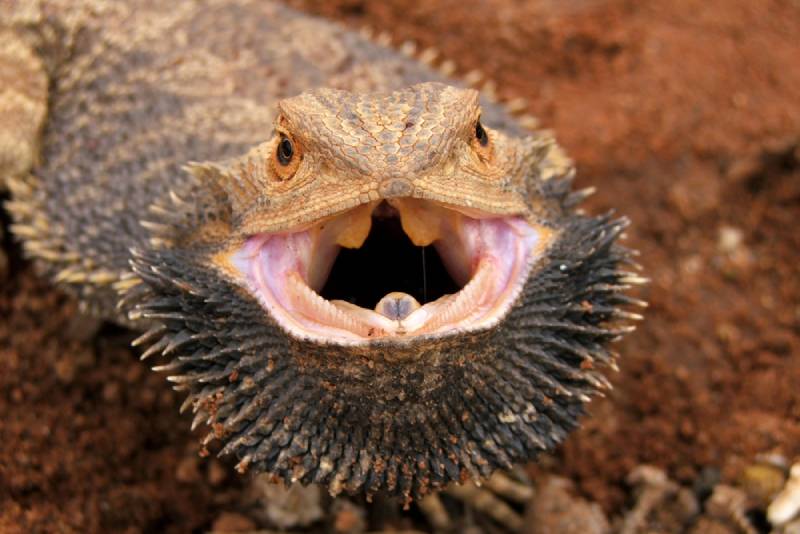
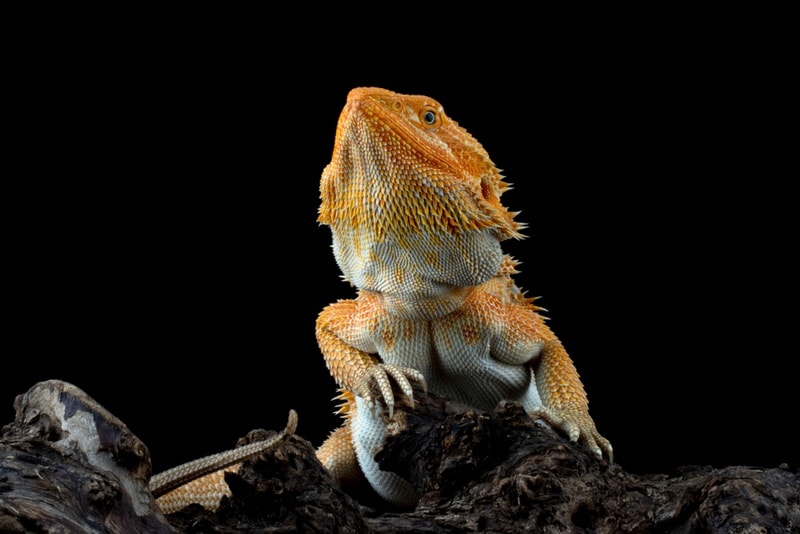
Bearded Dragons generally puff up their beards to look more intimidating. They will do this if they feel threatened, perceive a rival, feel anxious or stressed, and they may also do it as a way to attract a mate. The puffing up of the beard is usually accompanied by the darkening of its color, though beard inflation can occur independently of color change.
Why Is My Bearded Dragon Bobbing Its Head?
Head bobbing is another fairly common reaction and has many of the same causes as beard darkening and puffing. This means that your Beardie could be stressed, or anxious, or it could be showing signs of dominance. Persistent or aggressive head bobbing toward a cagemate is a sign of incompatibility and potential welfare concern, particularly in mixed-sex or male pairings.
Conclusion
Bearded Dragons really are fascinating animals and not least because of that amazing beard. It can puff up and change color, reflecting thermoregulation, stress responses, reproductive behavior, or environmental conditions. Learning what beard changes indicate will come with time for the majority of owners, and the darkening of the beard is most often linked to stress, anxiety, or fear, persistent or unexplained color changes should always prompt a review of husbandry and, when indicated, veterinary evaluation.
Sources
Featured Image Credit: C. Nass, Shutterstock
Get Hepper In Your Inbox


Pet care tips from our vets and experts, straight to your inbox.
You may opt-out at any time. View our Privacy Policy for more information.
Nicole is a lover of animals of all sizes but is especially fascinated with the feline variety. She’s the proud mom of Baby, a Burmese, and works every day so he can relax in the sunshine or by the fire. She’s always had a cat in her home and has spent countless days with others, observing behaviors and softening up even the grouchiest of the lot. Nicole wants to share her kitty expertise with you so you and your cat can live happy, healthy, and care-free.
Join the conversation
Ask a question, share your story, or send private feedback.