Hepper is reader-supported. When you buy via links on our site, we may earn an affiliate commission at no cost to you. Learn more.
Do Cats Only Purr for Humans? Vet Approved Facts & FAQ

In this article
The sound of a cat purring must be one of the most comforting sounds in the world. When you’ve had a bad day, coming home to a warm and fuzzy creature that purrs at the sight of you can end your night on a positive note. But have you wondered if cats only purr for us humans?
If you live alone with your cat, it might seem like they only purr for you, but cats do purr for other animals and sometimes, even for themselves.
Here, we get into this purring business, like whom cats purr for and why, as well as other reasons that cats are prone to purring.

How Do Cats Purr?
If you’ve ever wondered how cats purr, we’ll give you the lowdown. It all starts, like for everything, with the brain. The brain reacts to a situation and sends the information to the cat’s voice box (larynx). When the larynx receives the information, the muscles vibrate, and the air from the cat’s breathing flows over the vibrating muscles. This is a purr!
As the cat inhales and exhales, the air continuously passes over the vibrating muscles, which is why the cat’s purr can sound continuous. But you should still hear a slight difference in your cat’s purr as they breathe in and out.

Why Do Cats Purr?
There are several reasons that cats purr, and here are the most common ones.
When Happy
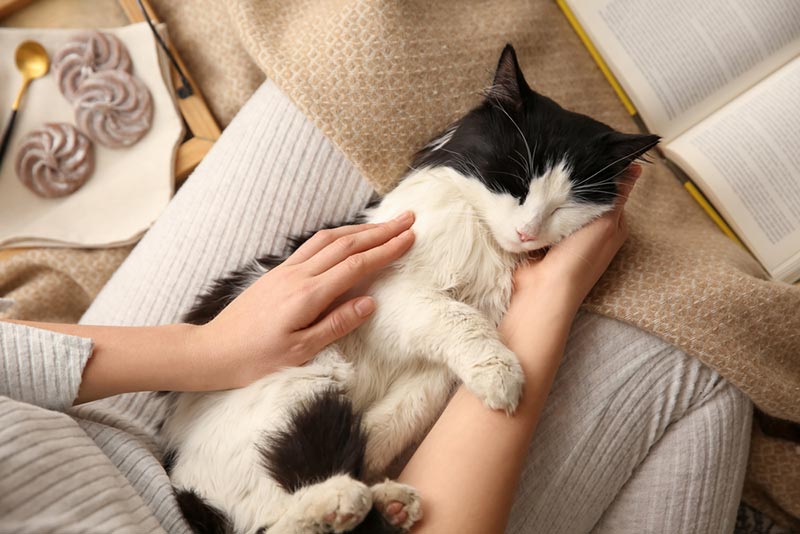
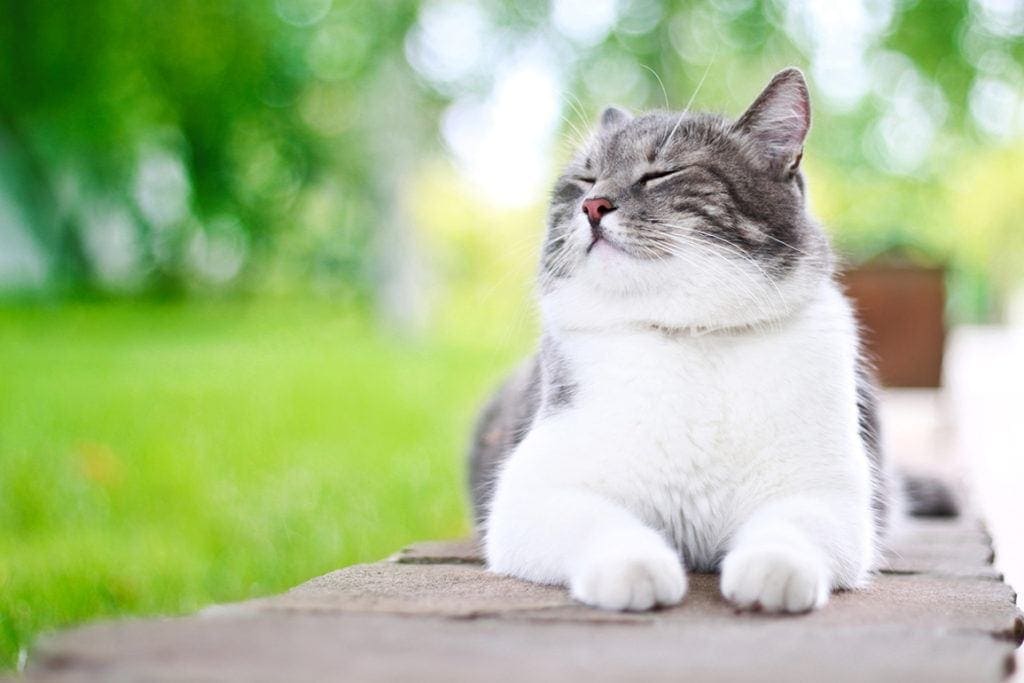
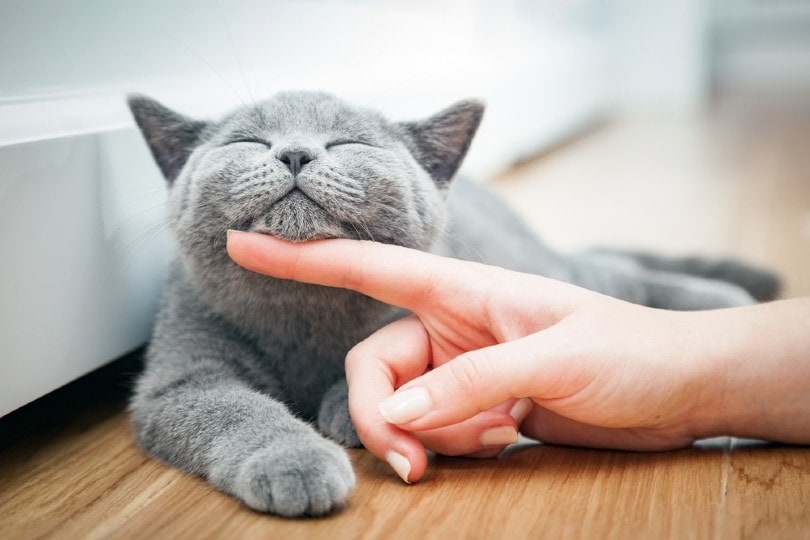
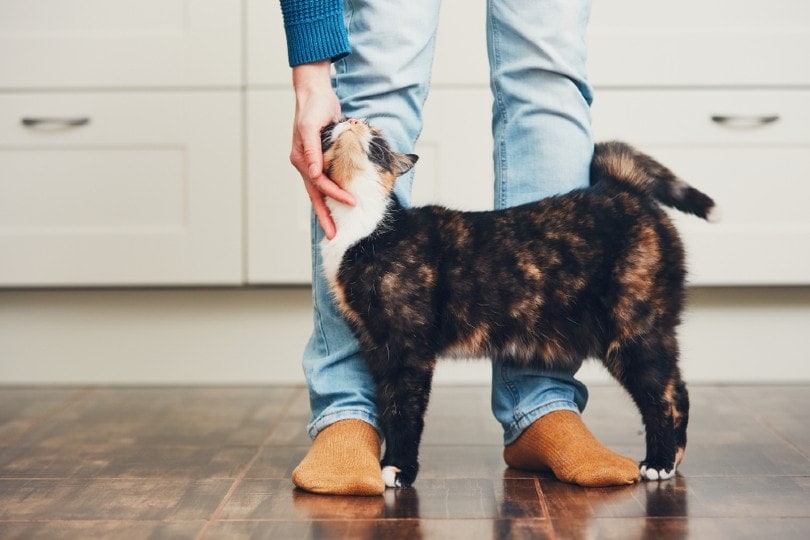
This is the most common reason that cats purr and probably the one that we are the most familiar with. Cats purr while they’re waiting for you to put down the food bowl while eating, when receiving a marathon chin scratch, and when you come home. In these scenarios, purring is a natural, almost automatic reaction.
When Stressed
When cats are stressed, they resort to various behaviors, which can include purring. Think of it as a form of self-soothing, like when we eat ice cream, breathe deeply, or squeeze a stress ball.
If you notice that your cat is purring but is also panting or showing their teeth, this is a sign that your cat is stressed. You can also tell the difference between an anxious purr and a happy purr by the pitch.
Happy purrs tend to be low in pitch, whereas a stress purr is high pitched. The other difference with stress purring is that it is brought on intentionally and not automatically, like contented purrs.

When Wanting Something
When you’re getting your cat’s food ready, you might have noticed that your cat is purring. But if your cat is staring hard at you while you’re lounging on your favorite chair, willing you to get up to feed them, you might notice that the purr is high-pitched.
This isn’t the high pitched stressed purr, but since your cat wants you to do something for them, the purr goes up in pitch to add to the urgency of the situation.
A study played a variety of different purrs that ran between the low, contended purrs to the high purrs from cats that wanted something. The human subjects found the high-pitched purrs less pleasant and seemed to recognize their urgency.
When in Pain
Like the stress purr, when cats have been injured and are in pain, they are likely to start purring. They do this on purpose, similar to self-soothing. This often happens when a mother cat is in labor.
Beyond self-soothing, purring while in pain is also a form of self-medication. Purring helps regulate breathing and produces low-frequency vibrations, which are thought to stimulate healing.
One study demonstrated that using a similar low-frequency vibration on humans could stimulate bone growth and muscle strength.

When Do Cats Purr for Others?
Cats do purr around other animals and here’s why.
When Mother Communicates With Her Kittens
Kittens start purring when they are a couple of days old, which is how they bond with their mother and how they communicate.
Kittens are born deaf and blind, so their mother purrs so her kittens can find her for nursing.
When Greeting Other Cats
Just like how cats purr when greeting us, they also purr when they greet another cat that they are familiar with. No one knows for sure why they do this, but it’s believed that purring around another cat is intended to project that they are friendly and non-threatening.
You’ll also hear cats purring while they are grooming each other, which is likely projecting those trust vibes, as well as being content.
Do All Cats Purr?
All domesticated cats purr but not all big cats do. The rule is that the big cats that can roar, like lions, tigers, jaguars, and leopards, can’t purr. The cats that can’t roar, like cheetahs, lynxes, pumas, bobcats, and ocelots, can purr.
Essentially, the parts of the cat’s larynx that create a roar make it virtually impossible to purr.
In big roaring cats, the larynx is flexible, which helps produce those loud roars, whereas cats that purr have a more rigid set of vocal cords.
The lion has the loudest roar of all of the big cats. Their roar can reach around 114 dB, equivalent to an emergency vehicle siren, and can be heard at 5 miles or 8 kilometers away!
Are There Any Other Animals That Purr?
There are quite many different species of animals that can purr to some degree.
Conclusion
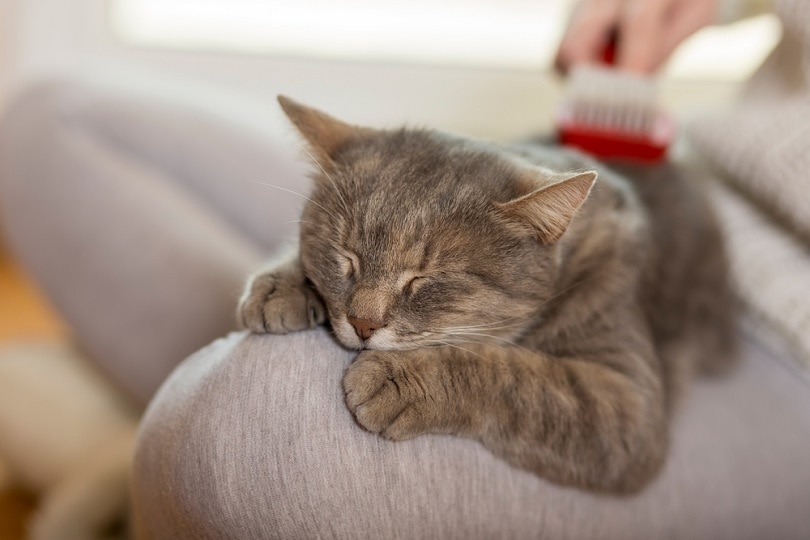
Cats start to purr when they are kittens, and they will purr around other trusted cats and when they are by themselves. But the most common reason that cats purr is when they are happy and content while being stroked gently or lying in the sun. So, while cats might purr around humans most of the time, they will purr around other creatures for various reasons.
Featured Image Credit: Piqsels
Get Hepper In Your Inbox


Pet care tips from our vets and experts, straight to your inbox.
You may opt-out at any time. View our Privacy Policy for more information.
Kathryn was a librarian in a previous lifetime and is currently a writer about all things animals. When she was a child, she hoped to work in zoos or with wildlife in some way, thanks to her strong love for animals. Unfortunately, she's not strong in the sciences, so she fills her days with researching and writing about all kinds of animals and spends time playing with her adorable but terribly mischievous tabby cat, Bella. Kathryn is hoping to add to her family in the near future – maybe another cat and a dog.
Join the conversation
Ask a question, share your story, or send private feedback.