Hepper is reader-supported. When you buy via links on our site, we may earn an affiliate commission at no cost to you. Learn more.
Doberman vs Husky - What's the Difference? (With Pictures)

In this article
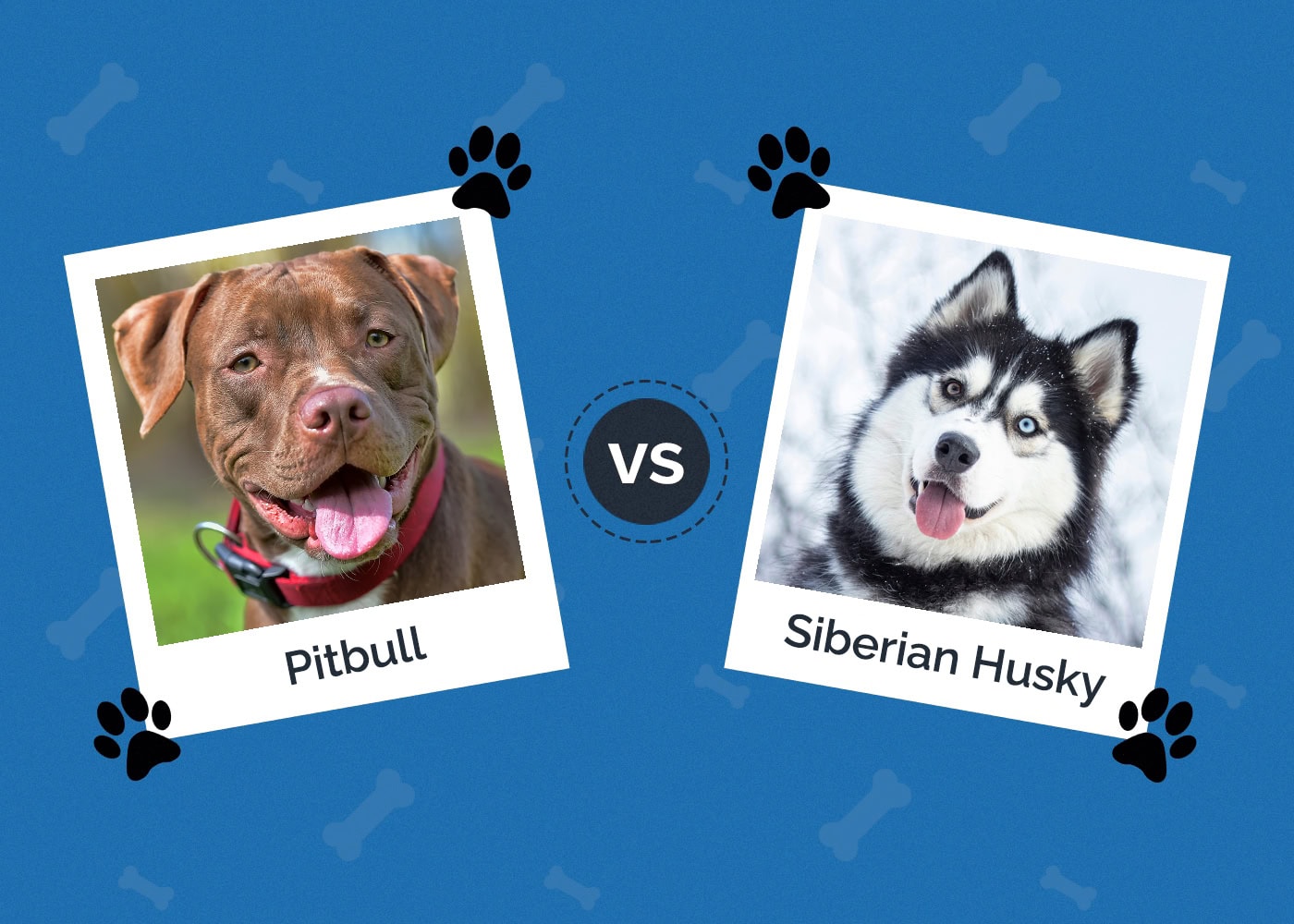
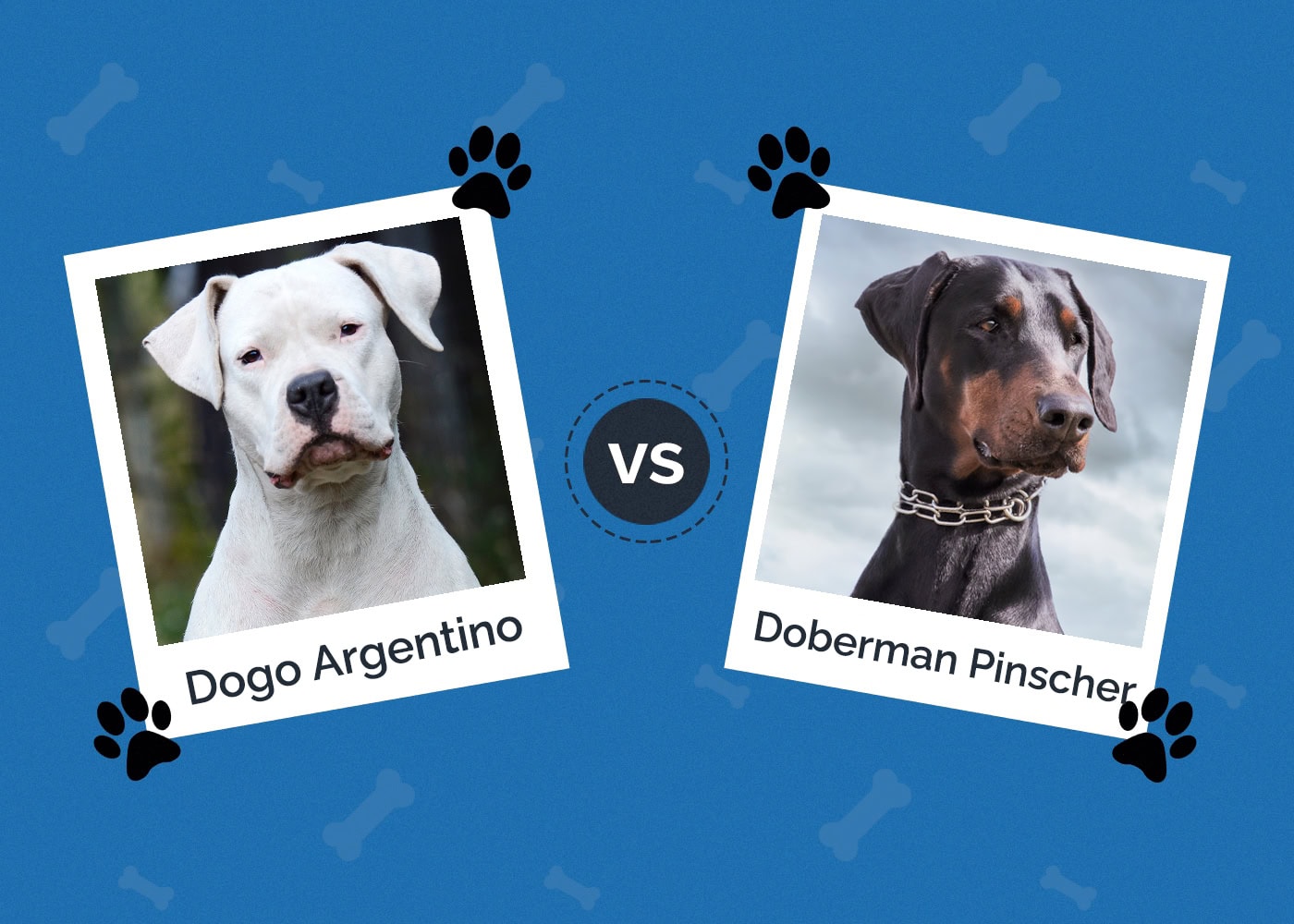
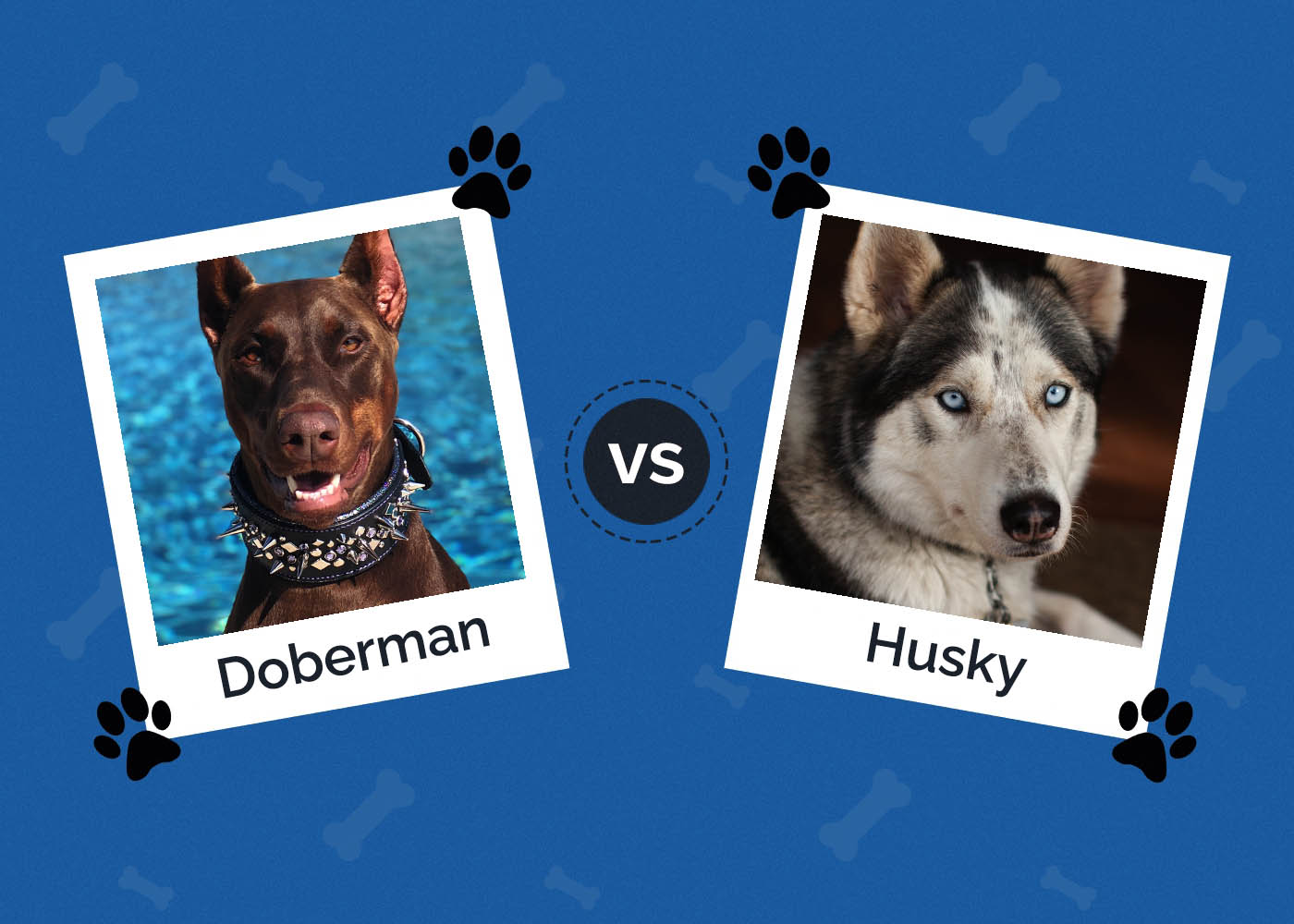
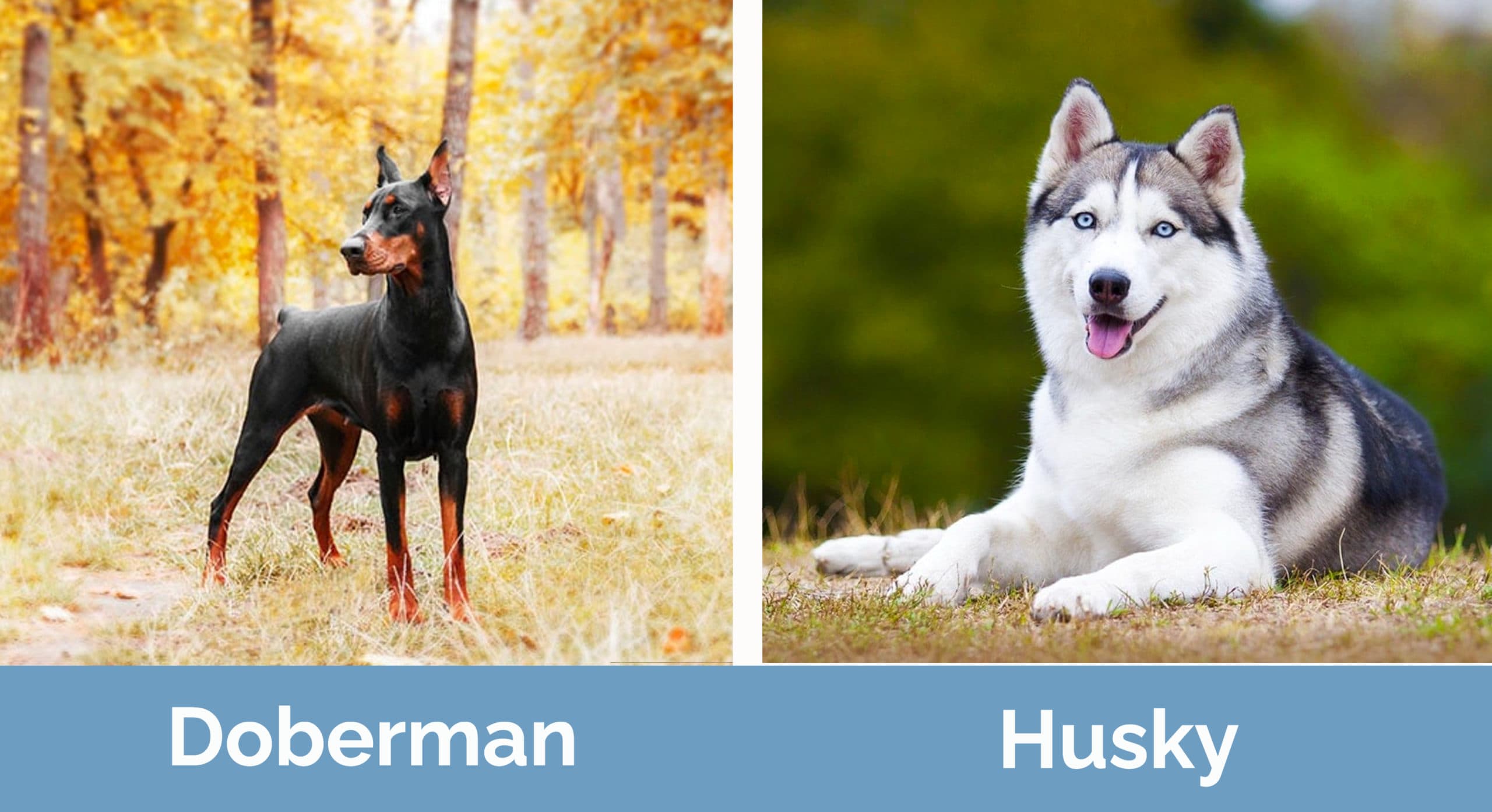
If you're looking for an energetic dog that will loyally accompany you on walks or runs, the Doberman and the Husky both fit the bill. Both breeds are known for their high-energy and ride-or-die attitudes. They're also often intensely loyal to their families. Just as when you're dating people, though, it's important to know the good and the bad sides of both breeds before you commit for the long haul. Although they're similar in many ways, Dobermans and Huskys differ in a few important areas such as grooming, health, and trainability. Read on to find your perfect match.

Visual Differences
At a Glance
Doberman Overview
Personality / Character
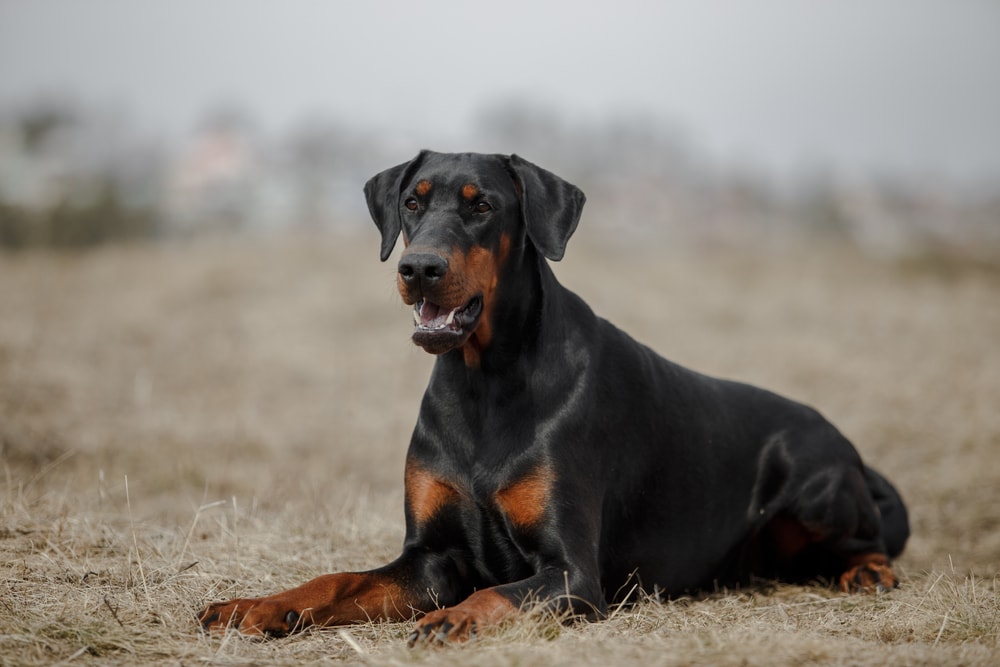
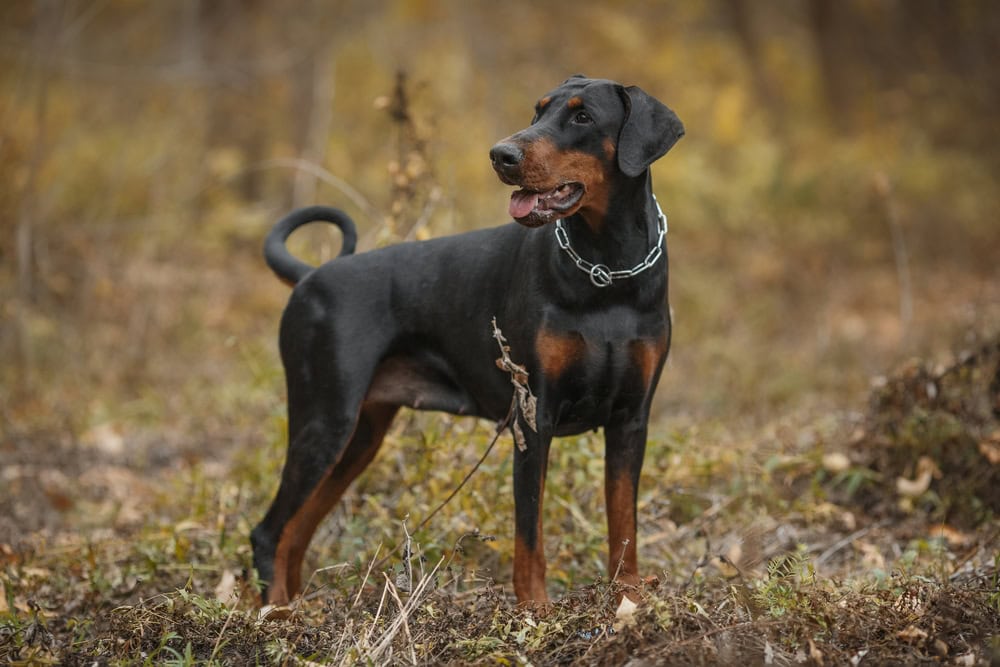
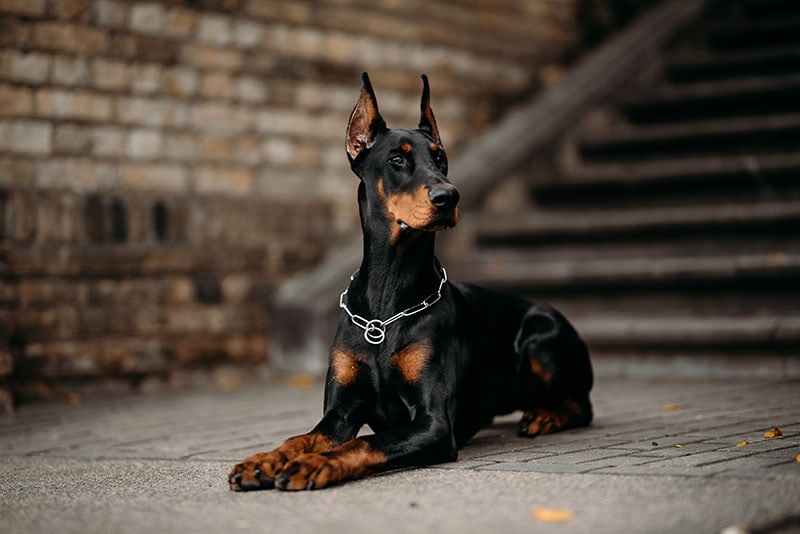
Intelligent, alert, and fiercely loyal to their people, the Doberman is the embodiment of the ideal family watchdog. They were originally bred in Germany in the 19th century to guard tax collectors and were later used by the American military and police force. Nowadays, they make great pets for households who like to stay active. Dobermans can act a little aloof and reserved but are typically closely bonded to at least one person.
Training
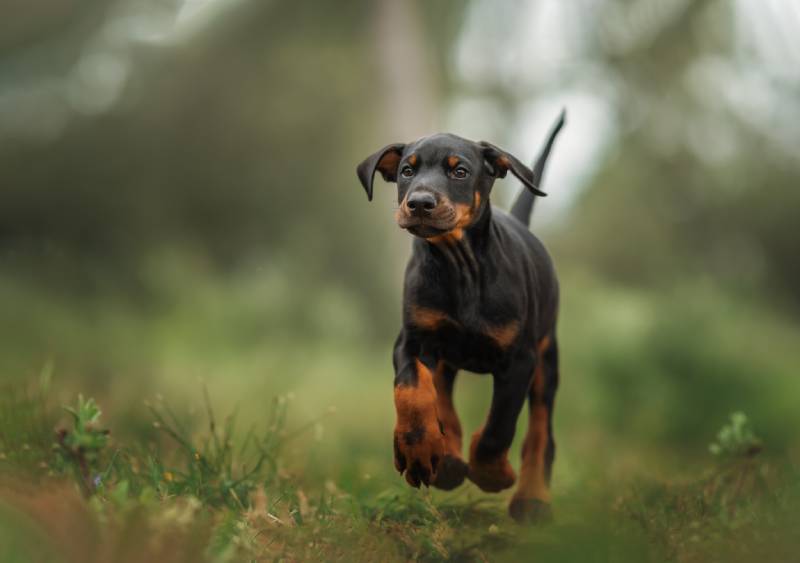
Dobermans are eager to please their people and have a good reputation for being easy to train. Since the Doberman possesses admirable qualities as a watchdog, you may have to carefully socialize them as a young pup so that they aren't aggressive to strangers.
Grooming
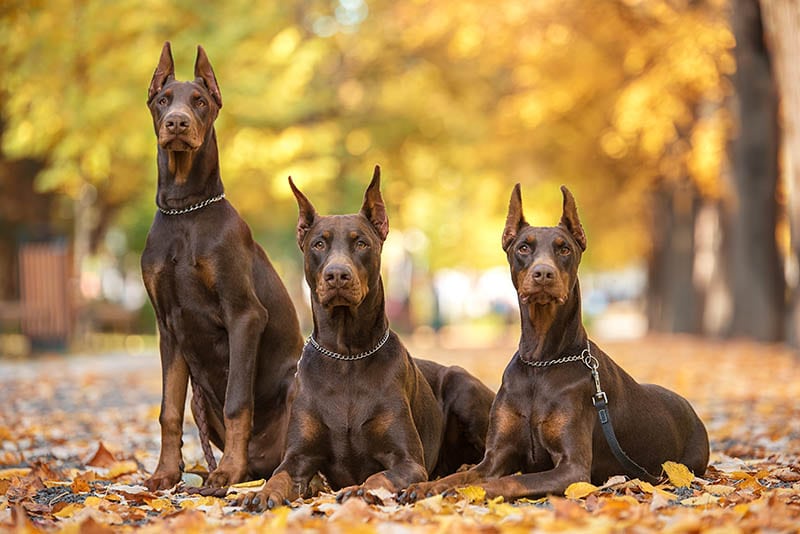
Since they only have a single coat, Dobermans don't leave loose tufts of fur all over the house like double-coated dogs do during the spring and fall. Instead, they shed gradually throughout the year. To care for your Dobermans, you'll need to brush their teeth daily and trim their nails as needed as you would with any dog. Additionally, they need to be brushed, preferably with a glove brush, every week or so. Dobermans have sensitive skin that won't tolerate frequent washing.
You should aim to wash your Doberman every 6-8 weeks with a sulfate-free shampoo that's formulated for dogs. Shampoo that contains sulfates or isn't meant for dogs could overly dry out their skin, which is already prone to itchiness. You'll also need to carefully clean out their ears with isopropyl alcohol and a cotton swab every couple of weeks to prevent ear infections, which they're also known to develop.
Health & Care
As mentioned previously, Dobermans are prone to ear infections and sensitive skin. Unfortunately, those are some of the mildest issues you might see in a typical Doberman Pinscher. Although not every dog will develop these diseases, the Doberman has a higher than average susceptibility to bloat, prostate cancer, hip dysplasia, cardiomyopathy, and von Willebrand's disease, a disease in which their blood doesn't coagulate properly. Responsible breeders should use DNA testing to screen for von Willebrand's disease before breeding their dogs. Unfortunately, however, DNA tests won't necessarily predict certain types of cancers and other common diseases in Dobermans.
Suitable for:
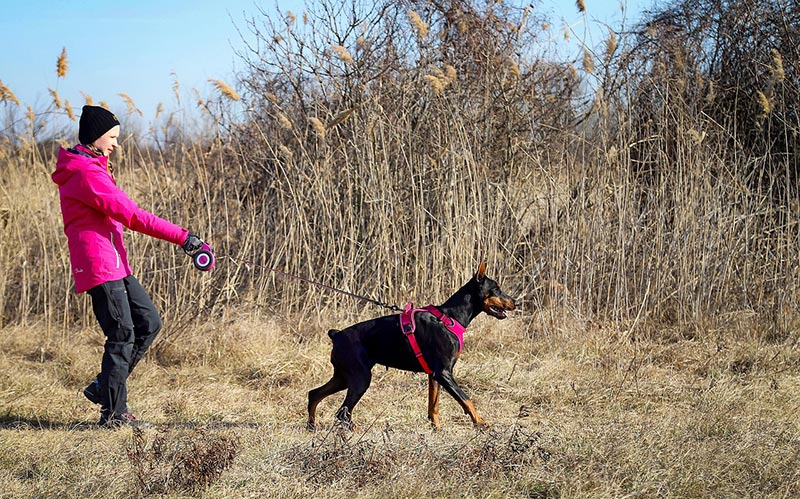
Dobermans are probably your best bet if you want a dog who you can train for canine agility courses. They're a great pet to have if you have a large yard, or if you're an apartment dweller who's willing to commit two or more hours a day to walks and dog park runs. Although they can act a little aloof, Dobermans tend to be closely bonded with at least one person and are ready to guard their family if the need arises. This breed is also a good choice if you're looking for a short-haired dog with minimal shedding.
Pros
- Easy to train
- Agile and athletic
- Minimal grooming needs
Cons
- Extremely susceptible to a host of serious health problems
- May not tolerate strangers or other pets
Husky Overview
Personality / Character
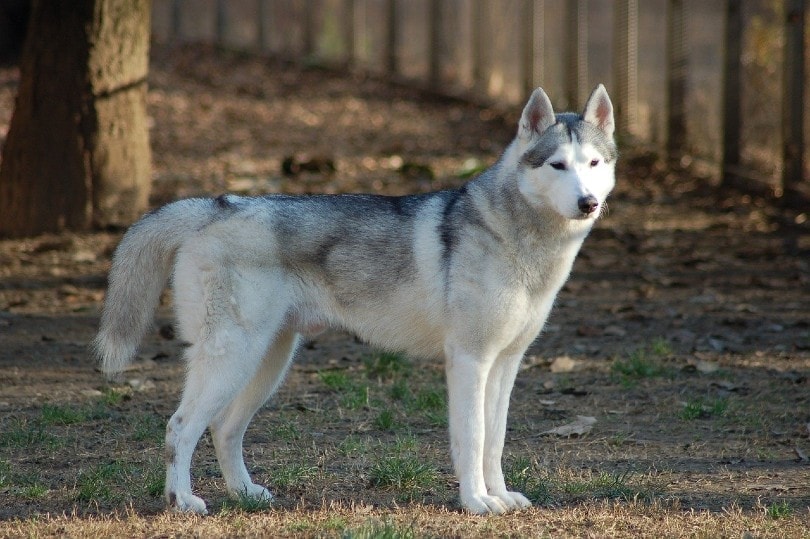
The Siberian Husky is highly sociable with other dogs and children. They're medium-sized dog with a longer life expectancy than the Doberman Pinscher. Huskies were bred to work together in a pack to pull sleds and tend to be very fast runners.
Training
Even though they're working dogs, Siberian Huskies are also notoriously difficult to train. You'll need to begin while they're young for best results, although it is possible for old dogs to learn new tricks. The Husky won't be your best choice if you're looking for a dog that'll ace the agility course, but you should at least be able to teach them the basic dog skills such as sit, stay, and fetch.
Because Huskies are hunters, they might not be the best choice if you share a house with a cat. Huskies have a high prey drive and may accidentally hurt your cat if they try to chase it. They typically get along fine with other dogs, however, and are usually friendly toward other household members.
Grooming
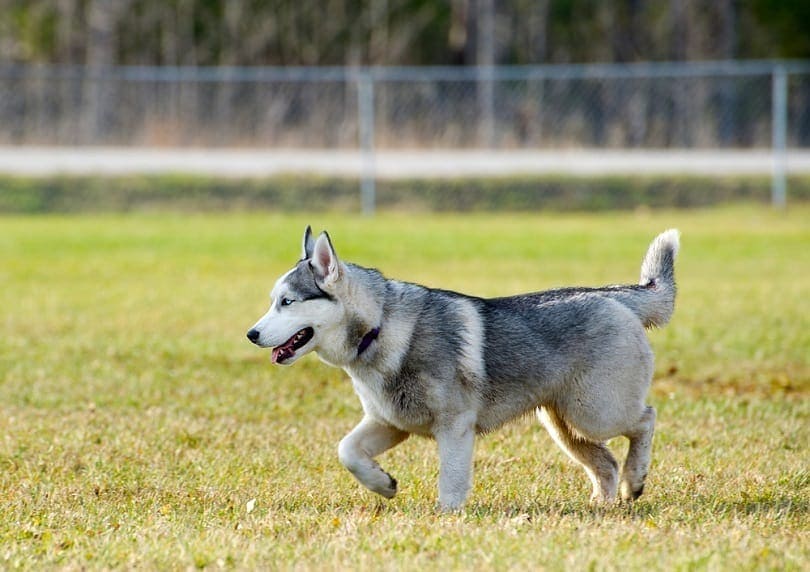
Their fluffy fur is due to an undercoat that sheds twice a year, in addition to the gradual year-round shedding like you see in the Doberman Pinscher. You'll definitely notice more loose fur from your Husky than you would with a short-haired breed who has a single coat. In addition to typical dog grooming routines such as daily toothbrushing and routine nail trims, you'll need to brush your Husky at least once a week. The good news is that this breed only requires a couple of baths per year, preferably around the time they “blow” their coat to help relieve their shedding.
Health & Care
Any dog can develop diseases, but Huskies are a fairly healthy breed overall. Like most big dogs, they are more susceptible to hip dysplasia given their relatively large size. Hypothyroidism and eye disorders such as progressive renal atrophy are also cited as common problems.
Suitable for:
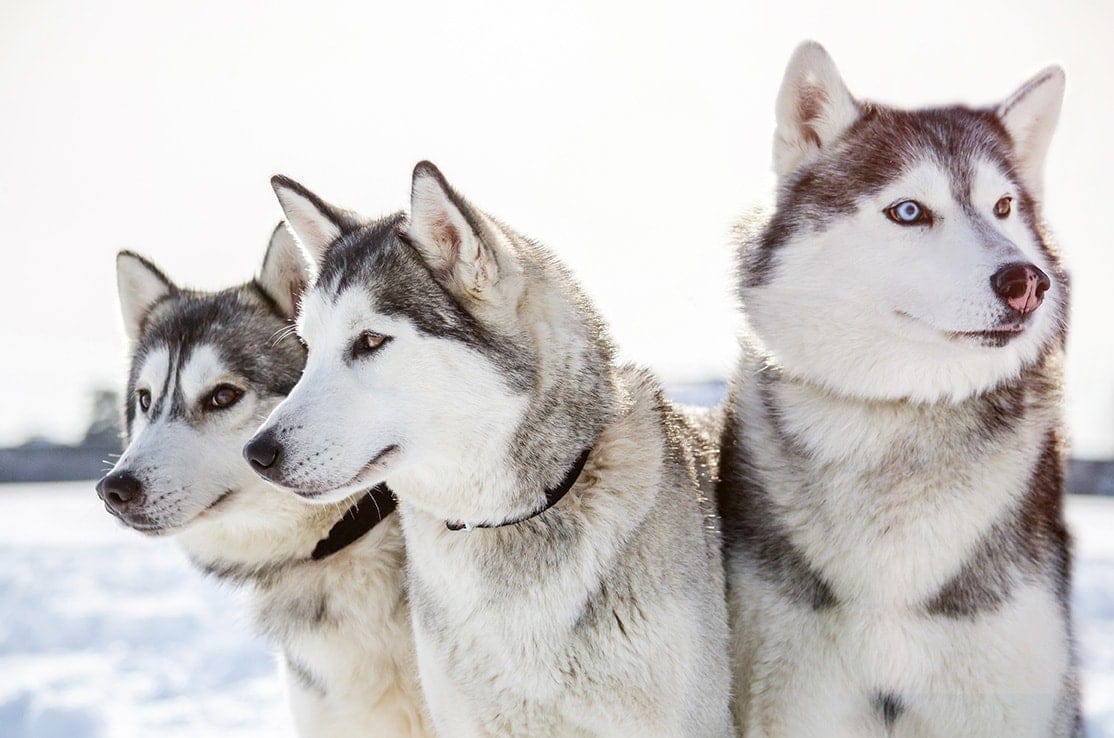
Siberian Huskies are excellent running mates for active owners, especially if they live in a colder climate. You probably won't find this dog raking in trophies from agility championships, but they can run up to 150 miles per day. They may not be the best choice for families with cats due to their high prey drive, but they're loyal pack animals who'll typically get along with dogs and other household members. Since they don't have nearly as many genetic issues as Dobermans, Huskies have a longer life expectancy on average. Just don't expect your floors to be clean during the spring and fall during their shedding season.
Pros
- Highly sociable
- Marathon runners
- Smaller dog with longer life expectancy
Cons
- Notoriously hard to train
- May chase other small pets
- Double-coat sheds excessively
Which Breed Is Right for You?
Both the Siberian Husky and the Doberman can make great pets. Huskies are smaller dogs with fewer breed-related health issues and a longer lifespan, but the Doberman is much easier to groom since they have a single coat that only sheds moderately. The Doberman will faithfully watch over your house, but the Husky is a better option if you want a dog that's friendly to everyone. Although neither one is probably an ideal choice for a household with cats, the Husky's strong prey drive especially disqualifies them from living with felines. Both breeds are notoriously active with an average lifespan that should give you at least ten years of companionship. The best choice for you depends on your environment and preferences.
See also:
Sources
Featured Image Credit: (L) Dyrefotografi, Shutterstock | (R) TimmerTammer, Shutterstock
Get Hepper In Your Inbox


Pet care tips from our vets and experts, straight to your inbox.
You may opt-out at any time. View our Privacy Policy for more information.
Brooke Bundy is a freelance writer who graduated from the University of North Georgia with a B.S. in Media Studies. She is interested in storytelling across different mediums. When she isn’t writing, Brooke loves to spend time with her dog, and three cats, in New Orleans, Louisiana. Brook enjoys gardening, cooking, brewing coffee, and making her pet's house a home.
Join the conversation
Ask a question, share your story, or send private feedback.