Hepper is reader-supported. When you buy via links on our site, we may earn an affiliate commission at no cost to you. Learn more.
Dog Ear Hematoma: Causes, Signs, and Treatment (Vet Answer)

In this article
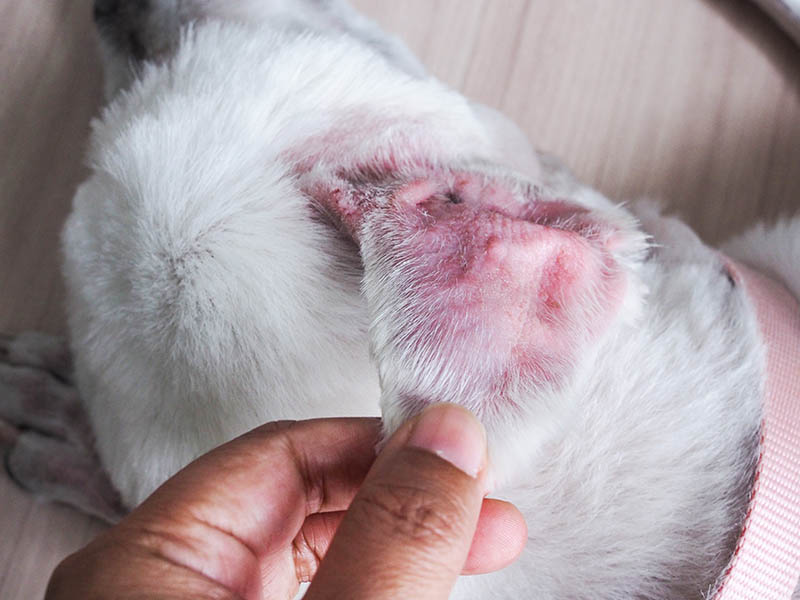
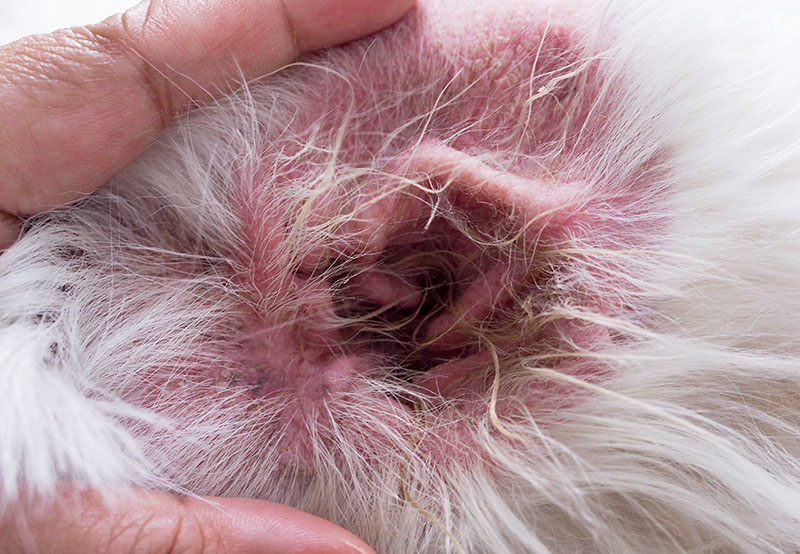
Any dog can suffer from an ear hematoma. Ear hematomas will occur secondary to some type of repeated trauma to the ear, but are almost always associated with an ear infection. One or both ears can be affected, and the affected ear will appear swollen, red, and very painful to the touch. Any size and/or breed of dog can suffer from an ear hematoma. In this article, we’ll help you learn what to look for, what causes it, and how to care for an ear hematoma.

What Is an Ear Hematoma?
A hematoma is a pocket or collection of blood. Hematomas can occur almost anywhere in/on the body for a number of different reasons. An aural or ear hematoma is a hematoma or pocket of blood that will develop in the flap of the ear, known as the ear pinna. The blood can be frank (fresh blood) or clotted and is often mixed with inflammatory cells. The fluid within the hematoma is often not infectious and/or does not contain bacteria.
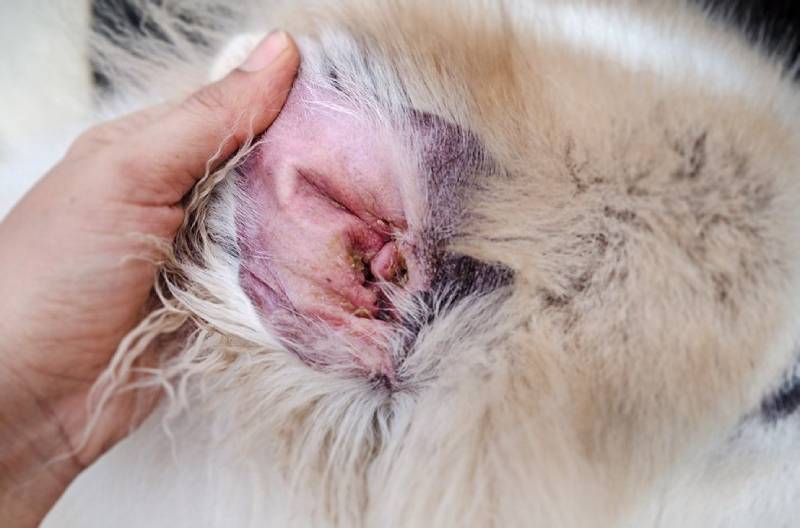
A hematoma can affect one or both ears and can range in severity. You may just notice a small swelling on the tip of your dog’s ear pinna. Other times, the entire ear flap will become severely swollen and have the appearance of a pillow.
What Are the Signs of an Ear Hematoma?
As discussed above, you may notice either just a small swelling of the ear, or a severe, pillow-shaped swelling of the ear. Either one or both ears can be affected. When you touch the swelling of the ear flap(s), your dog may cry in pain. You may also notice that the swelling feels squishy and is a fluid-filled pocket.
Prior to the swelling occurring, your dog will likely exhibit signs of an ear infection. Dogs will often constantly scratch at their ears with their back feet, shake their heads, or even rub their ear(s) along the carpet or sides of the furniture. Your dog may be sensitive when you try to pet their head and/or ears and you may also notice an odor from your dogs’ ears.
Ear infections can sometimes occur after swimming and/or your dog getting a bath. Because of this, keep a lookout for the signs a few days after. Your dog may also have underlying allergies to things in the environment and this can trigger an ear infection. If you notice your dog licking their feet, chewing on the nails or generally seeming itchy, you should seek veterinary care for medications to try and calm your dogs’ itching. Your veterinarian will also look for an ear infection at the time of their exam.
What Are the Causes of an Ear Hematoma?
An ear hematoma occurs from build-up of blood beneath the surface of the skin. Each ear flap, or pinna, is composed of a layer of cartilage in between the two sides of skin and fur. There are numerous blood vessels that run along and within each ear pinna as well. If your dog suffers acute, or more frequent, chronic trauma to the ear, these blood vessels will break open and bleed underneath the skin, building up between the cartilage and a skin layer.
The most common reason why your dog may suffer trauma to their ear is from self-trauma. In other words, if your dog has itchy skin from allergies, or they have an ear infection, they are going to constantly shake their head and/or itch at the head/ears with their feet. They may even rub their ears on the floor and furniture. If the ear infection and/or underlying allergies aren’t addressed and the itching persists, your dog will continue to traumatize their ears. This may eventually cause the bleeding to start under the skin and swelling to develop.
Depending on where in the country you live, dogs may also get plant awns or grass pieces stuck within their ear canals. This will cause significant irritation to their ears, and they will shake, claw, and rub at their ears to try and get the material out. Any other type of trauma to the ear such as another animal bite, fall, etc., may cause bleeding and swelling as well.
How Do I Care for a Dog With an Ear Hematoma?
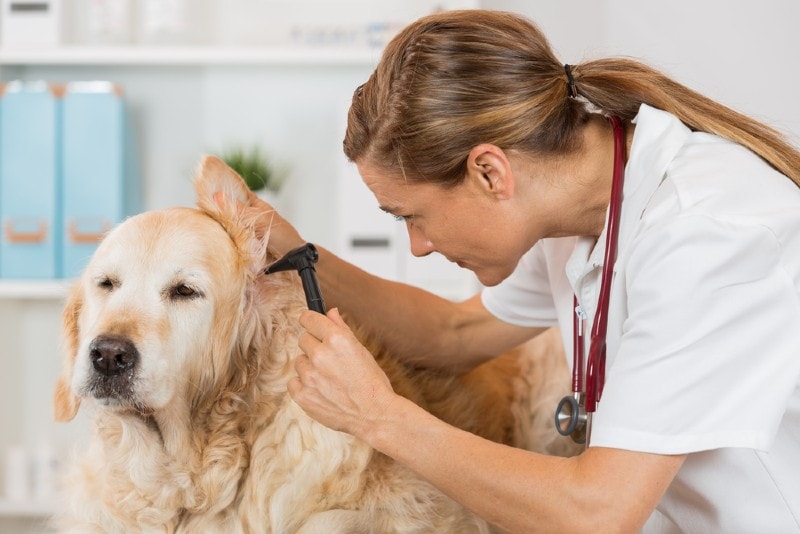
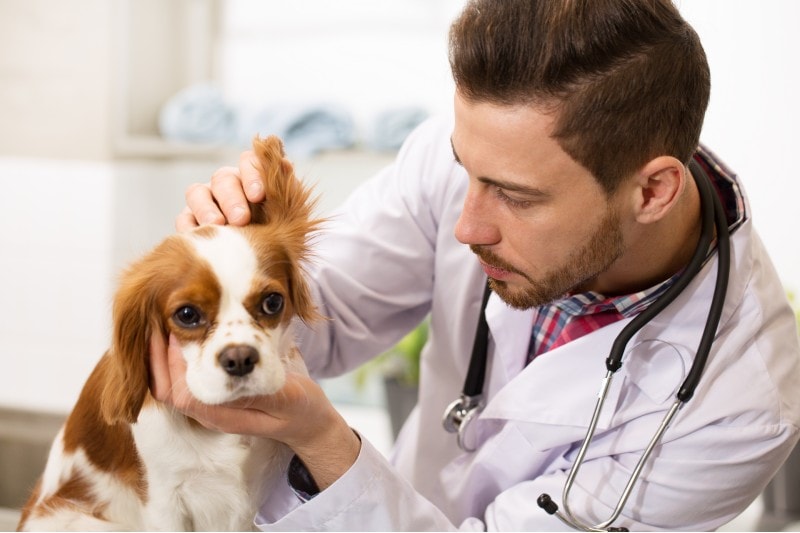
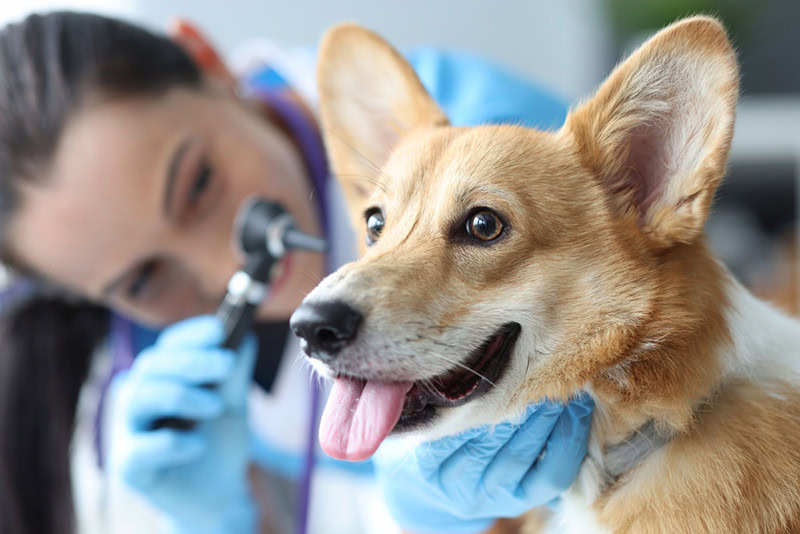
Once you notice an ear infection and/or an ear hematoma, you should make an appointment for your dog to see the veterinarian. The veterinarian will look for an ear infection and will likely look at a microscope slide of a sample from the ears to determine if there are bacteria and/or yeast causing any irritation. The ear infection will be treated accordingly with either drops or long-acting ear medications.
As for the hematoma, there are different options for treatment. If the hematoma is small, your veterinarian may just treat the ear infection and start a course of steroids. If your dog stops shaking their head and/or itching at their ears once the infection has been treated, then the swelling will slowly go down and resorb on its own.
However, if the swelling is severe, and/or your dog won’t stop shaking its head, then your veterinarian may need to do surgery to resolve the swelling. There are different surgical procedures to remove the fluid and help prevent it from building up again. Oftentimes there is some type of drain placed so that additional fluid cannot build up under the skin. Your dog may just be sent home in an e-collar so that they do not scratch open the sutures. Or, your veterinarian may also send your dog home with a head bandage if the discharge is significant.
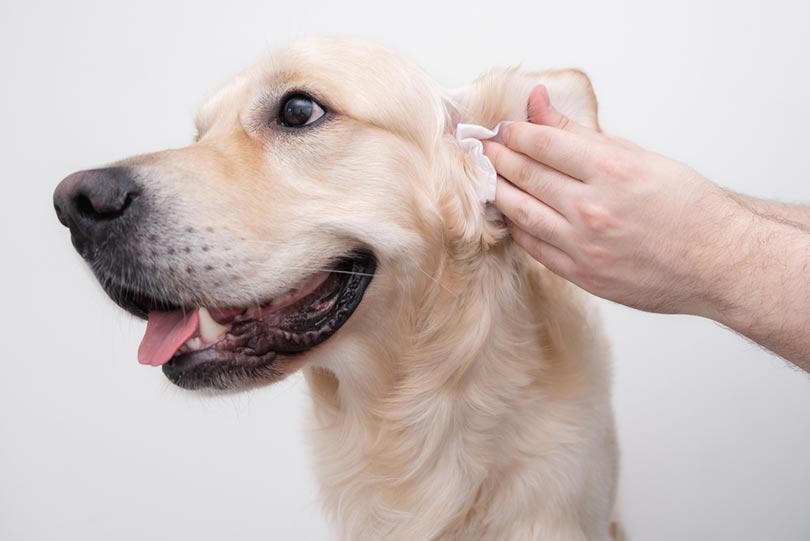
No matter what your veterinarian decides, it’s important that you do not treat your dog’s infection and swelling at home. Old wives’ remedies of alcohol, peroxide, apple cider vinegar, etc., not only don’t work (as they do not have any medications to treat bacteria and/or yeast), but they can be extremely irritating to your dogs’ ear canal. Owners who try to drain the swelling themselves often cause additional trauma to the ear and may also cause infection to form within the hematoma.
Frequently Asked Questions (FAQs)
Once My Dog Has Surgery, Are They Cured?
Unfortunately, surgery is not a guarantee for the problem to be cured. Oftentimes the swelling will come back and/or take weeks to resolve, despite surgery and the ear infection being resolved. If your dog is prone to ear infections and/or has chronic allergies, this problem can happen again at any time in the future. Ear hematomas can be extremely frustrating to treat and manage for everyone involved.
What If I Just Leave It Alone?
Many veterinarians won’t perform surgery for ear hematomas because of the risk of them occurring again. As long as the ear infection is being treated and improving, and your dog has stopped bothering the ears, you may be able to just leave the hematoma alone. After a while (typically a few weeks), the body will resorb the fluid on its own. Your dog’s ear may be left scarred and crinkly but should be OK. Unfortunately, many dogs are bothered by the swelling and will continue to shake and bother their ears if the swelling is not treated surgically and/or drained.
Conclusion
An ear hematoma, otherwise known as an aural hematoma, is a build-up of blood and inflammatory fluid within the ear flap (pinna). The blood will build up from trauma to the ear, often from your dog shaking their head and/or scratching from an ear infection and/or allergies. The constant trauma will cause bleeding to occur under the skin and a squishy swelling to occur in one or both ears. Your veterinarian will want to diagnose and appropriately treat any underlying ear infections and try to control allergies. Depending on the severity of the hematoma, your veterinarian may choose to just drain it, leave the swelling alone, and/or treat it surgically. Unfortunately, ear hematomas can be extremely frustrating to treat, they often take weeks to resolve, and they can recur at any time.
Sources
Featured Image Credit: Kittima05, Shutterstock
Get Hepper In Your Inbox


Pet care tips from our vets and experts, straight to your inbox.
You may opt-out at any time. View our Privacy Policy for more information.
Dr. Podlecki is a graduate of The Ohio State University College of Veterinary Medicine with more than 12 years of experience working with small animals in the US. Dr. Podlecki spent 10 years working almost exclusively in emergency and specialty medicine before transitioning to relief in general practice and the ER. She also owns her own veterinary consulting company (renewvetconsulting.com) that helps vet hospital improve their internal culture.
For as long as she can remember, Dr. Podlecki always wanted to be a veterinarian. It is her passion and she lives to help animals. She also owns her own consulting company (renewvetconsulting.com) which focuses on helping veterinary hospitals prioritize their staff to promote a healthier internal culture.
Education
Dr. Podlecki graduated from The Ohio State University College of Veterinary Medicine.
Experience
Dr. Podlecki has over 12 years of experience working in the USA with small animals. For more than 10 years, she worked almost exclusively in emergency and specialty medicine, before transitioning to relief in both general practice and ER.
Join the conversation
Ask a question, share your story, or send private feedback.