Hepper is reader-supported. When you buy via links on our site, we may earn an affiliate commission at no cost to you. Learn more.
E-Collar vs Shock Collar for Dogs: The Differences, Pros & Cons

In this article
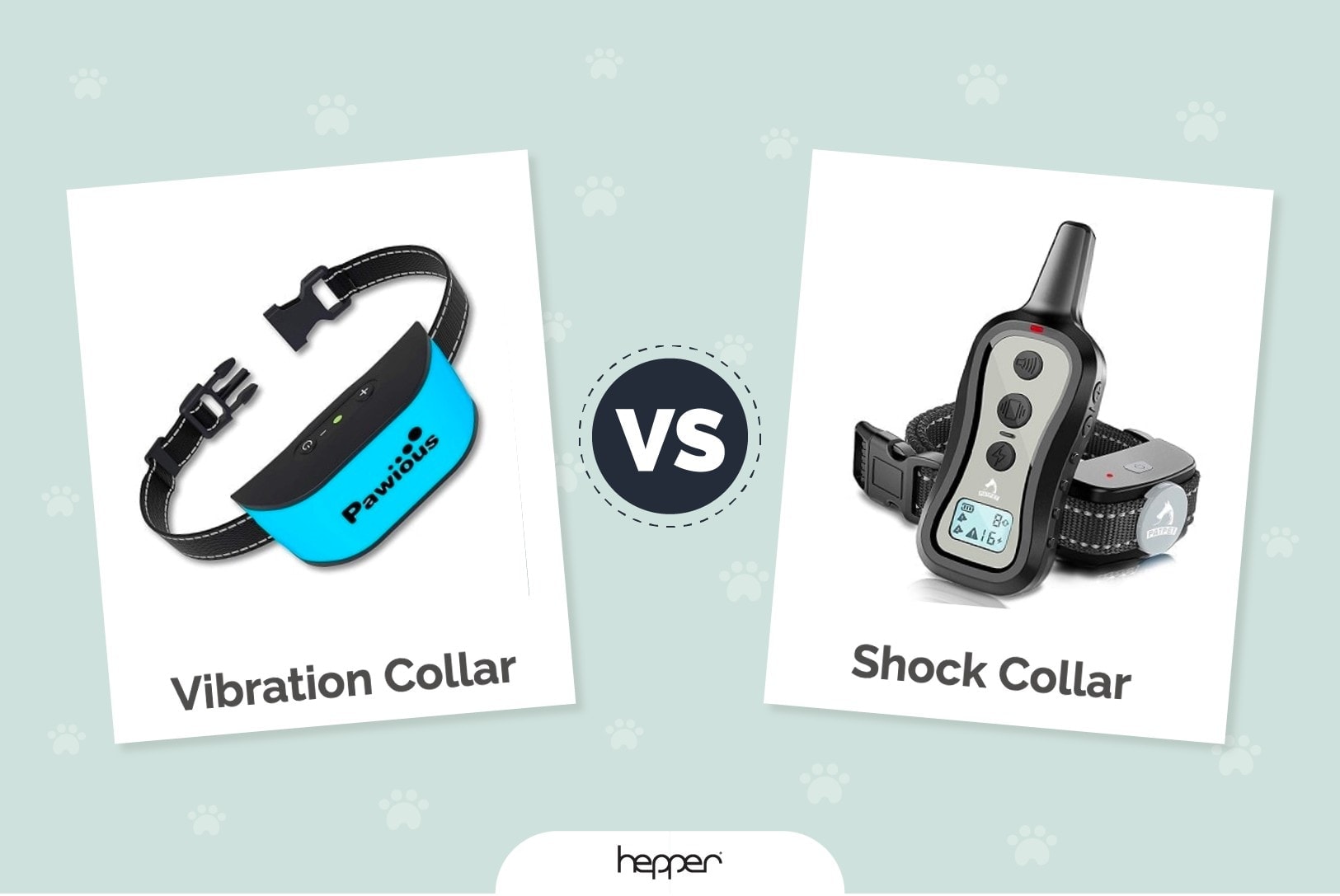
There is a great deal of controversy around the use of shock collars and E-collars in dog training. However, this is mostly due to a lack of understanding of what these devices really are. Just the word “shock” in the name is enough to evoke powerful emotions in dog owners, as the last thing you want is for your pet to feel any pain. But these collars do not cause your dog any pain and most certainly do not shock them. This is an unfortunate misnomer that has caused unnecessary negativity toward these products.
With this in mind, these collars can be a great help for dog training and keeping your dog from wandering and getting lost or hurt. In essence, an E-Collar is similar to a shock collar, and the terms are often used interchangeably, which creates confusion.
In this article, we attempt to dispel a few of the myths surrounding the use E-collars vs shock collars, what the differences between the two are, and whether you should use one. Let’s get started!

What's An E-Collar?

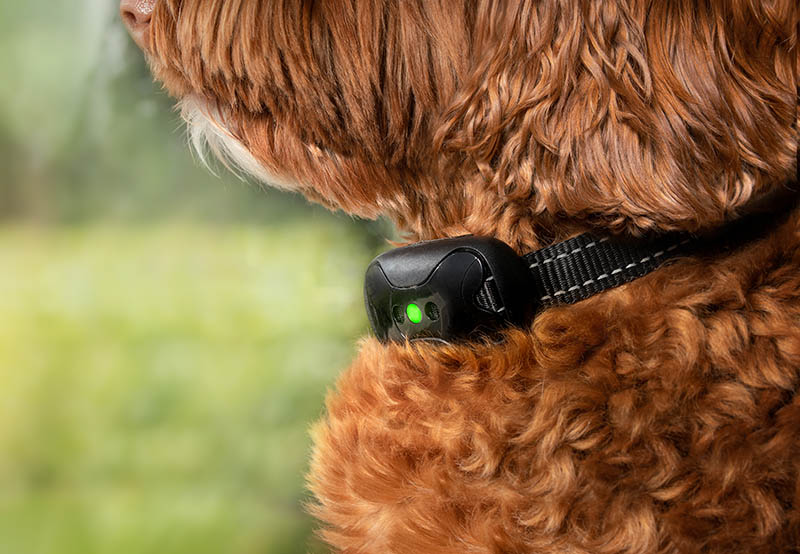
Electronic collars, or E-Collars, were first used in the 1970s and were designed to “shock” dogs with a small electronic current to force behavior modification. However, modern E-Collars use electronic stimulation as opposed to electronic shocks—the collar simply stimulates your dog’s nerve receptors through powerful vibrations, and as a result, there is no pain caused to your dog.
While there's no pain, the vibration still causes discomfort to your dog, and this aids in your dog associating the discomfort with a certain behavior, hopefully helping them to cease the behavior.
How do E-collars Work?
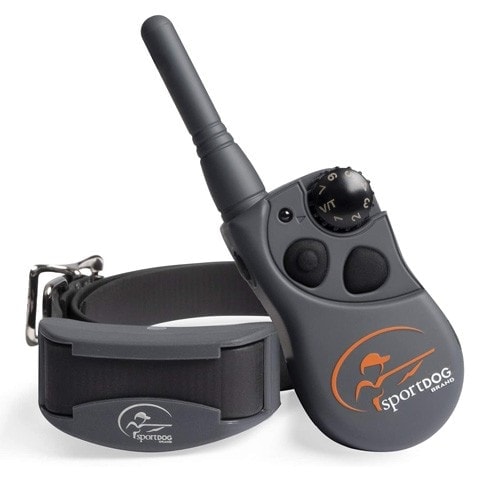
E-Collars typically have a wireless remote, carried by you, and a receiver attached to a collar, which your dog wears around their neck. E-Collars use a mild electronic stimulation—not a shock—that you can trigger with the remote as a method of negative reinforcement. This helps stop negative behavior by associating the behavior with a feeling of discomfort. Some E-Collars have adjustable settings so you can adjust the intensity of the vibration depending on the situation and your dog. Some even have the option to just vibrate, which you can use as a gentle reminder once the behavior has been adjusted. Some types of E-collars for dogs have handy GPS trackers built in too.
Are E-Collars Safe for Dogs?
Yes, E-Collars are perfectly safe for dogs when used properly. The small electronic pulse that they produce can be compared to a flea bite at lower levels and only provides mild discomfort to your dog. Even at higher levels, an E-Collar cannot harm your dog, even though the sensation may be uncomfortable for them. We recommend starting on the lowest setting and watching how your dog reacts. You may need to increase it, or they may alter their behavior just on the lowest setting. Either way, these collars are not a permanent solution and should only be used temporarily for training use.
When Should You Use an E-Collar?
For dogs that are proving difficult to train or if you are trying to keep your dog within certain boundaries that are not fenced, E-Collars can be an effective training tool. They can be viewed as an extension of a leash and simply as another way of communicating with your dog. That said, E-Collars should only be used in moderation and never relied on as a shortcut to proper training. One of the main benefits of training is to keep your dog safe, and if an E-Collar can help prevent your pooch from running into the street or stop them from getting hurt, it is certainly worth a try.
The whole concept of negative reinforcement is highly debated by animal experts, as there are a wide variety of behaviors that could be considered wrong when you are attempting to train your dog. If you do not use an E-Collar correctly, it can easily make your dog’s behavior worse, so you should use it sparingly and consult with an expert trainer who can advise you on the correct methods.
Pros
- Can be an effective training tool
- Perfectly safe for your dog
- Multiple settings to use
- Can be useful for difficult behavior
- Helps keep your dog safe
Cons
- Can cause more problems if not used correctly
- May cause anxiety for your dog

What Are Shock Collars?

The term “E-Collar” is really a euphemism for a shock collar, and the terms are often used interchangeably. However, there are fundamental differences; since the introduction of the shock collar in the 1970s, the technology has changed. Originally, the devices were fairly primitive, and some did deliver a substantial current to the dog. Still, this was not enough to cause physical harm to your dog and simply stimulate their pain receptors.
Are Shock Collars Inhumane for Dogs?
Physiologically, shock collars are perfectly safe, but there can be unintended consequences if they're not used properly. If overused, shock collars can cause fear, anxiety, and even aggression in dogs. By suppressing bad behavior, these collars use negative reinforcement as a training tool, a method that some experts wholeheartedly disagree with.
Are There Different Types of Shock Collars?
Currently, there are three types of shock collars available: fence-containment collars, remote-training collars, and anti-bark collars. All three types operate in a similar way but have different uses. Fence-containment collars will administer a shock to your dog when they cross a certain boundary and will typically warn your dog with a beeping sound beforehand. The other two types are essentially the same, administering shocks via a handheld transmitter.

Are Shock Collars Worse Than E-Collars?
Essentially, E-Collars and shock collars are the same devices. The product itself is not necessarily inhumane or bad for your dog but needs to be used sparingly and carefully to be effective and not produce negative results.
Pros
- Safe to use with dogs
- It may be an effective training tool
- Can be used for difficult behavioral issues
- Three different variations to try
Cons
- Can cause harm if not used correctly
- Works via negative reinforcement
Are E-Collars and Shock Collars Inhumane?
The use of a device that causes any type of discomfort to your dog will raise ethical concerns, and many experts believe that the collars simply don’t work or do more harm than good. That said, the harm done by these devices is largely due to misuse or misinformed use by owners, not from the device itself. For example, a leash that is not used correctly can do serious harm to a dog and most certainly can cause discomfort at times, but almost all dog owners and experts agree that leashes are necessary for effective training.
Generally, an E-Collar should be reserved for dogs that are not responding to other forms of training and are at risk of injuring themselves or other dogs or people. We always recommend positive reinforcement training wherever possible, but there are cases where this is not effective. Some dogs have trauma from past experiences and a shock collar may be the last option to effectively train them. That said, these collars need to be used properly to be effective, and overuse can quickly result in the opposite effect that you were hoping for.
Most anti-shock collar rhetoric is simply based on misinformation, misuse, or the understandably emotional reaction to causing any kind of discomfort to an animal. We feel that there is definitely a place for these kinds of training methods, albeit a small one.

Conclusion
There is almost no difference between a shock collar and an E-Collar, and the terms are used interchangeably, usually by those either opposing or promoting the use of these collars. When used properly, these collars can be highly useful tools in training a dog that may be resistant to other training methods, and they may even be a successful last resort to keep them safe.
There are many varying opinions on the efficacy and the humane aspect of using these collars. In the end, it’s up to you, the dog’s owner and provider, to decide what’s best for your pooch.
Featured Image Credit: sophiecat, Shutterstock
Get Hepper In Your Inbox


Pet care tips from our vets and experts, straight to your inbox.
You may opt-out at any time. View our Privacy Policy for more information.
Oliver (Ollie) Jones is a zoologist turned freelance animal writer living in South Australia with his partner Alex and their mini zoo consisting of many aquatic creatures, dog Pepper, and of course, cat Steve. Ollie is originally from the USA and holds a Master's degree in wildlife biology. He hopes to share his feline knowledge and expertise with people so they can share in his passion and help their cats live their best lives.
Join the conversation
Ask a question, share your story, or send private feedback.