Hepper is reader-supported. When you buy via links on our site, we may earn an affiliate commission at no cost to you. Learn more.
Vibration Collar vs Shock Collar: What’s the Difference? 2026 Comparison

In this article
Along with spray and ultrasound models, vibration and shock collars are some of the more common training collars. While the terms "vibrating collar" and "shock collar" are sometimes used interchangeably, the two are very different and have different purposes, and one type might be illegal in the country where you live. Both have very specific requirements and work in limited circumstances, and neither should be taken lightly. Below, we look at the similarities and the differences between these two to determine whether either of them is the right training tool for you and your dog.

Overview of Vibration Collars
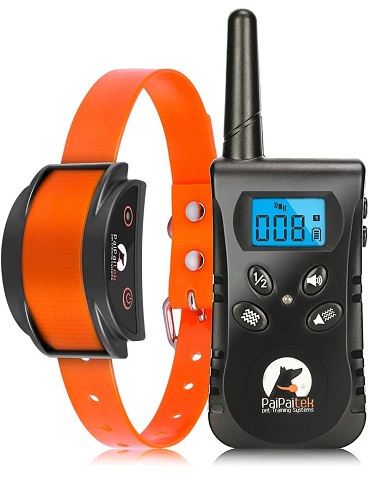
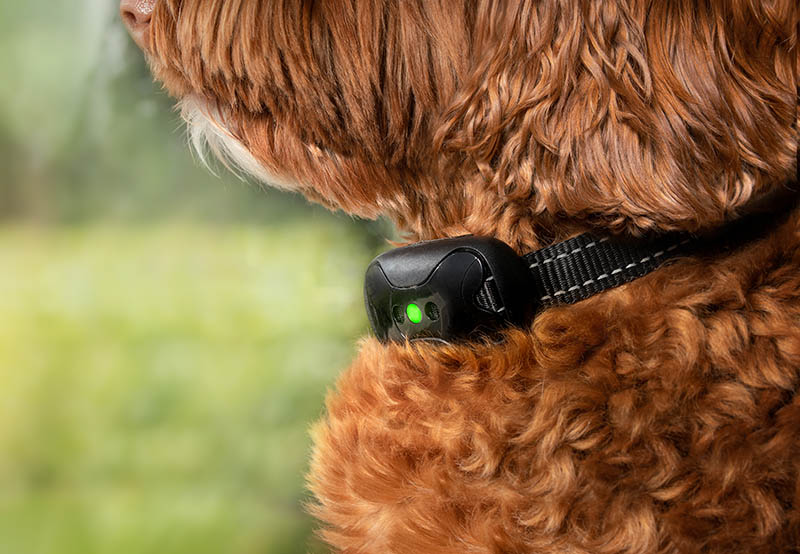
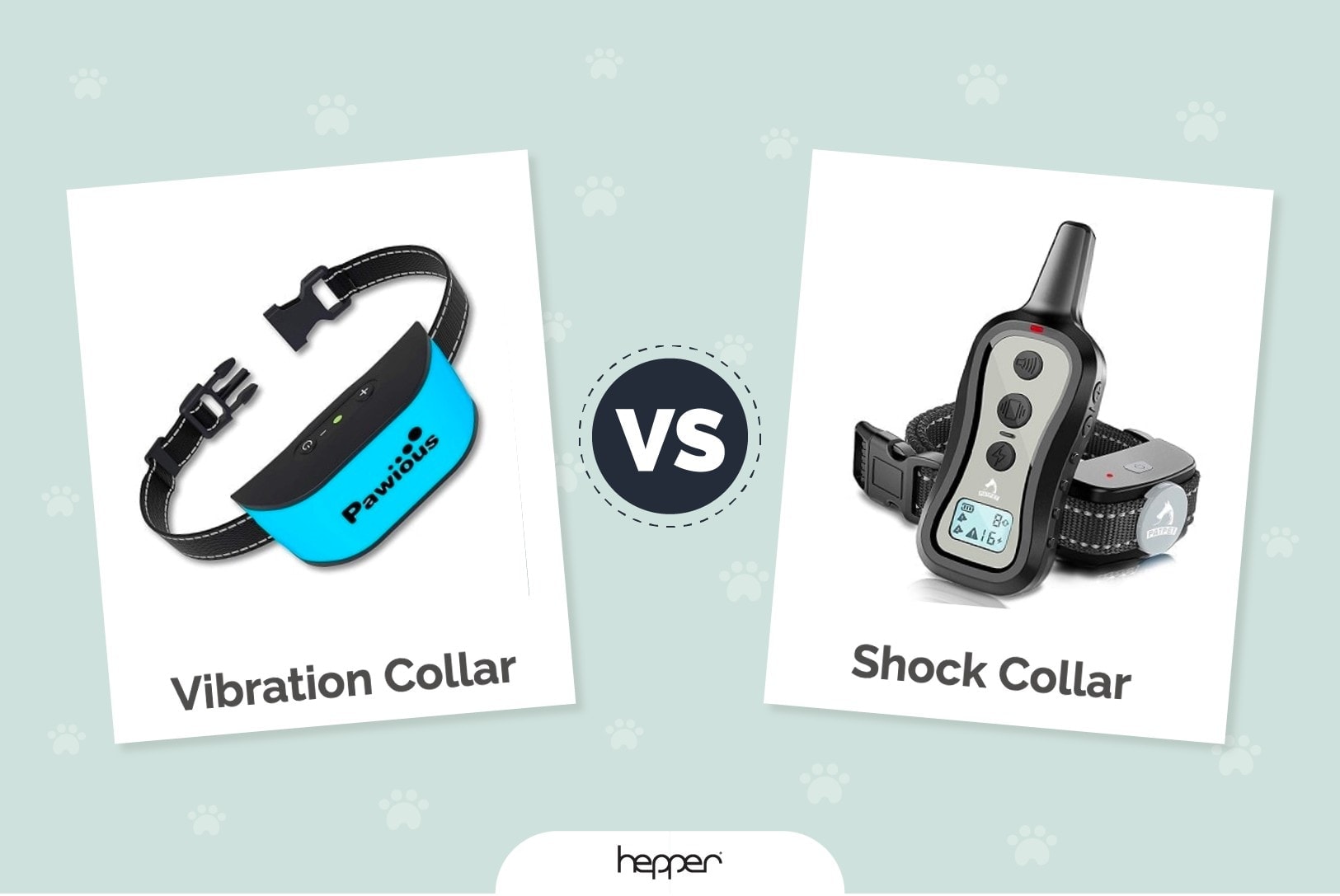
A vibration collar sits against your dog’s neck and, when activated, vibrates. Most come with variable settings and offer remote activation. You can also get those that react to audible noise (i.e., barking).
The vibration is not designed to hurt your dog and should be used to get their attention rather than to administer any form of punishment. For this reason, owners should choose a setting that does not cause pain but that does get a dog’s attention, much in the same way as calling their name.
Uses for Vibration Collars
The primary purpose of any of these reactive collars is as a means of training . They are touted as offering corrective training, and example uses of vibrating collars include:
Are Vibration Collars Legal?
Vibrating collars are not illegal. In particular, their use for training deaf dogs, and the fact that they do not deliver any kind of electric or electronic shock, means that they have not been banned.
Do Vibration Collars Hurt Dogs?
Vibration collars do not usually hurt a dog. They are designed to grab attention, so your dog will feel the vibration, but it should not cause any pain. With that said, it is important to remember that every dog is different. Some dogs may be hyper-sensitive, and some may suffer anxiety and nerves that make the use of a vibration collar almost impossible. Always start with the vibration collar at the lowest setting and turn it up until it gets your dog’s attention rather than the other way around.
Pros
- Remote training collar
- Suitable for training deaf dogs
- Legal almost everywhere
- Doesn’t hurt your dog
Cons
- Some dogs are too sensitive
- Can cause anxiety in some dogs
- Ineffective in some dogs

Overview of Shock Collars:
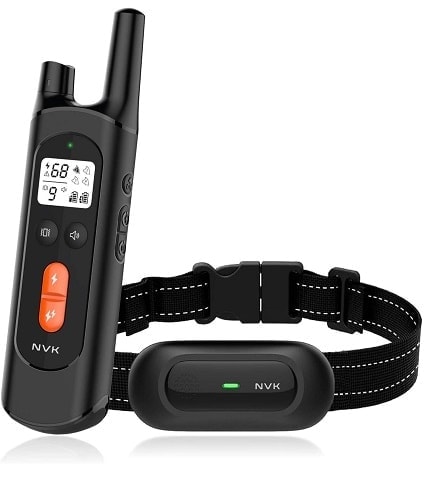
The term "shock collar" is sometimes mistakenly used interchangeably with vibration collar, but the two are different. A shock collar has two prongs that sit against your dog’s skin. When the collar is activated, a shock is administered and sends a current between the two prongs. A shock collar usually has variable settings and may include a vibration setting, as well as shock settings.
Manufacturers and proponents claim that the shock doesn’t hurt but is designed at getting the attention of your dog. Opponents claim that it must hurt or shock the dog, otherwise it wouldn’t get their attention. Others claim that because it is a means of negative reinforcement, the shock collar doesn’t train the underlying behavior and is therefore ineffective.
Uses for Shock Collars
Shock collars are used in the same circumstances as vibrating collars. Automatic collars are used to prevent barking, and remote collars are used to stop nuisance behavior, such as lunging, chasing, or aggressive behavior.
Are Shock Collars Legal?
Laws vary by country and even by state, but shock collars are illegal in a lot of places. They have caused physical scars that don’t heal, and they can have a detrimental effect on dogs, causing some to become anxious and even to show aggressive tendencies.
Do Shock Collars Hurt Dogs?
You may have seen online videos of people using shock collars on themselves or friends and partners, and in some cases, these do cause genuine pain. They can even leave physical scars. Dogs are smaller and more sensitive than humans, so the pain will be magnified in a lot of dogs. The people in the videos willingly do that to themselves, while your dog really has no choice.
Pros
- Remote collars work from a distance
- Can prevent aggressive behavior
- Some shock collars have vibrate settings
Cons
- Illegal in some states and countries
- Can cause pain and discomfort
- Can exacerbate problem behavior

Negative Reinforcement and Positive Punishment
Even though vibration collars may be considered more humane than shock collars, both of these types of collars tend to be used with negative reinforcement and positive punishment training techniques.
Negative reinforcement and positive punishment can be considered quite miserable and negative training techniques. Positive reinforcement techniques are generally considered more humane, are less unpleasant for your dog, and can achieve all of the same results as other methods.
Alternatives to Vibrating and Shock Collars
The best alternative to these collars is to use positive reinforcement. This means to introduce something when your dog performs the desired action. You can give them a healthy treat, but praise works just as well with a lot of dogs.
In either case, you won’t be startling, shocking, or causing any kind of harm or alarm to your dog. Vibration collars can be useful for dogs with hearing problems, but they should be used sparingly and properly because they can be highly alarming for a dog that is unable to see anything.

Conclusion: Vibration Collar vs. Shock Collar
Vibration and shock collars are reactive training collars. Manual versions require your input to administer a shock or vibration, while automatic collars react to noise or other stimuli. Although the collars are similar, vibration collars are considered more humane, and while shock collars are illegal in a growing number of states and countries, vibration collars are not usually prohibited. Try positive reinforcement training techniques before resorting to these methods.
Related Reads:
Get Hepper In Your Inbox


Pet care tips from our vets and experts, straight to your inbox.
You may opt-out at any time. View our Privacy Policy for more information.
Oliver (Ollie) Jones is a zoologist turned freelance animal writer living in South Australia with his partner Alex and their mini zoo consisting of many aquatic creatures, dog Pepper, and of course, cat Steve. Ollie is originally from the USA and holds a Master's degree in wildlife biology. He hopes to share his feline knowledge and expertise with people so they can share in his passion and help their cats live their best lives.
Join the conversation
Ask a question, share your story, or send private feedback.