Hepper is reader-supported. When you buy via links on our site, we may earn an affiliate commission at no cost to you. Learn more.
How to Put a Prong Collar on a Dog Properly in 3 Simple Steps

In this article
A prong collar can be an effective training tool, but it’s also a controversial and polarizing piece of canine training equipment. Some people think that it’s a cruel method of training, but it’s likely that they don’t truly understand how a prong collar works. When used properly, it’s an effective and safe way to leash-train your dog.
It’s true that not all dogs will need a prong collar for their training. However, some dogs are large, stubborn, and extremely pain-tolerant. For these dogs, the prong collar is a negative reinforcement tool used to teach them the proper way to walk on a leash.
To use it correctly, a prong collar must be properly sized for the dog. Otherwise, it could be a painful experience. Here, we walk you through the steps that you must take to properly put a prong collar on your dog. We also talk about the ethics surrounding prong collars so you can make an informed decision about their use.

What Is a Prong Collar?
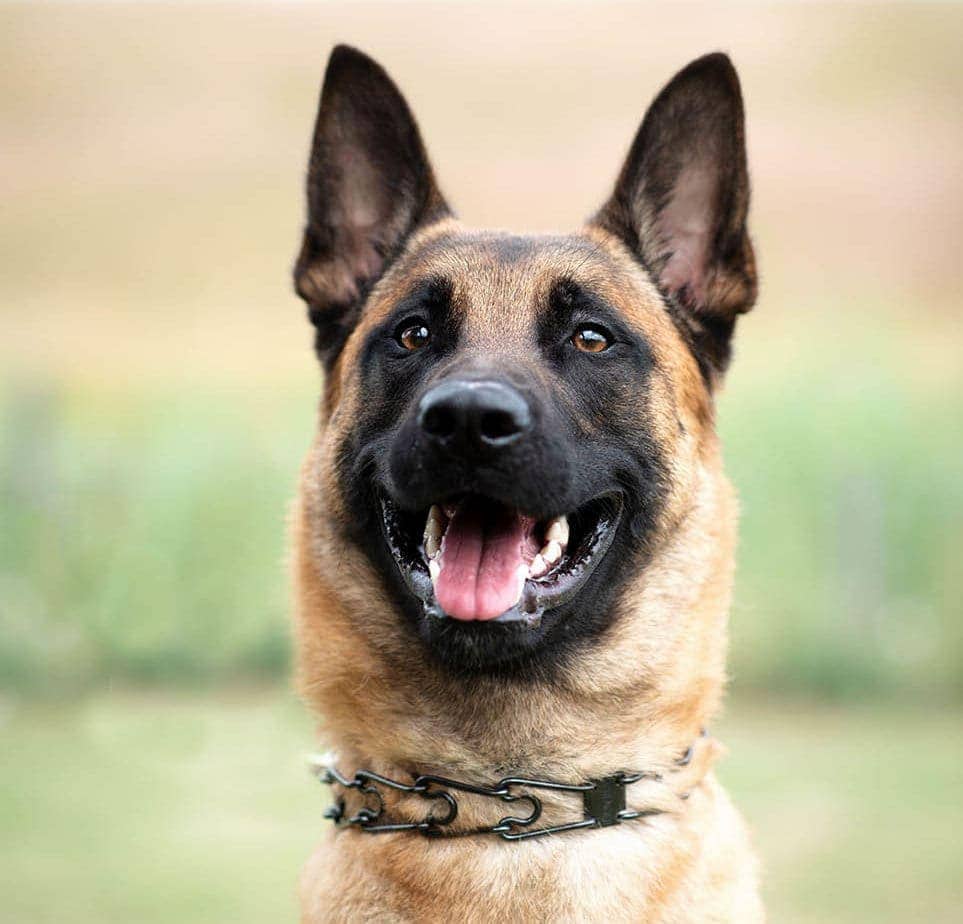
Prong collars are special training collars for dogs that have prongs pointing into the dog’s neck. These prongs aren’t sharp, but when they tighten, they will let the dog know that a particular action is undesirable. This tool is only designed for short-term use. You should never be using a prong collar as a primary collar. Instead, it’s to be used as a tool for training sessions to help teach your dog how to walk on the leash properly without pulling.
How to Use a Prong Collar
Using a prong collar is a simple process. Start by properly fitting the collar to your dog. Once fitted, you will leash walk the dog using the collar. When the dog pulls or commits a behavior that you want to discourage, you simply give a short tug on the leash. This will tighten the prong collar, causing the prongs to create pressure against your dog’s neck, imitating a nip from another dog. These are simple steps on how to use a prong collar with your dog and how to properly adjust it to their size and comfort.
You don’t want to leave constant tension on the collar, though. You must only tug in short bursts to discourage particular behaviors.

The 3 Steps to Put a Prong Collar on Your Dog
1. Picking a Prong Collar
Many prong collars are available and come in different designs and sizes. Most have removable links that enable you to alter the size to fit your dog as needed.
You may notice that some collars have different sizes and types of prongs, so you’ll have to decide what’s best for your dog. Some collars buckle closed and others you must manually clasp. Either is a great choice, and the way that your collar is attached won’t necessarily affect its use.
There is one type to avoid, though, which is a collar with rubber-tipped prongs. Many people mistakenly believe that these will cause less harm to the dog, but the rubber can actually cause more pain than metal prongs.
2. Proper Placement
The first step to properly fitting your dog’s collar is to ensure that it’s in the right place. For a proper fit, the collar should be just behind your dog’s ears. This way, it will distribute pressure evenly all the way around the dog’s neck. If not placed correctly, the pressure will be applied unevenly, which can be dangerous and likely to cause pain when the collar is tightened.
Take note that the placement of a prong collar is different from the placement of a regular collar. A regular collar sits around the base of your dog’s neck. If you put a prong collar in this area, it could damage your dog’s trachea or larynx.

3. Correct Fit
Next, you need to ensure that the prong collar is set to the right size for your dog’s neck and head. The collar should not be able to fit over your dog’s head. If it can, it’s too loose to be used effectively. Instead, it should fit snugly around your dog’s neck, staying in place just behind the ears. It shouldn’t be tight, though; just snug. The prong collar shouldn’t move around when your dog does.
Are Prong Collars Ethical?
The best way to train your dog is by finding the solutions that work best for them. Training methods often need to be adjusted to suit the age and behavior of the dog that you’re training, and what works with one dog might not work with another.
For this reason, we can’t tell you whether a prong collar is the right choice for your dog, but this section examines the ethics of prong collars and why they may or may not work. We hope that it helps you make an educated and balanced decision about using one.
Anxiety
With any training tool, you need to first consider the effect on your dog. Prong collars can and do cause discomfort, especially when used incorrectly. You might also accidentally apply pressure when your dog isn’t doing anything wrong. Your dog won’t understand that it’s a mistake and will associate the pressure with the situation that they’re in. Unfortunately, this means they might later face similar situations with increased wariness and sometimes fear.
There’s also no way of telling what your dog associates the discomfort with. They might realize that it’s their pulling that causes the pressure, but they could also link it to the child approaching them or even the barking dog in the yard that you’ve just passed. For your dog, the correction might just be confusing and cause them anxiety.

Training Tool
Despite its appearance, a prong collar wasn’t designed to cause pain. That said, it’s true that it’s all metal with spikes, and just thinking about it being around your dog’s neck might make you uncomfortable.
The prong collar is intended to mimic the scolding nip that a mother dog applies to her puppies when they misbehave. When used correctly, the collar applies universal pressure around the throat. However, It can easily be misused and cause pain and discomfort. This is where many of the problems and controversies come from.
Improper vs. Proper Usage
As with all tools, prong collars are dangerous when used incorrectly. While some dog owners have had success with the collar, others have caused their dogs serious injuries. It’s incredibly easy to grab the first prong collar that you see, put it on your dog, and think that you’ve solved their leash pulling for good.
The reality is not this simple. You have to carefully size the prong collar to your dog’s neck and place it in the correct position. A prong collar is also not designed to be a general-use collar. It’s a short-term training tool rather than something that should be worn all the time. You also need to carefully consider the age of the dog that you plan to use a prong collar on. For example, a puppy should never wear one.
Yanking or pulling your dog when they wear the collar, applying too much pressure, or placing the collar too low can cause severe injuries to the trachea, esophagus, and nerves in your dog’s neck. Prong collars might be effective in some cases, but there is a steep learning curve required for their use.
Prong Collars vs. Positive Reinforcement
Dog training is often split into two types. One involves negative reinforcement, including prong collars, and the other relies on positive reinforcement. Both have their pros and cons, but positive reinforcement is typically considered the more ethical and rewarding of the two choices.
While positive reinforcement is preferred for nurturing a trust-filled bond between you and your dog, it does require more time and patience to yield results. In comparison, a prong collar can have faster results. However, it also tends to earn more disapproving looks. If you’re worried about what your neighbors might think, a prong collar isn’t ideal.

Conclusion
When properly fitted, a prong collar is a safe and effective training tool that can help a dog learn how to walk on the leash without pulling or exhibiting other negative behaviors. However, it should never be used on puppies. Also, many dogs won’t ever need a prong collar. It’s a tool meant as a last resort for dogs that keep pulling on the leash despite the owner’s best efforts to get the behavior to cease.
A prong collar is not meant for long-term use. It’s meant to teach your dog how to use the leash properly before you switch to another form of collar for walking. One final rule: Never leave the prong collar on your dog when they’re unsupervised! If they become ensnared, it could be dangerous for your dog.
Featured Image Credit: marekuliasz, Shutterstock
Get Hepper In Your Inbox


Pet care tips from our vets and experts, straight to your inbox.
You may opt-out at any time. View our Privacy Policy for more information.
A true Renaissance man, Dean Eby has worked a variety of hands-on careers, including home building and remodeling, personal training, and now shares his experiences and understanding as a writer. An avid outdoorsman, Dean spends much of his time adventuring through the diverse terrain of the southwest United States with his closest companion, his dog, Gohan.
For Dean, few passions lie closer to his heart than learning. An apt researcher and reader, he loves to investigate interesting topics such as history, economics, relationships, pets, politics, and more.
Join the conversation
Ask a question, share your story, or send private feedback.