Hepper is reader-supported. When you buy via links on our site, we may earn an affiliate commission at no cost to you. Learn more.
Gabapentin for Cats (Vet Answer): FAQs, Uses, Dosage & Side Effects

In this article
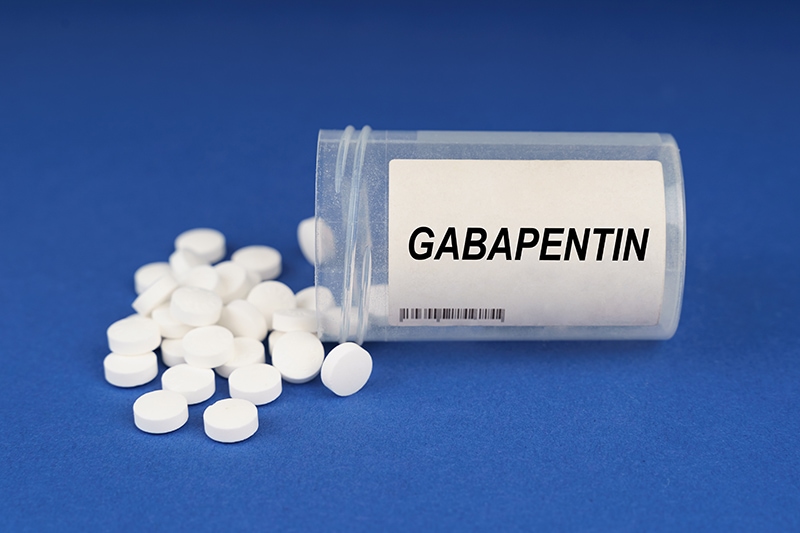
Gabapentin is a central nervous system medication used to manage pain, anxiety, or seizures. It was originally formulated as a treatment for seizures in humans, but it is very effective for pain relief and anxiety in animals. It can make cats slightly drowsy and uncoordinated but has few side effects, especially compared to other pain-relief medications.

What Is Gabapentin?
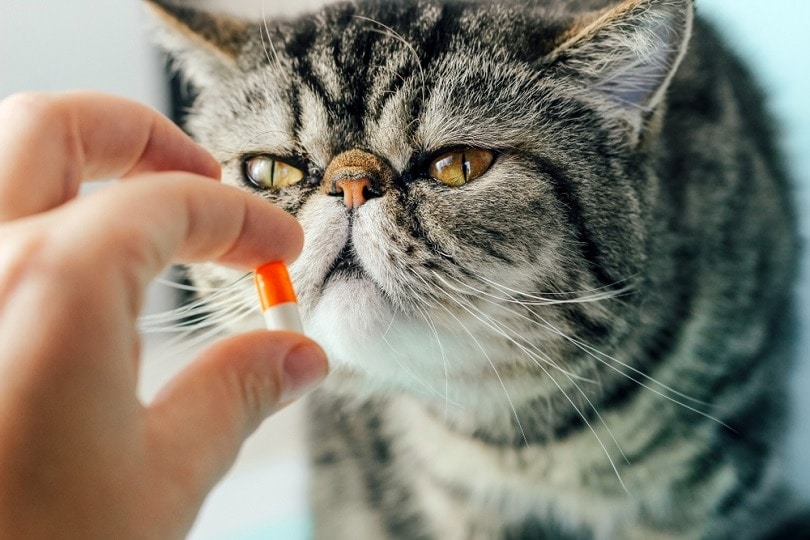
Gabapentin is an off-label drug. While it was made for humans, many veterinarians will prescribe human tablets or capsules for cats, and it is considered a safe medication for them.
The most common brand name is Neurontin, others include:
- Progresse
- Equipax
- Gaborone
- Aclonium
- Gralise
- Gantin
- Neurostil
Because it is given off-label, it is extra important to follow your veterinarian’s prescription and not the label on the box. And do not give gabapentin to your cat without a prescription—some forms of human gabapentin contain xylitol which is toxic to cats.
Gabapentin has three primary uses: pain relief, anxiety, or seizures.
How Is Gabapentin Given?
Gabapentin is usually given every 8–12 hours, depending on the condition being treated.
The amount given will vary depending on three important things:
What Happens if You Miss a Dose?
This depends on why your cat was given gabapentin in the first place. If you miss a dose, consult with your vet, they will most likely say to give the next dose as normal. Do not give more next time.
- If the gabapentin is treating chronic pain—arthritis, for example—a cat will probably just be a little stiffer until their next dose. But if it is after surgery, the consequences of that pain can be significant. A cat that misses a dose of pain relief is more likely to chew, scratch, or cause injury to its surgical site. They are also more likely to become severely stressed, to not eat or drink, or to injure themselves in some other way. Either way, a cat in pain will take longer to heal after surgery or injury.
- For anxiety, if gabapentin is not given before a vet visit, or as more often happens, it's given fifteen minutes before the appointment instead of two hours beforehand, then you're probably going to have to reschedule your visit because the medication has not had enough time to take effect.
- If you miss a dose, your cat is more likely to have a seizure. Seizure treatment tries to maintain a steady state of medication in the body because ups and downs of medication concentration in the body can trigger seizures.
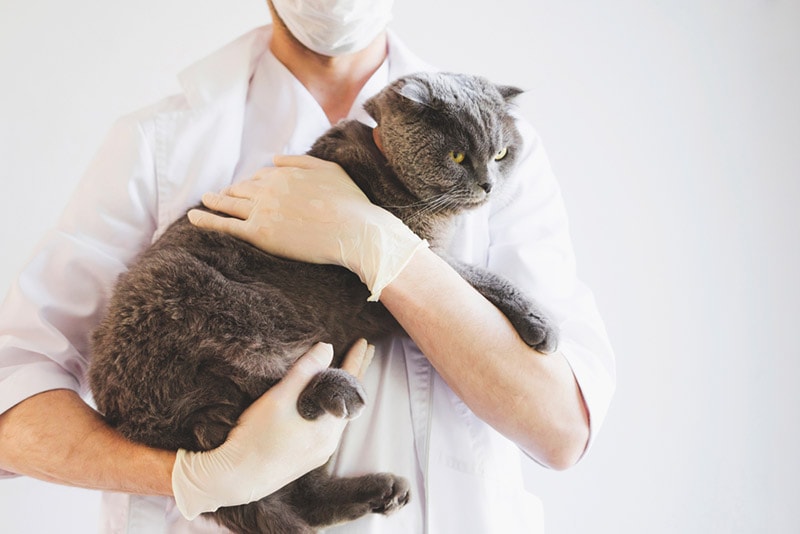
Potential Side Effects of Gabapentin
The beauty of gabapentin is that it has very few side effects. The only real side effect is some level of sedation, which can vary from drowsiness to being unsteady on their feet to just taking a few extra naps.

Frequently Asked Questions (FAQs)
Can I give gabapentin with food?
Technically, it can be given with or without food; the medication is not affected either way.
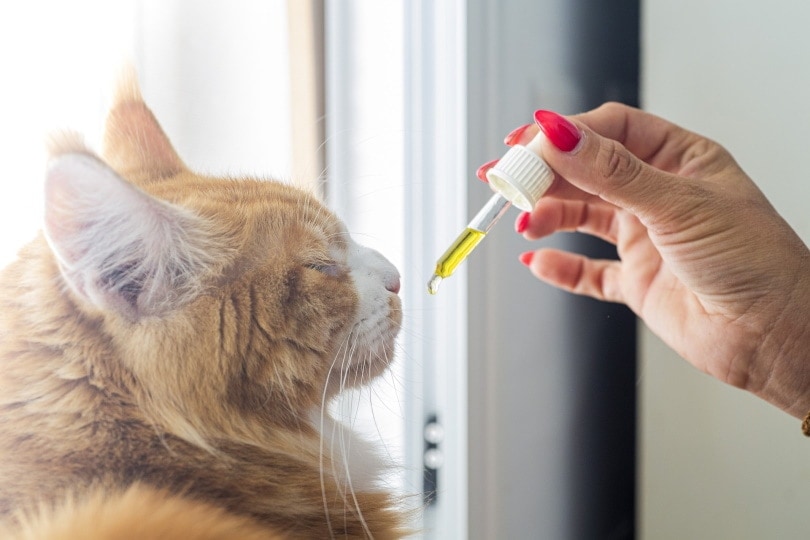
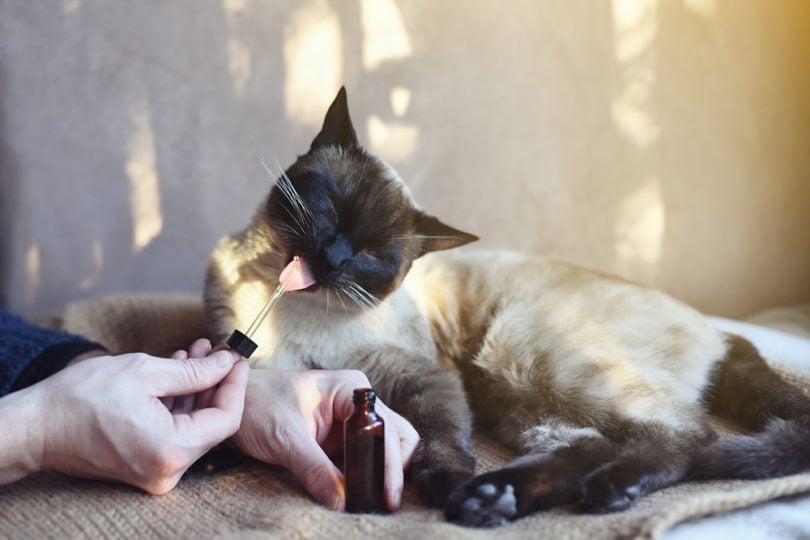
But it does not taste very good, so it often must be hidden in treats or coaxed down.
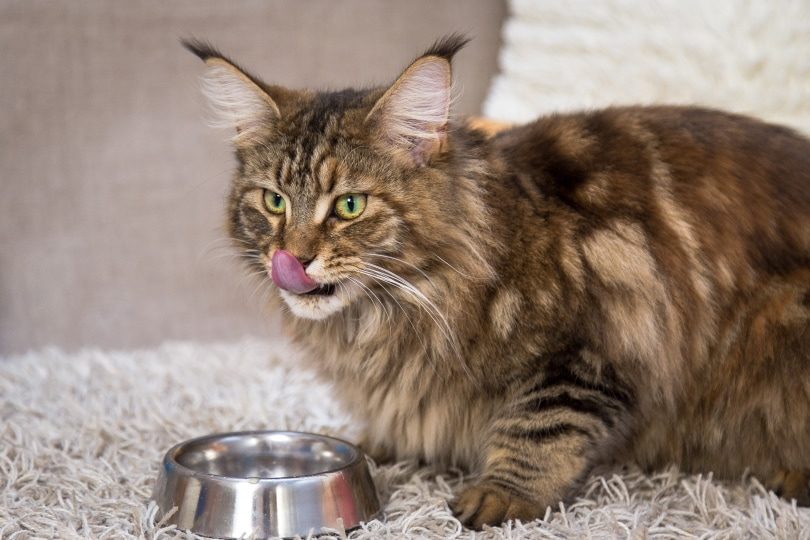
It is tempting to hide the pills in a bowl of food, but cats are sneaky and are very good at hiding the fact that they did not eat their medication. So, usually, giving it in their absolute favorite treat right before a meal—when they are hungriest—works best. That way you can watch them swallow the whole thing.
Getting your cat to swallow the medication is probably the worst thing about gabapentin.
Why am I giving my cat so many pills for pain?
Gabapentin is used to relieve pain because it does not have many side effects, but it is probably not enough to manage severe pain alone. Opioids, for example, are the best at relieving pain, and NSAIDs are great for reducing inflammation, but both can have some negative side effects.
Gabapentin does not have these side effects, but it does not block pain as effectively as most opioids and does not reduce inflammation like NSAIDs. So, in cases of severe pain, gabapentin is often used in combination with other pain meds so that a smaller dose of opioids and NSAIDs can be used, but more pain relief is achieved.
In fact, using more than one type of pain relief is considered safer and more effective than relying on just one type. This type of medication is called multimodal analgesia (pain relief). It uses more than one medication so that multiple points along the pain pathway are blocked, so pain relief is increased while the amount and side effects of individual medications are reduced.
Why am I giving my cat so many pills for seizures?
There are numerous medications used for controlling seizures, and while gabapentin can be helpful, it is probably not the most effective, especially if it is used alone. In other words, other drugs are more effective at treating seizures, but when gabapentin is added on top of these together, they can become even more effective than when used alone.
Long-term seizure control includes daily medicating and carefully titrating medications for each individual. Slowly increase the doses of each drug until the best control is reached while keeping the side effects of the medications used to a minimum.
Conclusion
Not much is more complicated than treating problems in the nervous system, such as pain, seizures, and anxiety. Gabapentin is one of the many medications veterinarians use, often in combination with other medications, to manage these complex conditions. Communicating with your vet and carefully watching your cat’s response to medication will help everyone find the dose that works best for your cat. Do not stop giving gabapentin without discussing it with your vet.
Just like any medication, gabapentin can have side effects, particularly at high doses as it can cause drowsiness and incoordination. The dose prescribed will depend on your cat’s medical condition, body condition, how they respond to the medication, and other medications used at the same time.
See Also:
Gabapentin for Dogs: Uses, Dosage & Side Effects (Vet Answer)
Amoxicillin for Cats: Uses, Dosage & Side Effects (Vet Answer)
Sources
Ramsey, I. (2008). BSAVA small animal formulary (No. Ed. 6). British Small Animal Veterinary Association.
The Merck Veterinary Manual. Whitehouse Station, NJ: Merck & Co., Inc. 2023
Featured Image Credit: Piskova Photo, Shutterstock
Get Hepper In Your Inbox


Pet care tips from our vets and experts, straight to your inbox.
You may opt-out at any time. View our Privacy Policy for more information.
Dr. Chantal is passionate about the human-animal bond and improving animals' lives through their connections with their human companions. She has worked with many different species, big and small, including dogs, cats, birds, rabbits, guinea pigs, reptiles, amphibians, and even horses and mice. Chantal is excited to share her knowledge using her writing to help people connect with their animal friends.
Dr. Chantal believes that the best way for animals to be healthy is for their humans to understand their needs and well-being. She loves spreading her knowledge to as many people as she can through her writing.
Education
Dr. Chantal graduated from the Royal Veterinary College in London, England, where she received her vet degree. She then received her Masters in Conservation Medicine from Tufts University.
Experience
Dr. Chantal has worked with animals her entire life in many fields, even outside of veterinary medicine. She managed horse barns, worked as a dog trainer, and as a wildlife biologist before attending vet school. Chantal has been a veterinarian for over three years and continues to work with dogs, cats, and exotic animals. And, she still knows a thing or two about horses.
Join the conversation
Ask a question, share your story, or send private feedback.