Hepper is reader-supported. When you buy via links on our site, we may earn an affiliate commission at no cost to you. Learn more.
Green Frog vs Bullfrog: What’s the Difference? Vet-Verified Facts & Pictures


In this article
Frogs aren’t exactly the first thing that comes to most peoples’ minds when they think of pets. However, they are often kept as pets by those who find them intriguing. These amphibians make excellent pets because they don’t take up much space and require little maintenance. They are also relatively long-lived, with some species living for over 30 years as pets.
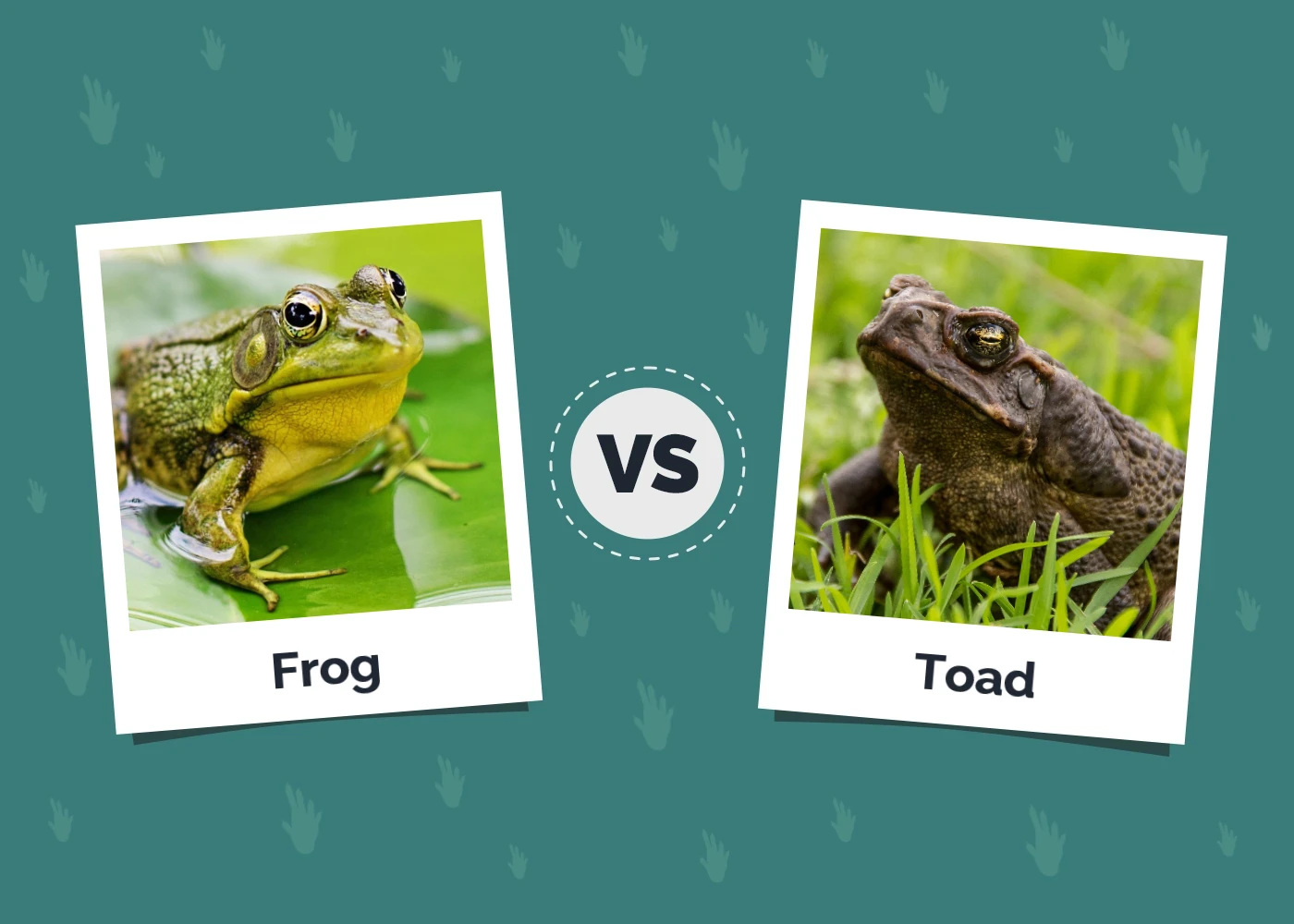
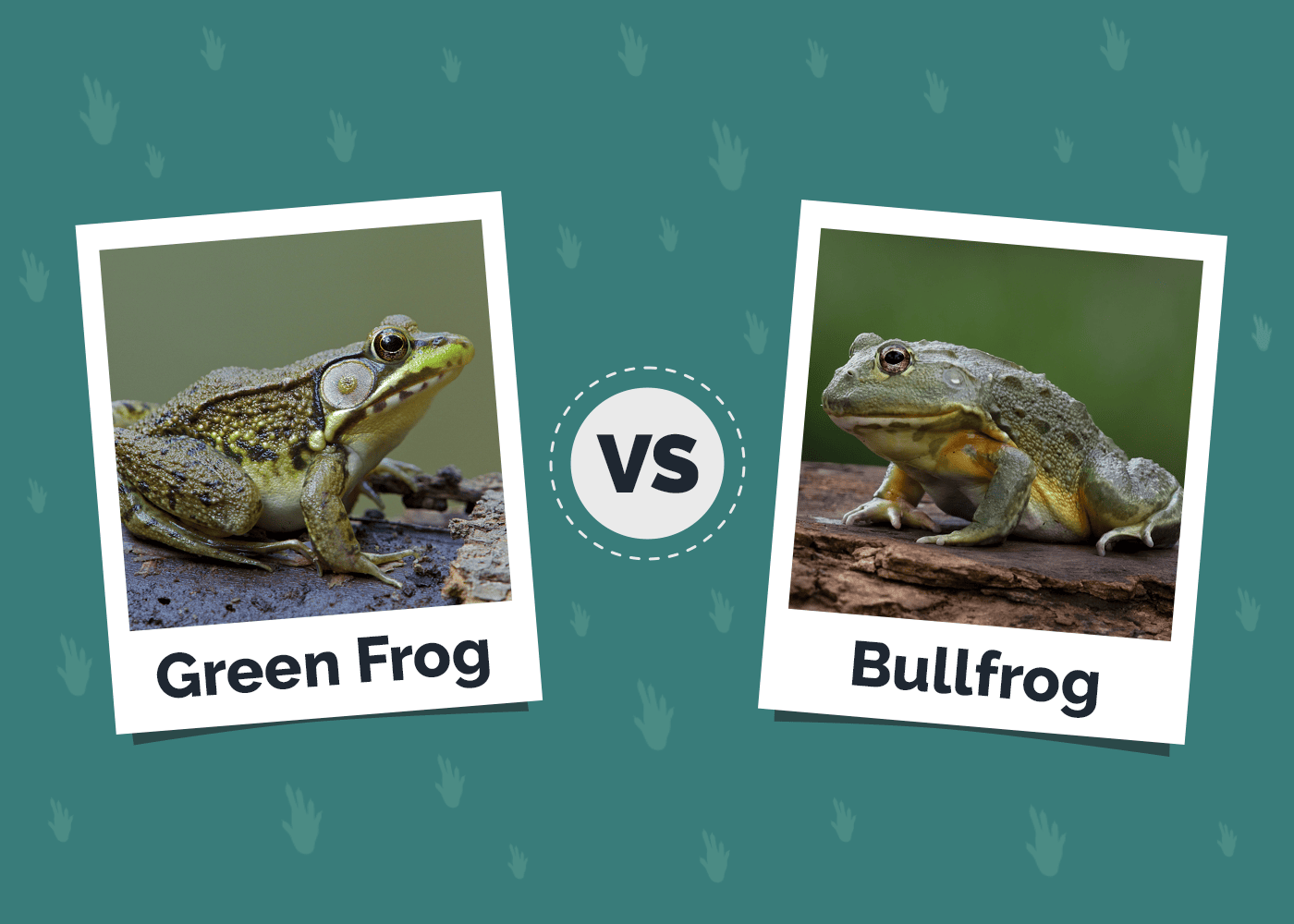
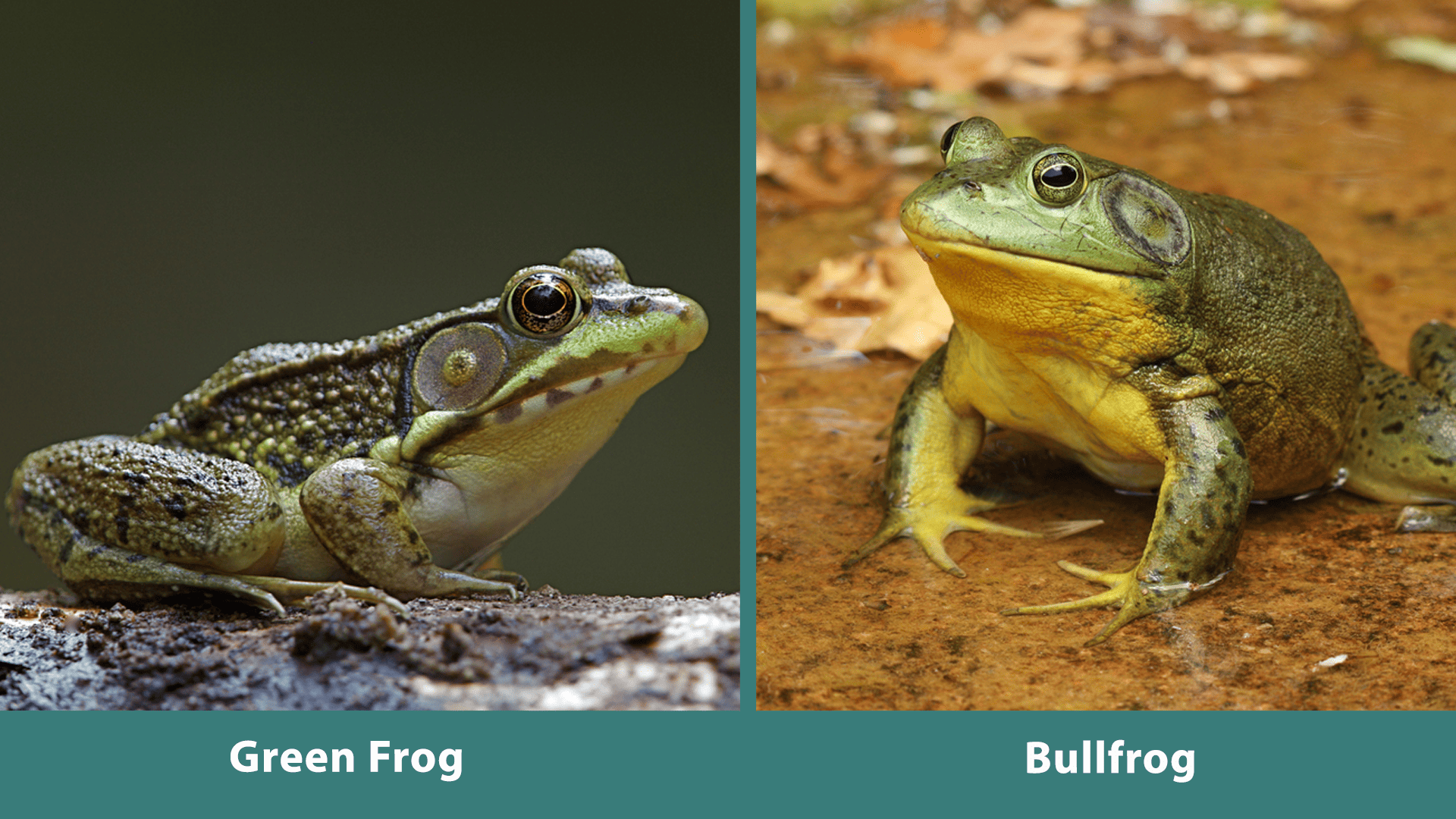
Green and Bullfrogs are among the most popular pet frogs. However, distinguishing between these two frog species can be a challenge. Read on to learn their differences and more.

Visual Differences
At a Glance
Green Frog Overview
The green frog (Rana clamitans or Lithobates clamitans) is native to eastern North America and is one of the most common frogs in the US.
That said, the name “green frog” might be somewhat of a misnomer because not all green frogs are green. There are two subspecies of this frog, and one of them (Lithobates clamitans clamitans) appears to have a bronze hue.
The frog's scientific name is still in contention, and Lithobates clamitans is the more recent of the two names. It was formerly placed in the Rana genus.
Characteristics and Appearance
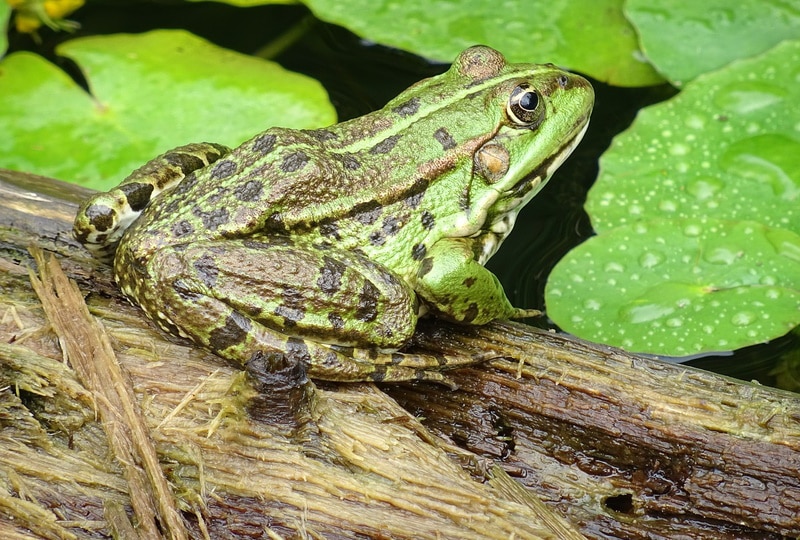
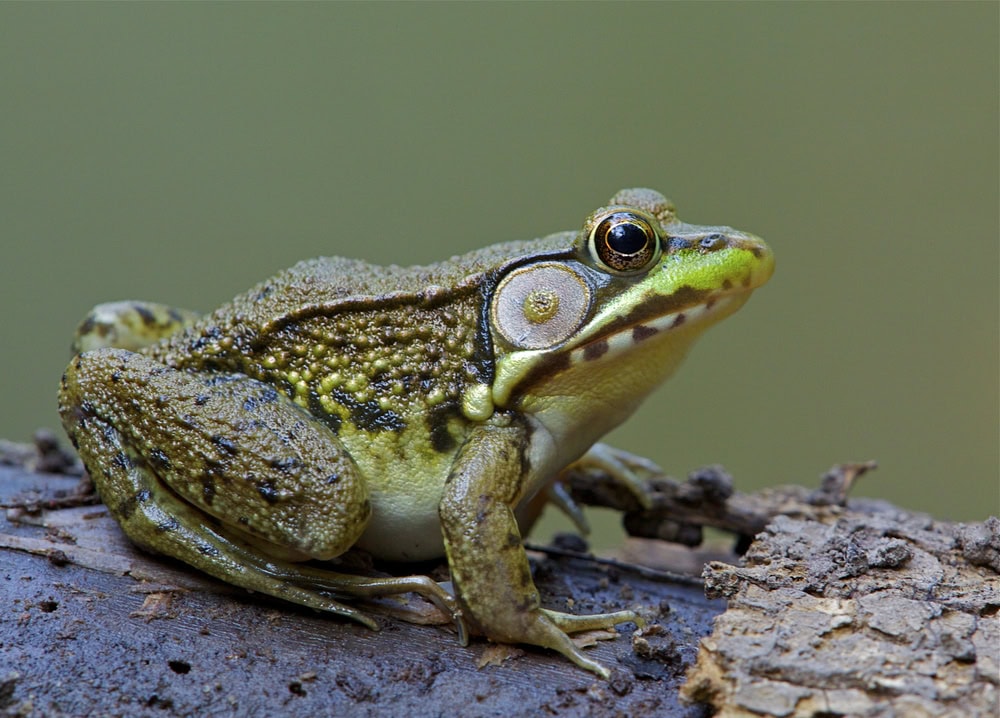
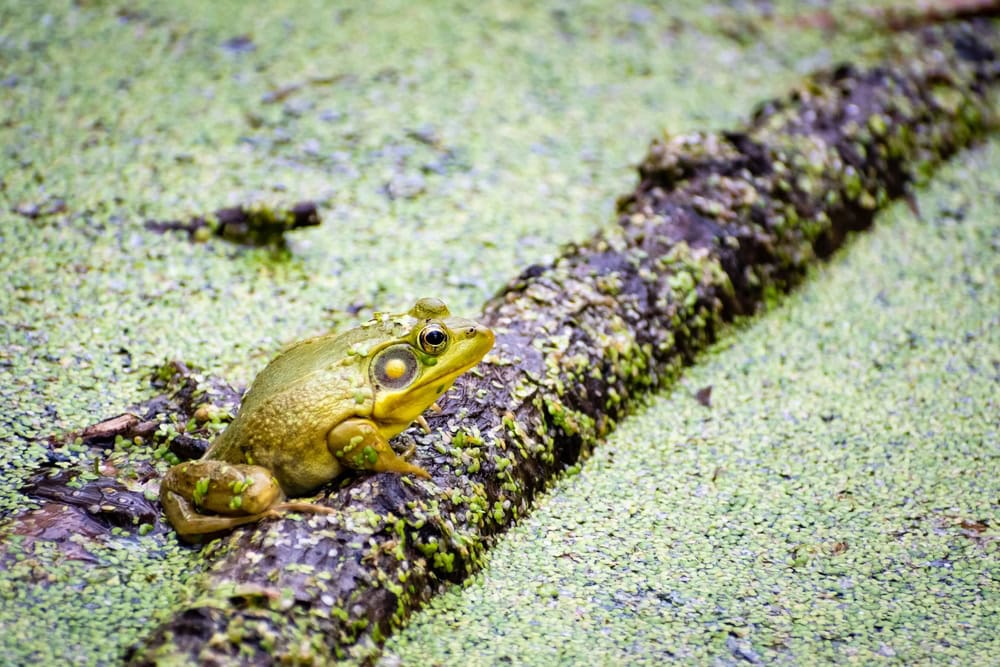
Green frogs derive their name from their vivid green color, although this can be light and slightly muddied in some frogs.
Sometimes the variation in brown tones on these frogs gives them a bronze appearance. They have visible ridges around their ears (tympanum), and their skin folds from the back of the eyes to the middle of their backs, forming dorsolateral ridges.
Their bellies are typically light yellow, with black dots scattered over most of the surface. And their skin appears slimy and sometimes is, but it’s mostly smooth. This is unlike the bullfrog, which has rough, warty skin.
Green frogs prefer solitude, except during mating season when they’re looking to breed. They mostly live in permanent or semi-permanent, shallow water bodies and lay up to 7,000 eggs every breeding cycle.
Green frogs are primarily carnivores and eat insects such as crickets, beetles, and roaches. They may also hunt and devour small lizards, fish, and even other frogs. As adults, they tend to eat anything they can fit in their mouths. As tadpoles, they eat just about all organic matter, including plant matter (such as algae and diatoms).
Uses
Green frogs have immense utility in their ecosystems. These frogs are crucial for controlling the population of insects like flies and beetles, and other small animals to maintain ecological balance.
Green frogs also play a crucial role in environmental monitoring and toxicology. They’re highly sensitive to changes in the environment and monitoring them allows scientists to assess the environmental impact of pollutants and other man-made endeavors on the environment and amphibian life in general.
Bullfrog Overview
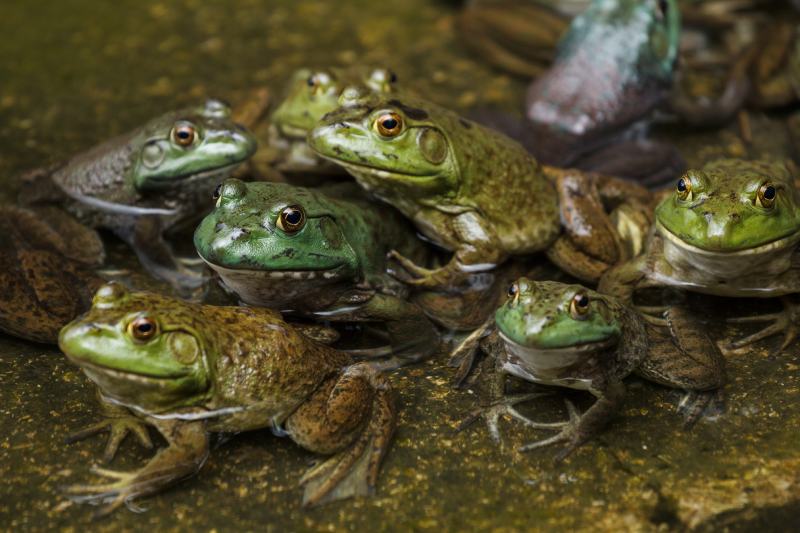
The American bullfrog (Lithobates catesbeianus) is among the largest of all frogs in the North American regions. They get their name from their baritone mating call, which resembles a cow’s mooing. You can hear the male frogs bellowing (usually at night) to attract potential mates.
These frogs were artificially introduced into the United States to control the insect population in the early 1900s. Today, they’re found in ponds, swamps, and lakes all over the country. In other areas of the world, like Asia and Africa, the term bullfrog is a general term for large species of frogs.
Also, this frog has a large, robust frame that gives further credence to the “bull” part of their name. Nomenclature aside, the bullfrog is a pretty popular pet.
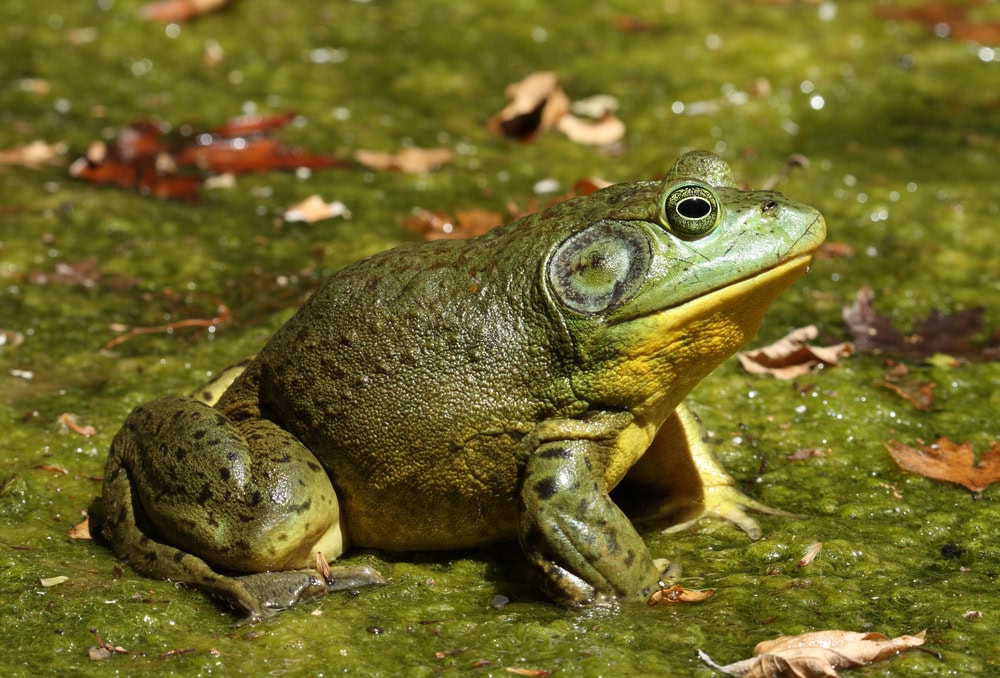
Characteristics and Appearance
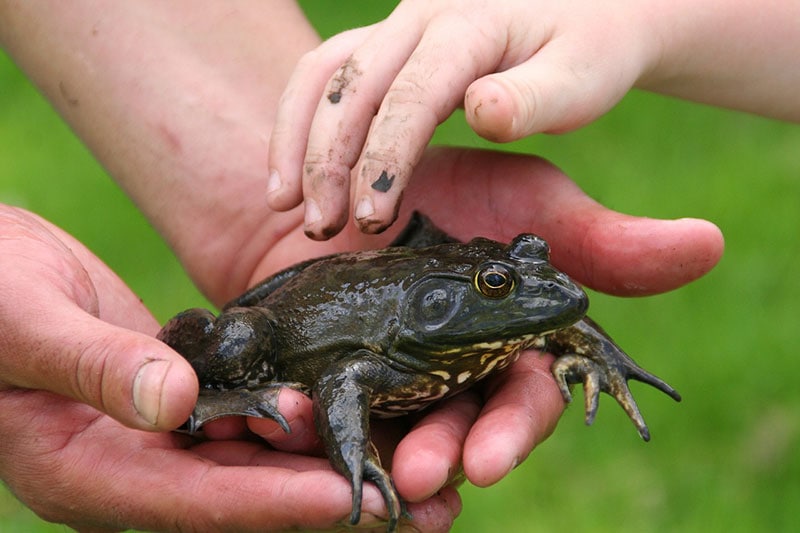
The American bullfrog measures 6 to 9 inches when fully grown.
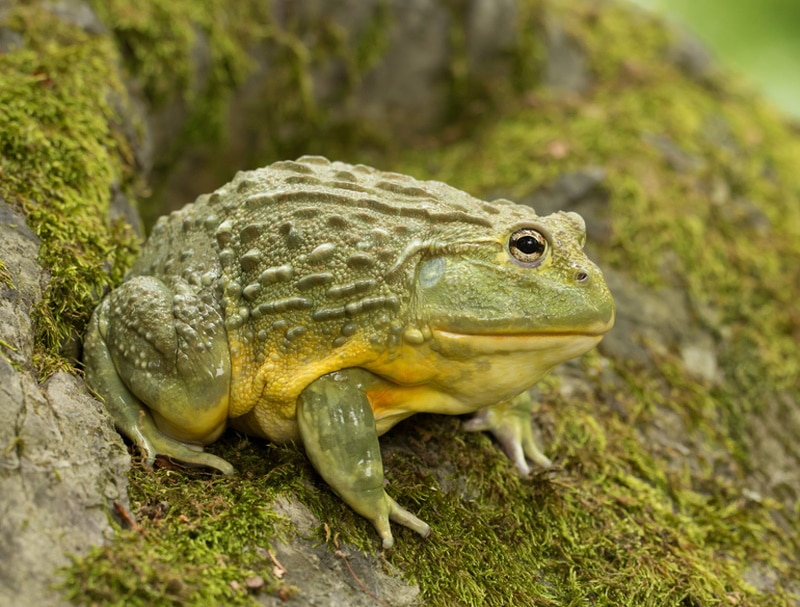
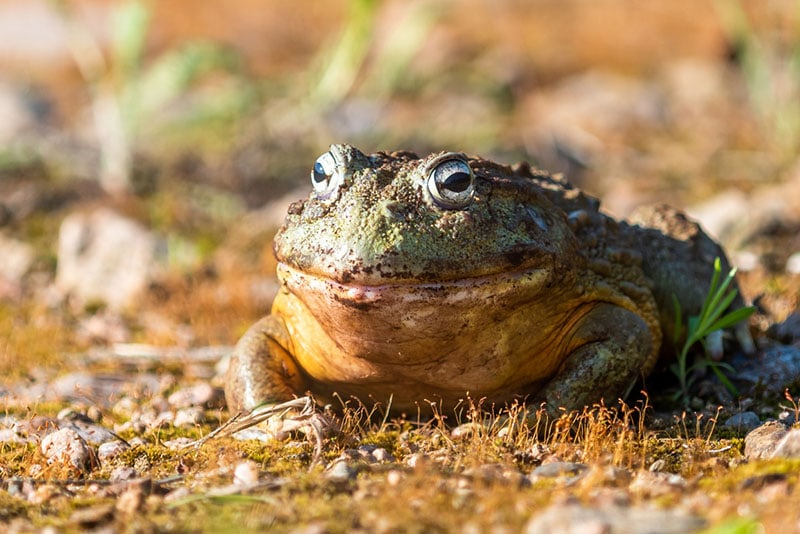
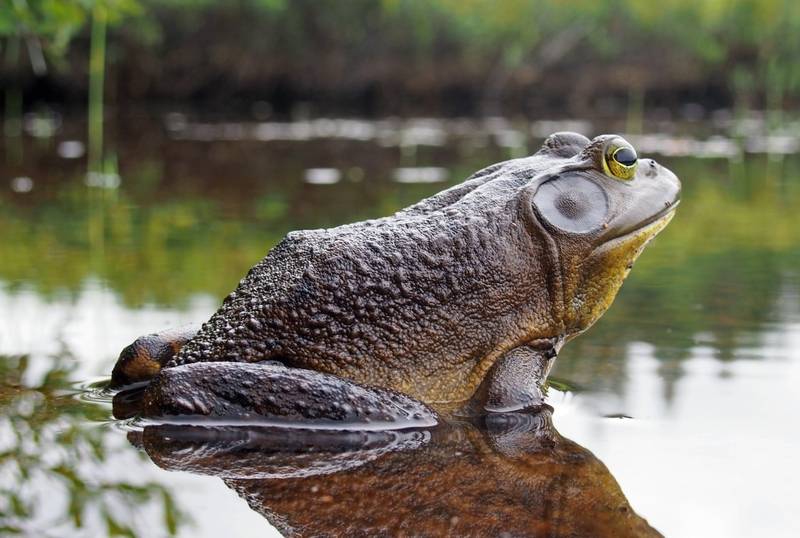
Like the green frog, the bullfrog also comes in various colors ranging from vivid green to a mellow brown. However, bullfrogs have rough, warty skin with white to yellowish bellies, unlike green frogs.
These frogs can stretch up to 3 feet and jump as high as 6 feet when hunting or escaping from predators.
A distinctive feature of the bullfrogs is the tympanum, or circular eardrums, located beside the eyes. Males typically have yellow throats with exceptionally large tympana, while females have white throats with much smaller tympana.
Like green frogs, bullfrogs are carnivores and enjoy a selection of small forest creatures. Their diet primarily consists of cricket, spiders, fish, snails, salamanders, and smaller frogs. However, they’re also preyed upon by snakes, snapping turtles, birds, and alligators.
Uses
Bullfrogs have many of the same uses as green frogs, meaning they help reduce the insect population in certain areas. When they are tadpoles, they eat the abundance of algae in ponds.
What sets bullfrogs apart from green frogs in terms of use is that bullfrogs are more commonly used for dissection in science classes. Bullfrogs are larger, making them easier to dissect for scientific purposes. Also, bullfrogs are consumed as food. Green frogs are also eaten, but, again, because of their size, bullfrogs make a better meal.
What Are the Differences Between Green Frogs and Bullfrogs?
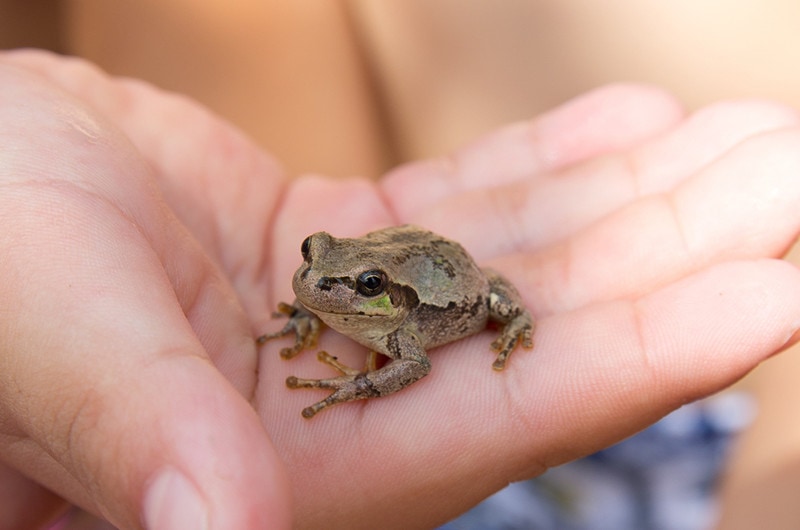
- Size: For starters, bullfrogs are larger than green frogs, measuring up to 9 inches. Green frogs only grow up to 3.5 inches.
- Coloration: Bullfrogs have a darker olive-green color compared to green frogs that have a vivid green color. The latter also has greater color variations within the species.
- Mating Call: Bullfrogs have a deep, bellowing call resembling a cow horn. Green frogs, on the other hand, have a mating call that resembles the plucking of a banjo string.
- Diet: Bullfrogs are thought to have a more expansive diet compared to their amphibian counterparts. Their large size allows bullfrogs to take on larger prey. The small size of the green frog restricts their selections.
- Conservation status: Most regions consider bullfrogs invasive since they can easily outcompete other species.
Which Species Is Right for You?
There’s no right or wrong answer here, as both frogs have some unique characteristics you’d want to consider before adopting a pet. On the other hand, some aspects of their care, such as their diet, is relatively similar.
Please note that many states and jurisdictions may have legislation that prevents capturing or owning tadpoles, or frogs. Always make sure you have the permission to legally own an exotic pet before deciding to adopt one. If you are in the US, please refer to state laws before deciding to adopt an exotic or wild pet. Elsewhere, please refer to the relevant laws where you reside.
In addition, amphibians may naturally harbor Salmonella and spread it to humans and other pets. Frogs are not recommended to be kept alongside children, the elderly, pregnant individuals, or those with a compromised immune system. Hygiene is of utmost importance when dealing with amphibians.
If noise is an issue, you would definitely want to avoid a male bullfrog. Likewise, if you have enough space for a large setup, and don’t mind the noise, a bullfrog might be just the pet you’re looking for. Either way, both frogs are wonderful to have in the house.
See Also:
Sources
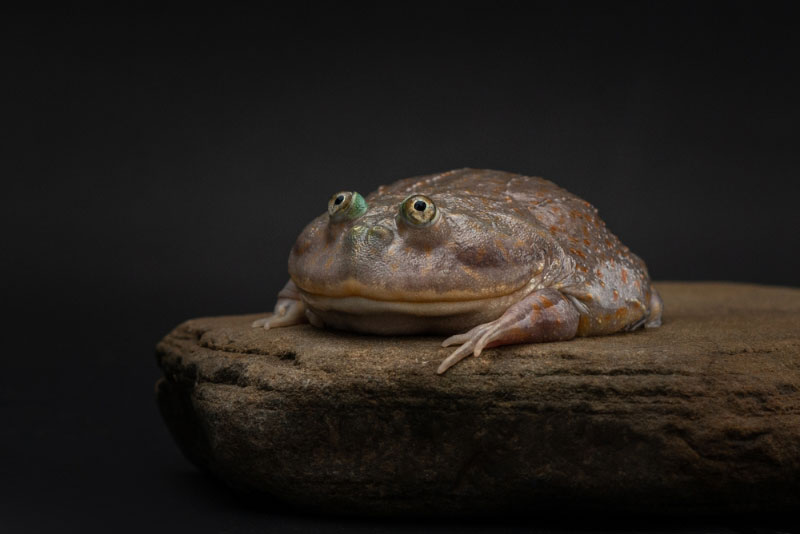
Image Credit: Green Frog, (Tom Reichner, Shutterstock), The African Giant Bullfrog (Lauren Suryanata, Shutterstock)
Get Hepper In Your Inbox


Pet care tips from our vets and experts, straight to your inbox.
You may opt-out at any time. View our Privacy Policy for more information.
Nicole is a lover of animals of all sizes but is especially fascinated with the feline variety. She’s the proud mom of Baby, a Burmese, and works every day so he can relax in the sunshine or by the fire. She’s always had a cat in her home and has spent countless days with others, observing behaviors and softening up even the grouchiest of the lot. Nicole wants to share her kitty expertise with you so you and your cat can live happy, healthy, and care-free.
Join the conversation
Ask a question, share your story, or send private feedback.