Hepper is reader-supported. When you buy via links on our site, we may earn an affiliate commission at no cost to you. Learn more.
Cane Toad vs Southern Toad: The Differences (with Pictures)
In this article
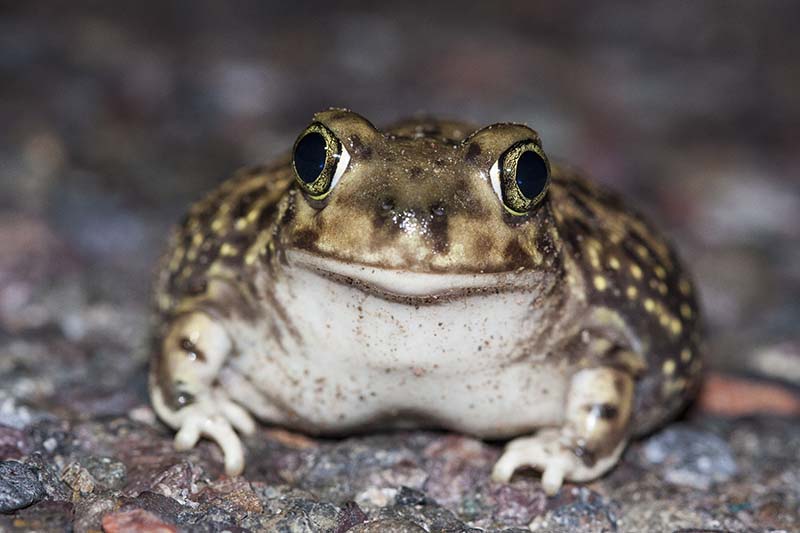
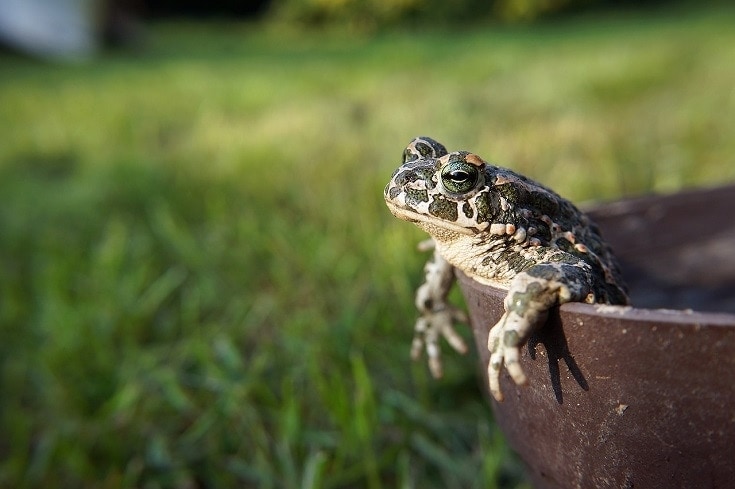
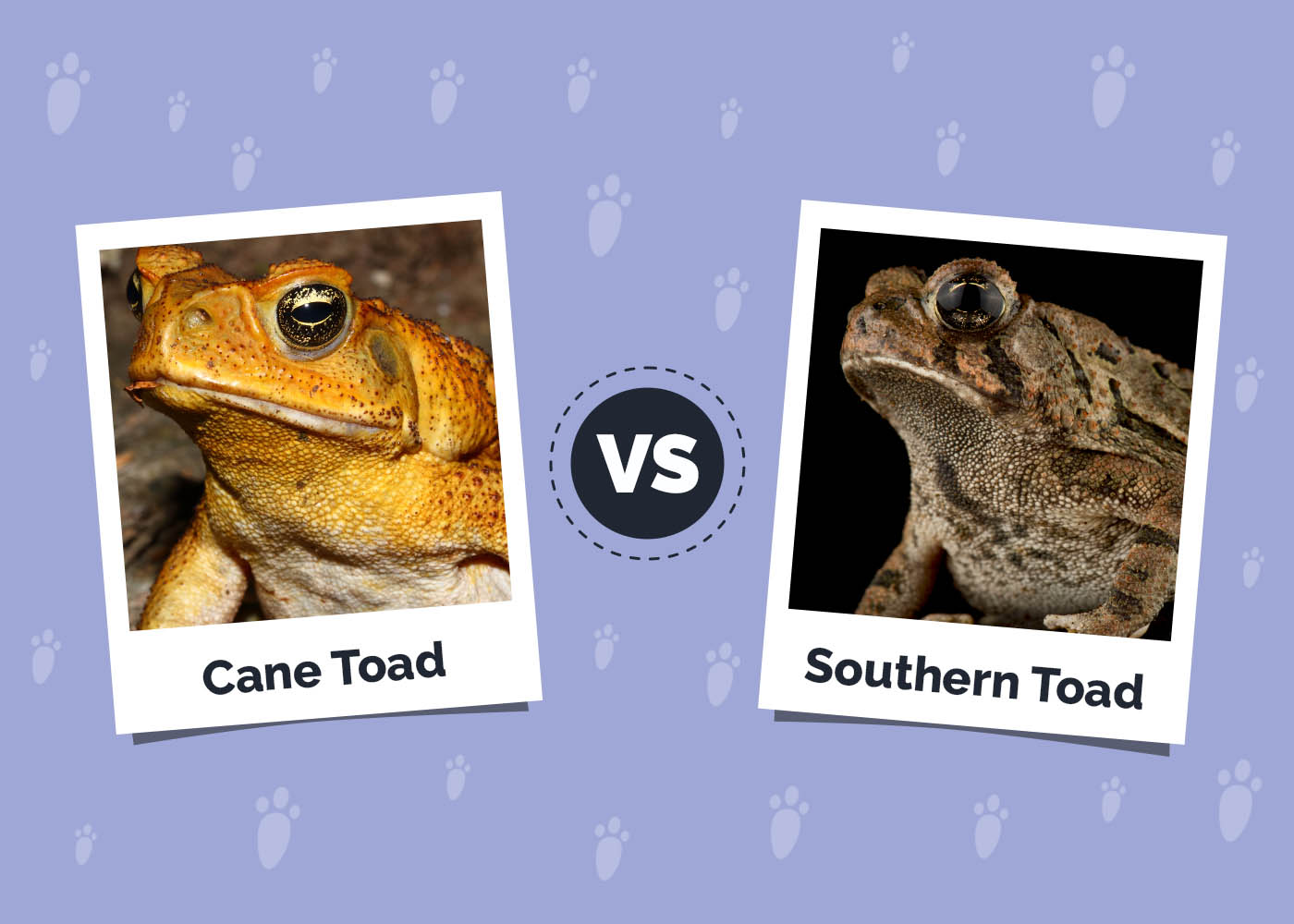
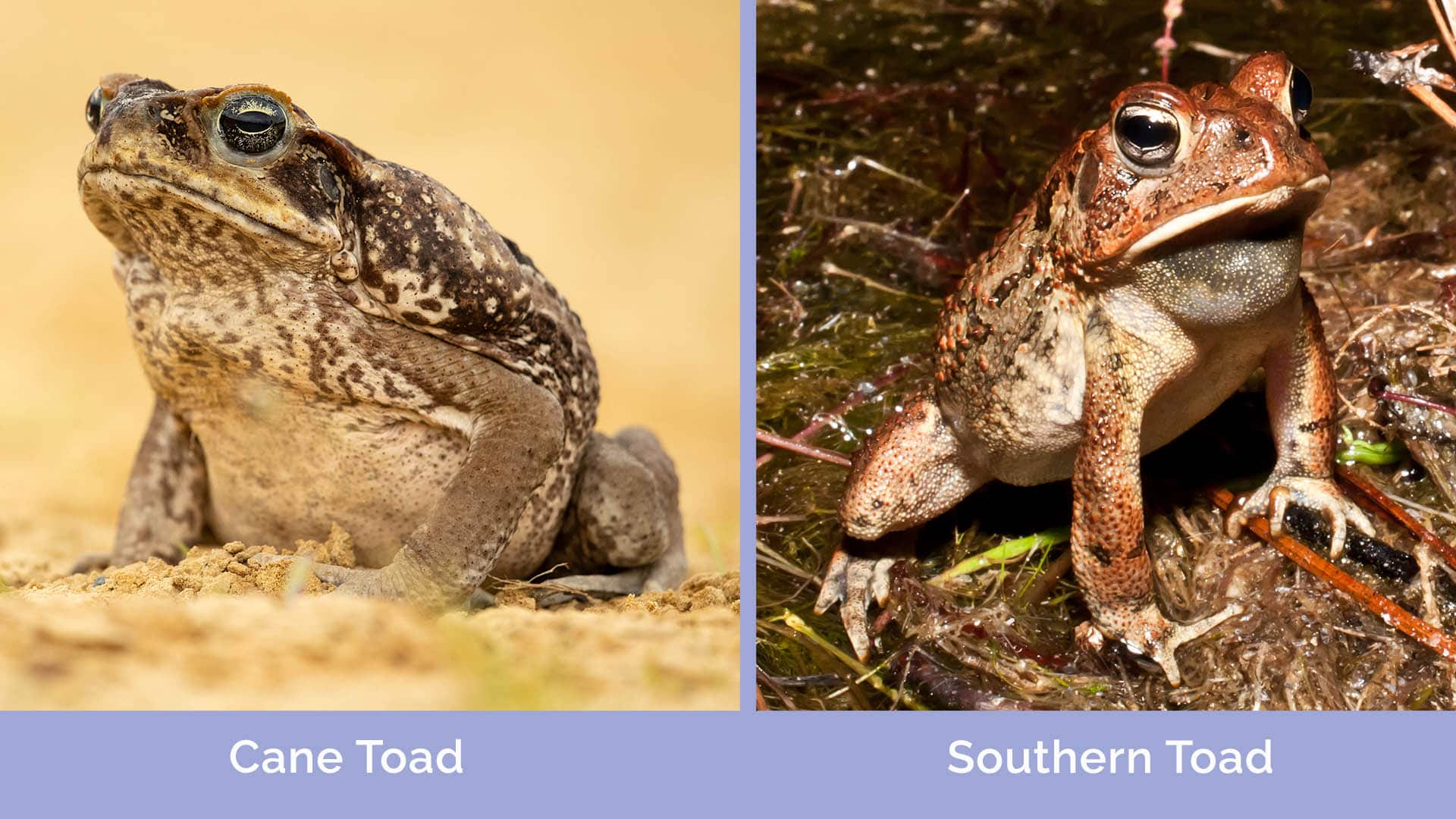
Cane Toads and Southern Toads look similar. However, an adult Cane Toad is considerably larger than an adult Southern Toad, and the Southern Toad has ridges on their heads whereas Cane Toads do not.
It's important to be able to differentiate the two in the wild because while they both secrete bufotoxins, the Southern Toad’s toxins are considered harmless to people and most animals, whereas the Cane Toad’s toxin can kill cats and dogs and may cause irritation to humans. Also, while the native Southern Toad is protected and, in most cases, cannot be moved or removed from its habitat, the Cane Toad is an invasive species and it is generally advised that you call a professional to have any of these toads removed from your property. They will usually be humanely euthanized to protect indigenous animals in the area.
In terms of pets, both species are kept as pets, although the Cane Toad’s toxin means that it needs handling with extreme care. The Southern Toad produces less-dangerous toxin and is low maintenance, but it doesn’t tolerate handling as readily as the Cane Toad.

Visual Differences
At a Glance
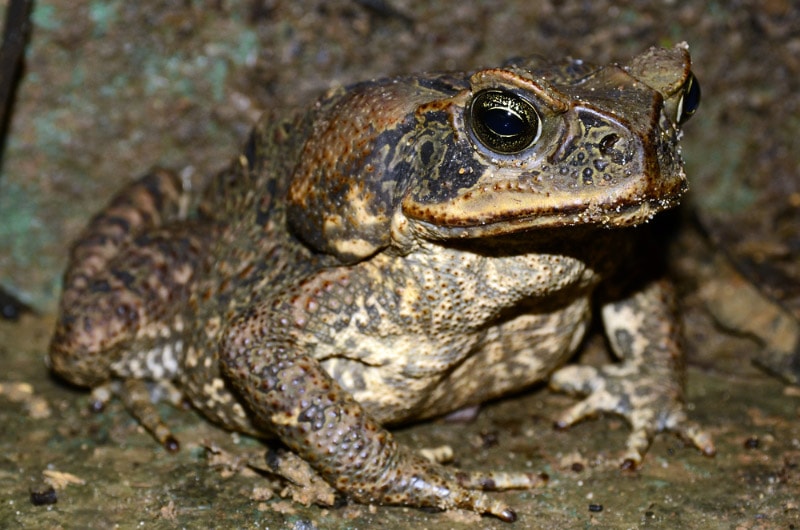
Cane Toad Overview
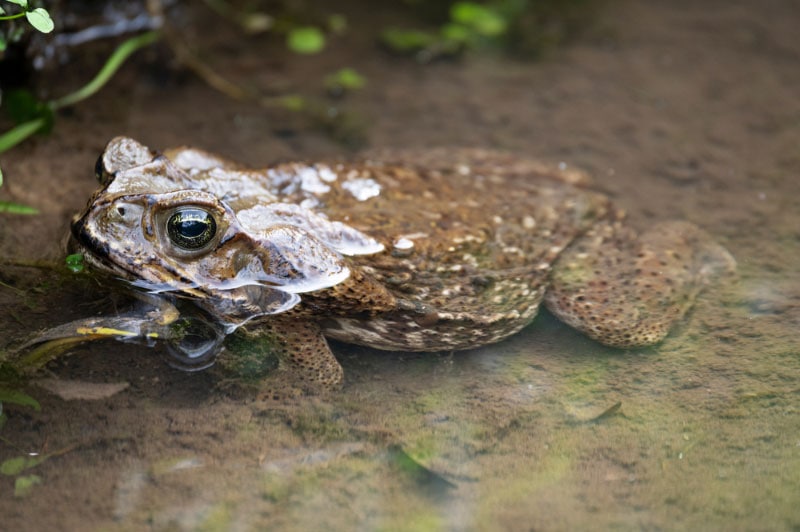
The Cane Toad is a popular pet toad species because, while it has a toxin that can cause skin irritation in humans and can even lead to the death of animals that bite or consume it, it tolerates handling better than most species. It does require very careful handling, however, which we'll look at below.
It is also a large toad, which makes it easy to spot in an enclosure, and it has low care and maintenance requirements so is considered a good species for beginner toad keepers. However, they are nocturnal, so are most active at night.
Characteristics & Appearance
Typically growing to 6 inches in size, some Cane Toads can reach 9 inches in length, with females being larger than males. The species is terrestrial and has adapted to survive in urban areas, as well as grasslands and woodlands. Although they do have slight bumps behind their eyes, the ridges are not as pronounced as those of the Southern Toad.
Habitat/Distribution
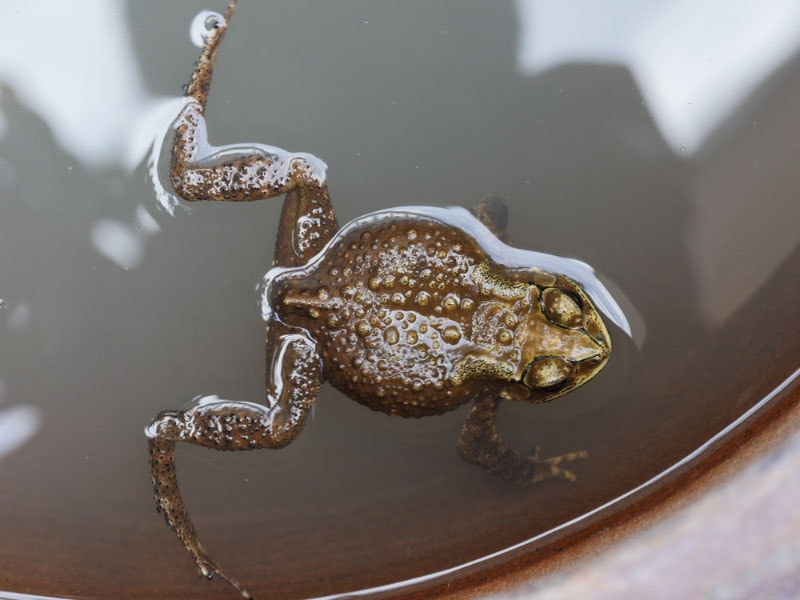
The Cane Toad originates from South and Central America. It was introduced to the US in the 1930s and 40s when it was brought to Florida in a bid to control sugarcane pests. From there, the population grew, and the Cane Toad is still found throughout Florida today. It is an invasive species and is not native to the US, and because its bufotoxin secretions can prove fatal to animals that bite and feed on the toad, it is considered a pest. They also compete with local toads and frogs, potentially eating their food and taking over breeding grounds.
Because they are considered an invasive pest, the Cane Toad can be removed from your property, and they can be humanely euthanized. Once you have removed the toad from your property, it is likely illegal to rehouse it in another area. But, before removing or moving the toad, you must differentiate it from the Southern Toad. The two species have similar markings, although the Cane Toad is considerably larger and has prominent ridges on its head, unlike the Southern Toad.
Populations of Cane Toads are also found in parts of Australia, where its secretion is deemed a class 1 narcotic because of its hallucinatory effects. The toad is also considered a pest in Australia because of the negative impact it has on wildlife.
Southern Toad Overview
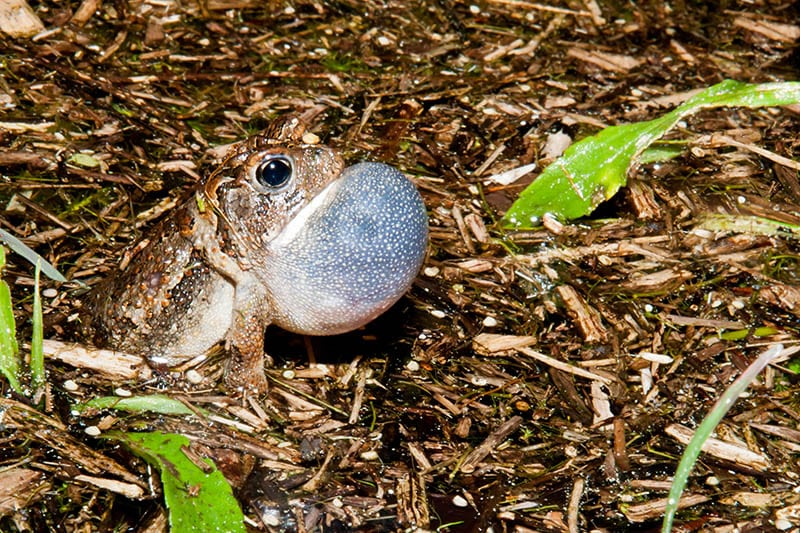
Southern Toads are native to the US and although they look similar in some ways to the Cane Toad, they are much smaller. The Southern Toad does secrete a similar toxin to the Cane Toad except it is much milder and unlikely to cause illness to you or animals. It's a popular pet species because while it does not tolerate handling like the Cane Toad, it is not as dangerous and it can be fun to watch eating when the species becomes especially active and will try to catch just about anything that moves.
Fortunately, they don’t have teeth, so even if a Southern Toad does mistake you for a potential food source, you won’t experience pain when they try nibbling a finger.
Characteristics & Appearance
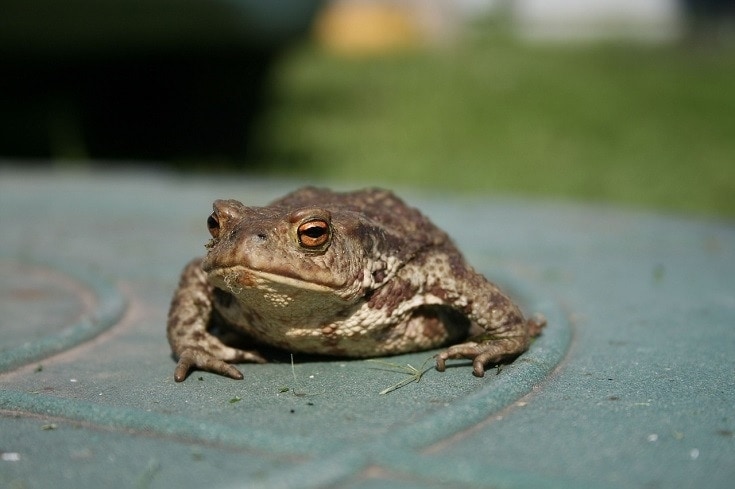
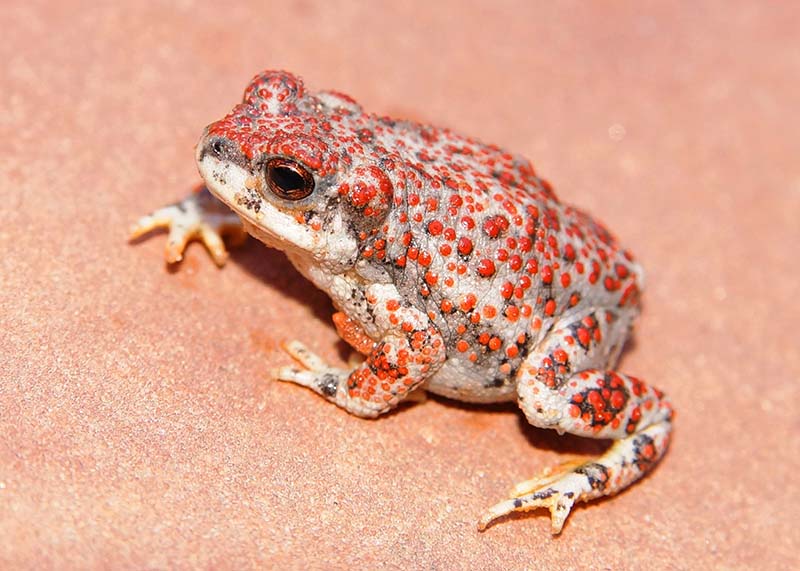
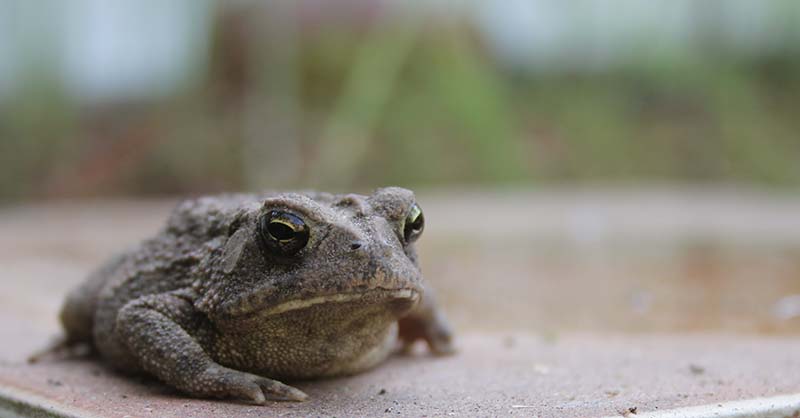
The Southern Toad is considered a medium-sized toad, growing up to 3 inches in length. Their skin color ranges from brown to red and they have a lighter underbelly. Their skin is warted and they have pronounced ridges behind their eyes.
Habitat/Distribution
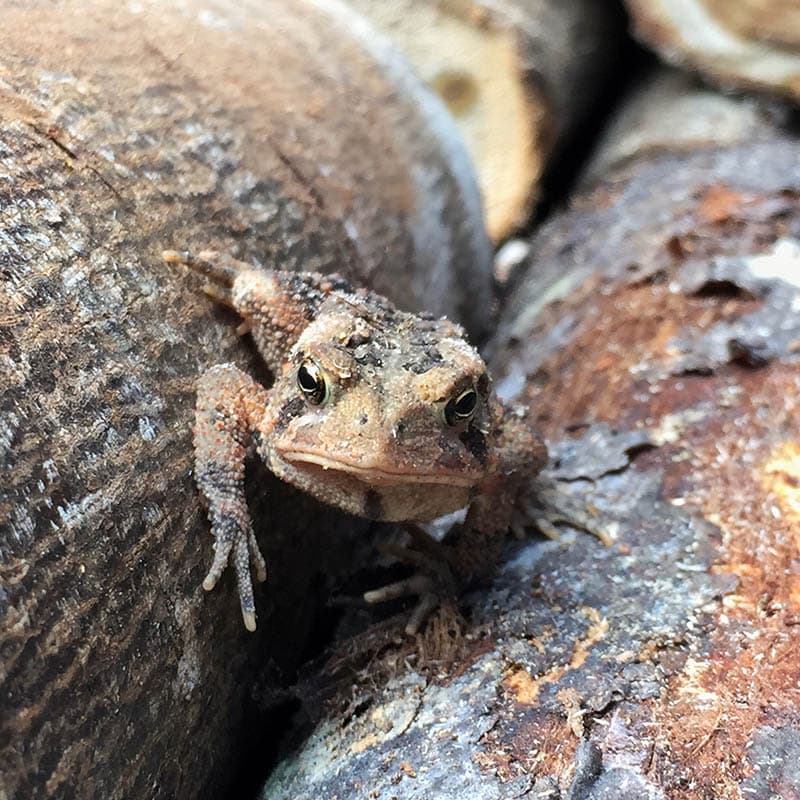
Southern Toads are burrowers and are generally found in burrows in soil or sand. They can be found in parks and gardens, as well as parks, and during mating season they can also be found around bodies of water. They are found in most of the southeastern parts of the US but are not found in Tennessee.
What Are the Differences Between Cane Toads and Southern Toads?
Appearance
Although Southern Toads and Cane Toads both have a typical toad appearance to them with warty skin and dark spots, there are notable differences in the appearance of the two. Cane Toads, which are invasive and considered a pest, are considerably larger than Southern Toads, growing up to three times the size of the natural inhabitant. The smaller Southern Toad also has distinctive ridges above its eyes and its color can range from an olive brown to a distinct red.
Toxins
Both these species produce a toxin from the parotid glands behind the eyes. This Bufotoxin is much stronger in the Cane Toad, and it is strong enough that it can cause skin irritation in humans and may even kill animals that bite or try to eat the toad.
The Cane Toad is tolerant of being handled, which is unusual for amphibians, but you will want to ensure that you wear latex gloves. When handling any toad, there is a danger that the bacteria and chemicals on your skin can cause damage to the toad, as well, so wearing gloves will help protect you both.
Which Breed Is Right for You?
Both the Southern Toad and the Cane Toad can be kept as pets, and they both make good beginner toad species. The Cane Toad is considered a good beginner pet because it is quite low maintenance and tolerates handling well, although the secretion of a potentially harmful toxin means that owners have to be careful when they do handle the toad. Pet owners need to be especially careful because the toxin can prove fatal to dogs and cats.
The Southern Toad also secretes a similar toxin, but it is much less potent and unlikely to cause harm to people or pets, but the Southern Toad is shy and does not enjoy being handled. The Southern Toad is smaller, which means its habitat takes up less space than that of the giant Cane Toad.
Sources
https://myfwc.com/wildlifehabitats/profiles/amphibians/cane-toad/
https://www.floridamuseum.ufl.edu/discover-herps/florida-frog-calls/southern-toad
https://www.fortmyersbeachtalk.com/2020/09/02/how-to-tell-good-toads-from-the-bad-invasive-ones/
https://c1thule-bd.edu.vn/how-can-you-tell-the-difference-between-a-cane-toad-and-a-southern-toad/
http://www.theamphibian.co.uk/cane_toad_bufo_marinus_care_sheet.htm
https://pethelpful.com/reptiles-amphibians/How-to-Keep-a-Wild-Toad-for-a-Pet
https://www.chattnaturecenter.org/visit/experience/wildlife/animal-facts/southern-toad/
Featured Image Credit: (L) Mr F, Shutterstock | (R) reptiles4all, Shutterstock
Get Hepper In Your Inbox


Pet care tips from our vets and experts, straight to your inbox.
You may opt-out at any time. View our Privacy Policy for more information.

Nicole is a lover of animals of all sizes but is especially fascinated with the feline variety. She’s the proud mom of Baby, a Burmese, and works every day so he can relax in the sunshine or by the fire. She’s always had a cat in her home and has spent countless days with others, observing behaviors and softening up even the grouchiest of the lot. Nicole wants to share her kitty expertise with you so you and your cat can live happy, healthy, and care-free.
Join the conversation
Ask a question, share your story, or send private feedback.