Hepper is reader-supported. When you buy via links on our site, we may earn an affiliate commission at no cost to you. Learn more.
African Bullfrog: Care Guide, Diet, Pictures & Lifespan (Vet-Verified Info)


In this article
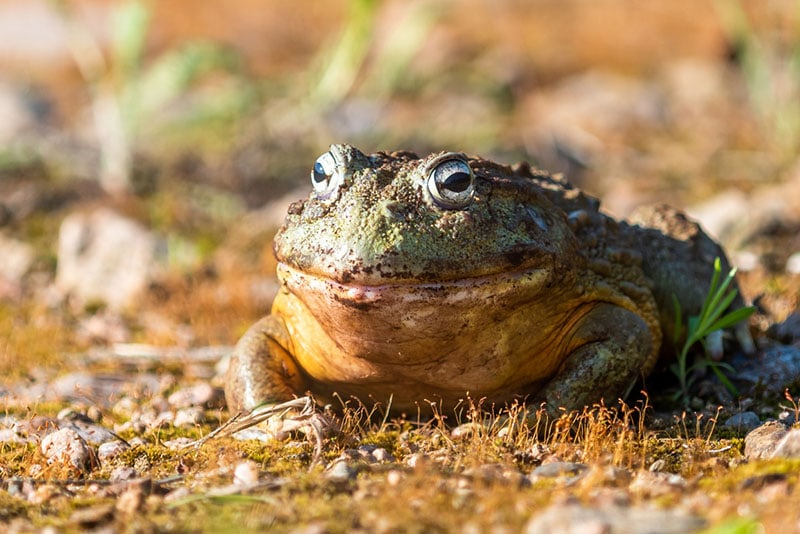
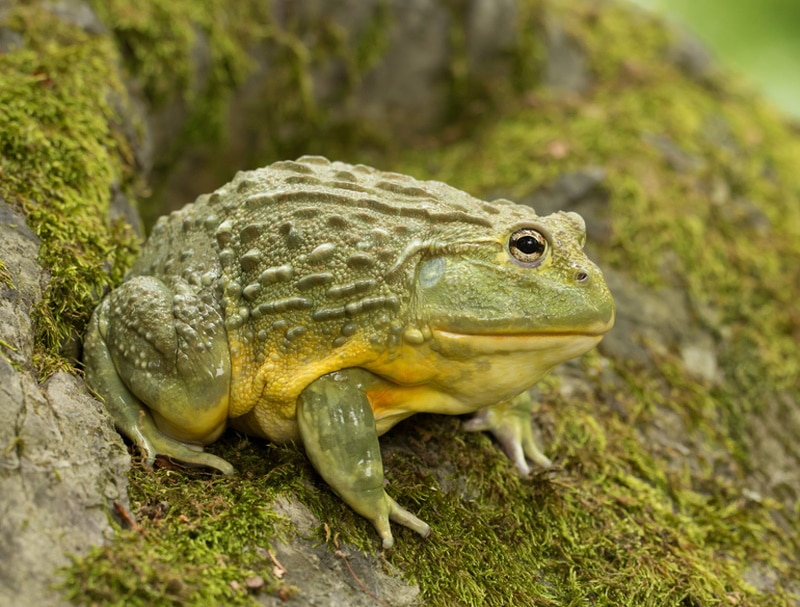
The African Bullfrog (Pyxicephalus adspersus) is a gigantic frog commonly kept in domestic environments. Many keepers love these amphibians because they are interesting to watch and easy to care for. If you've been thinking about bringing one into your home, you'll undoubtedly want to know every in and out of their care.
In this article, we're going to explore how much African Bullfrogs cost, what set-up you need, and how to optimize their living experience. Then, you can decide if you want the responsibility of this particular amphibian.
| Size: | 9–10 inches (males), 4–5 inches (females) |
| Lifespan: | 25–30 years (average estimate), 45 years (record)1 |
| Color: | Olive green (adults), bright green (juveniles) |
| Suitable for: | First-time but amphibian-educated owners |
| Temperament: | Easy-going, relatively low maintenance |
| Diet: | Carnivorous |
| Tank Set-Up: | Bark substrate and fresh soaking water |
| Minimum Tank Size: | 30 gallons |
| Suitable Tank Mates: | Not advised |
African Bullfrogs are a popular choice of pets because they are relatively easy to care for and rewarding to keep. These frogs have voracious appetites and require an immaculate living environment to thrive.
So, even though they are considered relatively low maintenance and great first-time picks for inexperienced pet owners, you need to ensure that you are well-educated about these amphibians and that you have the proper setup and know how to clean it appropriately so your frog can live their best life.
African Bullfrog Characteristics

African Bullfrog Frog Overview
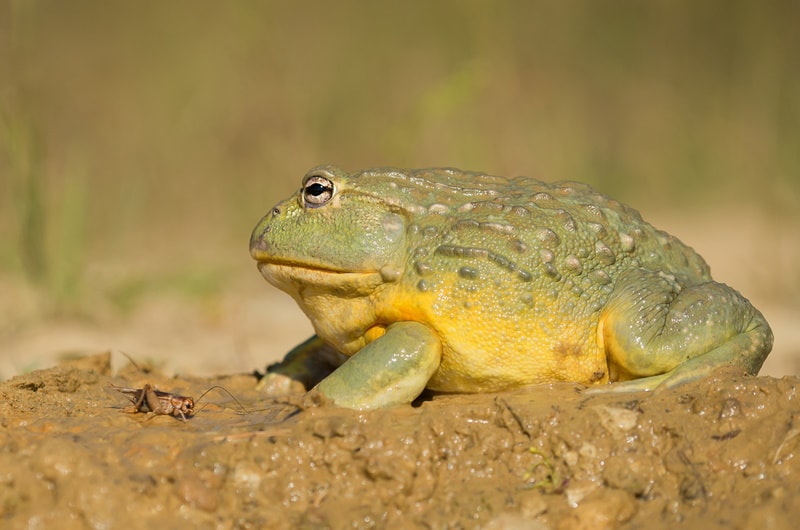
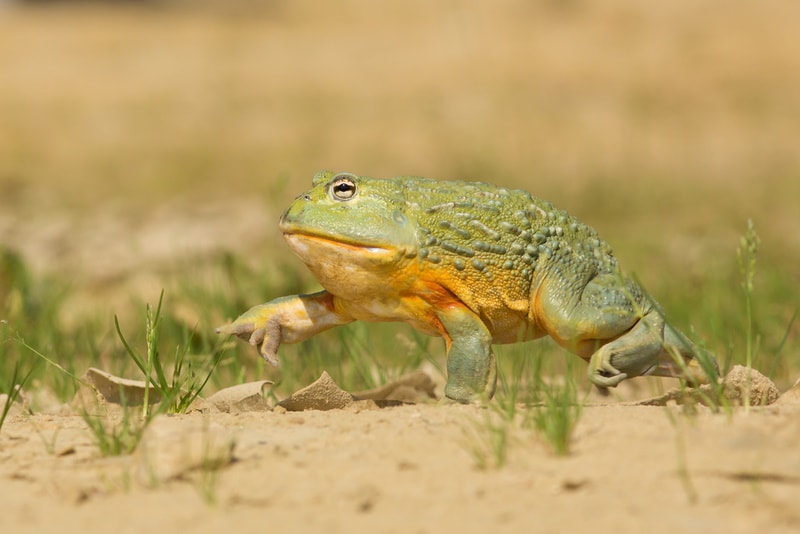
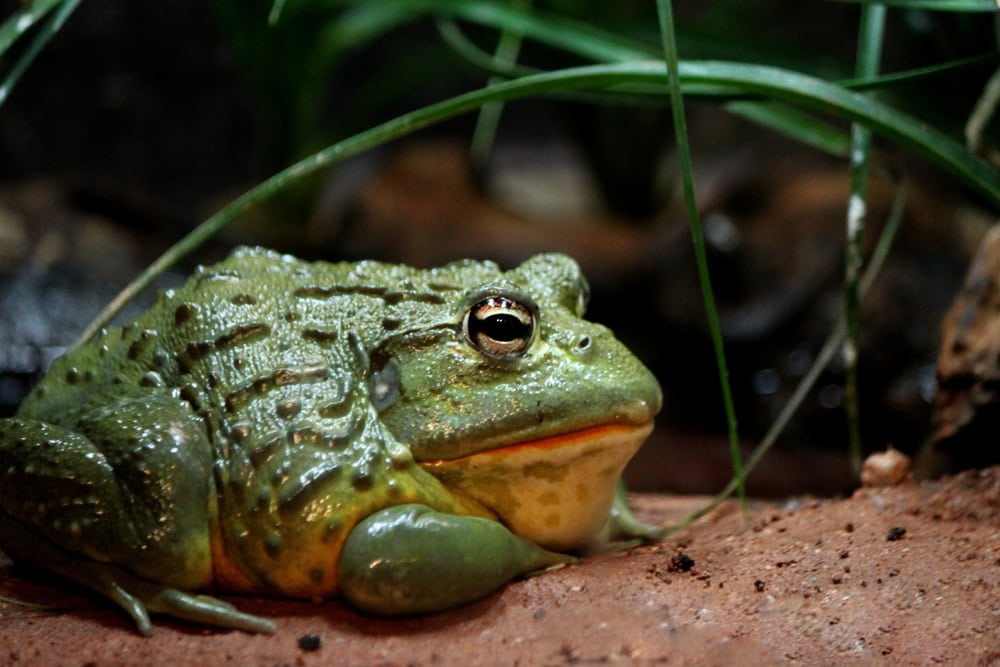
The African Bullfrog (Pyxicephalus adspersus) goes by many names, including the Pixie Frog, Giant Bullfrog, and South African Burrowing Frog. They inhabit dry savannas, subtropical shrublands, and areas near freshwater in the wild. The African Bullfrog is a sought-after species, as they are extremely large and will be a pet that your friends definitely won’t forget.
Despite their size and sensitivities, this species is considered easy to care for. So, even if you’re a first-time owner, if you have the proper knowledge about this amphibian, you can easily manage their care at home, provided that you create an ideal habitat for them.
We will stress that these animals are not meant to be held much, as it can severely stress them out. These beauties are meant for observation only for the most part. So, you must understand before adoption that interactions might not be as frequent as you'd prefer.
American Bullfrog Frog Cost
The cost of an African Bullfrog can vary depending on where you purchased them. However, on average, they run between $25 and $75. You can find a breeder specializing in African Bullfrogs if you want to own one as a pet, as most breeders should be well-educated about the species and may help ensure that your prospective pet is healthy.
Occasionally you can find one at a pet shop, although the health of the African Bullfrog might not be ideal in certain circumstances. While pet shops aim to provide the best care for the animals, sometimes, a lack of specific education about certain animals can lead to a lack of proper care instead.
So, if you do purchase from a pet shop of some kind, make sure to thoroughly check over the frog for signs of illness or disease. You should also research and find an exotic veterinarian before you adopt your pet, in order to get their input on the animal’s health and general condition.
In addition to purchasing the bullfrog, you have to consider other things. Owning cold-blooded animals is not a cheap task upfront. You have to ensure they have proper lighting, a sizable tank, a supply of food, and proper substrate.
Since African Bullfrogs are such voracious eaters, they require a bountiful feast every meal. You can keep live gut-loaded insects on hand, but these require their own care. Often, folks choose to breed these insects themselves to save money.
Ultimately, with all supplies considered, you're looking for upward of $350 for the frog and initial supplies in order to start caring for one of these animals.
Care Guide & Tank Set-Up
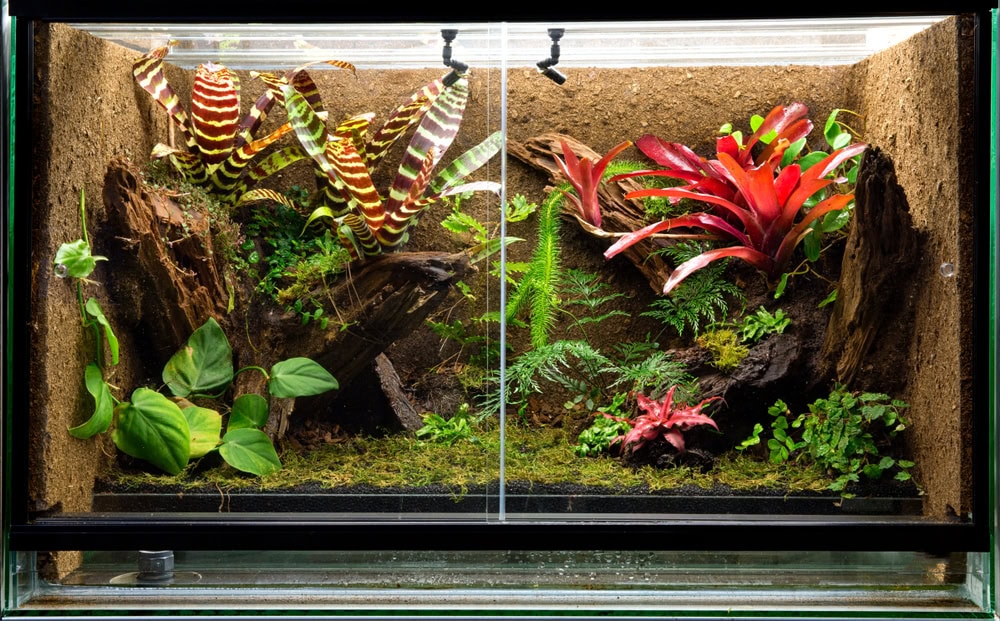
Offering the appropriate tank setup will be the very first step to successful care. An African Bullfrog’s environment sets the foundation for everything else. Improper living conditions can lead to a drastically shortened lifespan, potential for disease, and other downfalls.
Tank Size
There's some confusion when it comes to housing for African Bullfrogs. As you well know, they can get very large: Males can reach up to 10 inches in length (from snout to vent) and weigh up to 3 pounds. This size comes with the need for a relatively large enclosure.
Since they don’t tend to be super active in their enclosure, some people might believe that they don't require much space. While they might not need as much as some other active species, they still require the appropriate amount of space.
Ultimately, it’s easier to control the climate for a cold-blooded animal in a large enclosure than a small one. In turn, a stable enclosure environment ensures your pet’s health, even if they seem to only want to remain in one area of their enclosure all the time.
When you get your frog from a pet store, you might purchase a cage according to their current size, but keep in mind that they will get big rapidly. At a minimum, your frog should be placed in a 20-gallon aquarium. Ideally, though, 30 gallons or more is a more appropriate amount of space for an adult African Bullfrog.
Substrate
African Bullfrogs are very notorious for swallowing their substrate. These frogs are burrowers, which means they love to dig and snooze under the surface.
For this reason, it is essential to purchase the correct kind of substrate. While there might be some mixed opinions on the subject, coconut husks are one of the best substrates you can get for an African Bullfrog. It’s easily digestible if it is swallowed by mistake.
Cage liners are also useful to promote easy cleaning.
Humidity
Humidity is one of the most important aspects of your African Bullfrog’s setup. These frogs require constant moisture to stay healthy. Their enclosure should maintain humidity levels between 80% and 90% at all times.
To ensure that these levels stay at a reasonable level, always buy a hygrometer so you can keep track visually.
Lighting
African Bullfrogs explicitly require 12 hours of daylight and 12 hours of night to maintain their appropriate schedules. Lighting is not only essential to mimic day and night cycles, but it also helps your frog regulate their body temperature, as these are cold-blooded creatures that require warmth from heat sources. Fluorescent or LED bulbs should be used to avoid excess heat production. The light itself should be within 18 inches of your frog. For example, if your enclosure is 12 inches high, the light should be placed no more than 6 inches above the set-up.
Although the benefits of ultraviolet light are not well understood in amphibians, African Bullfrogs are likely to benefit from the use of ultraviolet B (UVB) light (280–320 nm) for calcium metabolism and color rendition. These lights are also useful for maintaining proper daytime/nighttime cycles. UVB bulbs must be changed every 6–8 months or according to the manufacturer’s specifications.
Heating
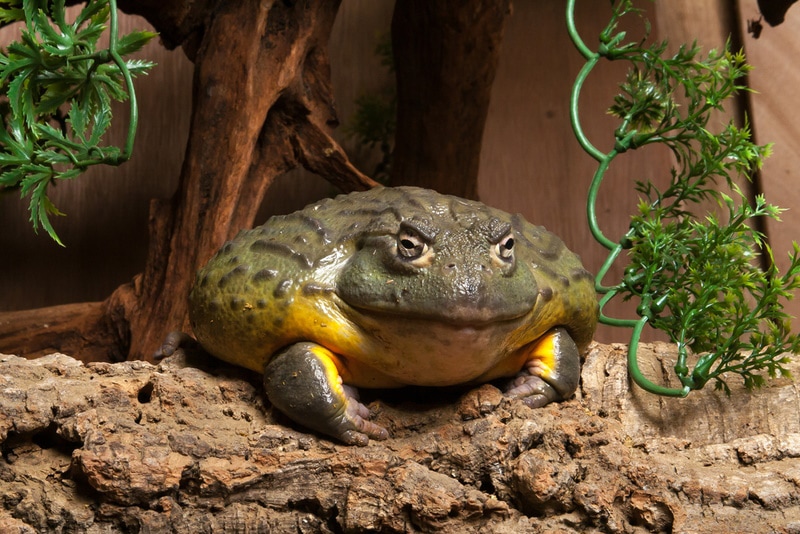
African Bullfrogs, like other amphibians, are cold-blooded creatures. That means you are responsible for providing all their necessary heat inside the enclosure. African Bullfrogs need cool and warm sides of the enclosure so they can regulate their body temperature. Their ideal temperature is around 75oF (approximately 24oC).
A thermometer to monitor the temperatures will ensure your frog gets the correct amount of heat inside the space they dwell.
Things to Know When Owning an American Bullfrog
Food & Diet Requirements
African Bullfrogs are carnivores, and they are very efficient predators. These voracious frogs will eat just about anything! Their prey is not limited to insects like many other frog species. These frogs require a bountiful diet.
While they are young, they need a broad spectrum of gut-loaded insects to stay healthy. As they age, you will likely have to incorporate small rodents into their diet to meet their daily demands.
African Bullfrogs require an uptake of calcium. This is usually done by gut-loading insects using commercially available diets high in calcium or by coating the insects with powdered multiple-vitamin preparations that include vitamin D3 and calcium (a process also known as dusting). In addition, African Bullfrogs cannot synthesize their own carotenoids (vitamin A), so they must be supplemented with a vitamin A source.
Examples of prey for your frog:
- Crayfish
- Earthworm
- Grasshopper
- Snails
- Silkworms
- Roaches
- Minnows
- Shiners
Since African Bullfrogs are voracious eaters, they often can eat substrate by mistake. It is best to feed them with tongs when possible or in an area of their habitat where substrate is scarce (such as a rocky area).
Water/ Liquid Requirements
Water should be changed out daily and always treated with some type of chlorine or chloramine remover. This will ensure that none of these contaminants get into your frog's water and cause them to get ill.
African Bullfrogs love to soak; in fact, they will spend a large portion of their time doing this inside the enclosure. That is why it is imperative to have a water bowl big enough for them to submerge themselves in completely.
Some keepers choose to have one part of the enclosure mimic a pond-like structure. Just be careful not to add any other smaller critters into the mix, as they will surely become a food source for the bullfrog.
Size & Growth Rate
The African Bullfrog typically reaches their adult size between 2 and 3 years of age. They grow exceptionally fast, averaging 1.4 inches in just 30 days! When they are fully grown, the males weigh approximately 3 pounds.
However, there are some differences between male and female African Bullfrogs. The females stay relatively smaller and are generally around 1.5–2 pounds. They also top out at around 5 inches. In essence, they are roughly half the size and weight of males. Interestingly, this trait is odd among frogs because for most species, the females are larger than the males.
Handling
It would be best if you did not handle an African Bullfrog very often. The first reason is that they have very powerful jaws that bear sharp spikes known as odontoid structures. If they clamp down on a finger, it can cause some serious injury and pain.
Even though these bullfrogs are mostly very docile, they can sometimes bite by mistake or if frightened. So, always move very slowly and handle them gently. Also, these frogs are covered with a protective layer of mucus. Handling the frog with your bare hands can cause the removal of this protective mucus, which is bad for their skin. Frogs can absorb many substances through their skin, including any chemicals on your hand (such as soap residue), which makes handling them a health risk.
In addition, amphibians can naturally harbor pathogens (such as Salmonella spp.) that are potentially dangerous for humans. Therefore, they should only be handled when absolutely necessary. Generally speaking, amphibians should be viewed as hands-off pets.

Lifespan and Health Conditions
While African Bullfrogs are generally considered “hardy,” they can contract certain health conditions. An improper set-up remains the main culprit for a wide range of illnesses that can affect pet amphibians. Therefore, getting the set-up and diet correct can save you heartache and vet bills later.
It's always best to have an exotic vet on hand in case something should happen. Exotic vets can sometimes be hard to locate, though, so it's best to secure one before even bringing home an amphibian.
Male vs Female
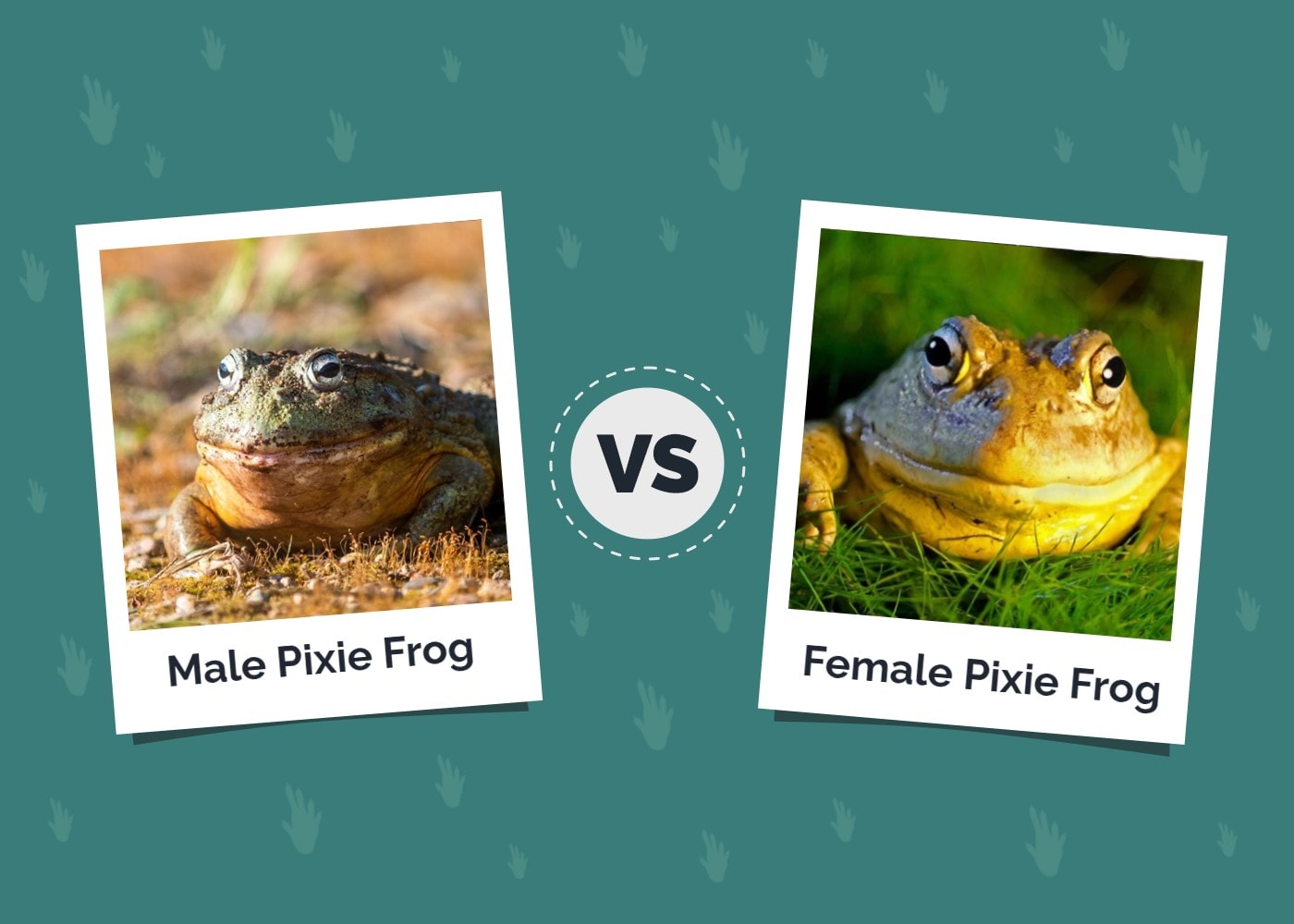
There are several ways to differentiate between male and female African Bullfrogs. The most obvious way to tell them apart is by their size, as males are generally around twice as heavy and larger than females. The stark size difference makes sexing these frogs quite easy for most people.
Apart from size, there are some other ways to tell. Male African Bullfrogs have an olive-green hue and yellow or orange throats. Females have a slightly duller olive-green color but have cream-colored throats.
In addition to visual appearance, males will loudly croak, but females do not croak (though they may produce other sounds). This telltale sign lets you know exactly what sex your African Bullfrog is.
3 Little-Known Facts About African Bullfrogs
1. African Bullfrog females can lay up to 4,000 eggs per clutch.
African Bullfrogs can have quite a few offspring! If you plan on breeding, you might want to know just what you're getting into. In a single clutch, a female African Bullfrog can lay up to 4,000 eggs! Once they hatch, they develop very quickly, only 2 days after they emerge.
2. African Bullfrogs can live over 40 years under human care.
Under human care, these frogs can live significantly long lives, sometimes reaching the 40-year mark. The confirmed record for a pet African Bullfrog was 45 years.
3. African Bullfrogs will often cannibalize.
We've mentioned several times throughout the article that African Bullfrogs are highly voracious eaters. They will eat anything their size or smaller. So, it might come as no surprise that they will also cannibalize their own species. They certainly aren't picky!
Final Thoughts
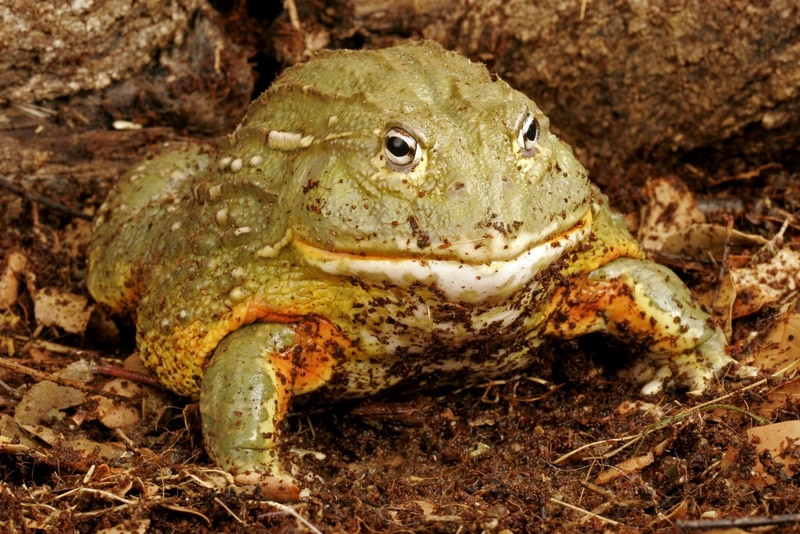
Hopefully, with the information in this article, you now understand what it takes to keep an African Bullfrog successfully. This unique species should be a top contender for experienced and inexperienced owners alike. The primary thing to ensure is that you are well-educated about the species and maintain a proper environment.
These frogs require very specific living conditions to ensure their health and prevent any avoidable issues. Remember, there are better frogs than these if you want to have tank mates, as they can be aggressive with their own species and eat anything that's their size or smaller.
Featured Image Credit: Milan Zygmunt, Shutterstock
Get Hepper In Your Inbox


Pet care tips from our vets and experts, straight to your inbox.
You may opt-out at any time. View our Privacy Policy for more information.
Ashley Bates, a freelance writer with a passion for pets, is currently studying animal therapy. She is a mother to four children and 23 pets, both furry and feathery. Ashley actively volunteers at local shelters, advocates for animal welfare, and rescues animals in distress. Her mission is to promote awareness, education, and entertainment about pets to help prevent animal homelessness. She specializes in the care and well-being of dogs and cats.
Join the conversation
Ask a question, share your story, or send private feedback.